Beginner’s Guide to Clunking and Knocking Noises While Driving: Simple Checks Before the Repair Shop
Hearing clunks or knocks while driving can be scary, but many causes are easy to narrow down at home. This guide walks beginners through simple, safe checks before heading to a repair shop....

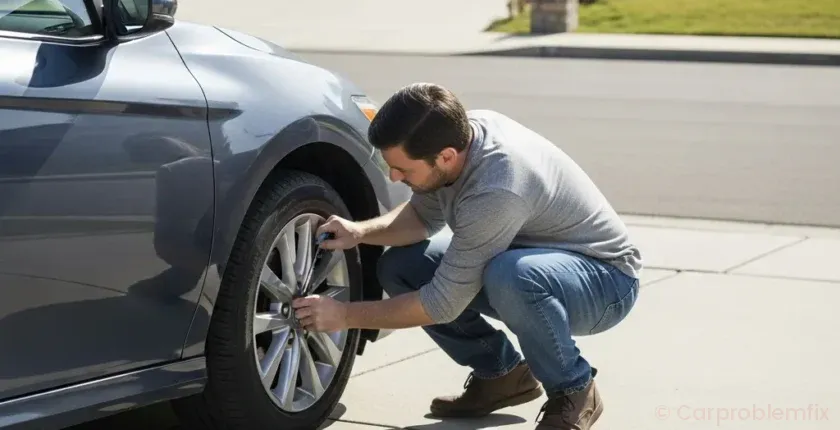
Hearing clunking or knocking noises while driving is unsettling, especially if you are not sure whether it is safe to keep going. The good news is that many of the common causes follow clear patterns you can recognize with a few simple checks. This guide is written for beginners and focuses on what you can safely inspect at home before you book a repair.
- 1. How to Describe the Clunk or Knock (So You Can Diagnose It)
- 2. Safety First: When a Clunk or Knock Means “Stop Driving”
- 3. Simple Checks for Clunks Over Bumps
- 3.1. Step-by-Step: Basic Suspension Noise Check
- 4. Clunks and Knocks While Turning the Steering Wheel
- 4.1. Checklist: Noises When You Turn
- 5. Clunks When Accelerating, Decelerating, or Shifting
- 5.1. Checklist: Noises on Throttle Changes
- 6. Knocking From the Engine Area While Driving
- 6.1. Common Engine-Related Knocking Noises
- 7. Using a Simple Decision Path to Narrow Down the Noise
- 8. Simple Maintenance Habits to Prevent Future Clunks
- 9. Summary and Next Steps
We will walk through how to describe the noise, what to check based on when it happens, and which problems are urgent safety issues versus those that can usually wait for an appointment.
How to Describe the Clunk or Knock (So You Can Diagnose It)

Before you start checking anything, pay attention to when and how the noise happens. Clear descriptions make it easier to diagnose the problem and help your mechanic later. Try to answer these questions while you drive (safely) or ride along with someone else driving.
- When does it happen? Over bumps, during turns, while braking, when accelerating, or at low-speed parking maneuvers?
- Where does it sound like it comes from? Front, rear, left, right, or under your feet in the center?
- How often? Single clunk, repeated knocking, or a rhythmic thump that speeds up with the car?
- What speed? Only at low speeds, only at highway speeds, or anytime?
Write these details down or record a short voice note on your phone after driving. This will guide your checks and save time at the shop.
Safety First: When a Clunk or Knock Means “Stop Driving”
Some noises are more than just annoying; they can signal a part that might fail and cause you to lose control. If you notice any of the following along with the noise, treat it as urgent.
- Steering feels loose, delayed, or wanders when the clunk happens.
- Car pulls hard to one side under braking or during a clunk.
- Metal-on-metal grinding in addition to clunks, especially when braking.
- Severe vibration at highway speeds combined with knocking from a corner of the car. For more detail on high-speed issues, see Car Vibrates Only at Highway Speeds: Causes, Diagnosis & Fixes.
- Visible loose or broken suspension parts when you look under the car.
If any of these apply, avoid highway driving and have the car towed or inspected as soon as possible. Do not try aggressive DIY repairs on suspension or steering if you are a beginner.
Simple Checks for Clunks Over Bumps
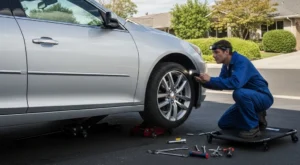
Clunking or knocking that happens mainly when you go over speed bumps, potholes, or driveway entrances usually points to suspension components. Many of these can be visually checked in your driveway.
Step-by-Step: Basic Suspension Noise Check
- Park on level ground and secure the car.
Why: You need a stable car to safely inspect underneath.- Park on a flat surface, set the parking brake, and put the transmission in Park (or in gear for manuals).
- Turn the engine off and remove the key.
- Do a “bounce test” at each corner.
What to do:- Stand at the front of the car and push down hard on one corner of the hood, then quickly release.
- The car should bounce up, then settle within one or two movements.
- Listen for clunks or knocks as it moves.
What it might mean:
- Clunking during the bounce can point to worn struts or shocks, or loose mounting bolts.
- Excessive bouncing without much resistance suggests worn-out shocks or struts even if they are quiet.
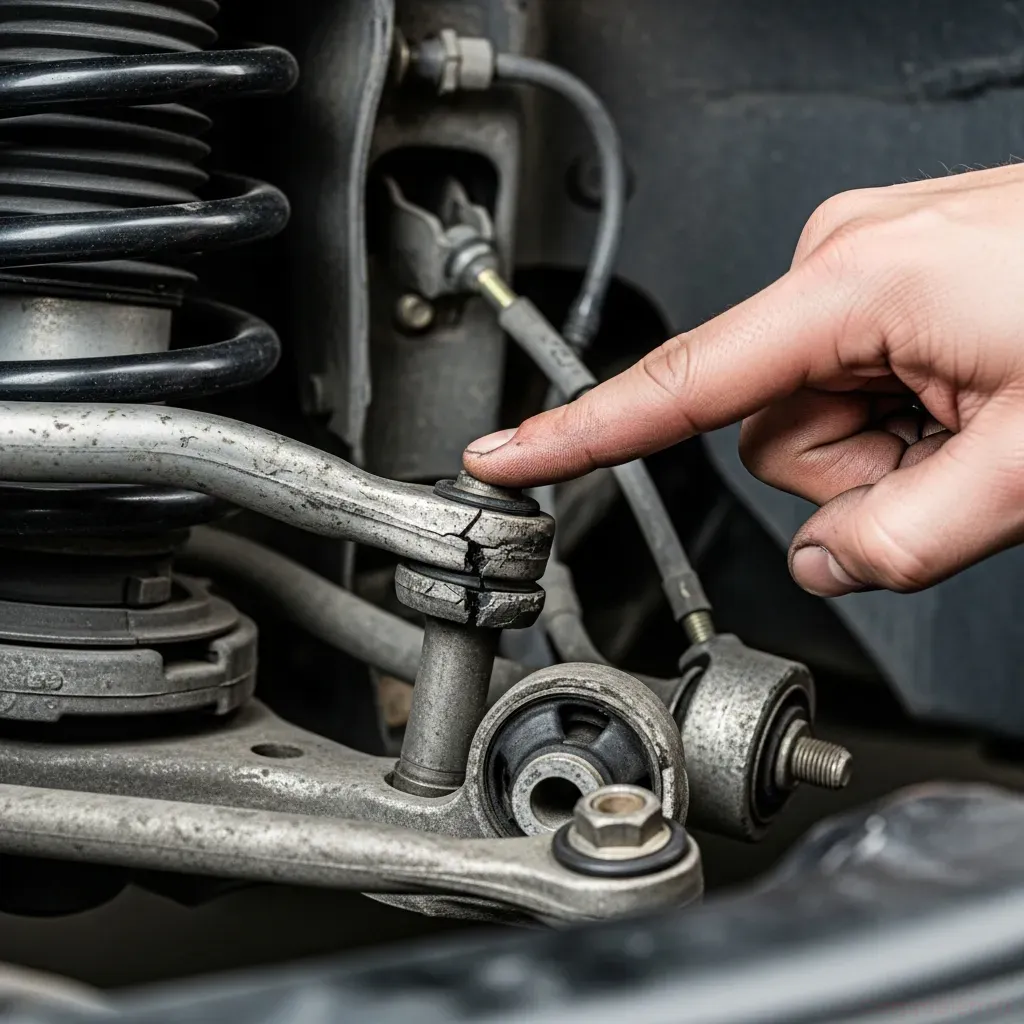
- Inspect sway bar links and bushings.
What to look for:- Behind the front wheels, you will see a bar running across the car (the sway bar) with small links connecting it to the suspension.
- Check for torn rubber boots, missing bushings, or obvious looseness.
Noise clue:
- Worn sway bar links or bushings often cause sharp, single clunks over small bumps, especially at low speeds.
- Check for loose exhaust components.
Why: A loose exhaust pipe or muffler can hit the body and sound like a suspension clunk.- With the car cool, gently push up and side-to-side on the exhaust pipe and muffler.
- Listen for metal-on-metal clunks or see if it hits heat shields or the body.
Noise clue:
- Exhaust knocks often sound like hollow metal clunks near the center or rear of the car, especially over bumps.
- Look for obvious broken or separated components.
- Check for broken springs (a coil that is snapped or out of place).
- Look for oil leakage on shocks or struts (wet, oily tubes).
- Check that major bolts appear present and not halfway out.
When to stop:
- If you see a broken spring, severely leaking strut, or missing bolt, avoid driving at speed and schedule a tow or immediate repair.
If your checks point to worn suspension but the car still drives straight and feels stable, you can usually drive gently to a shop. However, any clunk that feels like the wheel is moving around under you is a higher priority.
Clunks and Knocks While Turning the Steering Wheel
Clunking or knocking that happens mainly while turning, especially at low speeds or in parking lots, often involves steering or front suspension joints. These parts are critical to safety, so treat them seriously.
Checklist: Noises When You Turn
- Clunk when turning into driveways or parking lots: Often related to ball joints, control arm bushings, or strut mounts.
- Rapid clicking when turning sharply: More like a click-click-click than a clunk, usually from a worn CV axle on front-wheel-drive or all-wheel-drive cars.
- Single knock when you start turning the wheel: Can be a loose steering rack mount or worn tie rod end.
Here are simple checks you can do without special tools.
- Check steering feel with the engine running.
- In Park with the engine on, turn the steering wheel slightly left and right.
- Listen for clunks near your feet or under the hood.
- Notice if there is a dead spot or looseness before the wheels start to turn.
What it might mean:
- Clunks felt in the steering wheel can indicate worn tie rods or a loose steering rack.
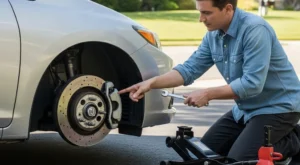
- Visual check of tie rods and ball joints (basic).
- Turn the steering wheel so the front wheel you are inspecting is angled outward.
- Look behind the wheel for rubber boots on steering and suspension joints.
- If a boot is torn and you see grease splattered or rust, that joint may be worn.
Warning: Do not crawl fully under the car without proper jack stands and safety procedures. Beginners should stick to what is visible from the side.
- Listen during slow, full-lock turns.
- In an empty parking lot, turn the wheel fully left and drive slowly in a circle.
- Repeat with the wheel fully right.
- Note whether you hear clunks, knocks, or rapid clicking, and from which side.
Noise clue:
- Rapid, rhythmic clicking on full lock is classic for a failing outer CV joint.
- Single or double clunks at the start or end of a turn can be from strut mounts or control arm bushings shifting.
Any steering-related clunk is worth having a professional confirm. If the steering feels vague, delayed, or you hear loud knocks while turning, avoid highway speeds until it is inspected.
Clunks When Accelerating, Decelerating, or Shifting
Some knocking noises show up mainly when you start moving, let off the gas, or shift between Drive and Reverse. These often involve engine and transmission mounts or drivetrain components.
Checklist: Noises on Throttle Changes
- Single thump when shifting from Park to Drive or Reverse: Often related to worn engine or transmission mounts, or excessive play in the driveshaft or CV axles.
- Knock when you tap the gas on and off at low speed: Can be loose mounts or excessive slack in the drivetrain.
- Rhythmic thump that changes with speed: May be related to tires, wheels, or axles rather than the engine itself.
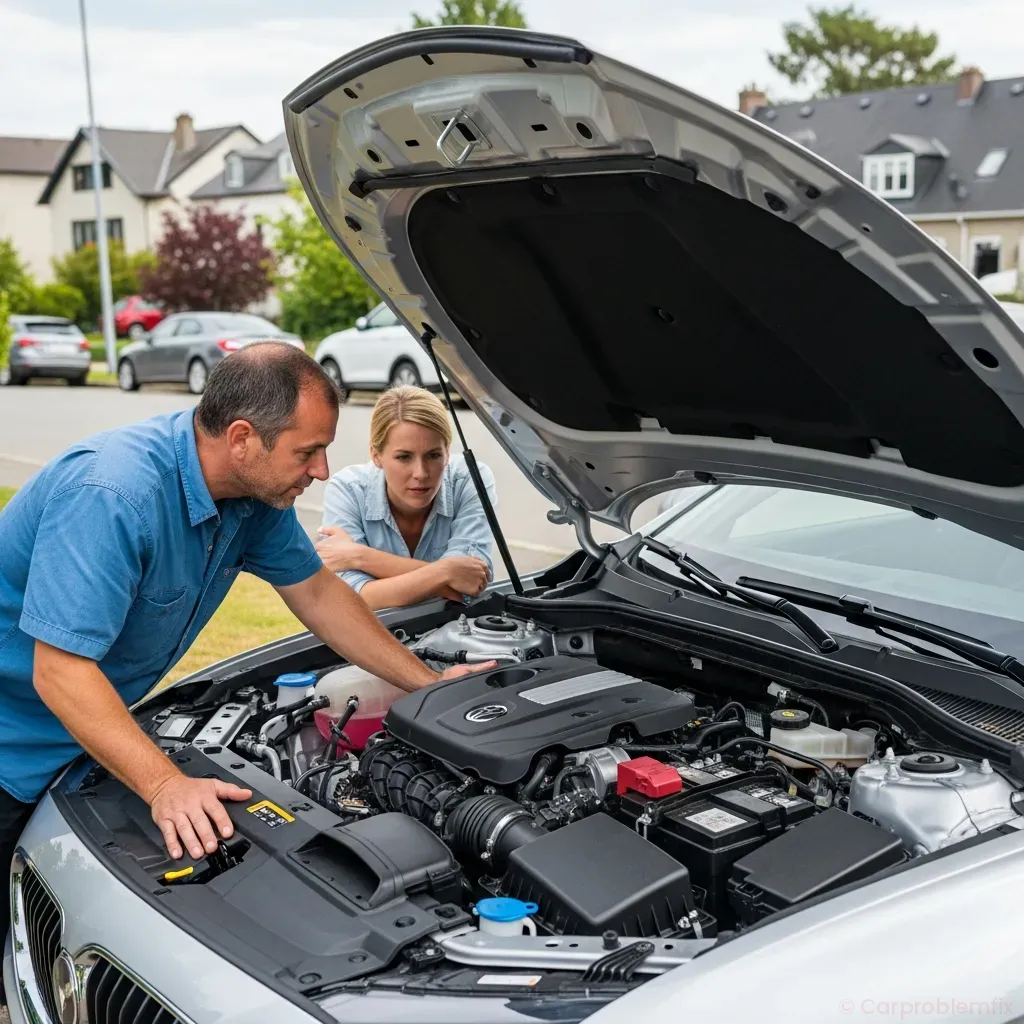
- Simple mount movement check (visual).
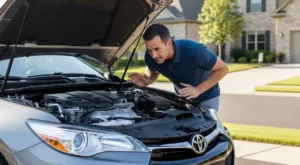
- Open the hood with the engine running and the parking brake fully set.
- Have a helper sit in the driver’s seat with their foot on the brake.
- Ask them to gently shift between Reverse and Drive while you watch the engine.
What to look for:
- A small amount of movement is normal.
- Large rocking or a visible “jump” when shifting can indicate a worn engine or transmission mount.
Safety note: Keep your hands and tools clear of moving parts. Stand to the side, not directly in front of the car.
- Check for loose cargo or jack equipment.
Why: It sounds silly, but a loose jack, spare tire, or toolbox in the trunk can make loud clunks when you start or stop.- Empty the trunk and storage compartments.
- Secure the spare tire and jack using the factory hold-downs.
Noise clue:
- If the noise disappears with the trunk empty, you may have solved the problem for free.
- Listen for drivetrain clunks at low speed.
- In a quiet area, drive slowly (5–10 mph) and gently tap the gas on and off.
- Listen for knocks from the front or rear as the car loads and unloads.
What it might mean:
- Repeated clunks from the rear on acceleration and deceleration can point to worn driveshaft joints or differential mounts (common on rear-wheel-drive vehicles).
Mount and drivetrain issues are usually not instant emergencies, but they can worsen and cause additional wear. Plan a shop visit soon if you notice strong thumps or see excessive engine movement.
Knocking From the Engine Area While Driving
Not all knocking sounds are from suspension or mounts. Some come directly from the engine and can indicate serious problems if ignored. Beginners should focus on simple checks and avoid deep engine disassembly.
Common Engine-Related Knocking Noises
- Light metallic pinging under load (uphill, heavy throttle): Often called spark knock or detonation, related to fuel quality, ignition timing, or carbon buildup.
- Deep, heavy knock that speeds up with engine RPM: Can be a sign of internal engine wear (rod knock or main bearing issues).
- Ticking or tapping at idle: Often valve train noise, which may or may not be serious.
- Check engine oil level and condition.
- With the engine off and cool, use the dipstick to check oil level.
- If it is below the minimum mark, add the correct oil type as specified in your owner’s manual.
- Look at the oil color; very dark, thick oil may indicate overdue changes.
Why it matters:
- Low or dirty oil can cause or worsen engine knocking and accelerate wear.
- Listen carefully at idle and light revs.
- With the hood open, start the engine and let it idle.
- Listen for knocking that is in sync with engine speed (faster when you gently rev, slower when it idles).
- Try to locate whether it is from the top (valve area) or bottom (block area) of the engine.
When to worry:
- A deep, dull knock from the lower engine that gets louder with revs is a red flag. Avoid hard driving and have it inspected promptly.
- Check for warning lights and stored codes.
- If the Check Engine light is on along with knocking, there may be misfires or ignition issues.
- Many auto parts stores will read basic OBD2 codes for free, or you can use a simple code reader.
Next step:
- If you find electrical-related codes or suspect a battery/charging issue, see the Beginner’s Guide to Car Electrical Problems for simple checks.
For persistent engine knocking, especially under load, consider using fuel that meets your manufacturer’s octane recommendation and keeping up with maintenance like spark plug replacement. You can find official recommendations in your owner’s manual or on manufacturer sites like Volkswagen owner resources.
Using a Simple Decision Path to Narrow Down the Noise
To avoid feeling overwhelmed, follow this basic decision path based on when the clunk or knock happens most clearly.
- Mainly over bumps?
- Focus on suspension: sway bar links, bushings, shocks, struts, springs, and loose exhaust.
- Use the bounce test and visual checks described earlier.
- Mainly while turning?
- Focus on steering and front suspension: tie rods, ball joints, control arm bushings, strut mounts, and CV axles.
- Pay attention to whether it is a single clunk or rapid clicking.
- When shifting or changing throttle?
- Focus on engine/transmission mounts and drivetrain: driveshaft joints, differential mounts, and loose cargo.
- From the engine area, tied to RPM?
- Focus on engine health: oil level, fuel quality, ignition issues, and internal wear.
If the noise fits more than one category or is hard to reproduce, write down as many details as possible. This documentation will help your mechanic track it down faster and reduce diagnostic time.
Simple Maintenance Habits to Prevent Future Clunks
Many clunking and knocking problems develop slowly as parts wear out. Good basic maintenance can delay or prevent some of the most common issues.
- Keep up with regular inspections. A quick look at tires, suspension, and fluid levels each month can catch problems early. See the Beginner’s Guide to Basic Car Maintenance for a simple routine.
- Replace air and cabin filters on schedule. While they do not directly cause clunks, a well-maintained engine and HVAC system reduces strain and vibrations. For easy DIY, see DIY Engine Air Filter Replacement and DIY Cabin Air Filter Replacement.
- Inspect tires regularly. Uneven wear or bulges can create thumps and vibrations that sound like clunks. Rotate and balance tires as recommended.
- Address minor noises early. A small bushing or sway bar link noise is cheaper to fix than the extra wear it can cause if ignored.
Summary and Next Steps
Clunking and knocking noises while driving are not something to ignore, but many causes can be narrowed down with simple, safe checks at home. Start by noting exactly when the noise happens, then follow the suspension, steering, drivetrain, or engine checklists that match your symptoms.
If you find broken or severely worn parts, or if the car feels unstable, avoid highway speeds and schedule professional service as soon as possible. For mild, repeatable noises where the car still drives normally, use your notes to explain the issue clearly at the shop. A little structured troubleshooting now can save you time, money, and stress later.
How do you rate this guide?

Related Posts
Comments have been disabled.