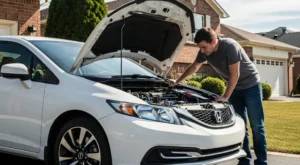
OBD2 Code P0300: Random/Multiple Cylinder Misfire – Causes, Diagnosis & Fixes Before You Damage the Engine
Learn what OBD2 code P0300 really means, how serious it is, common causes, and step‑by‑step DIY diagnosis and repair so you don’t ruin your engine or catalytic converter....

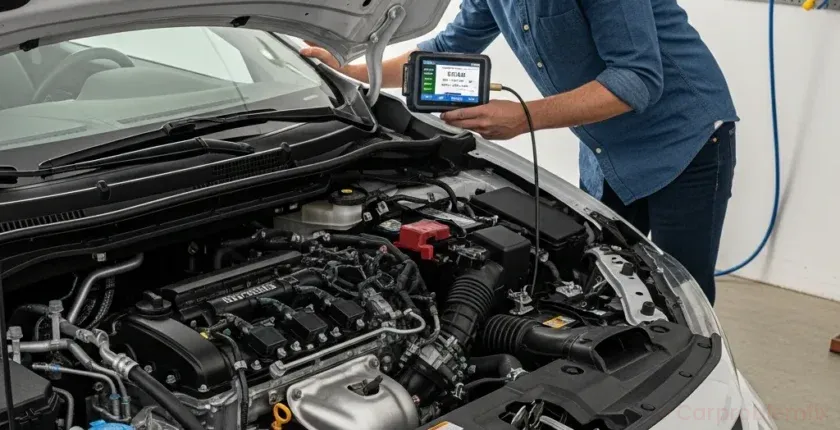
OBD2 code P0300 – Random/Multiple Cylinder Misfire Detected is one of the most common and confusing check engine light codes. It can show up on almost any gasoline car or light truck, from older sedans to modern direct‑injection engines.
- 1. What OBD2 Code P0300 Actually Means
- 2. Is P0300 Safe to Drive With?
- 2.1. Flashing vs Solid Check Engine Light
- 2.2. Risks of Ignoring P0300
- 3. Common Symptoms of P0300
- 4. Most Common Causes of OBD2 Code P0300
- 4.1. 1. Ignition System Problems (Very Common)
- 4.2. 2. Fuel Delivery Issues
- 4.3. 3. Air and Vacuum Problems
- 4.4. 4. Engine Mechanical Problems
- 4.5. 5. Sensor and Control Issues
- 5. Tools You’ll Need to Diagnose P0300
- 6. Step‑by‑Step Diagnosis for OBD2 Code P0300
- 6.1. 1. Pull Codes and Freeze‑Frame Data
- 6.2. 2. Perform a Quick Visual Inspection
- 6.3. 3. Check Spark Plugs and Ignition Components
- 6.4. 4. Look at Fuel Trim and Misfire Data (Live Data)
- 6.5. 5. Check for Vacuum Leaks
- 6.6. 6. Test Fuel Pressure and Delivery
- 6.7. 7. Check Key Sensors (MAF, Crank, Cam)
- 6.8. 8. Check Engine Mechanical Health (If Needed)
- 7. Common Fixes for OBD2 Code P0300
- 7.1. Ignition System Repairs
- 7.2. Fuel and Air System Repairs
- 7.3. Sensor and Control Repairs
- 7.4. Mechanical Repairs
- 8. After the Fix: Clearing P0300 and Confirming the Repair
- 9. When to DIY and When to See a Professional
- 10. Key Takeaways About OBD2 Code P0300
The code sounds vague, and that’s because it is: the engine computer is telling you it detects misfires, but not consistently on just one cylinder. Left alone, misfires can quickly damage your catalytic converter and, in severe cases, the engine itself.
This guide breaks down P0300 in plain language and walks you through symptoms, causes, DIY diagnosis, and realistic repair options so you can decide what to tackle yourself and when to call a pro.
What OBD2 Code P0300 Actually Means
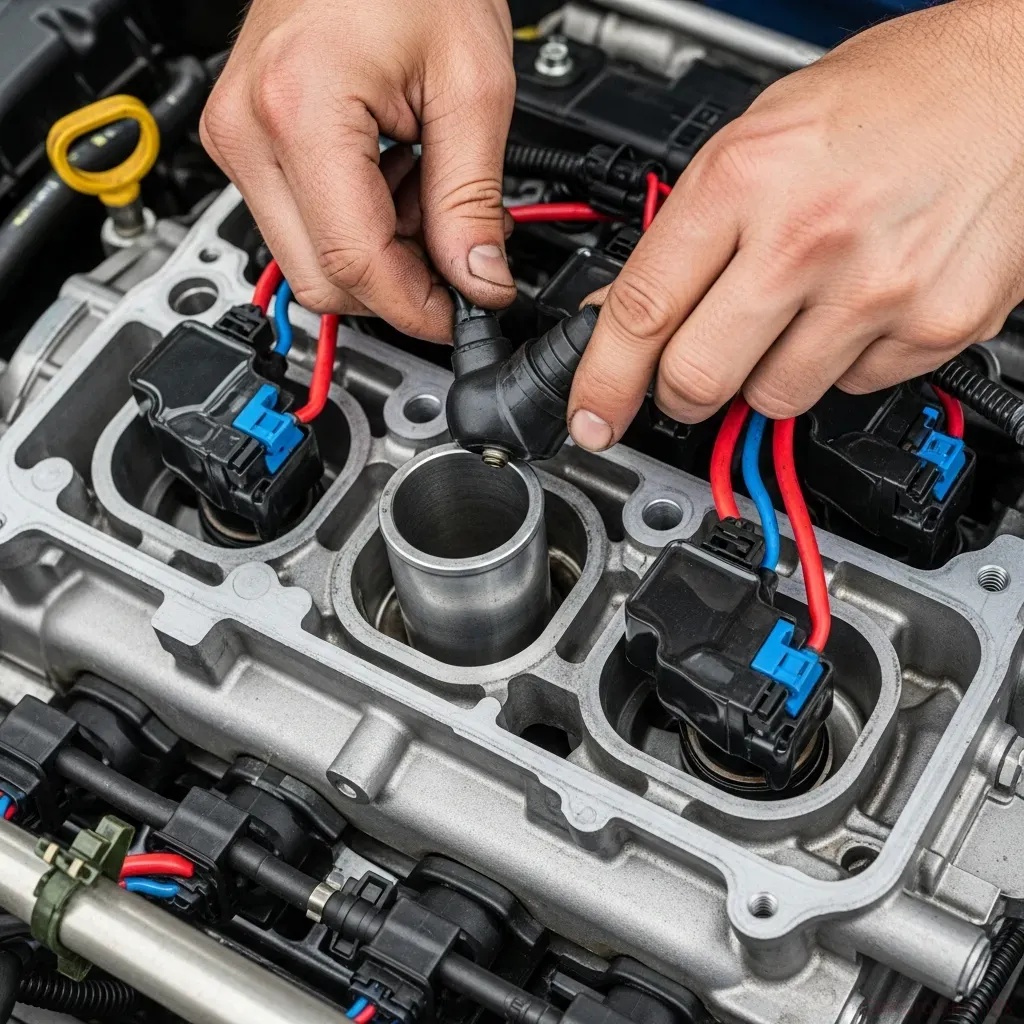
Your engine computer (ECM/PCM) constantly monitors crankshaft speed. When a cylinder fires weakly or not at all, the crankshaft slows down slightly in that moment. If the ECM sees too many of these irregularities across multiple cylinders, it sets P0300 – Random/Multiple Cylinder Misfire Detected.
Unlike codes like P0301 or P0302 (misfire on cylinder 1 or 2), P0300 means:
- More than one cylinder is misfiring, or
- The misfire pattern is inconsistent enough that the ECM can’t pin it to a single cylinder.
P0300 is a symptom code, not a root cause. It tells you misfires are happening, but not exactly why.
Is P0300 Safe to Drive With?
How urgent P0300 is depends on how the car feels and whether the check engine light is flashing.
Flashing vs Solid Check Engine Light
- Flashing MIL (check engine light): The ECM is warning you of an active, severe misfire that can quickly overheat and melt the catalytic converter. Reduce speed and load immediately and avoid driving until you diagnose the problem.
- Solid MIL: Misfires are present but not severe enough to trigger a flash. You can usually drive short distances, but you should still diagnose and repair soon to avoid long‑term damage.
Risks of Ignoring P0300
- Catalytic converter damage from unburned fuel overheating the cat.
- Poor fuel economy and loss of power.
- Hard starting and rough idle that can get worse over time.
- In extreme cases, internal engine damage (washed cylinder walls, fouled plugs, etc.).
If the light is flashing or the engine runs very rough, treat P0300 as urgent.
Common Symptoms of P0300
You might notice one or more of these symptoms along with the code:
- Rough idle – shaking or vibrating at stoplights.
- Stumbling or hesitation on acceleration.
- Loss of power, especially under load or going uphill.
- Popping from the exhaust or intake (mild backfire).
- Strong fuel smell from the exhaust.
- Poor fuel economy compared to normal.
- In severe cases, engine may feel like it’s going to stall or actually stall.
Most Common Causes of OBD2 Code P0300
Misfires always come down to one of three things: spark, fuel, or compression. With P0300, the problem usually affects multiple cylinders at once.
1. Ignition System Problems (Very Common)
- Worn or fouled spark plugs – old, oil‑fouled, or incorrectly gapped plugs.
- Failing ignition coils – especially on coil‑on‑plug systems; one weak coil can disturb overall running.
- Damaged plug wires (on older systems) – cracked, arcing, or high‑resistance wires.
- Moisture or oil in plug wells – from leaking valve cover gaskets.
2. Fuel Delivery Issues
- Weak fuel pump – low pressure under load causes lean misfires.
- Clogged fuel filter – restricts flow, especially at higher RPM.
- Dirty or partially clogged injectors – poor spray pattern or reduced flow.
- Bad fuel pressure regulator (on older return‑style systems).
3. Air and Vacuum Problems
- Vacuum leaks – cracked hoses, intake gasket leaks, PCV hose leaks causing a lean condition.
- Unmetered air entering after the MAF sensor.
- Dirty or failing MAF sensor – incorrect air flow readings.
- Stuck EGR valve (if equipped) – too much exhaust gas diluting mixture at the wrong time.
4. Engine Mechanical Problems
- Low compression on multiple cylinders – worn rings, valves, or head gasket issues.
- Timing chain/belt issues – jumped timing causing poor combustion.
- Camshaft or lifter problems – valves not opening/closing correctly.
5. Sensor and Control Issues
- Crankshaft or camshaft position sensor problems – incorrect timing reference.
- ECM/PCM software issues – rare, but sometimes fixed with a dealer reflash.
- Bad engine grounds or power supply to ignition/fuel systems.
Tools You’ll Need to Diagnose P0300
You don’t need a full shop to get started. These basic tools cover most DIY diagnosis:
- OBD2 scanner – ideally one that can read live data and freeze‑frame info.
- Basic hand tools – sockets, ratchet, screwdrivers, pliers.
- Digital multimeter – for checking voltage, resistance, and continuity.
- Fuel pressure gauge (optional but helpful) – to verify pump and regulator performance.
- Spray bottle with water or carb cleaner – for vacuum leak checks (use carefully).
- Compression tester (if you suspect mechanical issues).
Step‑by‑Step Diagnosis for OBD2 Code P0300

Work through these steps in order, starting with the easiest and cheapest checks.
1. Pull Codes and Freeze‑Frame Data
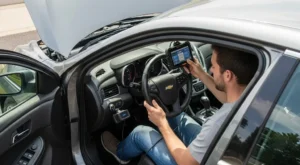
Connect your OBD2 scanner and read all stored and pending codes, not just P0300.
- Look for related codes like P0301–P0306 (cylinder‑specific misfires), P0171/P0174 (lean), P0101 (MAF), P0335 (crank sensor), etc.
- Check freeze‑frame data – RPM, load, coolant temp, fuel trims – at the moment P0300 set. This tells you if misfires happen at idle, cruise, or under load.
Example: If P0300 appears with P0171 (system too lean, bank 1), suspect vacuum leaks or fuel delivery.
2. Perform a Quick Visual Inspection
Open the hood and look for obvious problems:
- Loose or cracked vacuum hoses.
- Oil or coolant in spark plug wells.
- Broken or disconnected ignition coil connectors.
- Loose air intake duct between airbox and throttle body.
- Corroded or loose battery terminals and engine grounds.
Fix anything obvious, clear the code, and test drive to see if P0300 returns.
3. Check Spark Plugs and Ignition Components
Because ignition issues are so common, inspect these early:
- Remove a few spark plugs and inspect:
- Normal: light tan/gray deposits, clean electrodes.
- Fouled: black, sooty (rich), oily (oil burning), or white blistered (overheating/lean).
- If plugs are old or worn, replace the full set with the correct type and gap for your engine.
- On coil‑on‑plug systems, inspect coils for cracks, carbon tracking, or melted plastic.
- On older distributor systems, inspect cap, rotor, and plug wires for wear and arcing.
After replacing worn ignition parts, clear codes and road test.
4. Look at Fuel Trim and Misfire Data (Live Data)
With the engine warmed up and idling, use your scanner’s live data:
- Check short‑term (STFT) and long‑term (LTFT) fuel trims:
- Positive trims (e.g., +15% or higher) suggest the engine is running lean – think vacuum leaks or low fuel pressure.
- Negative trims (e.g., −15% or more) suggest a rich condition – leaking injectors, high fuel pressure, or sensor issues.
- Some scanners show misfire counters by cylinder. Even with P0300, you may see certain cylinders misfiring more often, pointing you toward a specific area.
5. Check for Vacuum Leaks
Vacuum leaks are a major cause of random misfires, especially at idle.
- Listen for a hissing sound around the intake manifold, throttle body, and vacuum hoses.
- Lightly spray carb cleaner or brake cleaner (or use propane) around suspected leak areas while the engine idles:
- If RPM suddenly rises, you’ve likely found a leak.
- Common leak points:
- PCV hoses and valves.
- Brake booster hose.
- Intake manifold gaskets.
- Cracked plastic vacuum tees and fittings.
Repair or replace leaking hoses or gaskets, then clear codes and retest.
6. Test Fuel Pressure and Delivery
If trims show lean under load, or the engine stumbles on acceleration, check fuel delivery:
- Connect a fuel pressure gauge to the rail (if your vehicle has a test port).
- Compare readings at idle and under light throttle to the factory spec.
- If pressure is low:
- Suspect a weak fuel pump, clogged filter, or restricted line.
- If pressure is high:
- Suspect a faulty regulator (on systems that use one).
Dirty injectors can also cause random misfires. A quality fuel system cleaner may help mild cases; severe clogging often requires professional cleaning or injector replacement.
7. Check Key Sensors (MAF, Crank, Cam)
When basic ignition and fuel checks don’t reveal the issue, look at sensors that affect timing and mixture:
- MAF sensor:
- Inspect for dirt or oil contamination.
- Clean gently with MAF cleaner (never touch the element).
- Watch MAF g/s readings at idle and under load; obviously low readings can indicate a problem.
- Crankshaft and camshaft position sensors:
- Intermittent failure can cause random misfires and stalling.
- Look for related codes (P0335, P0340, etc.).
8. Check Engine Mechanical Health (If Needed)
If you still haven’t found the cause and the engine has high mileage, check compression:
- Perform a compression test on all cylinders.
- All cylinders should be within about 10–15% of each other.
- Low compression on multiple cylinders points to worn rings, valves, or head gasket issues.
Mechanical problems are more complex and usually worth having a professional confirm before major repairs.
Common Fixes for OBD2 Code P0300
The right fix depends on what you find in diagnosis, but these are the most common repairs that resolve P0300:
Ignition System Repairs
- Replace spark plugs with the correct type and gap.
- Replace ignition coils on cylinders showing frequent misfires, or all coils if multiple are failing and the vehicle is high mileage.
- Replace plug wires, cap, and rotor on older distributor‑equipped vehicles.
- Fix oil leaks into plug wells by replacing valve cover gaskets.
Fuel and Air System Repairs
- Replace a clogged fuel filter (if serviceable on your vehicle).
- Replace a weak fuel pump or faulty pressure regulator.
- Clean or replace dirty fuel injectors.
- Repair vacuum leaks – new hoses, fittings, or intake gaskets.
- Clean or replace a faulty MAF sensor.
- Repair or replace a stuck EGR valve if it’s hanging open.
Sensor and Control Repairs
- Replace failing crankshaft or camshaft position sensors if testing or codes confirm issues.
- Update ECM/PCM software at a dealer if a known calibration issue exists for your vehicle.
- Repair corroded grounds or damaged wiring to ignition and fuel components.
Mechanical Repairs
- Timing belt or chain replacement if it has jumped a tooth or is badly stretched.
- Valve or head gasket repair if compression tests show serious mechanical problems.
Mechanical fixes are usually beyond basic DIY and may justify a professional shop, especially on modern engines with tight packaging.
After the Fix: Clearing P0300 and Confirming the Repair
Once you’ve made repairs:
- Use your scanner to clear all codes.
- Take a 15–20 minute mixed driving test (city and highway) to let the ECM run misfire monitors.
- Re‑scan for codes:
- If P0300 and related misfire codes do not return and the engine runs smoothly, your fix was successful.
- If P0300 returns, recheck your work and continue diagnosis, focusing on areas you haven’t tested yet.
When to DIY and When to See a Professional
You can confidently DIY many P0300 causes, especially:
- Replacing spark plugs, coils, and wires.
- Fixing simple vacuum leaks and intake duct issues.
- Cleaning MAF sensors and throttle bodies.
- Replacing fuel filters on vehicles where it’s easily accessible.
Consider a professional diagnosis if:
- The engine runs very rough or stalls and the check engine light is flashing.
- You suspect internal engine damage or low compression.
- You don’t have tools to safely test fuel pressure or access buried components.
- Multiple previous repairs haven’t resolved P0300.
Key Takeaways About OBD2 Code P0300
- P0300 means random or multiple cylinder misfires, not just one cylinder.
- It’s often caused by ignition problems, vacuum leaks, or fuel delivery issues.
- A flashing check engine light with P0300 is serious – avoid driving to protect your catalytic converter.
- Start with simple checks: plugs, coils, vacuum hoses, air intake, and basic sensor inspection.
- Use your OBD2 scanner’s live data and fuel trims to narrow down whether the engine is running lean, rich, or has a specific cylinder pattern.
Handled early, P0300 is usually fixable without major expense. Ignored, it can snowball into costly catalytic converter or engine repairs. A methodical approach and a few basic tools go a long way toward getting your engine smooth and reliable again.
How do you rate this guide?

Related Posts

Comments have been disabled.