
Beginner’s Guide to Car Vibrations: Common Causes, Simple Checks, and When to Worry
Feeling your car shake through the steering wheel, seat, or brake pedal can be unsettling. This beginner-friendly guide explains what different vibrations mean, simple checks you can do at home, and when it’s time to see a mechanic....


Feeling your car shake or buzz is more than just annoying. Vibrations are often your car’s way of telling you that something is worn, loose, bent, or failing. Ignoring them can turn a cheap fix into a major repair or even a safety issue.
- 1. How to Describe the Vibration: The First Step to a Good Diagnosis
- 2. Common Types of Car Vibrations and What They Usually Mean
- 2.1. 1. Vibration in the Steering Wheel While Driving
- 2.2. 2. Vibration Felt in the Seat or Floor
- 2.3. 3. Vibration Only While Braking
- 2.4. 4. Vibration at Idle or When Revving in Park
- 2.5. 5. Vibration Only While Accelerating or at Certain Gears
- 3. Simple Checks You Can Do at Home (No Special Tools)
- 3.1. 1. Quick Tire and Wheel Inspection
- 3.2. 2. Check Tire Pressure and Condition
- 3.3. 3. Simple Brake Check (No Wheel Removal)
- 3.4. 4. Feel for Engine vs. Road-Speed Vibration
- 4. Beginner-Friendly Diagnostic Checklist by Symptom
- 4.1. Checklist A: Vibration at Highway Speeds
- 4.2. Checklist B: Vibration While Braking
- 4.3. Checklist C: Vibration at Idle or in Gear While Stopped
- 5. When a Vibration Is an Emergency vs. Just Annoying
- 5.1. Red-Flag Vibration Symptoms (Stop Driving)
- 5.2. Annoying but Usually Not Immediate Emergencies
- 6. What a Mechanic Will Typically Check for Vibrations
- 7. How to Prevent Many Vibrations Before They Start
- 8. Summary and Next Steps
This beginner’s guide breaks down the most common types of car vibrations, what they usually mean, simple checks you can do yourself, and clear signs that you should stop driving and call a professional.
How to Describe the Vibration: The First Step to a Good Diagnosis
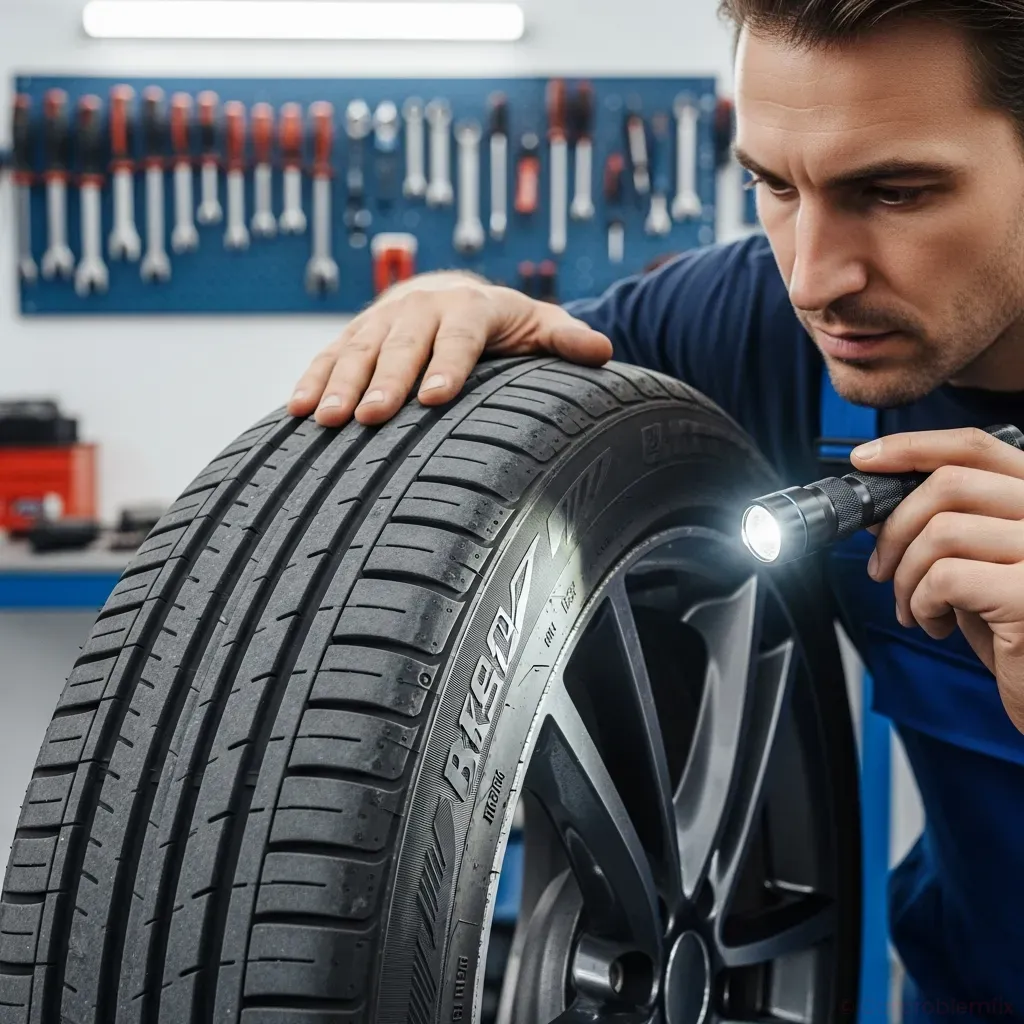
Before you can figure out what is wrong, you need to pay attention to how and when the car vibrates. These details are exactly what a good mechanic will ask you, and they also help you narrow down the likely causes.
- Where do you feel it? Steering wheel, seat, floor, or brake pedal?
- When does it happen? At idle, low speeds, highway speeds, while braking, or only while accelerating?
- Does it change with engine speed or road speed? Higher RPMs vs. higher MPH.
- Is it constant or pulsing? A steady buzz vs. a rhythmic shake that comes and goes.
Write down your answers or record a short video while describing what you feel. This “symptom log” makes troubleshooting much easier, especially if you end up visiting a shop.
Common Types of Car Vibrations and What They Usually Mean
Most vibrations fall into a few common patterns. Matching your symptoms to these patterns is the fastest way to get pointed in the right direction.
1. Vibration in the Steering Wheel While Driving
If the steering wheel shakes or wiggles as you drive, especially at certain speeds, the problem is usually in the front wheels or steering system.
- Likely causes: Wheel imbalance, bent wheel, uneven or cupped front tires, worn tie rod ends, worn ball joints, or warped front brake rotors (if it happens mainly while braking).
- Typical speed range: Often noticeable between 45–70 mph, but can occur at lower speeds if something is badly bent or loose.
If your vibration mainly appears at higher speeds, you may also want to read Car Vibrates Only at Highway Speeds: Causes, Diagnosis & Fixes for more focused guidance.
2. Vibration Felt in the Seat or Floor
When the seat or floor shakes more than the steering wheel, the issue is often in the rear of the car or the drivetrain.
- Likely causes: Rear wheel imbalance, worn rear suspension bushings, damaged driveshaft or CV axles, or a failing center support bearing on rear-wheel-drive vehicles.
- Clue: If the vibration gets worse as speed increases but does not change much with engine RPM, think wheels, tires, or driveline.
3. Vibration Only While Braking
A shake that appears mainly when you press the brake pedal and fades when you release it almost always points to the brake system.
- Likely causes: Warped brake rotors, uneven brake pad deposits on the rotors, or loose/worn suspension components that show up under braking load.
- Where you feel it: Steering wheel shake usually means front rotors; a pulsing brake pedal and seat shake can indicate rear rotors or drums.
4. Vibration at Idle or When Revving in Park
If the car shakes while standing still, especially in gear at a stoplight, the problem is usually engine- or transmission-related rather than wheels or tires.
- Likely causes: Worn or broken engine mounts, misfiring engine, dirty or failing spark plugs, vacuum leaks, or a rough-idling fuel system.
- Clue: If the vibration changes directly with engine RPM, think engine performance or mounts.
Engine-related vibrations can also show up as jerking or hesitation when you accelerate. If you feel that, see the detailed guide on Car Jerks When Accelerating – Causes, Diagnosis & Fixes.
5. Vibration Only While Accelerating or at Certain Gears
A shake that appears only when you are on the gas, and fades when you coast, often points to the drivetrain.
- Likely causes: Worn CV joints, inner CV axles, driveshaft issues, or transmission problems such as torque converter shudder or CVT shudder.
- Clue: If the vibration is tied to specific RPMs or gear ranges, the transmission or torque converter may be involved. For CVT-equipped cars, see CVT Transmission Shudder, Drone & Hesitation for more detail.
Simple Checks You Can Do at Home (No Special Tools)
You do not need to be a mechanic to catch many vibration causes early. These basic checks are safe for most beginners and can save you money by spotting obvious issues before they get worse.
1. Quick Tire and Wheel Inspection
- Park safely. Park on a level surface, engage the parking brake, and turn off the engine.
- Walk around the car. Look at each tire from the front and side. Check for low pressure, bulges, or obvious damage.
- Check tread wear. Uneven wear (more on one edge, cupping, or bald spots) can cause vibrations and usually means you need an alignment or suspension work.
- Look for bent wheels. Stand back and sight along the rim edge. Any obvious flat spots, cracks, or bends can cause shaking and are a safety risk.
- Spin test (if safe). If you have a jack and know how to use it safely, you can lift one wheel at a time and spin it by hand. Watch for wobble in the rim or tire.
If you are unsure how to safely jack up your car, skip the spin test and stick to visual checks. Unsafe lifting can cause serious injury.
2. Check Tire Pressure and Condition
- Use a tire pressure gauge. Compare each tire to the recommended pressure on the driver’s door jamb sticker, not the number on the tire sidewall.
- Adjust as needed. Over- or under-inflated tires can cause vibration, poor handling, and uneven wear.
- Look for age and cracks. Tires older than 6–10 years, even with good tread, can develop internal issues that cause vibration. Cracks in the sidewall are a warning sign.
Keeping tires in good shape is part of basic maintenance. For a broader routine, see the Beginner’s Guide to Basic Car Maintenance.
3. Simple Brake Check (No Wheel Removal)
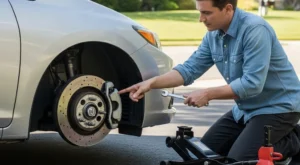
- Look through the wheel spokes. On many cars you can see the brake rotor and sometimes the pads.
- Check rotor surface. Deep grooves, heavy rust, or blue spots from overheating can all contribute to brake-related vibrations.
- Listen while braking. Grinding, scraping, or squealing noises along with vibration usually mean the pads and rotors need attention soon.
You will need a professional inspection if you suspect brake issues. Brakes are safety-critical and should not be guessed at.
4. Feel for Engine vs. Road-Speed Vibration
- Test at idle in Park. With the engine running and the car in Park (or Neutral with the parking brake on), note any shaking.
- Gently rev the engine. Increase RPM slightly while parked. If the vibration changes with RPM, the issue is likely engine-related.
- Compare to driving. If the vibration only appears at certain road speeds (e.g., 60 mph) and not at similar RPM while parked, wheels/tires or driveline are more likely.
This simple comparison helps you decide whether to focus on engine performance or the rolling parts of the car.
Beginner-Friendly Diagnostic Checklist by Symptom
Use this structured checklist to narrow down what might be wrong based on when and where you feel the vibration.
Checklist A: Vibration at Highway Speeds
- Step 1 – Confirm the speed range. Note the approximate speed where the vibration starts and whether it gets worse or better above that.
- Step 2 – Note where you feel it. Steering wheel only (front wheels/suspension), seat/floor (rear wheels or driveline), or both.
- Step 3 – Inspect tires and wheels. Look for uneven wear, bulges, missing wheel weights, or bent rims.
- Step 4 – Check tire pressure. Correct any low or high pressures and re-test.
- Step 5 – Consider recent work. Did the vibration start after a tire rotation, wheel repair, or hitting a pothole? That often points to wheel balance or damage.
If the vibration persists after checking pressure and visible issues, a professional wheel balance and alignment is usually the next step.
Checklist B: Vibration While Braking
- Step 1 – Identify the speed. Does it happen only at higher speeds (e.g., above 40 mph) or at all speeds?
- Step 2 – Note where you feel it. Steering wheel shake suggests front brakes; a pulsing pedal and seat shake can indicate rear brakes.
- Step 3 – Check rotor appearance. Look through the wheels for heavily grooved, rusted, or discolored rotors.
- Step 4 – Listen for noises. Grinding or scraping plus vibration usually means worn pads and damaged rotors.
- Step 5 – Decide on urgency. Strong pulling to one side, long stopping distances, or severe shaking under braking mean you should schedule brake service immediately.
Brake-related vibrations are safety-critical. If in doubt, have the car towed rather than driving it with severe brake shake.
Checklist C: Vibration at Idle or in Gear While Stopped
- Step 1 – Compare Park vs. Drive. If the vibration is much worse in Drive (with your foot on the brake) than in Park, worn engine or transmission mounts are likely.
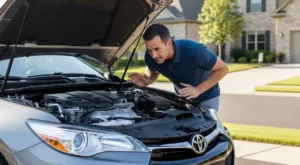
- Step 2 – Watch the engine. With the hood open and someone else shifting between Park and Drive (foot firmly on brake), watch the engine. Excessive rocking or movement suggests bad mounts.
- Step 3 – Listen for misfires. A choppy exhaust note or “puttering” sound along with shaking can indicate misfires, bad spark plugs, or ignition issues.
- Step 4 – Check for warning lights. A flashing or steady check engine light plus vibration usually means an engine performance problem that needs diagnosis.
- Step 5 – Note smells. Strong fuel smells or burning odors along with vibration are red flags to stop driving and get the car checked.
Engine misfires can quickly damage the catalytic converter if ignored. If the check engine light is flashing, reduce speed and seek professional help as soon as possible.
When a Vibration Is an Emergency vs. Just Annoying
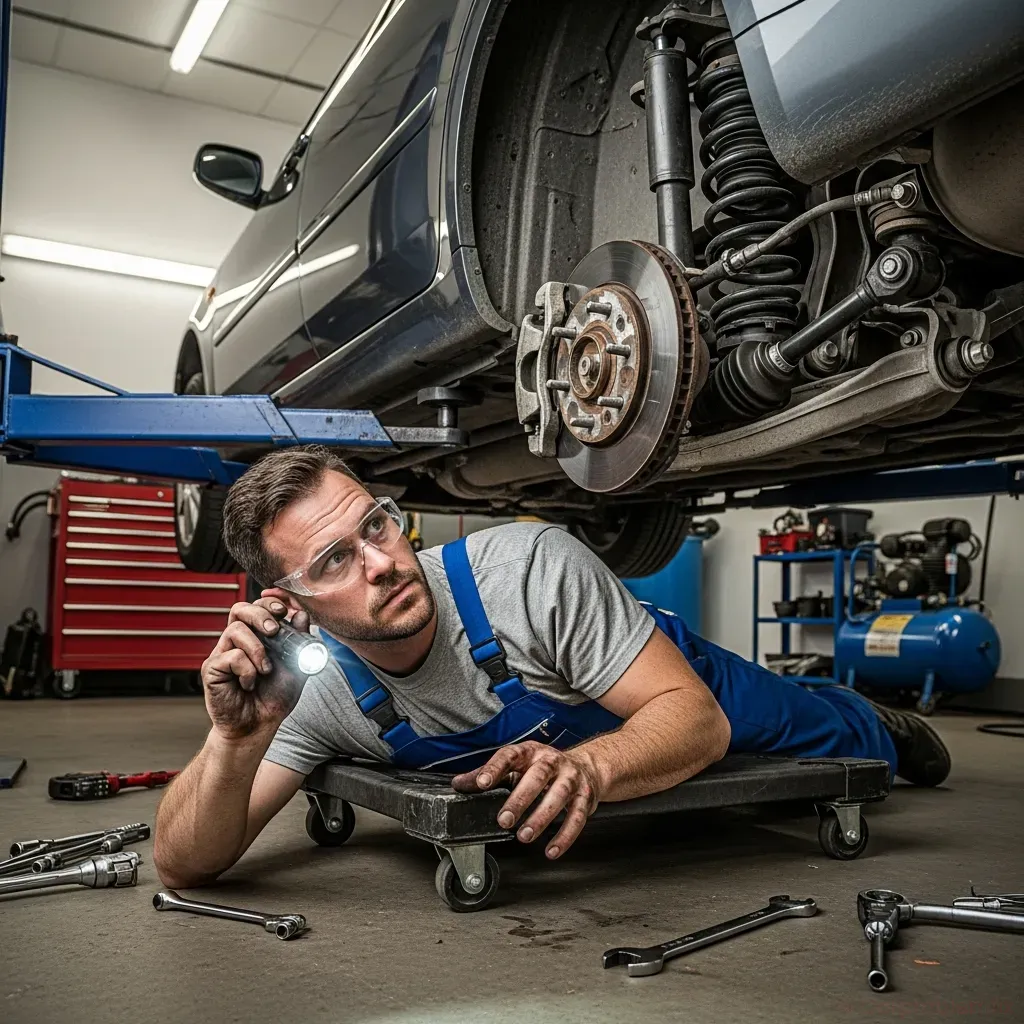
Not every vibration means your car is about to fall apart, but some should never be ignored. Use these guidelines to judge how urgent your situation is.
Red-Flag Vibration Symptoms (Stop Driving)
- Sudden, violent shaking that appears out of nowhere, especially after hitting something in the road.
- Vibration plus strong pull to one side when driving or braking, which can indicate a tire or brake problem that may cause loss of control.
- Vibration with loud clunking or banging from underneath the car, suggesting a failing driveshaft, CV joint, or suspension component.
- Vibration with burning smell or smoke, which could indicate dragging brakes, fluid leaks, or overheating components.
- Vibration with flashing check engine light, a sign of severe engine misfire that can damage the catalytic converter.
If you experience any of these, slow down carefully, pull over in a safe place, and consider having the car towed. Do not continue highway driving hoping it will “go away.”
Annoying but Usually Not Immediate Emergencies
- Steady steering wheel shimmy at certain speeds that has been present for a while but is not rapidly worsening.
- Mild seat vibration at highway speeds with no noises or smells.
- Light brake pedal pulsing at higher speeds with otherwise normal braking performance.
These issues still need attention, but you usually have time to schedule an appointment rather than calling a tow truck the same day. However, if anything changes quickly or gets much worse, treat it as urgent.
What a Mechanic Will Typically Check for Vibrations
Understanding what a shop will do can help you communicate clearly and avoid unnecessary work. A good technician will usually follow a structured process.
- Road test. They will drive the car to feel the vibration themselves and confirm your description.
- Visual inspection. Checking tires, wheels, suspension, brakes, and driveline components for obvious wear or damage.
- Wheel balance and alignment check. Using a balancing machine to correct wheel imbalance and an alignment rack to measure suspension angles.
- Brake measurement. Measuring rotor thickness and runout (wobble) to see if they are warped or uneven.
- Engine and transmission diagnosis. If the vibration is engine-related, they may scan for codes, check misfire data, and inspect mounts.
For cost estimates on common vibration-related repairs like wheel balancing, brake rotor replacement, or suspension work, sites like RepairPal’s repair cost guides can give you a ballpark range before you visit a shop.
How to Prevent Many Vibrations Before They Start
Most vibration problems develop slowly over time. A few simple habits can greatly reduce your chances of dealing with annoying shakes and rattles.
- Rotate and balance tires regularly. Follow your owner’s manual, often every 5,000–7,500 miles, or at each oil change.
- Avoid potholes and curbs. Hard impacts bend wheels, knock alignment out, and damage suspension parts.
- Keep up with basic maintenance. Regular inspections of tires, brakes, and suspension help catch issues early. The Beginner’s Guide to Basic Car Maintenance is a good starting point.
- Address warning lights promptly. Engine-related vibrations often come with check engine lights. Fixing misfires early prevents bigger problems.
- Use quality fluids and parts. Following your manufacturer’s recommendations and using reputable fluids (see resources from major oil manufacturers like Castrol) helps keep the engine and transmission running smoothly.
Summary and Next Steps
Car vibrations are your vehicle’s way of telling you that something is out of balance, worn, or failing. By paying attention to when and where you feel the shake, and doing a few simple checks at home, you can often narrow down whether the issue is with tires, brakes, suspension, the drivetrain, or the engine.
Use the checklists in this guide to document your symptoms before calling a shop, and treat red-flag vibrations as urgent safety issues. If you are ever unsure, or if the vibration is severe, sudden, or accompanied by noises, smells, or warning lights, stop driving and have the car inspected by a qualified mechanic.
Staying on top of basic maintenance, driving carefully, and addressing small shakes early will keep your car smoother, safer, and cheaper to own in the long run.
How do you rate this guide?

Related Posts
Comments have been disabled.
