
Beginner’s Guide to Weak Car AC: Poor Airflow, Warm Vents, and Simple Checks You Can Do First
If your car’s AC feels weak, barely blows, or only gets cool while driving, you can often narrow down the cause with a few simple, beginner-friendly checks before visiting a shop....


When your car’s AC feels weak on a hot day, it can be hard to tell whether you have a small issue you can live with or a problem that could damage the system if you ignore it. Weak AC can mean poor airflow, air that is only slightly cool, or vents that go warm when you stop at a light.
- 1. Common Symptoms of Weak Car AC
- 2. Safety Basics Before You Start
- 3. Checklist 1: Weak or Uneven Airflow From the Vents
- 3.1. Step 1: Check Fan Speeds and Vent Modes
- 3.2. Step 2: Inspect and Replace the Cabin Air Filter
- 3.3. Step 3: Look for Blocked Intake or Vents
- 3.4. Step 4: Listen for Blower Motor Problems
- 4. Checklist 2: AC Air Is Cool, But Not Cold
- 4.1. Step 1: Compare Temperatures at Different Settings
- 4.2. Step 2: Check the Condenser for Blockage or Damage
- 4.3. Step 3: Confirm the Cooling Fans Are Working
- 4.4. Step 4: Look for Obvious Refrigerant Leak Clues (Without Opening the System)
- 5. Checklist 3: AC Cold While Driving, Warm at Idle
- 5.1. Step 1: Compare Performance at Idle vs. 1,500–2,000 RPM
- 5.2. Step 2: Check Engine Temperature and Related Issues
- 6. Checklist 4: One Side Cold, One Side Warm
- 6.1. Step 1: Reset Climate Settings
- 6.2. Step 2: Listen for Clicking or Tapping in the Dash
- 7. Simple Things You Can Safely Try (and What to Avoid)
- 8. Summary and Next Steps
This beginner-friendly guide walks you through simple checks you can do yourself to understand what is going wrong, what you can safely try at home, and when it is time to see a professional AC technician.
Common Symptoms of Weak Car AC

Before you start checking anything, pay attention to exactly how your AC is acting. Different symptoms often point to different causes.
- Poor airflow: Fan on high but very little air comes out of the vents.
- Air not cold enough: Air is cooler than outside but never gets truly cold.
- Cold while driving, warm at idle: AC feels OK on the highway but warms up at stoplights.
- Only one side cold: Driver side cool, passenger side warm (or the opposite).
- AC cycles on and off: You feel bursts of cold, then it goes warm again.
Write down what you notice, including outside temperature and whether the engine is idling or cruising. This will help you follow the right checklist below and explain the problem clearly if you visit a shop.
Safety Basics Before You Start
Most beginner checks are safe if you use common sense, but AC systems run at high pressure and can be dangerous if you open the wrong parts.
- Never loosen AC lines, fittings, or metal caps on the compressor or condenser.
- Do not poke sharp objects into vents or the evaporator (behind the cabin filter).
- Work with the engine off and key out when inspecting under the hood, unless a step specifically says to run the engine.
- Keep loose clothing, hair, and tools away from belts and fans. If you are not comfortable under the hood, stop and get help.
If you suspect an electrical issue beyond simple fuses or relays, it may be worth reviewing a broader guide like Beginner’s Guide to Car Electrical Problems before you dig deeper.
Checklist 1: Weak or Uneven Airflow From the Vents
If your main complaint is that the fan is on high but not much air comes out, focus on airflow problems first. These are often cheaper and easier to fix than low refrigerant issues.
Step 1: Check Fan Speeds and Vent Modes
- Turn the engine on and set the AC to Max or LO.
- Cycle the fan speed from low to high. You should clearly hear the blower getting louder.
- Switch between face vents, floor, and defrost modes.
What it means:
- If fan speeds do not change, the blower motor or its resistor/control module may be failing.
- If air only comes from one mode (like defrost) no matter what you select, a blend/vent door actuator or control panel issue is likely.
Door actuator and control problems can be tricky. If you also notice strange clicking behind the dash when changing modes, plan on a shop visit.
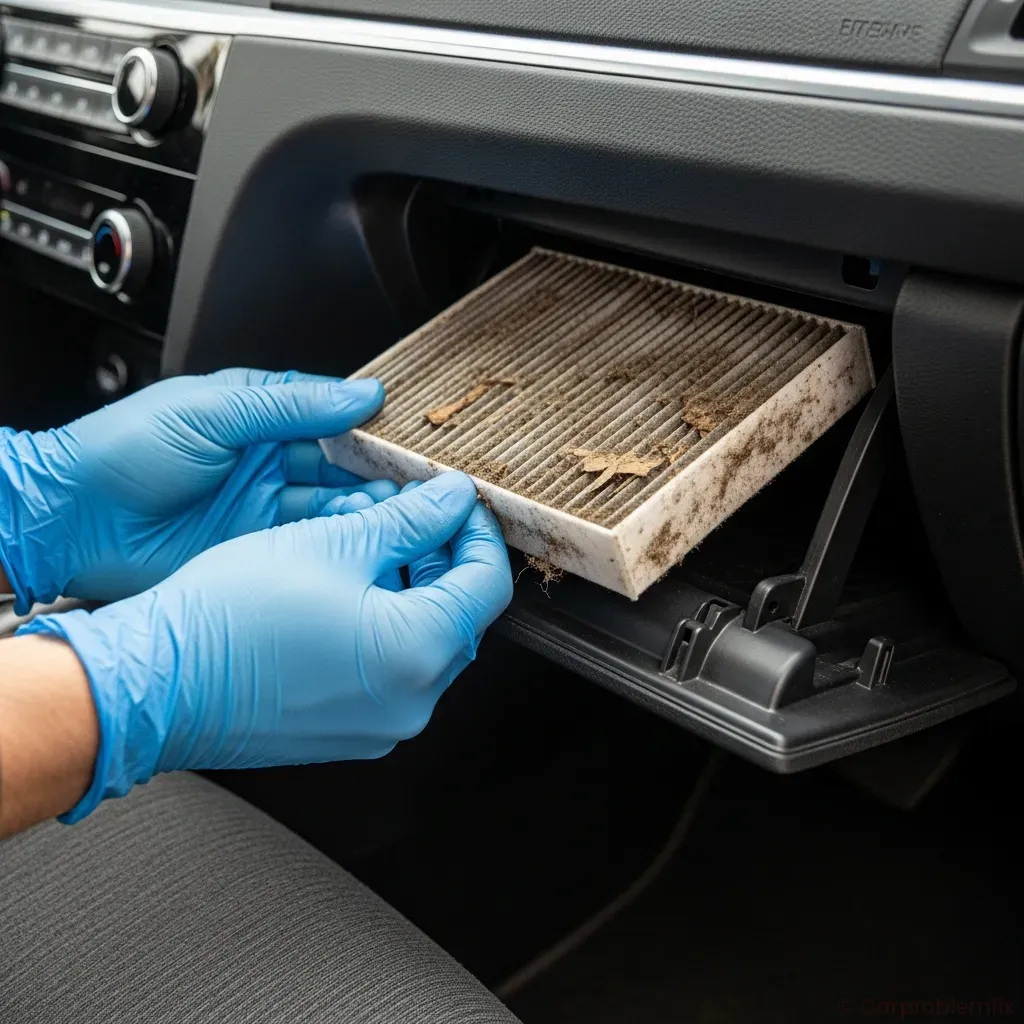
Step 2: Inspect and Replace the Cabin Air Filter
A clogged cabin air filter is one of the most common and overlooked causes of weak airflow.
- Locate your cabin air filter (often behind the glove box or under the cowl at the base of the windshield; your owner’s manual will show the location).
- Remove the cover carefully and slide the filter out.
- Check for leaves, dust, and debris. If the filter looks dark, packed with dirt, or smells musty, replace it.
- Install the new filter with the airflow arrow pointing in the correct direction.
If airflow improves noticeably after replacing the filter, you likely found your main problem. If not, continue with the next checks.
Step 3: Look for Blocked Intake or Vents
- Check the cowl area (where the wipers sit) for leaves, pine needles, or covers blocking the fresh air intake.
- Inside the car, make sure floor mats, bags, or seat covers are not blocking any vents.
- Switch between recirculation and fresh air modes. If airflow changes dramatically, the recirculation door may be sticking.
Minor debris can be vacuumed out, but if you suspect a stuck door or broken linkage, you will likely need a technician, as many of these parts are buried deep in the dash.
Step 4: Listen for Blower Motor Problems
- With the engine running and AC on, set the fan to maximum.
- Listen near the passenger footwell for whining, squealing, or rattling.
- Tap gently on the plastic blower housing with your hand.
If the blower speed changes when you tap the housing or if it makes grinding noises, the blower motor may be worn out. This is often a straightforward replacement on many vehicles, but if access is tight or you are not comfortable removing panels, a shop can handle it.
Checklist 2: AC Air Is Cool, But Not Cold
If you get some cool air but it never feels truly cold, you may have a refrigerant, condenser, or control issue. These checks help you narrow it down without opening the AC system.
Step 1: Compare Temperatures at Different Settings
- Park in the shade if possible. Start the engine and let it idle.
- Set AC to Max/LO, recirculation on, and fan on medium-high.
- After 3–5 minutes, place your hand near the center vents and note how cool the air feels.
- Switch between fresh air and recirculation.
What it means:
- If air is significantly colder on recirculation, that is normal, but if fresh air is barely cooler than outside, the system may be weak.
- If temperature swings from cool to warm and back, the compressor may be cycling due to low refrigerant or a sensor issue.
Step 2: Check the Condenser for Blockage or Damage
- Turn the engine off and let hot parts cool.
- Open the hood and locate the condenser (the thin radiator-like unit in front of the engine radiator).
- Look for leaves, plastic bags, or bugs blocking the fins.
- Check for bent fins or obvious damage from rocks or accidents.
If the condenser is dirty, you can gently rinse it from the engine side out with low-pressure water. Do not use a pressure washer; it can bend the fins and make things worse. If it is heavily damaged or leaking oil, a professional repair is required.
Step 3: Confirm the Cooling Fans Are Working
- Start the engine and turn the AC on to Max.
- With the hood open, look at the radiator/condenser fans behind the radiator.
- Within a minute or two, at least one fan should turn on when the AC is running.
What it means:
- If the fans do not run with the AC on, the condenser cannot get rid of heat, and the AC will feel weak, especially at idle.
- This could be due to a bad fan motor, relay, fuse, or wiring. The diagnostic steps are similar to other fan and electrical issues discussed in the Dashboard Warning Lights Explained for Beginners guide if a temperature or fan warning light is also on.
Fan diagnosis can involve live electrical testing, which is beyond what many beginners are comfortable with. If you are unsure, have a shop check fan operation.
Step 4: Look for Obvious Refrigerant Leak Clues (Without Opening the System)
You should not open AC lines or attach gauges unless you are trained and have proper equipment, but you can still look for signs of trouble.
- With the engine off, inspect AC hoses, the condenser, and fittings for oily residue. AC oil often leaks out with refrigerant.
- Check for green or yellow dye around fittings if your system was previously serviced with UV dye.
- Note any hissing sounds that continue for more than a few seconds after shutting the engine off.
If you see oily spots or dye, there is likely a leak. DIY top-off cans might make it cold for a short time but often lead to overfilling or contamination. For leak repair and proper charging, a professional AC shop is the safest choice.
Checklist 3: AC Cold While Driving, Warm at Idle

A very common complaint is that the AC feels fine on the highway but turns warm at stoplights or in traffic. This pattern usually points to airflow over the condenser, compressor performance, or fan issues.
Step 1: Compare Performance at Idle vs. 1,500–2,000 RPM
- Park safely with the engine running and AC on Max.
- Let the car idle for 3–5 minutes and feel the vent temperature.
- Now hold the engine at about 1,500–2,000 RPM (in Park or Neutral) for 30–60 seconds and feel the vents again.
What it means:
- If the air gets much colder at higher RPM, the compressor may be weak at idle, or the condenser is not getting enough airflow.
- Combine this with the fan check from earlier. If fans do not run at idle, but the car cools at speed, poor condenser airflow is very likely.
Step 2: Check Engine Temperature and Related Issues
An overheating or borderline-hot engine can also weaken AC performance, because the condenser sits in front of the radiator and both share airflow.
- Watch your temperature gauge while idling with the AC on.
- If the gauge climbs higher than normal or a warning light appears, shut the AC off and address the cooling system problem first.
Cooling system issues can also cause other symptoms like fan noise or steering changes if the serpentine belt is slipping. If you hear squeals or see belt wear, review a guide like DIY Serpentine Belt Replacement and Inspection and have the belt and pulleys checked.
Checklist 4: One Side Cold, One Side Warm
Dual-zone climate control can give you different temperatures on each side of the cabin, but if one side is stuck warm, something is wrong.
Step 1: Reset Climate Settings
- Set both driver and passenger temperatures to the lowest setting.
- Turn sync or dual mode off and on (if equipped) to see if the temperatures match.
- Switch between Auto and manual fan modes.
If one side stays warm no matter what you do, the issue is usually a blend door actuator or a stuck door inside the HVAC box.
Step 2: Listen for Clicking or Tapping in the Dash
- With the engine on, change the temperature setting from cold to hot and back again.
- Listen for rapid clicking or tapping sounds behind the dash on the side that is not cooling.
Those sounds often mean a plastic gear inside a blend door actuator has stripped. While some actuators are accessible under the dash and can be replaced by patient DIYers, many require partial dash disassembly. If access looks tight or you are not comfortable removing interior panels, plan on a professional repair.
Simple Things You Can Safely Try (and What to Avoid)
There are a few low-risk actions you can take to get the most out of a marginal AC system, even if you are not ready for a full repair.
- Use recirculation mode in hot weather so the system cools cabin air instead of hot outside air.
- Start with windows cracked for the first minute to vent hot air, then close them and turn on recirculation.
- Park in the shade or use a windshield sunshade to reduce cabin heat load.
- Keep the cabin filter fresh and the cowl area clear of debris.
What to avoid:
- Repeatedly adding DIY refrigerant top-off cans without knowing the correct charge amount. Overfilling can damage the compressor.
- Using sealant additives that claim to fix leaks. These can clog professional AC service equipment and make proper repairs more expensive.
- Bypassing fuses or relays with wire or foil. This can create fire risks and damage wiring.
If you suspect water leaks or electrical issues after heavy rain that coincide with AC problems, you may also want to review Car Won’t Start After Rain or Heavy Washing for related moisture and electrical concerns.
Summary and Next Steps
Weak car AC usually comes down to a few main areas: restricted airflow (cabin filter, blower, vents), poor heat rejection (fans, condenser), or refrigerant and control issues. With basic checks like inspecting the cabin filter, verifying fan operation, and observing how the system behaves at idle versus driving, most beginners can narrow the problem down before spending money at a shop.
If your checks reveal no fan operation, signs of refrigerant leaks, blend door failures, or overheating, it is wise to schedule a professional diagnosis. On the other hand, if you find a clogged filter or blocked condenser, you may be able to restore strong, cold airflow with simple cleaning and maintenance. Use this guide as a starting point, keep notes on what you observe, and bring that information with you if you decide to see a mechanic.
How do you rate this guide?

Related Posts


Comments have been disabled.