
2021 GMC Sierra 2500HD: Beginner’s Guide to the Tire Pressure Warning Light: What It Means, Quick Checks, and When It’s Safe to Drive
Learn what the tire pressure warning light really means, simple checks you can do in your driveway, and how to decide if it’s safe to keep driving or you should stop immediately....

This guide focuses on 2021 GMC Sierra 2500HD and uses that model/year for all checks and tips. The tire pressure warning light is one of the most common dashboard alerts, but also one of the most misunderstood. Many drivers ignore it for weeks, while others panic and pull over right away. The truth is somewhere in between, and knowing the difference can save your tires, fuel, and even prevent a blowout.
- 1. What the Tire Pressure Warning Light Really Means
- 2. Common Reasons the Tire Pressure Light Comes On
- 3. Is It Safe to Keep Driving With the Tire Pressure Light On?
- 4. Quick Checks You Can Do When the Tire Pressure Light Comes On
- 4.1. Step 1: Find a Safe Place to Stop
- 4.2. Step 2: Do a Visual and “Kick” Inspection
- 4.3. Step 3: Check Tire Pressure With a Gauge
- 4.4. Step 4: Add Air if Needed
- 5. When You Should Not Keep Driving
- 6. Why Tire Pressure Matters More Than Most People Think
- 7. What If the Tire Pressure Light Stays On After You Add Air?
- 8. Simple Tire Pressure Habits to Prevent Future Warnings
- 9. Summary and Next Steps
This guide walks you through what the tire pressure warning light means, quick checks you can do at home or at a gas station, and how to decide when it’s safe to keep driving and when you should stop immediately.
What the Tire Pressure Warning Light Really Means
The tire pressure warning light is part of your car’s Tire Pressure Monitoring System (TPMS). When it comes on, it means at least one tire is significantly below the pressure the vehicle manufacturer recommends.
Most systems trigger the light when pressure drops about 20–25% below the recommended value. That can happen from a slow leak, a puncture, or simply from cold weather shrinking the air inside your tires.
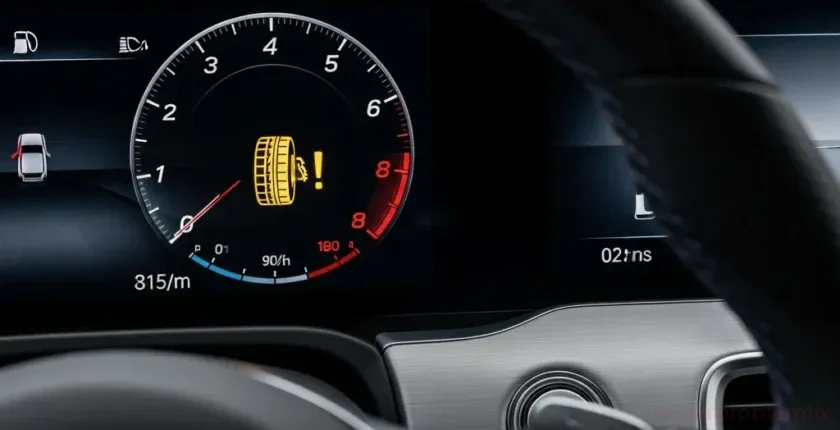
On most vehicles, the light looks like a cross-section of a tire with an exclamation mark in the middle. Some cars also show a message like “Low Tire Pressure” or display the actual pressure for each tire.
Common Reasons the Tire Pressure Light Comes On
Not every tire pressure warning means you have a nail in your tire. Understanding the most likely causes helps you react calmly and correctly.
- Normal air loss over time: Tires slowly lose air, even with no damage. A drop of 1–2 psi per month is common.
- Temperature changes: Cold weather can drop tire pressure quickly. A 10°F change can move pressure by about 1 psi.
- Slow puncture: A screw, nail, or sharp object can cause a slow leak that triggers the light after a day or two.
- Rapid leak or damage: Hitting a pothole, curb, or road debris can damage the tire or rim and cause fast air loss.
- Incorrectly set pressures: Tires filled too low (or sometimes too high) during service can cause the light to come on later.
- TPMS sensor issues: A dead sensor battery or faulty sensor can cause the light to flash and then stay on.
Your goal is to figure out which of these you’re dealing with and how urgent it is.
Is It Safe to Keep Driving With the Tire Pressure Light On?
Whether it’s safe to keep driving depends on how low the pressure is and how the car feels. Driving on underinflated tires increases heat, wears the tire edges faster, and can lead to a blowout at highway speeds.
Use this simple decision guide:
- Light just came on, car feels normal: Usually safe to drive a short distance at moderate speed to the nearest air pump or home to check pressures.
- Car pulls to one side, vibration, or obvious sagging tire: Treat it as urgent. Slow down, pull over in a safe place, and inspect the tires.
- Burning rubber smell, thumping noise, or strong wobble: Stop as soon as it’s safe. You may be close to a blowout or already driving on a damaged tire.
- Light flashes for 30–60 seconds at startup, then stays on: Often indicates a TPMS system or sensor fault rather than just low pressure. Still check your tire pressures manually.
When in doubt, slow down and inspect the tires. It’s far cheaper to deal with a tow or tire replacement than with body damage from a blowout.
Quick Checks You Can Do When the Tire Pressure Light Comes On
You don’t need special tools to do basic checks, but a simple tire pressure gauge makes the process much more accurate. Here’s a beginner-friendly checklist.
Step 1: Find a Safe Place to Stop
- Reduce speed gradually and avoid sudden steering or braking, especially if you suspect a rapidly deflating tire.
- Signal and move to the right lane or shoulder.
- Stop in a safe, flat area away from traffic if possible, such as a parking lot or wide shoulder.
Safety comes first. If you’re on a busy highway and the car still feels stable, it’s often safer to exit at the next ramp than to stop on a narrow shoulder.
Step 2: Do a Visual and “Kick” Inspection
- Walk around the car and look at all four tires (and the spare if it’s mounted outside).
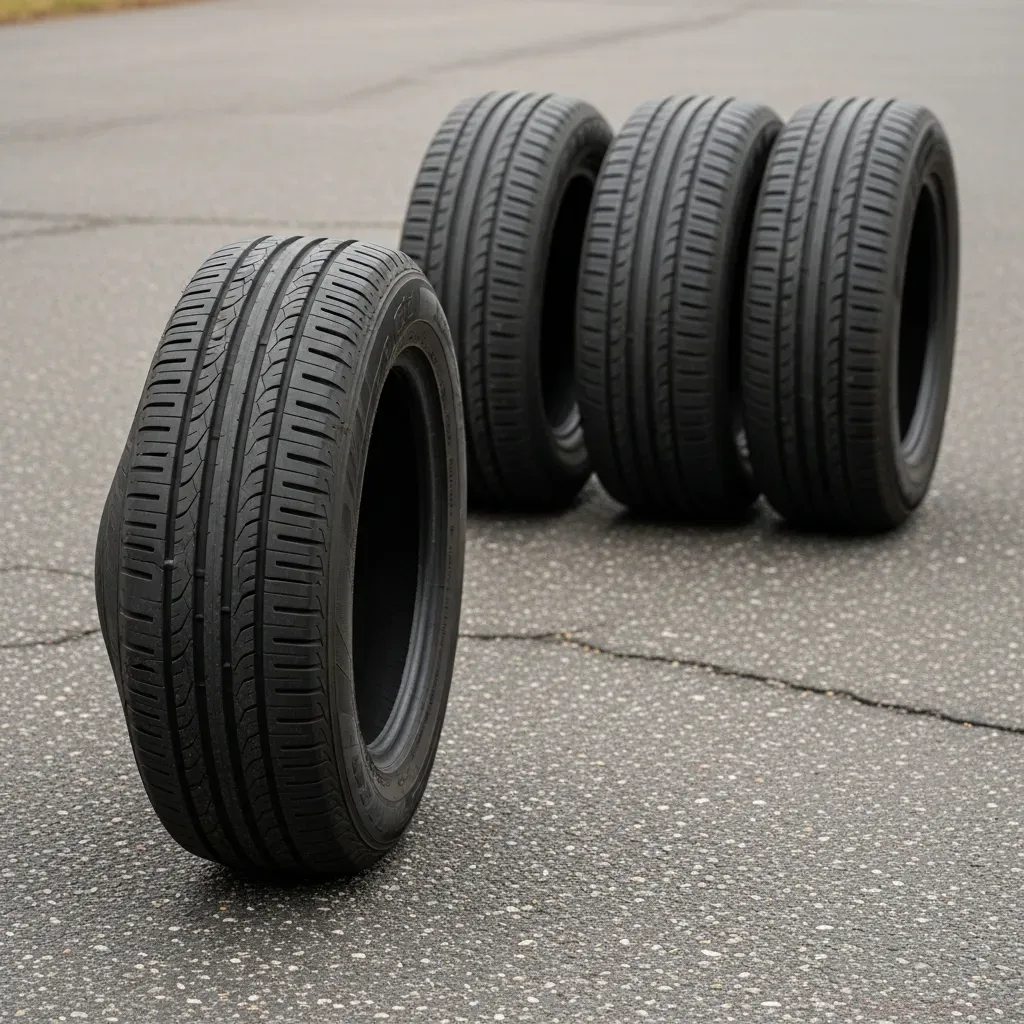
- Compare how much each tire is squishing at the bottom. A very low tire will look flatter or more “bulged” where it touches the ground.
- Give each tire a firm kick with your foot. A nearly flat tire will feel soft and may visibly flex more than the others.
- Look for obvious damage: nails or screws in the tread, cuts, sidewall bubbles, or a tire that’s partially off the rim.
If one tire looks clearly lower than the others, that’s your likely problem. If they all look similar, you still need to measure pressure to be sure.
Step 3: Check Tire Pressure With a Gauge
If you have a tire pressure gauge, you can get an accurate reading in a few minutes.
- Find the correct pressure: Open the driver’s door and look for the sticker on the door jamb. It lists the recommended front and rear tire pressures (in psi or kPa). Don’t rely on the number printed on the tire sidewall; that’s a maximum rating, not the target.
- Remove the valve cap: Unscrew the small cap on each tire’s valve stem and keep it in your pocket so you don’t lose it.
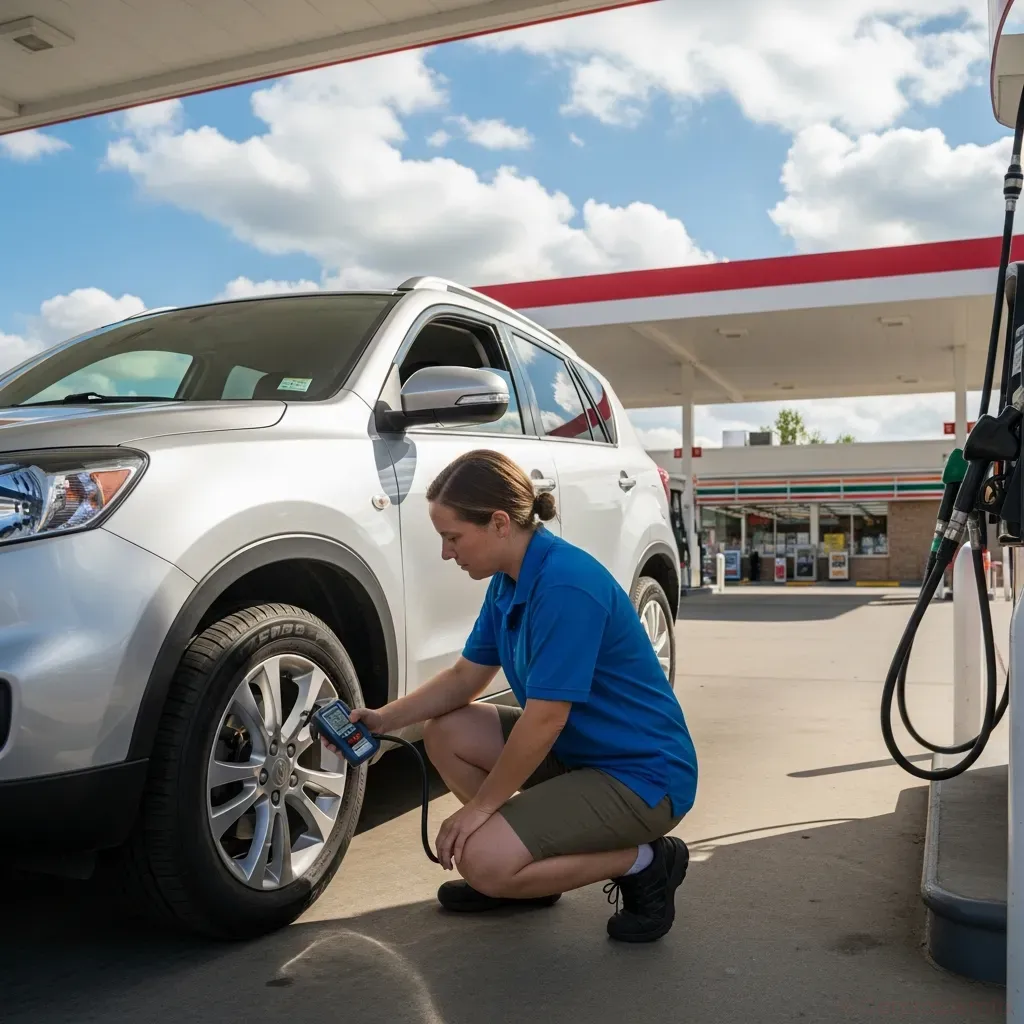
- Press the gauge straight on: Push the gauge onto the valve firmly until you hear only a brief hiss, then hold it steady. Read the pressure.
- Compare to the door sticker: If a tire is more than 3–4 psi below the recommended value, it’s considered low and can trigger the warning light.
Repeat for all four tires. Some cars also monitor the spare, so check it if it’s easily accessible.
Step 4: Add Air if Needed
Most gas stations have air pumps, sometimes combined with a vacuum. Many newer pumps let you set a target pressure and beep when each tire reaches it.
- Park so you can reach all four tires with the air hose.
- Set the pump to the recommended pressure (if it has that feature) or watch your own gauge.
- Add air in short bursts, then recheck with your gauge until you’re at the correct pressure.
- Replace all valve caps when you’re done.
After adjusting pressures, drive for a few minutes. On many cars, the tire pressure light will turn off automatically once all tires are back within range. Some models require a manual reset through a button or menu; your owner’s manual or an official resource like manufacturer owner support pages can show the exact procedure.
When You Should Not Keep Driving
There are situations where continuing to drive with the tire pressure warning light on can quickly damage the tire or put you at risk of a blowout.
- One tire is visibly flat or nearly flat: Do not keep driving on it. Even a short distance can destroy the tire and possibly the wheel.
- You see a sidewall bubble or deep cut: Sidewall damage is serious. The tire may fail suddenly, even if it still holds air.
- The car pulls strongly to one side: This can indicate a tire that’s much lower than the others or internal tire damage.
- You hear a rhythmic thumping or feel a strong vibration: This can mean the tire is deforming as it rolls, which is unsafe.
In these cases, your options are to install the spare tire (if you’re comfortable doing so), use a tire repair kit or inflator if the leak is small, or call roadside assistance or a tow truck. If your car won’t start after you stop to check the tires, guides like Car Won’t Start but Clicks: Beginner-Friendly Checks to Diagnose a No-Crank Problem can help you troubleshoot a separate issue.
Why Tire Pressure Matters More Than Most People Think
Ignoring the tire pressure warning light doesn’t just wear out your tires faster; it affects almost every part of how your car drives.
- Safety and braking distance: Underinflated tires flex more and have less precise contact with the road. That can increase stopping distance, especially in wet conditions.
- Fuel economy: Low pressure increases rolling resistance, meaning the engine has to work harder. Even a few psi low in all four tires can noticeably reduce mpg.
- Tire life and cost: Underinflated tires wear the outer edges faster, while overinflated tires wear the center. Either way, you’ll be buying new tires sooner.
- Handling and stability: Soft tires can make the car feel vague or “floaty” in corners and at highway speeds.
Keeping tires at the right pressure is one of the simplest, cheapest ways to improve safety and reduce running costs. It’s as important as basic checks you’d do when buying a used car, similar to the inspection advice in First-Time Used Car Buyer’s Guide: How to Avoid Lemons and Get Real Value.
What If the Tire Pressure Light Stays On After You Add Air?
Sometimes you’ll inflate all the tires to the correct pressure, but the warning light won’t go away. That doesn’t always mean you did something wrong.
- System needs time or a reset: Some TPMS systems only update while driving above a certain speed for several minutes. Others require a manual reset button or menu command after you adjust pressures.
- Slow leak still present: A small puncture can let air out slowly. The tire may look fine, but pressure drops again over a day or two and the light returns.
- Faulty TPMS sensor or dead battery: Sensors inside the wheel have small batteries that eventually fail. A flashing light at startup that then stays solid often points to this.
- Wrong tire size or wheels: If aftermarket wheels or tires were installed without compatible sensors, the system may not read correctly.
If you’ve confirmed pressures with a reliable gauge and the light still stays on, it’s worth having a shop read the TPMS codes with a scan tool. This is similar to how mechanics diagnose engine codes like OBD2 Code P0420: Catalyst System Efficiency Below Threshold or OBD2 Code P0300: Random/Multiple Cylinder Misfire.
Simple Tire Pressure Habits to Prevent Future Warnings
You can dramatically cut down on surprise tire pressure warnings with a few easy habits. None of these require advanced tools or skills.
- Check tire pressure once a month: Use a basic digital or pencil-style gauge. Do it when the tires are cold (car parked for a few hours and not in direct sun).
- Recheck after big temperature swings: If the weather suddenly gets much colder, expect the light to come on. Proactively check and adjust pressures.
- Inspect tires visually when you fuel up: A 10-second walk-around while the pump is running can catch slow leaks or damage early.
- Rotate tires on schedule: Follow your owner’s manual or ask your shop to rotate tires every 5,000–7,500 miles. This helps them wear evenly and gives the shop a chance to spot issues.
- Replace valve caps and damaged stems: Missing caps and cracked stems can let dirt and moisture in, leading to slow leaks or sensor issues.
These small steps take only a few minutes a month but can prevent flats, extend tire life, and reduce the chances of a warning light popping up at the worst time.
Summary and Next Steps
The tire pressure warning light is not something to ignore, but it also doesn’t always mean immediate danger. A calm, step-by-step approach—visual inspection, pressure check, and careful driving—will usually tell you whether it’s safe to continue or time to stop.
If you find a clearly low or damaged tire, treat it as urgent, especially at highway speeds. When the light keeps coming back or stays on despite correct pressures, have a shop check for leaks or TPMS sensor faults.
Make monthly pressure checks part of your routine, just like monitoring fuel and oil. It’s one of the easiest ways to stay safe, save money on tires and fuel, and avoid unexpected roadside problems.
How do you rate this guide?

Related Posts
Comments have been disabled.
