
Beginner’s Guide to Choosing the Right Engine Oil: Viscosity, Types, and Simple Change Intervals
Confused by 5W-30, synthetic vs conventional, and how often to change your oil? This beginner-friendly guide explains engine oil basics so you can choose confidently and avoid costly engine wear....


If engine oil feels confusing, you are not alone. Bottles covered in numbers, letters, and marketing claims make it hard to know what is actually right for your car. The good news: once you understand a few basics, choosing engine oil becomes simple and repeatable.
- 1. Why Engine Oil Choice Matters More Than You Think
- 2. Understanding Oil Viscosity: What 5W-30 Really Means
- 2.1. Breaking down the numbers
- 2.2. How to match viscosity to your car and climate
- 3. Oil Types: Conventional, Synthetic Blend, and Full Synthetic
- 3.1. Conventional oil
- 3.2. Synthetic blend
- 3.3. Full synthetic
- 4. How to Read the Label: API, ACEA, and Manufacturer Specs
- 5. Simple Engine Oil Change Intervals for Beginners
- 5.1. Start with your owner’s manual
- 5.2. Easy interval rules you can actually follow
- 6. Step-by-Step: How to Choose the Right Engine Oil for Your Car
- 7. Common Beginner Mistakes When Choosing Engine Oil
- 8. Do You Need a Special Oil Filter?
- 9. Summary and Next Steps
This guide breaks down viscosity numbers like 5W-30, the differences between conventional and synthetic oil, and easy change intervals you can follow without memorizing a service manual.
Why Engine Oil Choice Matters More Than You Think
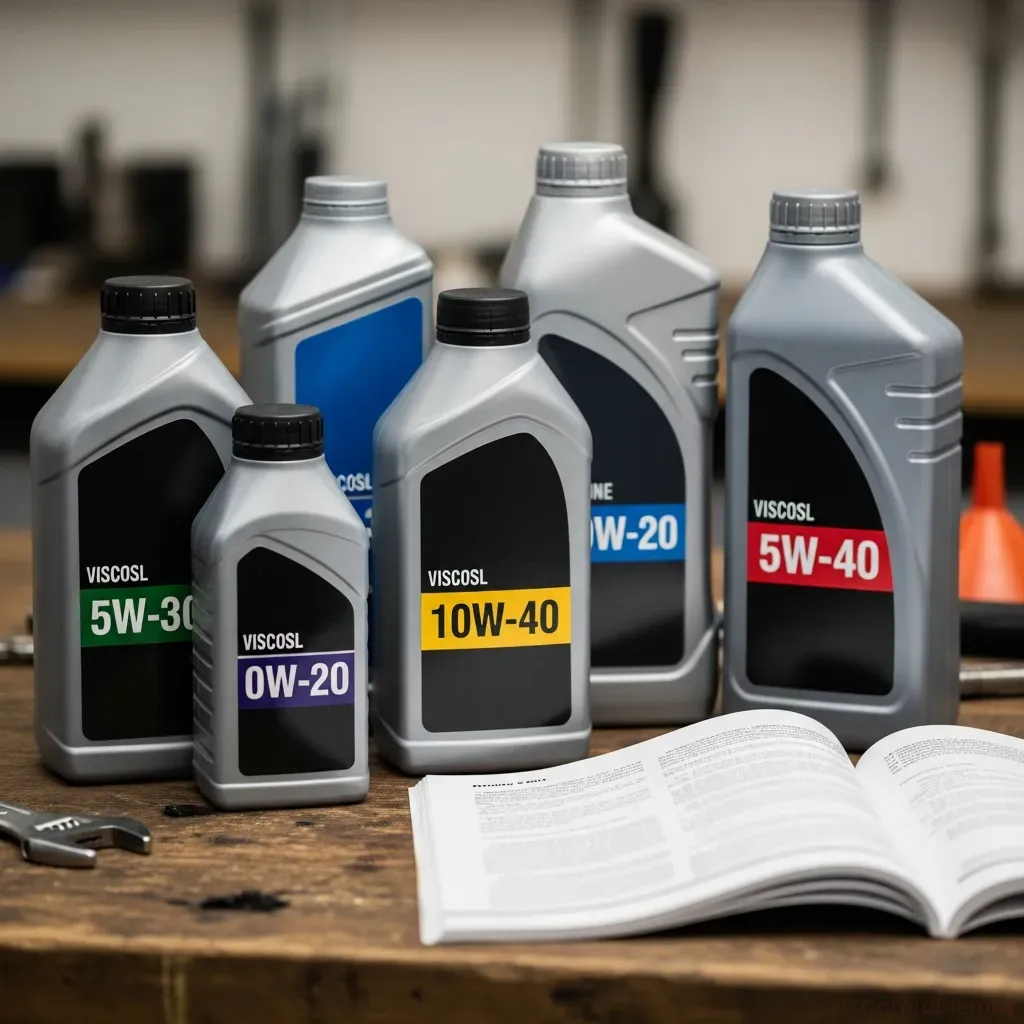

Engine oil does much more than just “lubricate.” It creates a thin film between metal parts, carries away heat, suspends dirt and combustion byproducts, and protects against rust and corrosion. Choosing the wrong oil can lead to increased wear, sludge buildup, and poor fuel economy.
Using the correct oil type and viscosity helps your engine:
- Start easily in cold weather
- Maintain stable oil pressure when hot
- Reduce internal friction and heat
- Stay cleaner for longer between changes
Over tens of thousands of miles, good oil choices can be the difference between a quiet, long-lasting engine and one that develops noisy lifters, oil consumption, or even bearing damage.
Understanding Oil Viscosity: What 5W-30 Really Means
Viscosity is simply how thick or thin the oil is at certain temperatures. The common rating you see on bottles, like 5W-30, is a multi-grade viscosity rating defined by the SAE (Society of Automotive Engineers).
Breaking down the numbers
Take 5W-30 as an example:
- “5W”: The first number with the W (for “winter”) describes how the oil flows at cold temperatures. A lower number (0W, 5W) means the oil is thinner when cold and flows more easily during cold starts.
- “30”: The second number describes the oil thickness at normal operating temperature. A higher number (30, 40, 50) means the oil stays thicker when hot, which can help maintain oil pressure and protect heavily loaded parts.
So a 0W-20 oil will be very thin when cold and still relatively thin when hot, while a 10W-40 oil will be thicker both at startup and at operating temperature.
How to match viscosity to your car and climate
Your first and most important reference is always your owner’s manual. It will list one or more recommended viscosities, often with a temperature chart. In most modern gasoline cars, you will see something like 0W-20, 5W-20, or 5W-30.
As a beginner, follow these simple rules:
- Start with the exact viscosity on the oil cap or in the owner’s manual. If it says 0W-20, use 0W-20 unless a trusted mechanic or manufacturer bulletin says otherwise.
- Consider your climate within the allowed range. If your manual allows both 5W-20 and 5W-30, you might choose:
- 5W-20 in colder regions for easier cold starts and slightly better fuel economy.
- 5W-30 in hotter regions or for frequent highway driving with heavy loads.
- Do not jump to much thicker oil without a reason. Using 10W-40 in an engine designed for 0W-20 can cause poor cold-start lubrication, reduced fuel economy, and may even trigger warning lights if oil pressure behaves unexpectedly.
If your car is older and has high mileage, some mechanics may suggest moving one step thicker within the manufacturer’s approved range. For example, if your manual allows 5W-30 and 10W-30, a high-mileage engine in a hot climate might benefit from 10W-30 to reduce oil consumption. Always confirm the allowed viscosities in your manual first.
Oil Types: Conventional, Synthetic Blend, and Full Synthetic
Once you know the correct viscosity, the next decision is oil type. You will usually see three main categories: conventional, synthetic blend, and full synthetic.
Conventional oil
Conventional oil is refined from crude petroleum with fewer advanced additives and less uniform molecules than synthetic oil. It is generally cheaper and works fine for many older engines that were designed around it.
However, conventional oil typically:
- Breaks down faster under high heat
- Is more prone to sludge in engines with long change intervals
- Does not flow as well in extreme cold compared with synthetic of the same grade
If you drive an older vehicle with short city trips and you change oil on time, conventional can still be acceptable, as long as it meets the specifications in your manual.
Synthetic blend
Synthetic blend combines conventional base oil with some synthetic components. It aims to offer better protection than conventional at a lower price than full synthetic.
Synthetic blends can be a good middle ground if:
- Your manual allows synthetic or conventional and you want improved protection on a budget.
- You tow occasionally or drive in hot conditions but do not want to pay for full synthetic.
Many high-mileage oils are synthetic blends with extra additives to help condition seals and reduce oil consumption in older engines.
Full synthetic
Full synthetic oil is engineered with highly uniform molecules and advanced additive packages. It resists breakdown at high temperatures, flows better in cold weather, and often keeps engines cleaner over time.
Benefits of full synthetic include:
- Better protection in extreme temperatures
- Improved resistance to sludge and deposits
- More stable viscosity over the entire oil change interval
Many modern engines are designed around synthetic oils from the factory. Some manufacturers even specify synthetic-only oils that meet strict standards. High-performance and turbocharged engines especially benefit from full synthetic oil because of the higher heat and stress they generate.
If you frequently drive in heavy traffic, tow, or encounter issues like engine overheating at low speeds or in traffic, full synthetic oil can add a margin of safety against heat-related breakdown.
How to Read the Label: API, ACEA, and Manufacturer Specs
Beyond viscosity and type, engine oil labels include approval symbols and specification codes. These show that the oil meets minimum performance standards set by industry groups and automakers.
As a beginner, focus on three things:
- API rating (for North America). Look for the API “donut” symbol on the back of the bottle. For modern gasoline engines, you will see ratings like API SP or SN Plus. Newer letters generally mean newer standards.
- ACEA rating (common in Europe). You may see codes like ACEA A3/B4 or C3. These relate to performance in areas like high-temperature stability and compatibility with emissions systems.
- Manufacturer approvals. Many bottles list specific approvals like “Meets GM dexos1” or “Approved for VW 504 00/507 00.” If your owner’s manual calls out a particular approval, make sure the bottle explicitly lists it.
Some performance and OEM-approved oils are tested extensively under controlled conditions. Companies like Schaeffler publish technical information about lubrication and engine components that rely on these standards to ensure long-term durability.
Simple Engine Oil Change Intervals for Beginners

How often you should change your oil depends on your driving style, environment, and the oil type. While every car is different, you can use some simple rules to get close to ideal intervals without overthinking it.
Start with your owner’s manual
Your manual will usually list two schedules:
- Normal service: Mostly highway driving, moderate climate, few cold starts.
- Severe service: Short trips, lots of idling, extreme temperatures, dusty conditions, or frequent towing.
Many drivers actually fall into the “severe” category because of short city trips and heavy traffic. If you rarely drive long enough to fully warm up the engine, contaminants build up faster in the oil.
Easy interval rules you can actually follow
If you do not want to memorize exact numbers, use these beginner-friendly guidelines (but never exceed the maximum interval listed in your manual):
- Conventional oil: Change every 3,000–5,000 miles (5,000–8,000 km) or 6 months, whichever comes first, especially if you do mostly city driving.
- Synthetic blend: Change every 5,000–7,500 miles (8,000–12,000 km) or 6–9 months.
- Full synthetic: Change every 7,500–10,000 miles (12,000–16,000 km) or 12 months, as long as your manual allows these longer intervals.
If you drive mostly short trips (under 10–15 minutes), lean toward the shorter end of these ranges. If you do mostly highway miles and your engine is healthy, you can use the longer end, especially with full synthetic oil.
Pay attention to how your engine behaves between changes. If you notice new vibrations, rough idle, or hesitation, it may be worth reading guides like Car Vibrates at Idle but Smooths Out While Driving to rule out other issues that can be aggravated by neglected maintenance.
Step-by-Step: How to Choose the Right Engine Oil for Your Car
Use this simple process every time you buy oil, whether you are doing your own change or supplying oil to a shop.
- Check your owner’s manual and oil cap.
- Find the recommended viscosity (for example, 0W-20 or 5W-30).
- Look for any specific approvals (such as dexos, VW, BMW, or Mercedes codes).
- Decide on oil type based on your car and driving.
- Newer car, turbocharged engine, or long intervals: choose full synthetic.
- Older car with moderate mileage and mixed driving: synthetic blend is a safe middle ground.
- Very old car with short intervals and low annual mileage: conventional can still be acceptable if allowed by the manufacturer.
- Consider your climate and usage.
- Very cold winters: prefer 0W or 5W oils for easier cold starts.
- Very hot summers, towing, or mountain driving: use the higher hot-number viscosity allowed by your manual (for example, 5W-30 instead of 5W-20 if both are listed).
- Verify the certifications on the bottle.
- Confirm the API or ACEA rating meets or exceeds what your manual specifies.
- Check that any required manufacturer approvals are printed on the label.
- Plan your change interval.
- Choose a mileage and time interval that is easy to remember and fits your driving pattern.
- Write the next due mileage and date on a small label under the hood or in your phone.
Following these five steps will keep you within the safe zone for almost any modern vehicle, without needing to be an oil expert.
Common Beginner Mistakes When Choosing Engine Oil
Knowing what not to do can save you from expensive problems later. Here are the most common mistakes beginners make with engine oil.
- Ignoring the owner’s manual. Guessing or copying what a friend uses can lead to using oil that is too thick, too thin, or missing key approvals for your engine.
- Mixing random oils repeatedly. Topping off with a different viscosity or type in an emergency is usually fine, but constantly mixing random oils can dilute additive packages and make performance unpredictable.
- Chasing the thickest oil to “fix” noises. Using 20W-50 in an engine designed for 0W-20 might quiet some noises temporarily but can starve tight-clearance parts of lubrication at cold start.
- Extending intervals too far “because it’s synthetic.” Even the best synthetic oil cannot protect indefinitely. Combustion byproducts, moisture, and fuel dilution still build up over time.
- Ignoring leaks and consumption. If you are adding a quart every 1,000 miles, you have an underlying issue. Oil choice alone will not fix worn seals, stuck rings, or PCV problems.
If you notice new warning lights, starting issues, or symptoms like car won’t start when hot or unusual vibrations while driving, address those problems directly rather than trying to mask them with a different oil.
Do You Need a Special Oil Filter?
The oil filter is just as important as the oil itself. A low-quality filter can bypass dirty oil back into the engine or collapse under high pressure. When you change oil, always replace the filter with a quality part that meets or exceeds OEM specifications.
Some high-performance or extended-life filters are designed to work with synthetic oils and longer intervals. Manufacturers and aftermarket companies, including those in the performance filtration space like K&N, publish detailed information about filter construction and flow characteristics.
As a beginner, you do not need to overcomplicate this. Use a reputable brand, match the filter to your exact engine, and replace it at every oil change. If you are extending intervals with synthetic oil, consider a filter that is rated for those longer intervals.
Summary and Next Steps
Choosing the right engine oil comes down to a few key decisions: follow the viscosity and specifications in your owner’s manual, pick a suitable oil type for your engine and driving style, and stick to realistic change intervals. You do not need to be an expert to protect your engine for the long term.
If you are unsure between two oils that both meet your car’s specs, choose the one that best matches your climate and budget, then stay consistent. If you notice new noises, warning lights, or drivability issues after an oil change, do not ignore them—consult a trusted mechanic and use resources like our guides on car vibrates while driving and steering or overheating problems to decide when professional diagnosis is necessary.
How do you rate this guide?

Related Posts



Comments have been disabled.
