
Beginner’s Guide to Car AC Leaks: Spotting Refrigerant Loss, Simple Checks, and When to See a Pro
Learn how to spot early signs of a car AC refrigerant leak, perform simple driveway checks, and decide when it’s time to let an AC specialist take over....

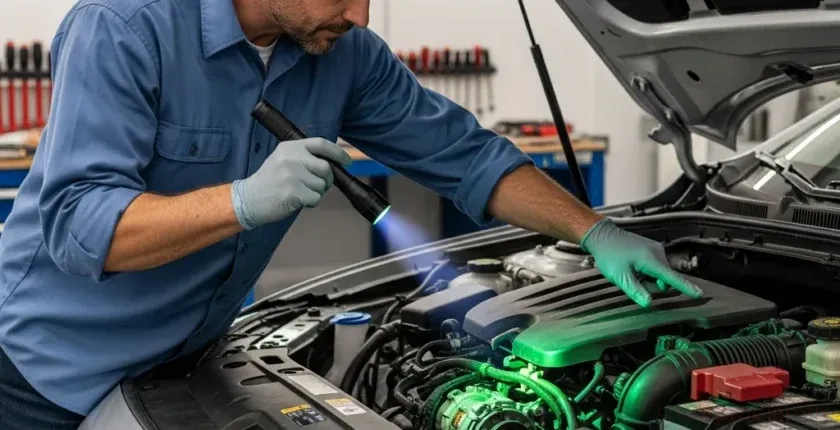
AC leaks are one of the most common reasons a car’s air conditioning slowly stops cooling. The tricky part is that refrigerant leaks are usually silent and invisible until your AC performance drops or the system fails completely. This guide walks you through beginner-friendly ways to spot car AC leaks, simple checks you can safely do at home, and when you should stop guessing and see a professional.
- 1. How Car AC Leaks Happen in the First Place
- 2. Common Symptoms of a Car AC Refrigerant Leak
- 3. Safety Basics: What You Should and Shouldn’t Do
- 4. Step-by-Step: Simple Checks for Suspected AC Leaks
- 4.1. Step 1: Confirm the AC Is Actually On and Engaging
- 4.2. Step 2: Feel the Air and Compare Vents
- 4.3. Step 3: Visual Inspection for Oily Spots and Damage
- 4.4. Step 4: Check for Water vs. Refrigerant Leaks Under the Car
- 5. Using DIY Leak Detection Tools (Without Opening the System)
- 5.1. Option 1: UV Dye and Black Light
- 5.2. Option 2: Electronic Leak Detector (Sniffer)
- 6. Common AC Leak Locations and What They Mean
- 7. When DIY AC Leak Fixes Make Sense (and When They Don’t)
- 8. How a Shop Professionally Diagnoses AC Leaks
- 9. Cost Expectations for Common AC Leak Repairs
- 10. Summary and Next Steps
We’ll focus on practical, real-world steps you can follow with basic tools. You do not need to be a mechanic, but you do need to understand what is safe to do yourself and what should be left to an AC-certified shop.
How Car AC Leaks Happen in the First Place
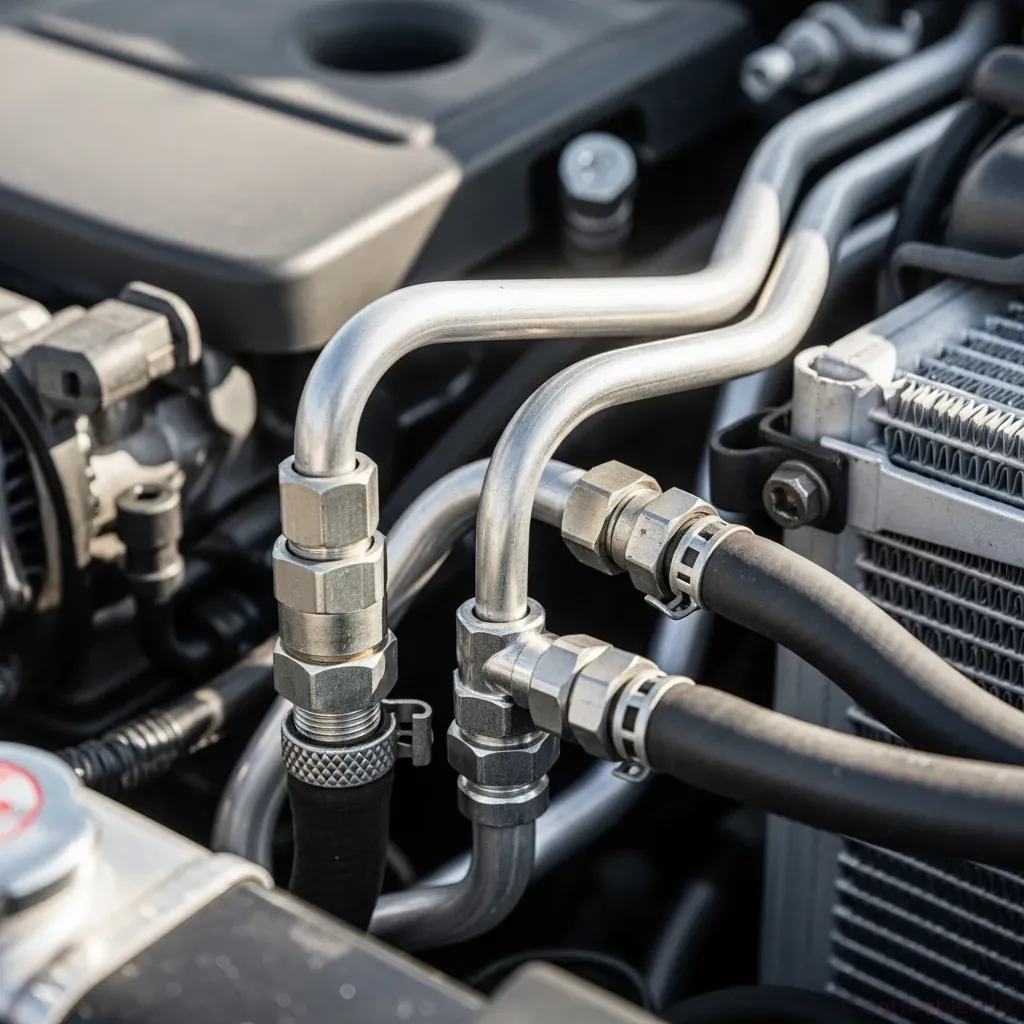

Before you start hunting for leaks, it helps to know where they usually come from. A car AC system is a closed loop that circulates refrigerant and oil through metal lines, rubber hoses, and components like the compressor, condenser, and evaporator.
Over time, leaks can start from several common causes:
- Rubber O-rings and seals harden from age and heat, allowing refrigerant to seep out at connection points.
- Aluminum lines and condensers corrode, especially in salty or humid climates, leading to pinhole leaks.
- Stone or road debris damage can puncture the condenser at the front of the car.
- Vibration and flexing can crack metal lines or stress fittings over many years.
- Poor previous repairs, like incorrect O-rings or under-torqued fittings, can slowly leak.
Because the system is under pressure and the refrigerant evaporates quickly, you usually will not see a puddle of liquid like you would with coolant or engine oil. Instead, you need to look for performance changes and subtle visual clues.
Common Symptoms of a Car AC Refrigerant Leak
Most AC leaks start small. If you catch them early, you may avoid a complete system failure or expensive compressor damage. Watch for these beginner-friendly warning signs.
- AC takes longer to get cold: The air might still get cool, but it takes several minutes instead of almost immediately.
- AC is cold at first, then warms up: Low refrigerant can cause the evaporator to freeze, then thaw, leading to temperature swings.
- AC only cools while driving: At idle, low refrigerant and weak system performance may show up as warm air at stoplights.
- Hissing or bubbling sound after shutoff: Some noise is normal, but loud or persistent hissing can hint at a leak or pressure issue.
- Oily or dirty spots on AC lines or components: Refrigerant carries oil; when it leaks, it often leaves a slightly oily residue that collects dirt.
- Repeated need for “top-offs”: If you have to recharge the AC every summer, you almost certainly have a leak, even if it seems to work after adding refrigerant.
If your AC problem is more about strange odors than weak cooling, you may be dealing with mold or moisture issues instead of a leak. In that case, see the Beginner’s Guide to Car AC Smells for odor-specific diagnosis and fixes.
Safety Basics: What You Should and Shouldn’t Do
Refrigerant is not something to experiment with. It is under high pressure, can cause frostbite on contact with skin, and releasing it intentionally into the air is illegal in many regions. Keep these rules in mind:
- Do not loosen AC fittings or attempt to open the system unless you are trained and have proper recovery equipment.
- Do not vent refrigerant to the atmosphere. AC shops use recovery machines to capture and recycle it.
- Wear eye protection and gloves when working near AC lines and components.
- Avoid over-the-counter sealers that claim to fix all leaks. Many professionals avoid them because they can clog equipment and cause more damage.
What you can safely do is visual inspection, basic temperature checks, and some simple DIY leak detection steps that do not involve opening the system.
Step-by-Step: Simple Checks for Suspected AC Leaks
Use this structured process to narrow down whether you likely have a refrigerant leak or some other AC problem.
Step 1: Confirm the AC Is Actually On and Engaging
- Start the engine and let it idle.
- Set the climate control to the coldest temperature, fan on medium-high, and AC button on. If you have dual-zone climate, set both sides to the lowest temperature.
- Listen for a click from the engine bay as the AC compressor clutch engages. You may also see the compressor pulley change behavior as it kicks in.
- Check the radiator fans. On many cars, at least one fan will run when the AC is on.
If the compressor never engages, you may have an electrical issue, a blown fuse, or extremely low refrigerant that has triggered a safety shutoff. Electrical problems can sometimes show up along with other symptoms like flickering lights; if that sounds familiar, see Dashboard Lights Flickering While Driving – Causes, Diagnosis & Fixes for broader electrical troubleshooting.
Step 2: Feel the Air and Compare Vents
- With the AC running, place your hand in front of the center vents.
- Note the temperature: is it cold, cool, or barely different from outside air?
- Check different vents (driver, passenger, rear if equipped). Are they all about the same temperature?
What this tells you:
- All vents cool, but not very cold: Low refrigerant is a strong possibility.
- Some vents cold, others warm: You might have a blend door or airflow issue rather than a leak.
- AC cools while driving but not at idle: Could be low refrigerant, weak condenser fan, or airflow problems through the condenser.
Step 3: Visual Inspection for Oily Spots and Damage
Next, look for physical signs of a leak. You do not need to disconnect anything; just inspect what you can see.
- Open the hood with the engine off and cool.
- Locate the AC lines: typically aluminum tubes and rubber hoses running from the compressor to the condenser (front of the car) and to the firewall (into the cabin).
- Inspect all visible connections and fittings for oily, dirty buildup. Pay attention to:
- Compressor body and shaft seal area.
- High- and low-pressure service ports (where gauges connect).
- Crimped joints where rubber hose meets metal line.
- Condenser edges and corners (front of the radiator stack).
- Look through the grille at the condenser. Check for bent fins, impact damage, or wet/oily spots collecting dust.
What to look for:
- Clean, dry metal and hoses: No obvious external leak, though tiny leaks may still be present.
- Oily, grimy patches: Strong clue that refrigerant and oil have been seeping out there.
- Crushed or punctured condenser: A rock strike or accident can cause a sudden leak.
Step 4: Check for Water vs. Refrigerant Leaks Under the Car
It is normal to see water dripping under the car when the AC runs. That is just condensation from the evaporator drain.
- Park on a dry surface with the AC running for 10–15 minutes.
- Turn the engine off and look under the passenger side area of the firewall.
- Check the drip:
- Clear, odorless water is normal condensation.
- Oily or colored fluid is not normal and could be engine coolant, power steering fluid, or another leak, but refrigerant itself will usually not puddle.
If you see a steady drip of clear water, that is a good sign your evaporator is draining properly. It does not rule out a refrigerant leak, but it means the system is at least producing condensation.
Using DIY Leak Detection Tools (Without Opening the System)
If your basic checks point toward a leak, you can go a bit further with simple tools that do not require disconnecting lines or releasing refrigerant.
Option 1: UV Dye and Black Light
Many manufacturers and AC shops use UV dye to find leaks. Some systems already have dye in the refrigerant from the factory or a previous service.
- Buy a UV flashlight and, optionally, yellow-tinted safety glasses designed for leak detection.
- Wait until dusk or work in a dim garage so the UV light is easier to see.
- Shine the UV light along all visible AC lines, fittings, the compressor, and the condenser.
- Look for bright yellow-green staining around joints or on components.
If you see glowing dye, you have likely found a leak point. If you do not see any dye, your system may not contain dye yet, or the leak could be in a hidden area like the evaporator inside the dash.
Adding dye yourself usually means connecting to the low-pressure port and injecting it along with refrigerant. This can be done with some DIY kits, but it still involves handling pressurized refrigerant. If you are not comfortable, this step is better left to a shop.
Option 2: Electronic Leak Detector (Sniffer)
Electronic leak detectors can “sniff” refrigerant in the air around potential leak points.
- Follow the tool’s instructions for warm-up and sensitivity settings.
- With the engine off, slowly move the probe around fittings, service ports, the compressor, and the condenser.
- Listen for beeps or watch the indicator that signals refrigerant detection.
These tools can be helpful, but they are sensitive to wind and user technique. For beginners, they are best used as a rough indicator rather than a final diagnosis.
Common AC Leak Locations and What They Mean

Once you suspect a leak, knowing the common failure points can help you understand the likely repair and cost.
- Service port Schrader valves: Small, inexpensive valves where gauges connect. If they leak, you might see oily residue or bubbles when tested with soapy water. Usually a low-cost fix.
- Compressor front seal: Leak at the pulley end of the compressor. Often shows as oily buildup on or under the compressor. May require compressor replacement or rebuild.
- Condenser leaks: Often from stone damage or corrosion. Visible as oily, dirty spots on the condenser face. Typically requires replacing the condenser.
- Hose or O-ring leaks: At crimped joints or connection points. Sometimes repairable with new O-rings or hoses.
- Evaporator core leaks: Inside the dash, often detected by dye or sniffers at the vents or condensate drain. Usually a labor-intensive repair because the dash may need to be removed.
Understanding where the leak is helps you decide if a DIY repair is realistic or if the job is too complex or risky for a beginner.
When DIY AC Leak Fixes Make Sense (and When They Don’t)
Some AC-related tasks are beginner-friendly; others are not. Use this checklist to decide your next move.
- Reasonable DIY tasks for many beginners:
- Visual inspection and cleaning of condenser fins.
- Replacing easily accessible O-rings or a leaking service port valve (after proper recovery by a shop if the system is still charged).
- Replacing a damaged condenser on some vehicles where access is straightforward.
- Best left to professionals:
- Recovering and recharging refrigerant with correct weight and oil amount.
- Diagnosing complex leaks inside the dash (evaporator core).
- Compressor replacement and system flushing after a major failure.
- Any repair that requires opening the system if you do not have access to a recovery machine and manifold gauges.
Professional shops use recovery machines, vacuum pumps, and precise scales to charge the system to the exact specification. That accuracy matters for performance and compressor life. You can find factory specifications in your owner’s manual or from trusted resources like vehicle specification guides on KBB.
How a Shop Professionally Diagnoses AC Leaks
Knowing what a competent shop will do can help you understand estimates and avoid paying for guesswork.
- Visual and dye inspection: They will look for obvious signs of leaks and use UV dye if needed.
- Pressure testing: Using manifold gauges, they will check high- and low-side pressures while the system runs.
- Vacuum hold test: After recovering refrigerant, they pull a vacuum and see if it holds. A loss of vacuum indicates a leak.
- Electronic leak detection: They may use a high-quality sniffer to pinpoint small leaks.
- Component isolation: In stubborn cases, they may isolate sections of the system to narrow down the leak source.
A good shop will explain where the leak is, show you evidence (photos, dye, or readings), and outline which parts need replacement and why.
Cost Expectations for Common AC Leak Repairs
Costs vary by vehicle and region, but having ballpark expectations helps you budget and avoid surprises.
- Service port valve or simple O-ring replacement: Often the least expensive, especially if done during a recharge.
- Condenser replacement: Parts and labor can range from moderate to high depending on vehicle design and bumper removal.
- Hose assembly replacement: Cost depends on hose complexity and accessibility.
- Evaporator core replacement: Often one of the most expensive AC repairs due to dash removal labor.
- Compressor replacement: Can be costly, especially if the system must be flushed and other components replaced to prevent repeat failure.
Because AC work often involves multiple components and refrigerant handling, always ask for an itemized estimate that separates parts, labor, and refrigerant charges.
Summary and Next Steps
If your car’s AC is slowly losing its cool, a refrigerant leak is a strong suspect. Start with safe, simple checks: confirm the AC engages, compare vent temperatures, and inspect lines and the condenser for oily spots or damage. Use UV light or basic leak detection tools if you are comfortable, but avoid opening the system or venting refrigerant.
Small, accessible leaks at service ports or hoses may be within reach for careful DIYers, but most AC leak repairs and all refrigerant handling are best left to a qualified shop. If your AC performance is dropping quickly, you need repeated recharges, or you suspect an internal leak, schedule professional diagnosis before the compressor is damaged. While you are tracking down AC issues, also pay attention to other symptoms like vibrations or electrical oddities; guides such as Car Vibrates While Driving – Causes, Diagnosis & Fixes and Parasitic Battery Drain: Causes, Diagnosis & Fixes for Overnight Dead Batteries can help you catch related problems early.
How do you rate this guide?

Related Posts


Comments have been disabled.