
First-Time Used Car Buyer’s Guide: How to Avoid Lemons and Get Real Value
Shopping for your first used car? This step‑by‑step guide explains how to set a realistic budget, choose the right type of vehicle, spot red flags in listings, inspect a car like a pro, and negotiate without getting ripped off....


- 1. Why Buying a Used Car Is Tricky (Especially the First Time)
- 2. Step 1: Set a Realistic Total Budget (Not Just the Purchase Price)
- 2.1. Key Costs to Include
- 3. Step 2: Decide What You Actually Need (Not Just What You Want)
- 3.1. Questions to Ask Yourself
- 3.2. Good Vehicle Types for First-Time Buyers
- 4. Step 3: Choose the Right Age and Mileage Range
- 4.1. Recommended Range for First-Time Buyers
- 4.2. High Mileage Isn’t Always Bad
- 5. Step 4: Where to Shop for a Used Car
- 5.1. 1. Private Sellers
- 5.2. 2. Independent Used Car Dealers
- 5.3. 3. Franchise Dealers (Brand Dealerships)
- 6. Step 5: How to Read Online Listings and Spot Red Flags
- 6.1. Good Signs in a Listing
- 6.2. Red Flags in a Listing
- 7. Step 6: Inspecting a Used Car Like a Pro (Even If You’re Not)
- 7.1. Exterior Inspection Checklist
- 7.2. Interior Inspection Checklist
- 7.3. Under the Hood Inspection
- 8. Step 7: The Test Drive – What to Listen and Feel For
- 8.1. Before You Move
- 8.2. While Driving
- 8.3. Braking Check
- 9. Step 8: Always Get a Pre-Purchase Inspection (PPI)
- 9.1. How to Arrange a PPI
- 9.2. What the Mechanic Will Check
- 10. Step 9: Smart Negotiation Strategies for First-Time Buyers
- 10.1. Do Your Homework First
- 10.2. How to Make an Offer
- 11. Step 10: Paperwork, Payment, and Protecting Yourself
- 11.1. Essential Documents
- 11.2. Safe Payment Methods
- 12. Common First-Time Buyer Mistakes to Avoid
- 13. Final Thoughts: Take Your Time and Trust the Process
Why Buying a Used Car Is Tricky (Especially the First Time)

Buying your first used car is one of the biggest financial decisions you’ll make early in life. Do it right and you’ll get years of reliable transportation with manageable costs. Do it wrong and you could be stuck with constant repairs, unsafe handling, or a car that loses value faster than you can pay it off.
This guide walks you through the entire process of buying a used car as a first-time buyer—from setting a budget to signing the paperwork—so you can avoid lemons and emotional decisions at the dealership.
Step 1: Set a Realistic Total Budget (Not Just the Purchase Price)
Most first-time buyers only focus on the sticker price. That’s a mistake. You need to calculate your total cost of ownership for the first year.
Key Costs to Include
- Purchase price – The advertised price of the car.
- Sales tax & registration – Typically 5–10% of the purchase price, depending on your state or country.
- Insurance – Get real quotes using the car’s year, make, model, and your driving record.
- Immediate maintenance – Budget at least $500–$1,000 for catching up on overdue maintenance (fluids, filters, tires, brakes).
- Pre-purchase inspection (PPI) – Usually $100–$200 at an independent shop and absolutely worth it.
As a rule of thumb, your car payment (if financing) plus insurance and fuel should not exceed 15–20% of your take-home pay. If it does, you’re stretching too far.
Step 2: Decide What You Actually Need (Not Just What You Want)
Before you fall in love with a specific car, define your real-world needs. This prevents you from buying something that looks cool but is expensive to own or doesn’t fit your lifestyle.
Questions to Ask Yourself
- How many passengers do you regularly carry?
- How far is your daily commute?
- Do you drive mostly city, highway, or mixed routes?
- Do you need cargo space for sports gear, tools, or pets?
- Is all-wheel drive important for snow or rough roads?
- How important are fuel economy and low running costs?
Good Vehicle Types for First-Time Buyers
- Compact sedans – Affordable, efficient, usually cheaper to insure.
- Compact crossovers – Higher driving position, more cargo, still reasonable fuel economy.
- Older midsize sedans – Often very comfortable and safe, but check maintenance history carefully.
Sports cars, big trucks, and luxury brands may be tempting, but they usually come with higher insurance, parts, and repair costs—bad news for a first-time buyer on a budget.
Step 3: Choose the Right Age and Mileage Range
There’s a sweet spot where a used car has already taken its biggest depreciation hit but still has plenty of life left.
Recommended Range for First-Time Buyers
- Age: 4–10 years old
- Mileage: 50,000–120,000 miles (80,000–190,000 km)
Cars newer than 3 years tend to be more expensive and often require full-coverage insurance. Cars older than 12–15 years can be cheap to buy but may need frequent repairs, especially if maintenance was neglected.
High Mileage Isn’t Always Bad
A highway-driven car with 120,000 miles and excellent maintenance records can be a better buy than a 60,000-mile car that was neglected. Focus on condition and maintenance history, not just mileage.
Step 4: Where to Shop for a Used Car
You have three main options, each with pros and cons.
1. Private Sellers
- Pros: Lower prices, more room to negotiate, you can talk directly to the owner about the car’s history.
- Cons: No warranty, must handle paperwork yourself, higher risk if you don’t know what to look for.
2. Independent Used Car Dealers
- Pros: Larger selection, they handle paperwork, sometimes short warranties.
- Cons: Prices can be inflated, quality varies widely, aggressive sales tactics are common.
3. Franchise Dealers (Brand Dealerships)
- Pros: Certified pre-owned (CPO) options, better reputation to protect, financing options.
- Cons: Higher prices, especially on CPO vehicles.
If you’re nervous as a first-time buyer, a franchise dealer or a well-reviewed independent dealer is usually safer than a random small lot. For private sellers, always meet in a public place and bring someone with you.
Step 5: How to Read Online Listings and Spot Red Flags
Online listings are your first filter. Learn to read between the lines so you don’t waste time on bad cars.
Good Signs in a Listing
- Detailed description of maintenance (oil changes, timing belt, brakes, tires).
- Clear, well-lit photos from multiple angles, including interior and engine bay.
- VIN number listed so you can run a vehicle history report.
- Seller mentions service records or a folder of receipts.
Red Flags in a Listing
- Very short description like “runs great, no issues” and nothing else.
- Few or blurry photos, or only one side of the car shown.
- Mentions of “rebuilt title,” “salvage,” or “flood vehicle” – avoid these as a first-time buyer.
- “Just needs a tune-up” or “cheap fix” – often code for bigger problems.
- Price far below market value with no clear explanation.
Before you go see a car, run the VIN through a vehicle history service. Look for accident history, title problems, odometer rollbacks, and repeated sales in a short time frame.
Step 6: Inspecting a Used Car Like a Pro (Even If You’re Not)

Even if you plan to get a professional pre-purchase inspection, your own initial check can save you from wasting time on obviously bad cars.
Exterior Inspection Checklist
- Body panels: Look along the sides for waves or mismatched paint that could indicate previous bodywork.
- Gaps: Uneven gaps between hood, doors, and trunk can mean accident damage.
- Rust: Check wheel arches, door bottoms, under the doors, and around the trunk. Surface rust is minor; structural rust is a deal-breaker.
- Glass: Look for cracks or large chips in the windshield and windows.
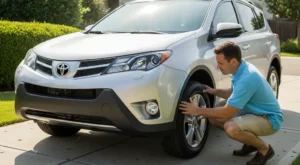
- Tires: Uneven tire wear can point to alignment or suspension issues that may cause the car to pull or shake at speed.
Interior Inspection Checklist
- Seats & belts: Check for tears, stains, and that all seat belts latch and retract properly.
- Electronics: Test all windows, locks, mirrors, lights, wipers, horn, radio, and climate controls.
- Warning lights: Turn the key to ON (engine off). All warning lights should illuminate briefly, then go off when the engine starts. A missing or always-off check engine light is suspicious.
- Odor: Strong air freshener can be hiding smoke or mold smells.
Under the Hood Inspection
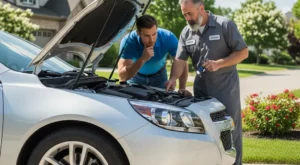
- Fluids: Check oil, coolant, transmission fluid (if accessible), and brake fluid. Very low or filthy fluids suggest poor maintenance.
- Leaks: Look around the engine, under the car, and near the radiator for wet spots or oily residue.
- Belts & hoses: Cracks, fraying, or bulges mean replacement is due soon.
If you notice white residue around the coolant reservoir or oil that looks milky, that can indicate internal engine issues. For more context on what certain exhaust symptoms mean, see White Smoke From Exhaust But Car Runs Fine – Causes, Fixes & When To Worry.
Step 7: The Test Drive – What to Listen and Feel For
Never buy a used car without a thorough test drive. Plan a route that includes city streets, highway speeds, and some rougher pavement.
Before You Move
- Start the car cold if possible. Hard starting, rough idle, or loud rattles can indicate engine issues.
- Listen for ticking, knocking, or squealing from the engine bay.
- Check that the transmission engages smoothly when shifting from Park to Drive and Reverse.
While Driving
- Acceleration: The car should accelerate smoothly without hesitation, jerking, or excessive vibration. If you feel shuddering or shaking under load, read our detailed guide on Car Shakes When Accelerating: Causes & Easy Fixes to understand potential repair costs.
- Steering: The car should track straight with minimal correction. Excessive play or wandering can mean steering or suspension wear.
- Transmission: Shifts should be smooth and consistent. Slipping, delayed engagement, or harsh shifts are red flags.
- Noise: Listen for humming, whining, or clunking from the wheels or drivetrain, especially at highway speeds.
Braking Check
- The car should stop in a straight line without pulling left or right.
- No grinding, scraping, or metal-on-metal sounds when braking.
- Pedal feel should be firm, not spongy.
If you hear grinding or feel vibration through the pedal, the car may need brake work. That’s not always a deal-breaker, but you should factor it into your budget. For more detail on what different brake noises mean, see Car Makes Grinding Noise When Braking – Causes, Diagnosis & Fixes.
Step 8: Always Get a Pre-Purchase Inspection (PPI)
Even if the car looks and drives fine, a professional inspection is your best protection against hidden problems.
How to Arrange a PPI
- Find a reputable independent mechanic or shop that doesn’t sell cars.
- Ask the seller if they’re willing to let you take the car for an inspection. A reasonable seller should agree.
- Expect to pay $100–$200. This is cheap insurance compared to a major repair.
What the Mechanic Will Check
- Engine compression and leaks
- Transmission operation and fluid condition
- Suspension, steering, and brakes
- Frame and underbody for rust or accident damage
- Diagnostic scan for hidden trouble codes
Use the inspection report as a negotiation tool. If the car needs tires, brakes, or other work soon, you can ask the seller to lower the price or fix the issues before you buy.
Step 9: Smart Negotiation Strategies for First-Time Buyers
Negotiating doesn’t have to be confrontational. It’s simply a discussion about value.
Do Your Homework First
- Use pricing guides and local listings to find the average market price for similar cars.
- Bring printed examples or screenshots to support your offer.
- Know your maximum budget and be ready to walk away if the seller won’t meet it.
How to Make an Offer
- Start with a reasonable offer slightly below market, based on the car’s condition and needed repairs.
- Be polite and factual: “The inspection shows it needs new tires and front brakes soon. That’s about $700 in work. Based on that, I’m comfortable at $X.”
- Don’t reveal your maximum budget. Just say, “That’s the most I’m comfortable paying for this car.”
If the seller won’t budge and the price isn’t fair, walk away. There are always other cars.
Step 10: Paperwork, Payment, and Protecting Yourself
Once you agree on a price, slow down and make sure the paperwork is clean before you hand over any money.
Essential Documents
- Title: Make sure the name matches the seller’s ID and that there are no liens (unless you’re paying off a loan at the bank).
- Bill of sale: Include buyer and seller info, VIN, price, date, and “as-is” wording if applicable.
- Odometer disclosure: Required in many regions for cars under a certain age.
- Service records: Ask for any maintenance receipts or logbooks.
Safe Payment Methods
- For private sales, use a cashier’s check or complete the transaction at the seller’s bank.
- Avoid carrying large amounts of cash or using peer-to-peer apps for large sums.
- Meet in a public place, ideally during daylight, and bring a friend or family member.
After the sale, transfer the title, register the car in your name, and update your insurance before driving it regularly.
Common First-Time Buyer Mistakes to Avoid
- Buying the first car you see – Always compare at least a few similar options.
- Skipping the test drive – A quick spin around the block is not enough.
- Ignoring warning signs – Strange noises, vibrations, or warning lights are not “normal for an older car.”
- Falling in love with a specific model – This makes you overlook flaws and overpay.
- Not budgeting for repairs – Even a good used car will need some maintenance.
If you feel vibration, shaking, or grinding during your test drive, don’t assume it’s minor. Use our guides like Car Shakes When Accelerating: Causes & Easy Fixes and Car Makes Grinding Noise When Braking – Causes, Diagnosis & Fixes to estimate potential repair costs before committing.
Final Thoughts: Take Your Time and Trust the Process
Buying your first used car doesn’t have to be stressful or risky. If you:
- Set a realistic total budget
- Choose the right type of vehicle for your needs
- Carefully screen listings and run history reports
- Inspect and test drive every car thoroughly
- Get a professional pre-purchase inspection
- Negotiate based on facts, not emotion
…you’ll dramatically reduce your chances of buying a lemon and increase your odds of getting a safe, reliable car that fits your life and your wallet. Take your time, ask questions, and don’t be afraid to walk away. The right used car is out there—and now you know how to find it.
How do you rate this guide?

Related Posts

Comments have been disabled.
