DIY Serpentine Belt Replacement and Inspection: Stop Squeals, Slips and Breakdowns
Learn how to inspect, diagnose, and replace your serpentine belt before it snaps and leaves you stranded. This detailed DIY guide covers symptoms, tools, step-by-step replacement, tensioner checks, and money-saving tips for most modern cars....

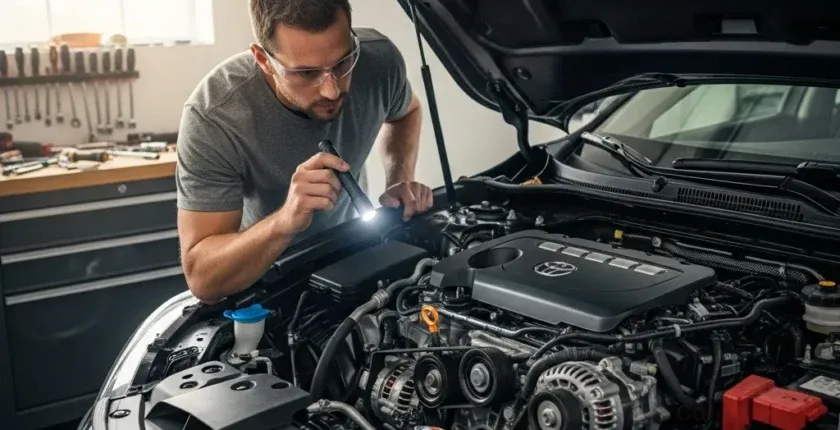
Your serpentine belt is one of the hardest working and most overlooked parts under your hood. It drives your alternator, power steering pump, water pump (on many engines), AC compressor, and sometimes even the radiator fan. When it slips or breaks, you can lose charging, cooling, steering assist, and AC in seconds.
- 1. What the Serpentine Belt Does (and Why It Matters)
- 2. Common Symptoms of a Worn or Failing Serpentine Belt
- 2.1. 1. Squealing or Chirping Noises
- 2.2. 2. Cracks, Fraying, or Missing Chunks
- 2.3. 3. Accessory Problems
- 2.4. 4. Belt Slap or Visible Vibration
- 3. When Should You Replace a Serpentine Belt?
- 4. Tools and Parts You’ll Need
- 5. Step-by-Step: How to Replace a Serpentine Belt
- 5.1. 1. Safety First
- 5.2. 2. Locate the Belt and Routing Diagram
- 5.3. 3. Inspect the Existing Belt and Pulleys
- 5.4. 4. Release Belt Tension
- 5.5. 5. Remove the Old Belt
- 5.6. 6. Inspect the Tensioner and Idler Pulleys
- 5.7. 7. Route the New Belt
- 5.8. 8. Apply Tension and Install the Belt Fully
- 5.9. 9. Final Checks and Start-Up
- 6. Diagnosing Persistent Belt Noise After Replacement
- 6.1. 1. Check for Contamination
- 6.2. 2. Inspect Pulley Alignment and Wear
- 6.3. 3. Evaluate the Tensioner
- 7. Preventive Maintenance Tips for Long Belt Life
- 8. How Much Does Serpentine Belt Replacement Cost?
- 9. Related Maintenance to Consider
- 10. When to DIY and When to See a Professional
- 11. Bottom Line
The good news: inspecting and replacing a serpentine belt is one of the most approachable DIY maintenance jobs you can do. With a few basic tools and some patience, you can stop belt squeals, prevent breakdowns, and save a solid chunk of money over shop prices.
What the Serpentine Belt Does (and Why It Matters)

Older cars used multiple V-belts to drive accessories. Most modern vehicles use a single, long, multi-ribbed serpentine belt that snakes around several pulleys. That one belt usually powers:
- Alternator – charges the battery and powers the electrical system.
- Power steering pump – provides steering assist (hydraulic systems).
- Water pump – circulates coolant through the engine and radiator (on many engines).
- AC compressor – runs your air conditioning.
- Idler and tensioner pulleys – guide and maintain tension on the belt.
If that belt fails while driving, you can quickly overheat, lose steering assist, and drain the battery. In extreme cases, a flailing broken belt can damage nearby components.
Common Symptoms of a Worn or Failing Serpentine Belt
Catch these early signs and you can replace the belt on your schedule instead of on the side of the road.
1. Squealing or Chirping Noises
A high-pitched squeal or chirp from the front of the engine, especially:
- On cold starts
- When turning the steering wheel at low speeds
- When the AC kicks on
- When accelerating hard
Usually indicates:
- Glazed or hardened belt ribs
- Insufficient belt tension (weak tensioner)
- Contamination from coolant, oil, or power steering fluid
- Misaligned or failing pulley
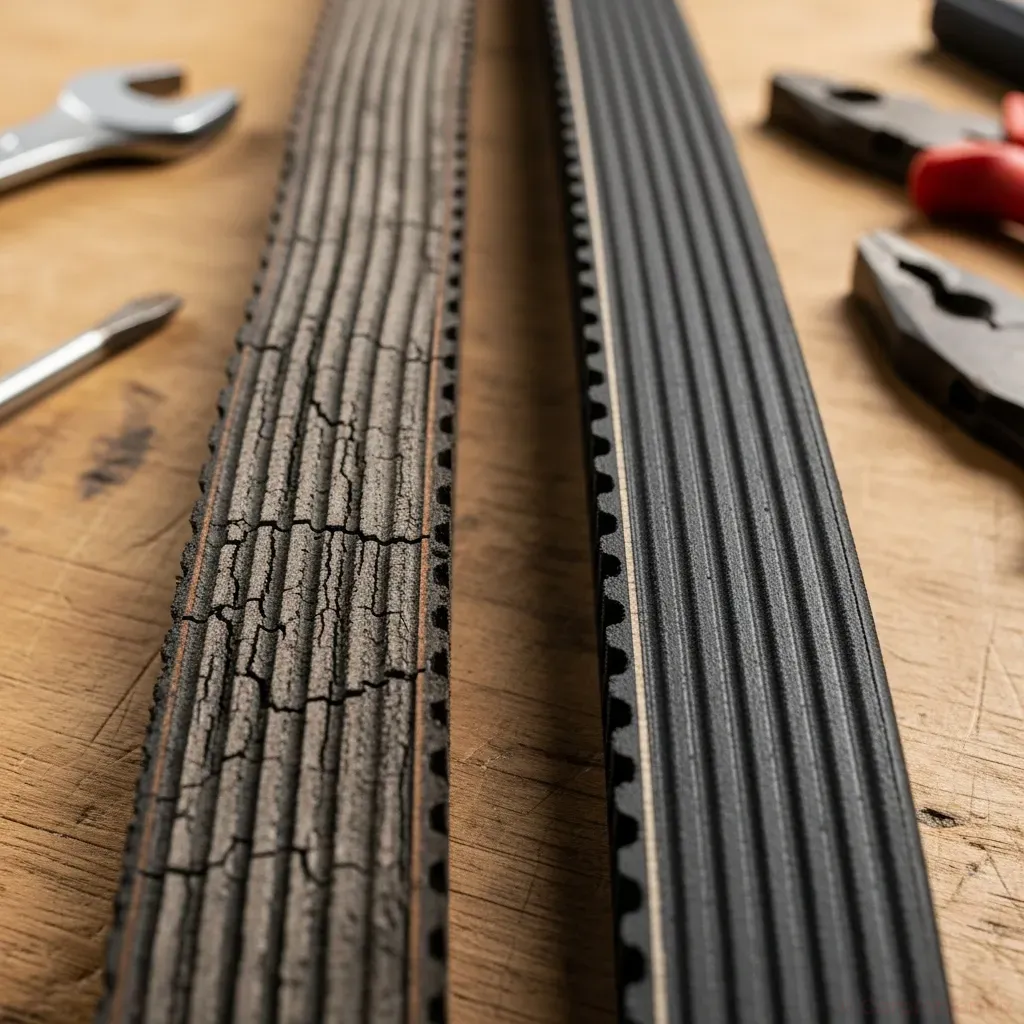
2. Cracks, Fraying, or Missing Chunks
Visual damage is a clear sign the belt is near the end of its life:
- Cracks across the ribs – older neoprene belts crack as they age.
- Fraying edges – often from misalignment or a damaged pulley lip.
- Missing rib sections – serious wear; replace immediately.
3. Accessory Problems
Because the belt drives multiple accessories, you might see:
- Battery light on or dim headlights at idle (alternator slipping).
- Heavy steering at low speeds (power steering pump not spinning properly).
- Engine overheating on vehicles where the water pump is belt-driven.
- AC not cooling well at idle or under load (AC compressor slipping).
These symptoms can also be caused by failing components themselves, so don’t assume it’s only the belt. But if you see accessory issues plus visible belt wear or noise, the belt and tensioner are prime suspects.
4. Belt Slap or Visible Vibration
With the engine running (and your hands and tools far away from moving parts), watch the belt:
- Does it flutter, slap, or bounce?
- Does the tensioner arm move excessively or jerk?
Excessive movement often means a weak tensioner, misaligned pulley, or a belt that has stretched beyond spec.
When Should You Replace a Serpentine Belt?
Always follow your owner’s manual, but common replacement intervals are:
- Traditional neoprene belts: 60,000–90,000 miles.
- Modern EPDM belts (most late-model cars): 90,000–120,000 miles or more.
However, time matters too. Rubber ages even if the car doesn’t rack up miles. If your belt is 7–10 years old, it’s cheap insurance to replace it.
Replace the belt immediately if you notice:
- Deep cracks or missing ribs.
- Fraying or shredded edges.
- Glazing (shiny, hardened surface) and persistent squeal.
- Coolant or oil saturation that can’t be fully cleaned off.
Tools and Parts You’ll Need
Exact tools vary by vehicle, but most DIY serpentine belt jobs require:
- New serpentine belt – match your exact year, make, model, and engine.
- Serpentine belt tool or long-handled ratchet – typically 3/8″ or 1/2″ drive.
- Socket set – for removing engine covers or splash shields.
- Wrench set – sometimes needed for tensioner or idler bolts.
- Flashlight – to see routing and pulleys clearly.
- Gloves and safety glasses – protect your hands and eyes.
- Torque wrench – if you’re replacing the tensioner or idler pulleys.
Optional but helpful:
- Inspection mirror – for tight engine bays.
- Chalk or paint marker – to mark belt direction or pulley alignment.
Step-by-Step: How to Replace a Serpentine Belt
This is a general guide that applies to many vehicles. Always consult a repair manual or reliable online guide for your specific car.
1. Safety First
- Park on a level surface and set the parking brake.
- Turn the engine off and remove the key.
- Let the engine cool if you’ve been driving (hot pulleys and coolant hoses can burn you).
- Disconnect the negative battery terminal if your hands will be near the starter or main power cables.
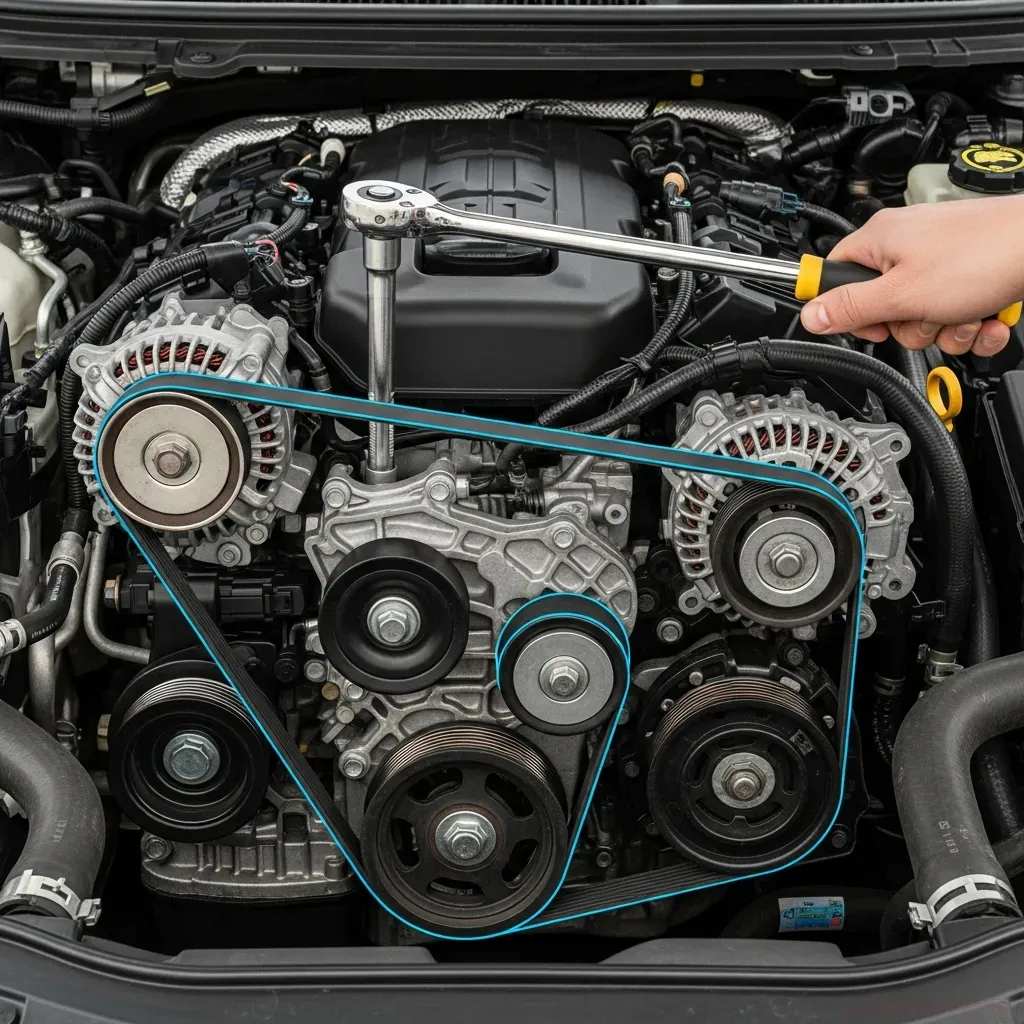
2. Locate the Belt and Routing Diagram
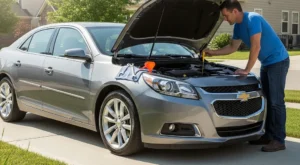
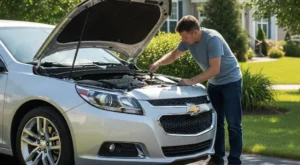
Open the hood and locate the serpentine belt. Look for a belt routing diagram on:
- The radiator support
- The underside of the hood
- A sticker near the fan shroud
If you don’t see one, draw your own diagram or take clear photos from multiple angles. Note which pulleys are ribbed (belt ribs contact these) and which are smooth (belt back rides on these).
3. Inspect the Existing Belt and Pulleys
Before removal, inspect:
- Belt condition – cracks, glazing, fraying, missing chunks.
- Pulleys – look for wobble, rust dust, or misalignment.
- Leaks – oil or coolant dripping onto the belt area.
Spin each accessible pulley by hand (engine off) once the belt is off later. Any grinding, roughness, or side-to-side play means that pulley or accessory bearing may be failing.
4. Release Belt Tension
Most modern vehicles use an automatic spring-loaded tensioner. It will have either:
- A square 3/8″ or 1/2″ drive hole for your ratchet or belt tool, or
- A bolt head (often 14–19 mm) you rotate with a wrench or socket.
Steps:
- Place the belt tool or ratchet into the tensioner.
- Rotate the tensioner in the direction that loosens the belt (usually away from the belt’s tight side).
- While holding the tensioner, slide the belt off one easy-to-reach pulley (often an idler).
- Slowly release the tensioner back to its rest position.
Do not let the tensioner snap back; that can damage the spring or stop.
5. Remove the Old Belt
Once tension is released from one pulley, you can remove the belt from the remaining pulleys and snake it out of the engine bay. Note how it passes around and under components.
6. Inspect the Tensioner and Idler Pulleys
With the belt off, this is the perfect time to check the rest of the system:
- Tensioner arm movement – move it through its range with your tool. It should be smooth, not jerky or gritty.
- Tensioner and idler pulley bearings – spin them by hand. They should be quiet and smooth, with no wobble.
- Pulley alignment – sight down the pulley faces. They should line up in a straight plane.
If the tensioner is weak, the pulley is noisy, or alignment is off, replace the tensioner and/or idler pulleys along with the belt. A new belt on a bad tensioner will often squeal or wear out quickly.
7. Route the New Belt
Compare the new belt to the old one:
- Length should be very similar (a small difference is normal due to stretch).
- Rib count must match the original.
Using your routing diagram:
- Start by wrapping the belt around the crankshaft pulley (usually the largest, lowest pulley).
- Route it around the fixed accessories (alternator, power steering, AC, water pump).
- Leave the easiest-to-reach idler or smooth pulley for last.
Make sure the belt ribs are seated properly in each ribbed pulley and not riding on the edges.
8. Apply Tension and Install the Belt Fully
With the belt routed except for the last pulley:
- Rotate the tensioner again to create slack.
- Slip the belt over the final pulley.
- Carefully release the tensioner so it applies tension to the belt.
Double-check every pulley:
- Belt ribs fully engaged in ribbed pulleys.
- Belt centered on smooth pulleys.
- Belt follows the routing diagram exactly.
9. Final Checks and Start-Up
Before starting the engine:
- Remove all tools from the engine bay.
- Reinstall any engine covers or splash shields.
- Reconnect the battery negative terminal if you removed it.
Then:
- Start the engine and let it idle.
- Observe the belt from a safe distance – it should run smoothly with minimal flutter.
- Listen for squeals, chirps, or grinding noises.
Turn on accessories one by one (headlights, AC, steering input at idle) and watch for any belt slip or noise. A brief, momentary chirp right after installation can be normal, but persistent noise means you should recheck routing, tensioner condition, and pulley alignment.
Diagnosing Persistent Belt Noise After Replacement
If you’ve installed a new belt and still have noise, don’t just spray belt dressing and hope it goes away. That often masks the problem and can attract dirt.
1. Check for Contamination
Oil, coolant, or power steering fluid on the belt or pulleys can cause squeal and premature wear. If you see contamination:
- Find and fix the leak (valve cover gasket, power steering hose, water pump, etc.).
- Clean pulleys with brake cleaner on a rag (do not soak bearings).
- Replace the belt if it’s heavily soaked.
2. Inspect Pulley Alignment and Wear
Misaligned pulleys can cause the belt to walk, fray, or chirp:
- Look for pulleys that sit forward or backward compared to others.
- Check for bent brackets or improperly installed accessories.
- Inspect pulley grooves for damage or heavy rust.
3. Evaluate the Tensioner
A weak or sticking tensioner is a very common cause of repeat belt issues:
- If the tensioner arm bounces excessively at idle, it may be worn.
- If it doesn’t maintain firm tension, the belt can slip under load.
- Listen for a grinding or chirping noise directly from the tensioner pulley.
In many cases, replacing the belt and tensioner together is the best long-term fix.
Preventive Maintenance Tips for Long Belt Life
A few simple habits can dramatically extend the life of your serpentine belt and accessories:
- Inspect at every oil change – a quick visual check takes seconds.
- Address leaks quickly – fluids degrade rubber and cause slip.
- Listen for new noises – a new squeal is your early warning.
- Replace tensioner and idlers proactively around 120k miles or when doing a major front-of-engine service.
- Use quality parts – cheap belts and pulleys often don’t last or fit correctly.
How Much Does Serpentine Belt Replacement Cost?
Costs vary by vehicle and whether you DIY or use a shop:
- DIY parts only:
- Belt: $20–$60 for most vehicles.
- Tensioner: $40–$120.
- Idler pulleys: $20–$60 each.
- Shop prices:
- Belt replacement only: typically $120–$250 parts and labor.
- Belt + tensioner: $250–$500+ depending on engine layout and labor time.
On many engines, this job is 30–60 minutes for a DIYer with basic tools. On tight transverse V6 engines or vehicles where you must remove an engine mount or wheel well liner, it can take longer.
Related Maintenance to Consider
While you’re under the hood, it’s smart to look at other wear items and safety-critical systems:
- Coolant hoses and clamps – soft, swollen, or cracked hoses should be replaced before they burst.
- Drive belt for other systems – some vehicles have a separate belt for the AC or power steering.
- Brakes – if you notice vibration or noise while braking, consider a full service. For a detailed how-to, see DIY Brake Pad and Rotor Replacement: Step‑by‑Step Guide to Safe, Quiet Brakes.
- Exhaust condition – if you ever notice unusual smoke from the tailpipe while driving, our guide on White Smoke From Exhaust But Car Runs Fine – Causes, Fixes & When To Worry can help you decide what to do next.
If you’re working on a recently purchased used car, doing a full under-hood inspection and baseline maintenance is one of the best ways to avoid surprise repairs. If you’re still shopping for a car, our First-Time Used Car Buyer’s Guide: How to Avoid Lemons and Get Real Value walks you through what to look for before you buy.
When to DIY and When to See a Professional
Serpentine belt replacement is well within reach for many DIYers, but there are times when it’s smarter to get help:
- DIY-friendly situations:
- Good access to the front of the engine from the top or through the wheel well.
- Clear belt routing and an obvious tensioner.
- No major leaks or accessory issues.
- Consider a professional if:
- The belt is extremely difficult to access (tight transverse V6, some luxury models).
- You suspect a failing accessory (alternator, power steering pump, AC compressor) causing the issue.
- You’re not comfortable safely supporting the vehicle if wheel or splash shield removal is required.
Bottom Line
A healthy serpentine belt and tensioner are critical to keeping your engine cool, your steering light, your battery charged, and your AC blowing cold. Regular inspections and timely replacement can prevent expensive damage and inconvenient breakdowns.
If you can change your own oil, you can likely handle a serpentine belt on most vehicles with patience and the right tools. Treat it as part of your regular maintenance routine, and your car will reward you with quieter operation and greater reliability mile after mile.
How do you rate this guide?

Related Posts

Comments have been disabled.