
Dashboard Lights Flickering While Driving: Electrical Causes, Diagnosis & Fixes
If your dashboard lights flicker while driving, you may have a charging or wiring problem that can leave you stranded. Learn what it means, how to diagnose it at home, and when to see a pro....


Seeing your dashboard lights flicker while you’re driving is unnerving. Maybe the gauge cluster briefly goes dim, the radio cuts out for a second, or all the warning lights flash like a Christmas tree and then go back to normal. It’s easy to ignore if the car keeps running, but flickering lights are an early warning of an electrical problem that can quickly leave you stranded.
- 1. Is It Safe to Drive With Flickering Dashboard Lights?
- 2. Common Symptoms That Go With Flickering Dashboard Lights
- 2.1. 1. Lights Flicker With Engine Speed
- 2.2. 2. Lights Flicker When Hitting Bumps
- 2.3. 3. Flicker With Electrical Loads
- 2.4. 4. Warning Lights Flash or Stay On
- 3. How the Charging System Works (Quick Overview)
- 4. Step-by-Step Diagnosis for Flickering Dashboard Lights
- 4.1. Tools You’ll Need
- 4.2. Safety First
- 4.3. 1. Visual Check of Battery and Cables
- 4.4. 2. Check Grounds (Earth Connections)
- 4.5. 3. Measure Battery Voltage (Engine Off and Running)
- 4.5.1. Engine Off (Resting Battery Voltage)
- 4.5.2. Engine Running (Charging Voltage)
- 4.6. 4. Load Test the Charging System
- 4.7. 5. Listen and Look at the Alternator
- 4.8. 6. Check for Ignition Switch or Main Power Issues
- 4.9. 7. When to Suspect the Instrument Cluster Itself
- 5. Common Causes and Fixes for Flickering Dashboard Lights
- 5.1. 1. Failing Alternator
- 5.2. 2. Bad Voltage Regulator
- 5.3. 3. Loose or Corroded Battery Terminals
- 5.4. 4. Bad Grounds
- 5.5. 5. Ignition Switch or Main Relay Problems
- 5.6. 6. Instrument Cluster or Connector Faults
- 6. When to See a Professional Mechanic
- 7. Preventing Future Flickering Light Problems
- 8. Key Takeaways
This guide explains, in beginner-friendly terms, what causes dashboard lights to flicker, how to safely diagnose the problem at home, and what to fix before it turns into a no-start, dead-battery, or stalling issue.
Is It Safe to Drive With Flickering Dashboard Lights?
Occasional, very brief dimming when you use a big electrical load (like power windows at idle) can be normal. But repeated or random flickering while driving is not. It usually points to one of these issues:
- Weak or failing alternator
- Loose, corroded, or damaged battery cables
- Bad ground (earth) connection between battery, body, or engine
- Failing voltage regulator
- Ignition switch or main power relay problems
- Loose connectors or wiring faults behind the dash
Any of these can eventually cause:
- Engine stalling while driving
- Dead battery and a no-start situation
- Damage to sensitive electronics from voltage spikes
If the flickering is frequent, getting worse, or accompanied by other symptoms (burning smell, whining noise from the engine bay, warning lights staying on), you should diagnose and repair it as soon as possible.
Common Symptoms That Go With Flickering Dashboard Lights
Pay attention to what else is happening when the lights flicker. These clues can narrow down the cause.
1. Lights Flicker With Engine Speed
- Flickering or pulsing gets faster when you rev the engine
- Headlights and interior lights brighten when revved, dim at idle
Most likely causes: Weak alternator, failing voltage regulator, poor alternator wiring or ground.
2. Lights Flicker When Hitting Bumps
- Dash lights cut out or flicker when you hit potholes or rough roads
- Radio or infotainment resets on bumps
Most likely causes: Loose battery terminals, loose ground strap, loose connectors behind the dash, worn ignition switch.
3. Flicker With Electrical Loads
- Lights dim or flicker when you use power windows, rear defroster, or heater fan on high
- Idle speed may dip slightly at the same time
Most likely causes: Weak alternator, poor battery, high resistance in main power or ground cables.
4. Warning Lights Flash or Stay On
- Battery/charging light, ABS, airbag, or traction control lights flicker or randomly appear
- Instrument cluster resets, gauges drop to zero then recover
Most likely causes: Low system voltage, intermittent power loss to the cluster, failing ignition switch, internal cluster fault.
How the Charging System Works (Quick Overview)
To understand flickering lights, it helps to know the basics of your car’s charging system:
- Battery – Stores energy to start the engine and stabilize voltage while running.
- Alternator – Generates electrical power once the engine is running.
- Voltage regulator – Controls alternator output, usually keeping system voltage around 13.5–14.5 volts.
- Cables and grounds – Carry power from the alternator to the battery and to the rest of the vehicle.
Flickering lights usually mean the voltage is fluctuating or power is intermittently cutting in and out. That’s why most fixes focus on the alternator, regulator, and wiring.
Step-by-Step Diagnosis for Flickering Dashboard Lights
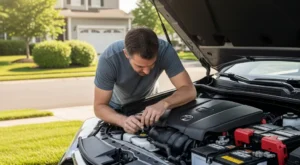
You can do a lot of basic diagnosis at home with simple tools. Here’s a logical order that works for most vehicles.
Tools You’ll Need
- Digital multimeter (DMM) that can read DC volts
- Basic hand tools (wrenches or sockets for battery terminals)
- Flashlight
- Safety glasses and gloves
Safety First
- Work in a well-ventilated area with the parking brake set.
- Keep tools and jewelry away from the battery’s positive terminal and metal body parts at the same time to avoid short circuits.
- Never disconnect the battery while the engine is running. This can damage electronics and doesn’t “test” the alternator safely.
1. Visual Check of Battery and Cables
Start with the easiest and most common problems.
- Inspect battery terminals: Look for white/green corrosion, loose clamps, or damaged posts.
- Check the cables: Follow the positive cable to the fuse box and starter, and the negative cable to the body and engine block. Look for frayed wires, cracked insulation, or loose bolts.
- Wiggle test (engine off): Gently try to twist each battery terminal by hand. If it moves, it’s too loose.
Fix: Clean and tighten the terminals.
- Disconnect the negative terminal first, then positive.
- Use a battery terminal brush or sandpaper to clean metal surfaces until shiny.
- Reinstall, tightening positive first, then negative. Terminals should be snug and not rotate.
2. Check Grounds (Earth Connections)
Bad grounds are a top cause of flickering lights and weird electrical behavior.
- Locate the main negative cable from the battery to the body or chassis.
- Look for a ground strap from the engine to the body (often a braided metal strap).
- Inspect for rust, paint, or corrosion where the cable or strap bolts to metal.
Fix:
- With the battery disconnected, remove the ground bolts.
- Clean the contact surfaces on both the cable lugs and the body/engine with sandpaper or a wire brush.
- Reinstall tightly. A dab of dielectric grease can help prevent future corrosion.
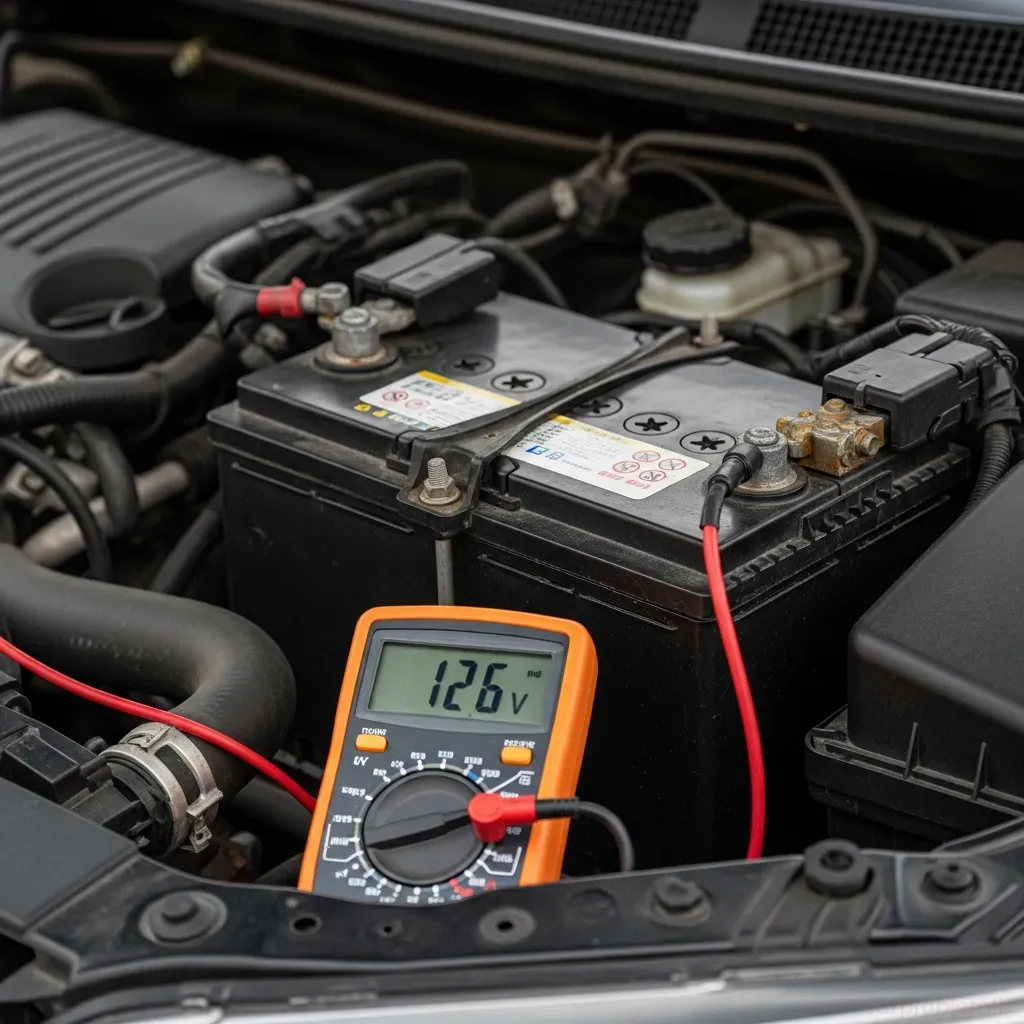
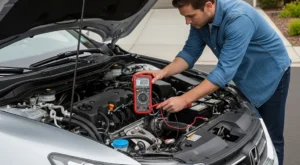
3. Measure Battery Voltage (Engine Off and Running)
This quick test tells you a lot about the battery and alternator health.
Engine Off (Resting Battery Voltage)
- Set the multimeter to DC volts (20V range is typical).
- Touch the red lead to the battery positive (+) and black to negative (−).
- Read the voltage with the engine off.
Typical readings:
- 12.6V–12.8V: Healthy, fully charged battery.
- 12.2V–12.4V: Partially discharged but usable.
- Below 12.0V: Significantly discharged or weak battery.
Engine Running (Charging Voltage)
- Start the engine and let it idle.
- Measure battery voltage again at the terminals.
Healthy charging system: Usually 13.5V–14.5V with most vehicles.
Abnormal results and what they mean:
- Below ~13.0V at idle: Alternator not charging properly, slipping belt, or bad wiring/grounds.
- Over ~15.0V: Voltage regulator likely failing high, which can cause flickering and damage electronics.
- Voltage jumps or fluctuates wildly: Intermittent alternator, regulator, or connection issue.
4. Load Test the Charging System
Next, see how the system behaves under electrical load.
- With the engine running, turn on:
- Headlights (high beam)
- Heater blower on high
- Rear defroster
- Hazard lights
Watch the multimeter and your dash lights:
- Voltage should stay above ~13.2V and be fairly steady.
- If it drops below ~13V and lights dim or flicker, the alternator may be weak or the belt may be slipping.
- If the voltage needle or reading jumps around in sync with flickering lights, suspect the voltage regulator or a loose connection.
5. Listen and Look at the Alternator
With the engine running:
- Listen for noises: Whining, grinding, or squealing near the alternator can indicate bad bearings or a slipping belt.
- Check the belt: It should be tight (with only a small amount of twist/play) and free of cracks or glazing.
- Look for flicker: In a dim area, watch the headlights or dash lights while gently revving the engine. If they brighten and dim with RPM, the alternator or regulator is suspect.
6. Check for Ignition Switch or Main Power Issues
If your voltage readings look normal but the dash still flickers, the problem may be in the power feed to the instrument cluster.
- Key wiggle test: With the engine running and parked, gently wiggle the key in the ignition (don’t turn it). If the dash lights flicker or accessories cut out, the ignition switch or lock cylinder may be worn.
- Tap test: Lightly tap around the steering column and under-dash fuse box with your hand. If the lights flicker, you may have a loose connector or relay.
These issues are more common on older vehicles or those with heavy keychains that stress the ignition switch over time.
7. When to Suspect the Instrument Cluster Itself
Sometimes, the problem is inside the dash cluster rather than the vehicle’s main power system.
- Only the gauge cluster lights flicker; headlights and other lights are stable.
- Gentle tapping on the top of the dash makes the cluster flicker.
- Some gauges drop to zero while others stay normal.
This can be caused by cracked solder joints, failing internal voltage regulators, or loose connectors on the back of the cluster. Repair usually involves removing the cluster and either resoldering or replacing it, which is often best left to a professional or specialty electronics shop.
Common Causes and Fixes for Flickering Dashboard Lights
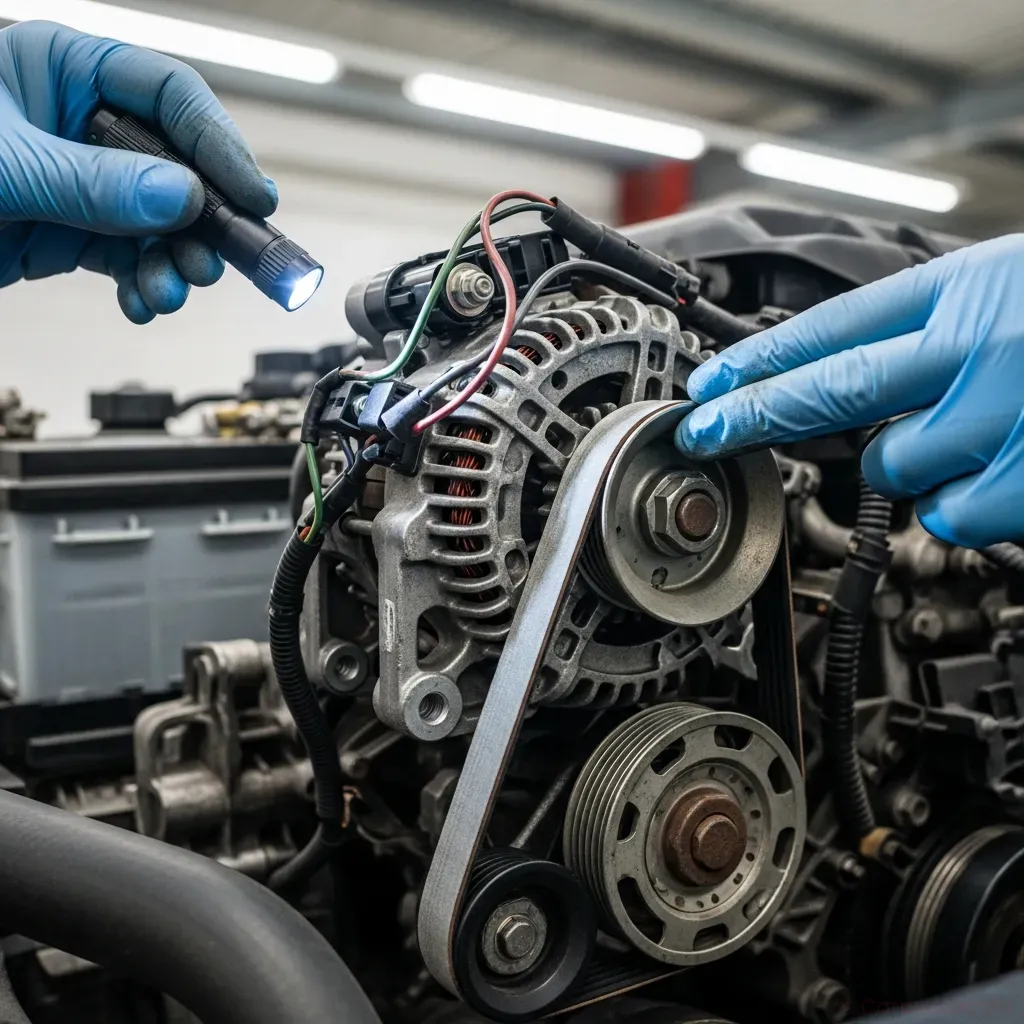
1. Failing Alternator
Typical signs:
- Battery/charging warning light flickers or glows dimly
- Lights flicker more at idle, improve with RPM (or vice versa)
- Whining or grinding noise from alternator area
Fix: Replace the alternator with a quality new or remanufactured unit. Always check and, if needed, replace the belt at the same time.
2. Bad Voltage Regulator
On many modern cars, the regulator is built into the alternator. On some older models, it’s a separate component.
Typical signs:
- Voltage swings high and low (for example, 12V to 15.5V)
- Lights brighten and dim rhythmically
- Electronics behave erratically
Fix: Replace the regulator (if separate) or the entire alternator (if integrated). Don’t ignore high voltage; it can cook bulbs and electronics.
3. Loose or Corroded Battery Terminals
Typical signs:
- Car sometimes won’t crank, then starts after jiggling cables
- Flickering dash when hitting bumps
- Visible corrosion or white/green buildup
Fix: Clean and tighten as described earlier. If the clamps are badly corroded or cracked, replace them or the entire cable.
4. Bad Grounds
Typical signs:
- Multiple weird electrical issues at once
- Flickering that changes when the engine rocks (acceleration, braking)
- Ground strap looks frayed or rusty
Fix: Clean, tighten, or replace ground straps and cables. Adding an extra ground strap between engine and body can improve reliability on older vehicles.
5. Ignition Switch or Main Relay Problems
Typical signs:
- Dash lights and accessories cut out together, then return
- Flicker when touching or moving the key
- Occasional no-crank or sudden stall while driving
Fix: Replace the ignition switch or affected relay. Because this involves airbag and steering column components, many DIYers prefer a professional for this repair.
6. Instrument Cluster or Connector Faults
Typical signs:
- Only the cluster lights/gauges are affected
- Cluster resets like you just turned the key off and on
- Flicker changes when tapping the dash
Fix: Remove the cluster, inspect and clean connectors, and repair or replace the unit. Some shops specialize in rebuilding clusters for less than dealer replacement cost.
When to See a Professional Mechanic
DIY diagnosis is great, but there are times when professional tools and experience are worth it:
- You measure abnormal voltage but aren’t sure if it’s the alternator, regulator, or wiring.
- The car stalls or nearly stalls when the lights flicker.
- You see or smell burning plastic or insulation.
- The problem is intermittent and hard to reproduce, even after basic checks.
A good shop can perform:
- Advanced charging system tests under controlled loads
- Voltage drop tests on power and ground circuits
- Scan-tool checks for stored electrical or communication fault codes
Preventing Future Flickering Light Problems
Once you’ve fixed the issue, a few simple habits can help prevent it from returning:
- Inspect the battery yearly for corrosion and secure mounting.
- Replace the battery proactively every 4–6 years in harsh climates.
- Check belt condition and tension at each oil change.
- Keep electrical loads reasonable and avoid overloading with aftermarket accessories without proper wiring and fusing.
- Use quality replacement parts for alternators and batteries; cheap units often fail early and cause voltage issues.
Key Takeaways
- Dashboard lights that flicker while driving are usually a sign of a charging or wiring problem, not just a bad bulb.
- Start diagnosis with the basics: battery terminals, grounds, and simple voltage checks.
- Unstable voltage from a failing alternator or regulator is one of the most common causes.
- Ignoring flickering lights can lead to stalling, a dead battery, or damage to electronics.
- If you’re not comfortable with electrical testing or the problem persists, a professional charging system test is the safest next step.
Deal with flickering dashboard lights early, and you’ll often catch a small, inexpensive electrical issue before it becomes a roadside breakdown.
How do you rate this guide?

Related Posts
Comments have been disabled.