
Most Common OBD2 Codes for Beginners: What They Mean, How Serious They Are, and Easy First Checks
Learn what the most common OBD2 codes actually mean, how serious they are, and the simple first checks you can do at home before heading to a shop....

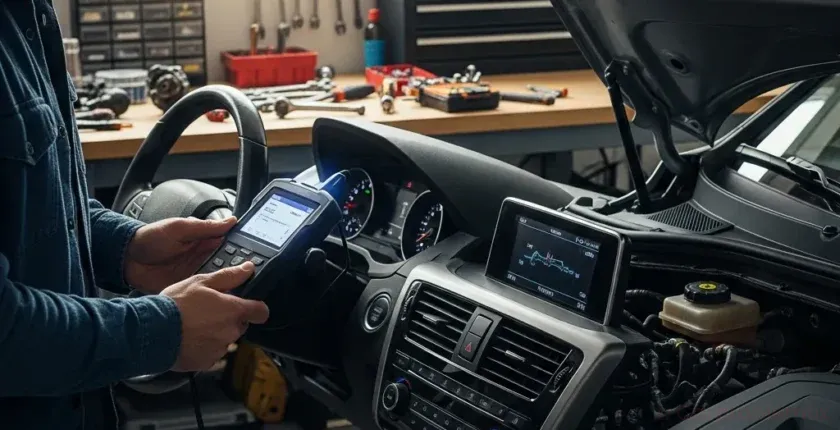
Seeing a check engine light and a confusing OBD2 code is stressful, especially if you are new to DIY car care. The good news is that many common codes point to simple problems you can understand and often check yourself with basic tools.
- 1. How to Read OBD2 Codes and Judge Seriousness
- 2. Common Misfire Codes (P0300–P030X)
- 2.1. P0300: Random/Multiple Cylinder Misfire Detected
- 2.2. P0301–P0308: Cylinder-Specific Misfire Codes
- 3. Oxygen Sensor and Fuel Trim Codes (P0130–P0175)
- 3.1. P0130–P0167: O2 Sensor Circuit Codes
- 3.2. P0171 & P0174: System Too Lean (Bank 1 / Bank 2)
- 4. Evap System Codes (P0440–P0457): Gas Cap and Vapor Leaks
- 4.1. P0440, P0441, P0442, P0455, P0456, P0457
- 5. Mass Airflow, MAP, and Throttle Codes (P0100–P0123)
- 5.1. P0100–P0104: Mass Airflow (MAF) Sensor Codes
- 5.2. P0120–P0123: Throttle/Pedal Position Sensor Codes
- 6. Catalytic Converter Efficiency Codes (P0420 & P0430)
- 6.1. P0420: Catalyst System Efficiency Below Threshold (Bank 1)
- 7. Transmission-Related Codes for Beginners (P0700 and Friends)
- 7.1. P0700: Transmission Control System Malfunction
- 8. Beginner-Friendly Checklist: What to Do When You Get a Code
- 9. Summary and Next Steps
This guide walks through the most common OBD2 codes beginners see, what they usually mean, how serious they are, and the easiest first checks you can safely do at home. You will not become a professional technician overnight, but you will know when you can take your time and when you should stop driving and call a mechanic.
How to Read OBD2 Codes and Judge Seriousness
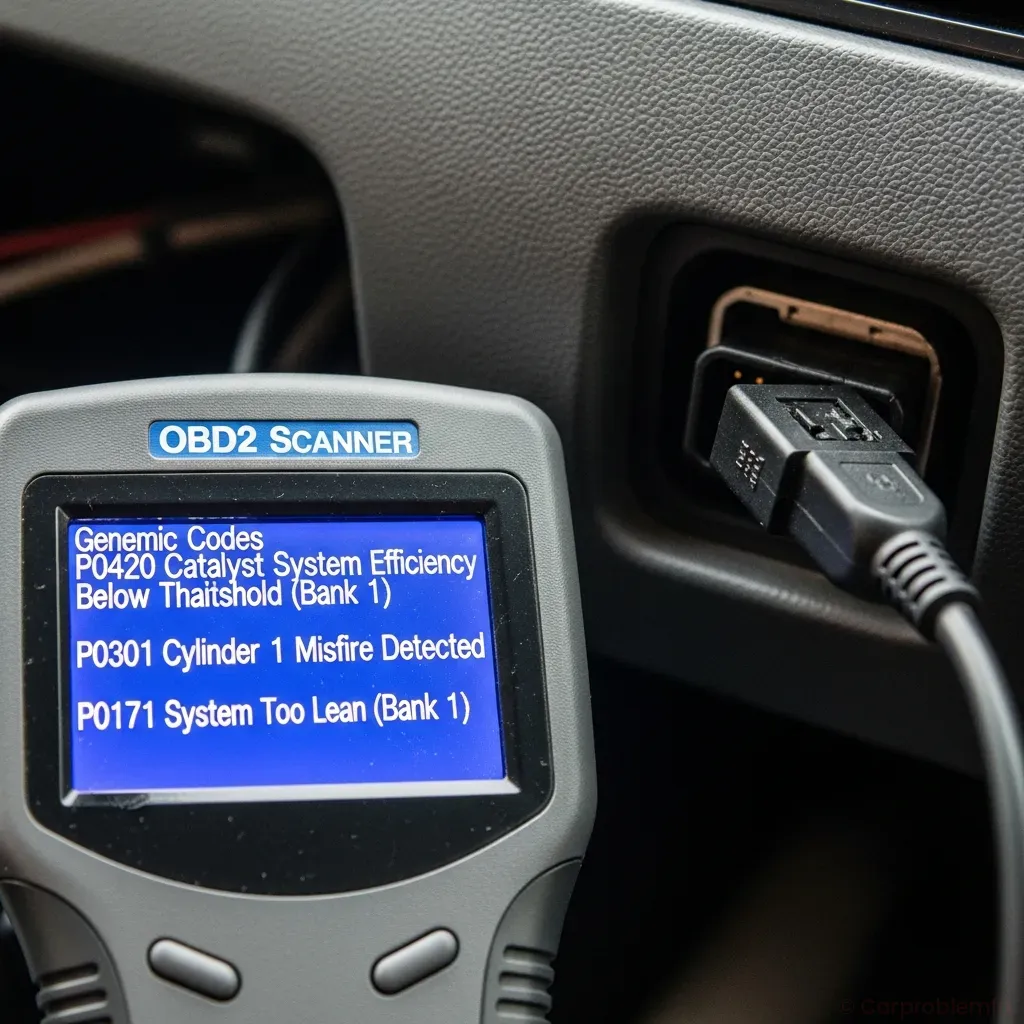
Every OBD2 code has one letter followed by four numbers, like P0301 or P0420. The letter tells you the system (P for powertrain, B for body, C for chassis, U for network), and the numbers narrow down the fault.
For beginners, the key questions are: Is this code likely to damage the engine or catalytic converter if I keep driving? Is it a safety risk? Or is it mostly an emissions or drivability issue that can wait a bit?
- Red flags: flashing check engine light, loud knocking, strong fuel smell, overheating, or major power loss. Treat these as urgent.
- Yellow flags: steady check engine light, mild rough running, slightly worse fuel economy. Usually safe to drive short distances while you diagnose.
- Green flags: stored or pending codes with no symptoms. You can usually monitor and plan a repair.
Below are the most common OBD2 codes beginners encounter, grouped by system, with plain-English explanations and easy first checks.
Common Misfire Codes (P0300–P030X)
Misfire codes are among the most common and also the most misunderstood. They indicate that one or more cylinders are not burning fuel properly.
P0300: Random/Multiple Cylinder Misfire Detected
What it means: The engine computer detects misfires on multiple cylinders or in a pattern it cannot assign to just one cylinder.
How serious it is: Moderate to severe. Driving for long with a misfire can overheat and damage the catalytic converter and, in extreme cases, harm the engine. If the check engine light is flashing, reduce load and get help quickly.
Typical symptoms: Rough idle, shaking, hesitation, poor fuel economy, sulfur or raw fuel smell from the exhaust.
Easy first checks:
- Check recent maintenance: If you recently did a tune-up or replaced spark plugs, coils, or wires, recheck your work. Crossed or loose plug wires and half-seated coil connectors are common.
- Look for obvious vacuum leaks: With the engine idling, listen for hissing around vacuum hoses and the intake manifold. Lightly wiggle hoses to see if idle changes.
- Inspect ignition parts you can see: Look for cracked ignition coils, damaged plug wires, or loose connectors. If your vehicle uses spark plug wires, make sure each one is fully seated.
- Check fuel quality: If this started right after a fill-up, you may have bad fuel. Consider refueling at a different station and adding fresh fuel to dilute a bad tank.
If you are comfortable with basic tools, pairing this with a proper DIY spark plug replacement can often resolve persistent misfire issues when plugs are old or worn.
P0301–P0308: Cylinder-Specific Misfire Codes
What they mean: The last digit tells you which cylinder is misfiring (P0301 = cylinder 1, P0302 = cylinder 2, and so on).
How serious they are: Similar to P0300. A single-cylinder misfire is often easier to track down and may be less severe at first, but still should not be ignored.
Easy first checks:
- Swap ignition parts between cylinders: If your engine uses individual coil packs, swap the suspected cylinder’s coil with a neighboring cylinder. Clear the code and see if the misfire follows the coil (e.g., P0301 becomes P0302). If it does, you likely have a bad coil.
- Check the spark plug on that cylinder: Remove and inspect the plug for heavy deposits, oil, or a cracked insulator. If plugs are old, replacing the full set is usually wise.
- Inspect the injector connector: Make sure the fuel injector connector on the misfiring cylinder is fully seated and not damaged.
If misfires persist after basic checks, a compression test or professional diagnosis is a good next step.
Oxygen Sensor and Fuel Trim Codes (P0130–P0175)
Oxygen (O2) sensors and fuel trim codes are extremely common and often related to air-fuel mixture issues. They can affect fuel economy and emissions more than immediate safety, but ignoring them can eventually damage the catalytic converter.
P0130–P0167: O2 Sensor Circuit Codes
What they mean: These codes point to problems in the oxygen sensor circuits, such as a faulty sensor, damaged wiring, or heater failure. The exact code tells you which sensor and bank.
How serious they are: Usually low to moderate. You can often drive for a while, but fuel economy may suffer and the engine may run rich or lean.
Easy first checks:
- Visual inspection: With the engine cool, locate the O2 sensors on the exhaust. Look for melted, frayed, or broken wires and loose connectors.
- Check for exhaust leaks: Listen for ticking or puffing near the exhaust manifold and sensor locations. Small leaks can trick the sensor.
- Clear and monitor: After checking connectors, clear the code. If it returns quickly, the sensor or wiring is likely at fault rather than a one-time glitch.
P0171 & P0174: System Too Lean (Bank 1 / Bank 2)
What they mean: The engine computer sees too much air or not enough fuel on one or both banks of cylinders. P0171 is bank 1; P0174 is bank 2.
How serious they are: Moderate. A lean condition can cause misfires and higher combustion temperatures, which are not healthy for the engine or catalytic converter over time.
Typical symptoms: Rough idle, hesitation, sometimes a whistling or hissing sound, and possibly misfire codes alongside.
Easy first checks:
- Inspect intake hoses: Look for cracks or loose clamps on the air intake hose between the air filter box and throttle body.
- Check vacuum lines: Follow small rubber hoses from the intake manifold. Replace any that are cracked, soft, or broken.
- Check the air filter: A severely clogged or missing filter can skew airflow readings. If it is dirty, consider a quick oil change and basic service visit where you can also have the filter replaced, or replace it yourself.
If lean codes persist after fixing obvious air leaks, a dirty mass airflow sensor or weak fuel pump may be involved, which may require more advanced tools.
Evap System Codes (P0440–P0457): Gas Cap and Vapor Leaks
Evaporative emission (EVAP) system codes are some of the least scary for beginners. They deal with fuel vapor leaks, not liquid fuel leaks, and are often caused by something as simple as a loose gas cap.
P0440, P0441, P0442, P0455, P0456, P0457
What they mean: These codes indicate small or large leaks or flow problems in the EVAP system. The system captures fuel vapors from the tank and routes them to the engine to be burned.
How serious they are: Usually low. They rarely affect how the car drives but can cause your vehicle to fail an emissions test and may slightly impact fuel smell or economy.
Easy first checks:
- Inspect and tighten the gas cap: Remove the cap, inspect the rubber seal for cracks, then reinstall until it clicks several times. Clear the code and drive a few days to see if it returns.
- Check for missing or wrong gas cap: If your cap is missing or obviously not original, replacing it with the correct type is cheap and often fixes EVAP codes.
- Look under the car near the tank: With the engine off, visually inspect hoses near the fuel tank and charcoal canister for cracks or disconnections.
If a new gas cap and hose inspection do not solve it, a smoke test at a shop is the most efficient way to find small EVAP leaks.
Mass Airflow, MAP, and Throttle Codes (P0100–P0123)

Airflow and throttle-related codes can cause rough running, stalling, or poor power. They are common on higher-mileage cars and those with dirty intake systems.
P0100–P0104: Mass Airflow (MAF) Sensor Codes
What they mean: The engine computer sees a problem with the mass airflow sensor signal, which measures how much air is entering the engine.
How serious they are: Moderate. The car may run poorly, stall, or use more fuel, but it is usually not an immediate safety threat unless it stalls in traffic.
Easy first checks:
- Inspect the intake tract: Make sure the air filter box is closed properly and the intake hose is not cracked or disconnected.
- Check the MAF connector: Ensure the electrical plug is fully seated and the wiring is not damaged.
- Look at the air filter: A very dirty filter can contaminate the MAF. Replacing the filter and carefully cleaning the MAF with dedicated MAF cleaner (never carb cleaner) can help, but only if you are comfortable following product instructions.
P0120–P0123: Throttle/Pedal Position Sensor Codes
What they mean: These codes indicate a problem with the throttle position sensor (TPS) or accelerator pedal sensor, which tell the computer how far you are pressing the gas pedal or how open the throttle is.
How serious they are: Moderate to high. Some vehicles go into “limp mode” with reduced power to protect the engine and transmission.
Easy first checks:
- Check for loose connectors: Inspect the connectors at the throttle body and accelerator pedal for looseness or corrosion.
- Look for physical obstructions: Make sure nothing is interfering with the pedal’s movement inside the cabin.
- Cycle the key: Occasionally, a temporary glitch clears after shutting the engine off and restarting. If the code returns, further diagnosis is needed.
If throttle codes are accompanied by sudden loss of power or unintended acceleration, stop driving and have the car towed for safety.
Catalytic Converter Efficiency Codes (P0420 & P0430)
Catalytic converter codes are common on higher-mileage vehicles. They do not usually cause immediate drivability issues but can be expensive to fix if the converter itself has failed.
P0420: Catalyst System Efficiency Below Threshold (Bank 1)
What it means: The computer believes the catalytic converter on bank 1 is not cleaning exhaust gases as well as it should, based on readings from the upstream and downstream O2 sensors.
How serious it is: Low to moderate. The car usually drives normally, but emissions are higher and you may fail an inspection. If ignored along with misfire or rich-running issues, you can destroy a marginal converter.
Easy first checks:
- Look for related codes: If you have misfire, rich/lean, or O2 sensor codes along with P0420, fix those first. They often cause the converter code.
- Inspect for exhaust leaks: Small leaks near the converter or O2 sensors can confuse the readings.
- Review driving pattern: Short trips only can prevent the converter from reaching full operating temperature. Occasional longer drives at highway speed can help burn off deposits.
P0430 is the same idea but for bank 2. If both banks show converter codes, underlying engine problems are more likely than two converters failing at the exact same time.
Transmission-Related Codes for Beginners (P0700 and Friends)
Modern automatic transmissions are controlled by their own computer. When something goes wrong, you may see a generic code like P0700 along with more specific transmission codes.
P0700: Transmission Control System Malfunction
What it means: The engine computer has received a message from the transmission control module that there is a fault stored. P0700 itself does not tell you the exact problem.
How serious it is: Ranges from mild to severe. If the transmission is shifting harshly, slipping, or stuck in one gear, treat it as urgent. If it shifts normally, you can usually drive gently while planning diagnosis.
Easy first checks:
- Check transmission fluid level and condition: If your vehicle has a dipstick, check fluid with the engine warm and idling in Park (follow the procedure in your owner’s manual). Fluid should generally be pinkish-red and not smell burnt.
- Look for leaks: Inspect under the car and around the transmission pan for fresh fluid.
- Note symptoms: Write down when the issue happens (cold, hot, uphill, during shifts). This helps a technician pinpoint the problem.
If you are shopping for a used truck or SUV and see transmission codes during a pre-purchase scan, that is a major red flag. Use a structured guide like How to Choose a Reliable Used Pickup Truck to avoid buying into expensive transmission trouble.
Beginner-Friendly Checklist: What to Do When You Get a Code
Instead of panicking when a code appears, follow a simple decision-based checklist. This helps you stay safe and avoid unnecessary repairs.
- Check for urgent symptoms first:
- Is the check engine light flashing?
- Is the engine overheating, knocking loudly, or losing power badly?
- Do you smell strong fuel or see smoke?
If yes, stop driving, shut the engine off, and consider a tow.
- Read and record the codes:
- Use your OBD2 scanner to read codes and note whether they are current or pending.
- Write down the exact code numbers, not just the description.
- Look for patterns:
- Multiple related codes (e.g., lean codes plus misfires) often point to one root cause like a vacuum leak.
- Unrelated codes may mean multiple issues or a low-voltage event (weak battery).
- Do the easiest safe checks:
- Gas cap tightness and condition for EVAP codes.
- Visible hose, wiring, and connector inspections.
- Fluid levels (oil, coolant, transmission) if powertrain or transmission codes appear.
- Clear and retest:
- After making a simple fix, clear the code and drive normally.
- If the code does not return after several drive cycles, you likely solved it.
- If it returns quickly, more in-depth diagnosis or a professional visit is needed.
Summary and Next Steps
Common OBD2 codes do not have to be scary. When you understand what the most frequent codes mean and how serious they usually are, you can focus on simple first checks instead of guessing or replacing parts at random.
Use your scanner, follow the safety-first checklist, and tackle the easy inspections you are comfortable with. If codes keep returning, symptoms get worse, or you see signs of overheating, misfires, or transmission trouble, schedule a visit with a trusted mechanic. Over time, combining basic code reading with simple DIY maintenance will make you far more confident in handling whatever your check engine light throws at you.
How do you rate this guide?

Related Posts

Comments have been disabled.
