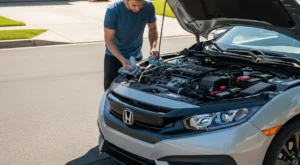
Mastering the Check Engine Light: What It Really Means, How Urgent It Is, and What to Do Next
Check engine light on? Learn what it really means, how to tell if it’s safe to keep driving, the most common causes, and step‑by‑step diagnosis and repair strategies—whether you’re using a basic OBD2 scanner at home or heading to a shop....

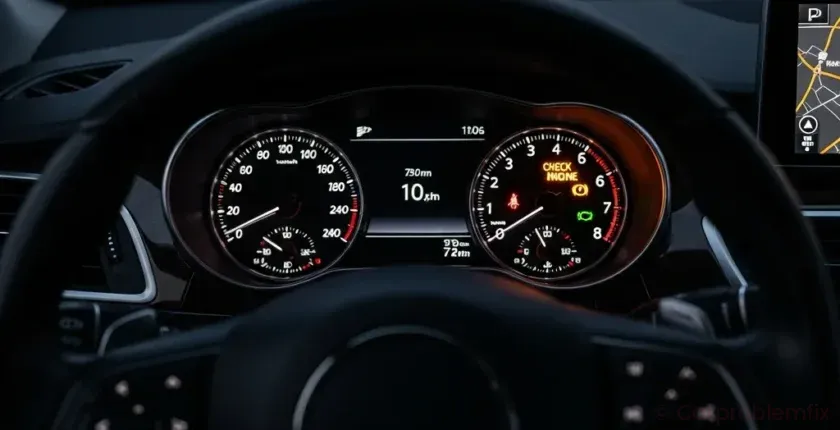
The check engine light is the most misunderstood warning light on modern cars. It can mean anything from a loose gas cap to an engine-destroying failure—and the car often feels completely normal when it comes on. That’s why so many drivers ignore it until it’s too late.
- 1. What the Check Engine Light Actually Means
- 2. Solid vs Flashing Check Engine Light: How Urgent Is It?
- 2.1. Solid Check Engine Light
- 2.2. Flashing Check Engine Light
- 3. Top 10 Common Causes of a Check Engine Light
- 3.1. 1. Loose or Faulty Gas Cap
- 3.2. 2. Oxygen (O2) Sensor Failure
- 3.3. 3. Misfires (Spark, Fuel, or Compression Issues)
- 3.4. 4. Mass Air Flow (MAF) Sensor Problems
- 3.5. 5. Catalytic Converter Efficiency Below Threshold
- 3.6. 6. EVAP System Leaks or Faults (Beyond the Gas Cap)
- 3.7. 7. EGR (Exhaust Gas Recirculation) System Issues
- 3.8. 8. Throttle Body or Throttle Position Sensor (TPS) Problems
- 3.9. 9. Transmission-Related Codes Triggering the Check Engine Light
- 3.10. 10. Sensor and Circuit Faults (Crank, Cam, Coolant Temp, etc.)
- 4. How to Diagnose a Check Engine Light at Home
- 4.1. Step 1: Read the Codes
- 4.2. Step 2: Check for Obvious Issues
- 4.3. Step 3: Match Codes to Symptoms
- 4.4. Step 4: Use Live Data (If Available)
- 4.5. Step 5: Clear Codes the Right Way
- 5. When You Can DIY vs When to See a Professional
- 5.1. Usually DIY-Friendly
- 5.2. Best Left to a Professional
- 6. Costs: What You Can Expect to Pay
- 7. Common Myths About the Check Engine Light
- 7.1. Myth 1: “If the Car Feels Fine, I Can Ignore It.”
- 7.2. Myth 2: “The Code Tells You Exactly Which Part to Replace.”
- 7.3. Myth 3: “Clearing the Code Fixes the Problem.”
- 7.4. Myth 4: “It’s Always an Expensive Repair.”
- 8. Check Engine Light and Other Warning Lights
- 9. Key Takeaways: How to Handle a Check Engine Light the Smart Way
This guide breaks down exactly what the check engine light really means, how to judge the urgency, the most common causes, and what you can realistically diagnose and fix at home versus what needs a professional. Whether you drive a 20-year-old sedan or a brand-new SUV, this is the warning light you can’t afford to ignore.
What the Check Engine Light Actually Means
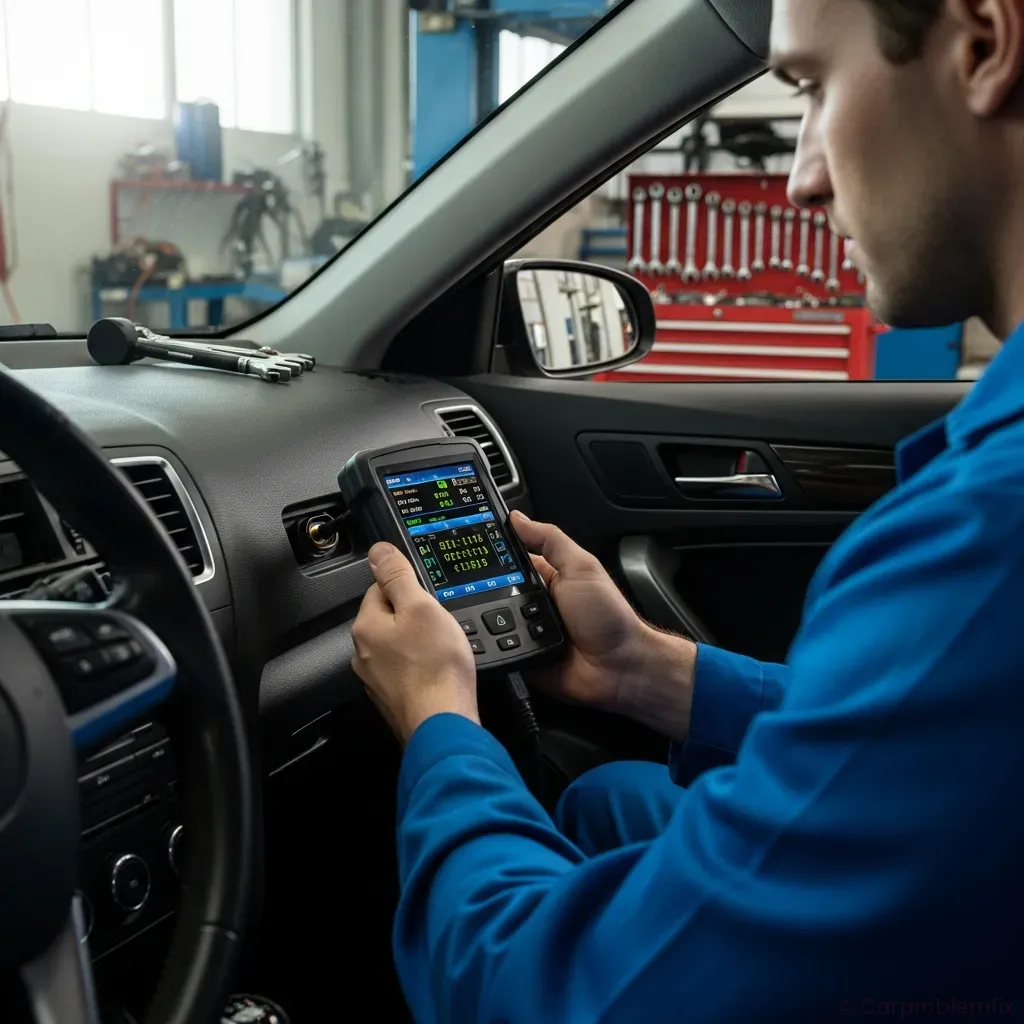
On modern vehicles, the check engine light (also called the MIL – Malfunction Indicator Lamp) is part of the OBD2 emissions and engine management system. It turns on when the engine computer (ECM/PCM) detects a problem that could:
- Increase emissions beyond legal limits
- Damage the catalytic converter or engine if ignored
- Cause driveability issues like rough running, stalling, or poor power
Contrary to what many people think, the check engine light doesn’t only mean “engine is broken.” It can be triggered by problems in:
- Fuel system (injectors, fuel pump, fuel pressure, EVAP system)
- Ignition system (spark plugs, coils, crank/cam sensors)
- Air intake (MAF sensor, MAP sensor, throttle body, vacuum leaks)
- Exhaust and emissions (oxygen sensors, catalytic converter, EGR)
- Transmission (on many vehicles, transmission faults set engine codes)
Because the range of possible issues is so wide, the light by itself doesn’t tell you what’s wrong. You need to read the stored OBD2 codes to know where to start.
Solid vs Flashing Check Engine Light: How Urgent Is It?
The first thing to check when the light comes on is whether it’s solid or flashing. This is your built-in urgency indicator.
Solid Check Engine Light
A steady (solid) check engine light usually means the ECM has detected a fault that affects emissions or performance, but it doesn’t see an immediate risk of severe damage.
Typical symptoms with a solid light:
- No noticeable symptoms at all (very common)
- Slight loss of power or fuel economy
- Occasional rough idle or hesitation
How urgent is it?
- Generally safe to drive short-term if the car feels normal
- Schedule diagnosis as soon as practical (within a few days)
- Don’t take long road trips until you know what’s wrong
Flashing Check Engine Light
A flashing check engine light is serious. It usually indicates an active misfire that is severe enough to overheat and destroy the catalytic converter in minutes if you keep driving.
Typical symptoms with a flashing light:
- Engine shaking or vibrating
- Loss of power, especially under load
- Raw fuel smell from the exhaust
- Possible popping or backfiring
How urgent is it?
- Reduce speed immediately and avoid hard acceleration.
- If the engine runs very rough, pull over safely and shut it off.
- Driving with a flashing light can turn a relatively cheap repair into a four-figure catalytic converter replacement.
Top 10 Common Causes of a Check Engine Light
While there are hundreds of possible OBD2 codes, a relatively small group of issues accounts for most check engine lights. Here are the most common, what they mean, and how serious they are.
1. Loose or Faulty Gas Cap
The EVAP (evaporative emissions) system keeps fuel vapors from escaping into the atmosphere. If the gas cap is loose, missing, or its seal is cracked, the system can’t hold pressure and the ECM sets an EVAP leak code.
- Typical codes: P0440, P0442, P0455, P0456
- Symptoms: Usually none; just the light
- Urgency: Low; emissions-related, not a driveability issue
- DIY fix: Tighten the cap until it clicks; inspect the seal; replace the cap if damaged
2. Oxygen (O2) Sensor Failure
Oxygen sensors monitor how much oxygen is in the exhaust so the ECM can adjust the fuel mixture. A failing sensor can cause poor fuel economy and eventually damage the catalytic converter.
- Typical codes: P0130–P0167 range
- Symptoms: Increased fuel consumption, sometimes rough running
- Urgency: Medium; don’t ignore for months
- DIY fix: Often replaceable at home with an O2 sensor socket and penetrating oil
3. Misfires (Spark, Fuel, or Compression Issues)
A misfire happens when one or more cylinders fail to burn the air-fuel mixture properly. The ECM detects this via crankshaft speed changes and sets misfire codes.
- Typical codes: P0300 (random misfire), P0301–P0308 (specific cylinder misfire)
- Symptoms: Rough idle, shaking, loss of power, flashing light under load
- Urgency: High if frequent or causing a flashing light
- DIY fix: Often spark plugs or ignition coils; more serious causes include low compression or injector issues
If your misfire is bad enough that the car struggles to start or won’t run at all, see our detailed guide on car won’t start but battery is good for additional no-start diagnosis.
4. Mass Air Flow (MAF) Sensor Problems
The MAF sensor measures how much air is entering the engine. If it’s dirty or failing, the ECM may deliver the wrong amount of fuel.
- Typical codes: P0100–P0104
- Symptoms: Hesitation, rough idle, poor fuel economy, sometimes stalling
- Urgency: Medium to high depending on severity
- DIY fix: Clean with MAF-specific cleaner (never carb or brake cleaner); replace if needed
5. Catalytic Converter Efficiency Below Threshold
The catalytic converter reduces harmful emissions. If it’s not working efficiently, the ECM compares upstream and downstream O2 sensor signals and sets a code.
- Typical codes: P0420, P0430
- Symptoms: Often none at first; later may include loss of power, rattling, or rotten egg smell
- Urgency: Medium; but replacing a failed converter is expensive, so diagnose thoroughly
- DIY fix: Usually not; rule out upstream issues (misfires, rich running, exhaust leaks) first
6. EVAP System Leaks or Faults (Beyond the Gas Cap)
Besides the gas cap, the EVAP system includes hoses, purge valves, vent valves, and the charcoal canister. Cracked hoses or stuck valves are common.
- Typical codes: P0441, P0446, P0455, P0456
- Symptoms: Usually none; sometimes hard starting after fueling
- Urgency: Low to medium; emissions-related but not usually damaging
- DIY fix: Visual hose inspection; purge valve replacement is often DIY-friendly
7. EGR (Exhaust Gas Recirculation) System Issues
The EGR system recirculates a small amount of exhaust back into the intake to reduce NOx emissions. Carbon buildup can clog passages or stick valves.
- Typical codes: P0400–P0409
- Symptoms: Rough idle, pinging, poor performance, sometimes stalling
- Urgency: Medium; can affect driveability and emissions
- DIY fix: Cleaning or replacing the EGR valve is often possible with basic tools
8. Throttle Body or Throttle Position Sensor (TPS) Problems
On modern drive-by-wire cars, the throttle body and TPS tell the ECM how far the throttle plate is open. If readings don’t match expectations, the ECM may go into “limp mode.”
- Typical codes: P0120–P0124, P2101–P2119
- Symptoms: Poor throttle response, limited power, high or unstable idle
- Urgency: Medium to high; limp mode can make the car unsafe to drive in traffic
- DIY fix: Cleaning the throttle body; some vehicles require a relearn procedure
9. Transmission-Related Codes Triggering the Check Engine Light
On many vehicles, transmission faults also illuminate the check engine light rather than a separate transmission warning.
- Typical codes: P0700 (generic transmission control system), plus manufacturer-specific codes
- Symptoms: Harsh shifting, slipping, staying in one gear, limp mode
- Urgency: High; continuing to drive can cause expensive damage
- DIY fix: Limited; fluid level checks and basic electrical inspections only
10. Sensor and Circuit Faults (Crank, Cam, Coolant Temp, etc.)
Modern engines rely on many sensors. A failed crankshaft or camshaft position sensor, for example, can cause stalling or a no-start condition.
- Typical codes: P0115–P0119 (coolant temp), P0335–P0344 (crank/cam), and many others
- Symptoms: Hard starting, stalling, poor running, inaccurate gauge readings
- Urgency: Medium to high depending on the sensor
- DIY fix: Some sensors are easy to access and replace; others require more disassembly
How to Diagnose a Check Engine Light at Home
You don’t need a full professional scan tool to get started. A basic OBD2 code reader or Bluetooth adapter is enough for most DIYers.
Step 1: Read the Codes
- Plug your OBD2 scanner into the port (usually under the dash near the steering column).
- Turn the key to ON (engine off) or follow your scanner’s instructions.
- Read and record all stored and pending codes.
- Note any freeze frame data (engine load, RPM, coolant temp, etc. when the code set) if your scanner supports it.
Important: A code tells you which system is unhappy, not which part to throw at it. For example, a P0171 (system too lean) doesn’t automatically mean “replace the O2 sensor.” It could be a vacuum leak, dirty MAF, fuel pressure issue, or exhaust leak.
Step 2: Check for Obvious Issues
- Gas cap: Tighten it until it clicks; inspect the seal.
- Under-hood inspection: Look for loose or cracked vacuum hoses, disconnected electrical connectors, or obvious damage.
- Fluids: Verify oil and coolant levels; low fluids can cause related codes or overheating.
Step 3: Match Codes to Symptoms
Ask yourself:
- Does the car run differently (rough idle, hesitation, poor power)?
- Is the light solid or flashing?
- Did the problem start after a specific event (refueling, washing the engine bay, hitting a pothole, recent repair)?
For example:
- Code P0302 + rough idle + flashing light under load: Likely cylinder 2 misfire; start with plug and coil inspection.
- Code P0442 + no symptoms + light came on a day after fueling: Likely small EVAP leak; check gas cap and EVAP hoses.
Step 4: Use Live Data (If Available)
Many affordable Bluetooth OBD2 adapters and apps can show live data. This can help you avoid guessing:
- Fuel trims (STFT/LTFT): High positive trims suggest a lean condition (vacuum leak, low fuel pressure, MAF issue).
- O2 sensor readings: Should switch between rich and lean at idle on older narrowband systems.
- Coolant temp: If it never warms up, you may have a stuck-open thermostat or bad sensor.
Step 5: Clear Codes the Right Way
Once you’ve made a repair or adjustment:
- Use the scanner to clear codes rather than disconnecting the battery (which can erase radio presets and adaptive learning).
- Drive the car through a normal cycle (city and highway). If the light stays off, you likely fixed the issue.
- If the light returns with the same code, further diagnosis is needed.
Note: Clearing codes also resets OBD2 readiness monitors. If you have an upcoming emissions test, you’ll need to drive enough for all monitors to run and show “ready” before you can pass.
When You Can DIY vs When to See a Professional
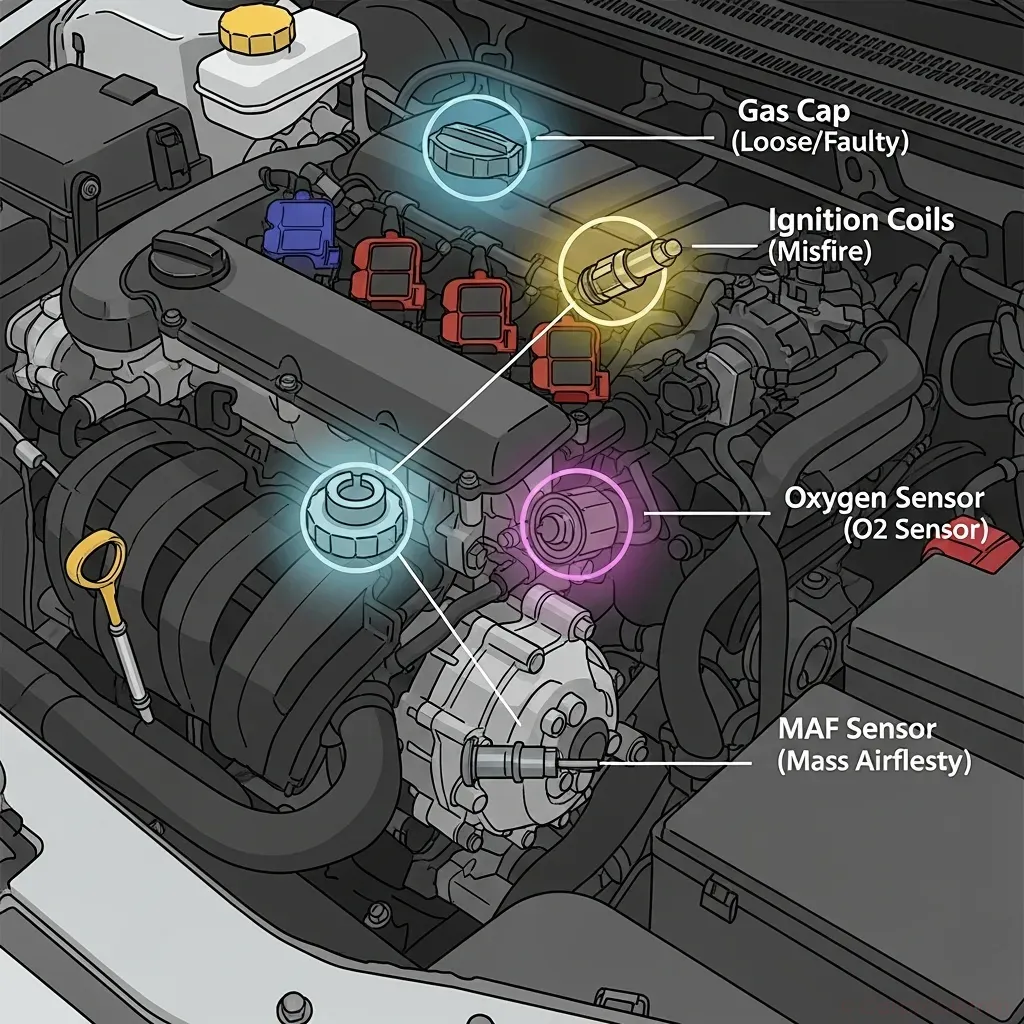
Some check engine light causes are perfect for DIYers; others are best left to a shop with advanced tools and experience.
Usually DIY-Friendly
- Loose or faulty gas cap
- Basic EVAP issues (visible hose cracks, easy-to-access purge valve)
- O2 sensor replacement (if accessible)
- MAF sensor cleaning or replacement
- Ignition coil and spark plug replacement
- Throttle body cleaning and some TPS replacements
- EGR valve cleaning on accessible engines
While you’re under the hood, it’s a good time to inspect suspension components for wear. If you notice cracked or sloppy bushings, our guide to DIY suspension bushing replacement walks you through how to tackle that job safely.
Best Left to a Professional
- Persistent misfires with good plugs/coils (possible internal engine issues)
- Complex EVAP leaks that require a smoke machine to find
- Catalytic converter diagnosis and replacement
- Transmission-related codes and limp mode
- Wiring harness problems, intermittent electrical faults, and CAN communication issues
- Issues requiring advanced scan tool functions (bi-directional control, relearn procedures, programming)
Costs: What You Can Expect to Pay
Costs vary widely by vehicle, region, and whether you DIY or use a shop, but here are typical ranges (parts only for DIY):
- Basic OBD2 scanner: $25–$80
- Gas cap: $15–$40
- O2 sensor: $60–$250 each (OEM sensors are often more)
- Ignition coil: $30–$150 each (varies heavily by engine)
- Spark plugs (set): $25–$120
- MAF sensor: $80–$300
- EGR valve: $80–$350
- Catalytic converter: $400–$2,000+ (parts only, depending on vehicle and whether it’s OEM)
Most shops charge a diagnostic fee (often $100–$200) which may be applied to the repair if you proceed. This can be money well spent for complex or intermittent issues.
Common Myths About the Check Engine Light
Myth 1: “If the Car Feels Fine, I Can Ignore It.”
Many early-stage problems don’t produce noticeable symptoms but can still damage expensive components over time or cause you to fail an emissions test. A solid light with no symptoms isn’t an emergency, but it should never be ignored indefinitely.
Myth 2: “The Code Tells You Exactly Which Part to Replace.”
Codes point to systems, not parts. A P0171 (lean condition) could be caused by a vacuum leak, MAF issue, fuel pressure problem, or exhaust leak—not just an O2 sensor. Blindly replacing parts based on codes is an expensive way to guess.
Myth 3: “Clearing the Code Fixes the Problem.”
Clearing codes only turns the light off temporarily. If the underlying issue isn’t fixed, the light will come back—often at the worst possible time, like on a road trip or just before an inspection.
Myth 4: “It’s Always an Expensive Repair.”
Some check engine light causes are costly, but many are inexpensive or even free to fix (like tightening a gas cap). You won’t know until you read the codes and do basic checks.
Check Engine Light and Other Warning Lights
If the check engine light appears along with other warning lights (like battery, temperature, or oil pressure), prioritize the ones that protect the engine immediately:
- Oil pressure light: Stop the engine immediately; running with no oil pressure can destroy the engine in seconds.
- Temperature/overheat warning: Pull over and shut off the engine as soon as it’s safe; overheating can warp the head or blow the head gasket.
- Battery/charging light: You may only have limited time before the car stalls; reduce electrical load and head for a safe place to stop.
Once those critical issues are addressed, you can circle back to the check engine light diagnosis. In some cases, a charging or overheating problem can trigger secondary engine codes that clear once the primary issue is fixed.
Key Takeaways: How to Handle a Check Engine Light the Smart Way
- Solid light + normal running: Safe to drive short-term, but read codes and plan diagnosis soon.
- Flashing light or severe symptoms: Reduce speed, avoid heavy load, and stop as soon as it’s safe. Continuing to drive can cause major damage.
- Always read codes before replacing parts: Use even a basic OBD2 scanner to avoid guesswork.
- Start with simple checks: Gas cap, loose hoses, obvious damage, and basic maintenance items.
- Know your limits: DIY the straightforward stuff; let a trusted shop handle complex electrical, internal engine, or transmission issues.
Handled correctly, a check engine light doesn’t have to be a wallet-draining disaster. It’s your car’s way of asking for attention—listen early, and you’ll usually spend less and keep your vehicle running reliably for years to come.
How do you rate this guide?

Related Posts
Comments have been disabled.