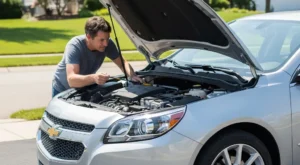
Car Won’t Start in the Morning: Simple Beginner Checks Before You Call a Tow Truck
If your car refuses to start first thing in the morning, you can often narrow down the cause with a few simple checks before paying for a tow. This step‑by‑step guide walks beginners through what to look, listen and sniff for....


When your car won’t start in the morning, it’s stressful and usually happens when you’re already running late. The good news is that many morning no-start problems follow predictable patterns you can check in a few minutes with almost no tools.
- 1. Why Cars Often Refuse to Start in the Morning
- 2. Step 1: Observe the Symptoms Carefully
- 2.1. Quick Morning No-Start Checklist
- 3. Step 2: If You Hear Nothing at All
- 3.1. 2.1 Check the Battery and Connections
- 3.2. 2.2 Check Gear Selector and Clutch Safety Switches
- 4. Step 3: If You Hear Clicking but No Crank
- 5. Step 4: If the Engine Cranks but Won’t Start
- 5.1. 4.1 Basic Checks You Can Do in Your Driveway
- 5.2. 4.2 Consider Temperature and Moisture
- 6. Step 5: If It Starts and Then Immediately Stalls
- 7. Step 6: Quick Visual Checks Under the Hood
- 8. Step 7: Decide If It’s Safe to Keep Trying
- 9. Simple Tools That Make Morning No-Starts Easier to Diagnose
- 10. Summary and Next Steps
This guide walks beginners through simple, safe checks you can do in your driveway before you call a tow truck. You’ll learn how to tell if you’re dealing with a weak battery, starter issue, fuel problem, or something more serious.
Why Cars Often Refuse to Start in the Morning

Morning is when your car is cold and has been sitting for hours. That combination exposes weak parts that might work fine later in the day. Common morning-only no-start causes include:
- Weak or partially drained battery that struggles more in cooler temperatures.
- Corroded battery terminals that lose contact after sitting.
- Fuel system pressure bleeding off overnight, making the first start hard.
- Moisture-related ignition issues (especially after rain or in damp climates).
- Electrical drains overnight from lights, accessories, or faults.
Before you assume the worst, walk through the checks below in order. Many drivers discover a simple issue like a loose battery clamp or a dome light left on.
Step 1: Observe the Symptoms Carefully
What your car does (or doesn’t do) when you turn the key or press the start button is your first big clue. Pay attention to sound, lights, and even smells.
Quick Morning No-Start Checklist
- Do the dash lights come on?
- Do you hear any clicking or cranking noise?
- Do interior lights and the radio work normally?
- Does it try to start but dies right away?
- Any strong fuel or burning smell?
Use your answers to follow the most relevant path below. If your car won’t start specifically right after refueling, see Car Won’t Start After Getting Gas: Causes, Diagnosis & Fixes instead, as that’s a different pattern.
Step 2: If You Hear Nothing at All
If you turn the key or push the button and nothing happens—no crank, maybe just a faint click—start with the simplest electrical checks.
2.1 Check the Battery and Connections
- Try the headlights. Turn on the headlights or hazard lights.
- If they are very dim or dead, the battery is likely discharged.
- If they are bright and normal, the issue may be the starter, ignition switch, or a safety interlock.
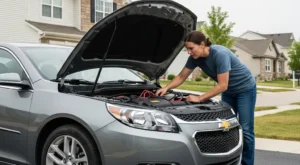
- Look at the battery terminals. Open the hood and visually inspect the battery.
- Check for white/green crust on the terminals (corrosion).
- Gently try to twist each battery clamp by hand. They should not move.
- Tighten loose clamps (if comfortable).
- Use a small wrench or socket to snug the clamp bolts. Do not overtighten.
- Never touch both terminals at once with metal tools.
- Consider a jump-start. If lights are dim and the battery is older, a jump-start from a friend or a jump pack may get you going.
- If the car starts easily after a jump but struggles again the next morning, you may have an underlying drain. See Car Battery Keeps Dying Overnight: Electrical Causes, Diagnosis & Fixes for a deeper dive.
If the battery and lights seem strong but you still get silence, the problem may be with the starter motor, ignition switch, or a security/immobilizer system. Those usually require a professional diagnosis, but you can still do a couple of simple checks.
2.2 Check Gear Selector and Clutch Safety Switches
- For automatics: Make sure the shifter is firmly in P (Park).
- Try starting in N (Neutral) instead of Park. A worn neutral safety switch may work in one position but not the other.
- For manuals: Press the clutch pedal all the way to the floor and try again.
- If the pedal switch is misadjusted, the car may think the clutch isn’t pressed.
- Watch for security lights.
- If a key or padlock symbol is flashing on the dash, your immobilizer may not be recognizing the key or fob.
- Try a spare key or fob if you have one.
If these quick checks don’t help and you still get silence, it’s usually time to call a tow or mobile mechanic, especially if you’re not comfortable working around starter wiring.
Step 3: If You Hear Clicking but No Crank
A rapid clicking or a single loud click when you try to start is often a sign of low battery voltage or a starter issue.
- Listen to the pattern.
- Rapid repeated clicks: Classic weak battery or poor connection.
- Single heavy click: Starter solenoid engages but the starter motor may be stuck or failing.
- Turn off all accessories.
- Switch off headlights, blower fan, and radio.
- Try to start again. If it cranks a bit better, the battery is borderline.
- Try a jump-start.
- If a jump makes it crank strongly and start, the battery is the prime suspect.
- If a jump doesn’t change anything, the starter or its wiring may be at fault.
Morning-only clicking that improves later in the day is a strong hint that your battery is aging or that cold temperatures are exposing a weak cell. Plan on battery testing or replacement soon, even if you get it running today.
Step 4: If the Engine Cranks but Won’t Start
If the engine turns over (rr-rr-rr sound) but never catches, you’re dealing with a crank-no-start condition. In simple terms, the engine is spinning but not getting what it needs: fuel, spark, or compression.
4.1 Basic Checks You Can Do in Your Driveway
- Check the fuel level honestly.
- Gauge stuck? If you’re near empty, add a few gallons of fuel and try again.
- Listen for the fuel pump.
- Turn the key to the ON position (not start) or press the start button without your foot on the brake.
- Listen near the rear seat or fuel tank area for a 2–3 second humming sound. That’s the fuel pump priming.
- No hum at all can point to a pump, relay, or wiring issue.
- Try a “key cycle” prime.
- Turn key to ON for 3–5 seconds, then OFF. Repeat 3–4 times, then try to start.
- If it starts after this, your fuel system may be losing pressure overnight.
- Smell for fuel.
- If you smell strong raw gasoline near the engine bay after repeated cranking, stop trying. You could have a flooding or leak issue.
If you suspect a fuel pump or leak, it’s best to avoid further cranking and have the car towed. Fuel leaks are a fire risk and should be handled by a professional.
4.2 Consider Temperature and Moisture
Morning no-starts often line up with specific weather conditions. That pattern can tell you a lot.
- Cold mornings: Weak batteries, thick oil, and marginal spark plugs or ignition coils show up here.
- Wet or foggy mornings: Moisture can get into old ignition wires, coil boots, or connectors and cause misfires or no-starts.
- Very hot mornings in summer: Vapor lock is rare on modern cars but heat-soaked sensors or fuel pumps can act up.
If your car starts fine later in the day once everything warms or dries out, mention this pattern to your mechanic. It can save diagnostic time and money.
Step 5: If It Starts and Then Immediately Stalls

Sometimes a car will start in the morning, run for a second or two, then die. This can feel like a tease, but it’s another useful clue.
- Try a gentle throttle.
- Start the car and gently hold the accelerator at about 1,500–2,000 RPM.
- If it stays running only while you hold the pedal, you may have an idle air control or throttle body issue.
- Watch for security lights.
- Some immobilizer systems will allow a brief start and then shut off fuel or spark.
- If a key or padlock light flashes right after stalling, suspect a key or security problem.
- Note any rough running.
- If it runs very rough and then dies, you could have misfires or a sensor problem.
- Once it does run, if you later notice the AC blowing inconsistently, see Car AC Blows Cold Then Warm: Causes, Diagnosis & Fixes for climate control issues that may show up once the engine is operating.
Repeated start-then-stall events can quickly drain your battery. If you’ve tried a couple of times with no improvement, it’s better to stop and arrange a tow than to kill the battery completely.
Step 6: Quick Visual Checks Under the Hood
Even if you’re a beginner, a quick look under the hood can uncover obvious problems that developed overnight.
- Look for loose or disconnected hoses.
- Check around the air intake tube and throttle body for large hoses that may have popped off.
- A major vacuum leak can cause a no-start or very rough idle.
- Check for obvious fluid leaks.
- Look under the car for fresh puddles of fuel, oil, or coolant.
- Any large puddle combined with a no-start is a reason to stop and call a tow.
- Inspect the serpentine belt.
- Make sure the main belt on the front of the engine is still in place and intact.
- If the belt is missing or shredded, do not attempt to drive; you may lose alternator, power steering, or water pump function.
You don’t need to identify every part by name. Your goal is simply to spot anything obviously broken, hanging, or leaking that could explain a sudden morning failure.
Step 7: Decide If It’s Safe to Keep Trying
Repeated cranking can overheat the starter, drain the battery, and in some cases wash down the cylinders with fuel. Use this simple decision guide to know when to stop.
- Limit cranking attempts.
- Crank for no more than 5–7 seconds at a time.
- Wait at least 20–30 seconds between attempts.
- Stop immediately if:
- You smell strong fuel under the hood or near the car.
- You see smoke from the engine bay or battery area.
- You hear grinding or metallic clunking when cranking.
- Consider your location.
- If you’re in a tight garage, avoid filling the space with exhaust fumes from repeated attempts.
- Open the garage door or move the car outside (if it does start) before letting it idle.
If you’ve gone through the basic checks and the car still won’t start, it’s safer and often cheaper in the long run to stop and get professional help rather than forcing it.
Simple Tools That Make Morning No-Starts Easier to Diagnose
You don’t need a full toolbox to handle most morning starting issues, but a few inexpensive items can save you time and guesswork.
- Compact jump starter pack: Lets you safely jump your own car without another vehicle.
- Basic digital multimeter: Allows you to check battery voltage (healthy resting voltage is usually around 12.4–12.7V).
- Small socket or wrench set: For tightening battery clamps and small brackets.
- OBD2 scanner: Even a basic unit can read stored codes that help explain a no-start.
Even if you don’t feel ready to use all these tools yourself, having them on hand can help a friend or mobile mechanic diagnose your car faster.
Summary and Next Steps
A car that won’t start in the morning is frustrating, but a calm, step-by-step approach can quickly separate simple issues from serious ones. Start by observing symptoms, checking battery health and connections, listening for the fuel pump, and noting weather patterns.
If you find a weak battery, loose terminals, or a simple user error like a shifter not fully in Park, you may be able to fix the problem on the spot. If your checks point to a failing starter, fuel pump, security system, or you notice strong fuel smells or leaks, stop trying to start the car and arrange a tow. Sharing the specific morning-only symptoms and the checks you’ve already done will help your mechanic get you back on the road faster and with fewer guesswork repairs.
How do you rate this guide?

Related Posts
Comments have been disabled.