
Car Won’t Start in Cold Weather: Causes, Diagnosis & Fixes
If your car won’t start when it’s cold outside, you’re not alone. Learn the most common cold-weather no-start causes, how to diagnose them at home, and what it really costs to fix them before you’re stranded again....

- 1. Car Won’t Start in Cold Weather: What’s Really Going On?
- 2. Why Cold Weather Makes Starting So Much Harder
- 3. Common Symptoms When a Car Won’t Start in the Cold
- 3.1. 1. Slow Cranking, Then Nothing
- 3.2. 2. Single Click, No Crank
- 3.3. 3. Rapid Clicking, No Crank
- 3.4. 4. Strong Cranking, But Engine Won’t Fire
- 3.5. 5. Intermittent No-Start Only When It’s Very Cold
- 4. Top Causes of Cold-Weather No-Start Problems
- 4.1. 1. Weak or Failing Battery
- 4.2. 2. Thick or Wrong-Grade Engine Oil
- 4.3. 3. Failing Starter Motor or Solenoid
- 4.4. 4. Fuel Delivery Problems in the Cold
- 4.5. 5. Ignition System Weakness (Spark Plugs, Coils, Wires)
- 4.6. 6. Faulty Engine Coolant Temperature (ECT) Sensor
- 4.7. 7. Frozen Locks, Linkages, or Security System Issues
- 5. Step-by-Step Diagnosis: What to Check First
- 5.1. Step 1: Listen and Observe
- 5.2. Step 2: Check the Battery and Connections
- 5.3. Step 3: Evaluate Cranking Speed
- 5.4. Step 4: If It Cranks But Won’t Start
- 5.5. Step 5: Consider Recent Maintenance and Driving Symptoms
- 6. When It’s Safe to Keep Trying—and When to Stop
- 7. Preventing Cold-Weather No-Start Problems
- 7.1. 1. Test and Replace the Battery Proactively
- 7.2. 2. Use the Right Oil and Keep Up on Maintenance
- 7.3. 3. Protect the Car from Extreme Cold
- 7.4. 4. Drive Regularly and Avoid Short Trips Only
- 8. When to Call a Professional
- 9. Key Takeaways
Car Won’t Start in Cold Weather: What’s Really Going On?
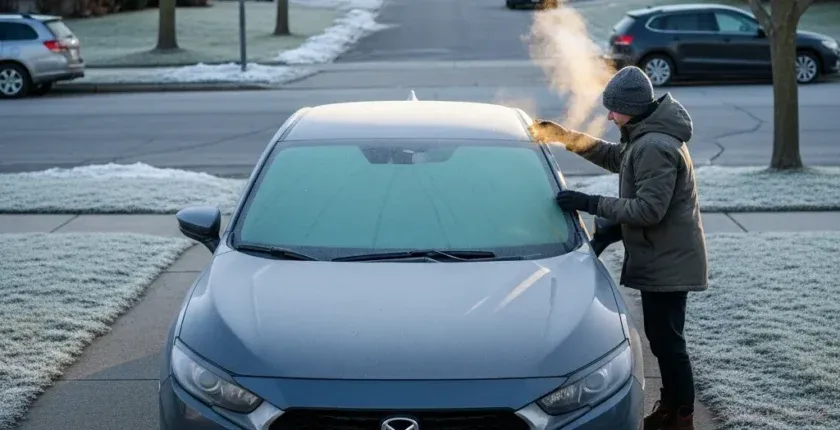
Few things are more frustrating than walking out to your car on a freezing morning, turning the key (or pressing the start button) and getting… nothing. Maybe it cranks slowly and dies, maybe it just clicks once, or maybe the dash lights come on but the engine never even tries to fire. When a car won’t start in cold weather, the problem is usually a combination of weak components and the extra stress low temperatures put on your battery, fuel, and engine.
This guide focuses specifically on cold-weather no-start problems—why they happen, how to diagnose them step by step, and what you can do to fix them and prevent a repeat on the next frosty morning.
Why Cold Weather Makes Starting So Much Harder
Before diving into specific failures, it helps to understand why your car is harder to start when it’s cold:
- Battery output drops: At 0°F (-18°C), a typical lead-acid battery can lose 30–50% of its cranking power, even though your engine needs more power to turn over thick, cold oil.
- Oil thickens: Cold oil has higher viscosity, which increases internal engine friction and makes the starter work harder.
- Fuel doesn’t vaporize as well: Gasoline doesn’t atomize as easily in cold air, so it’s harder to ignite. Diesel fuel can gel in extreme cold.
- Electrical resistance changes: Corroded connections, tired starters, and weak ignition components that seem “fine” in summer can fail in winter.
Cold weather doesn’t create new problems; it exposes marginal parts that were already close to failing.
Common Symptoms When a Car Won’t Start in the Cold
Pay attention to exactly what happens when you try to start the car. The symptom pattern is your biggest clue.
1. Slow Cranking, Then Nothing
The engine turns over slowly, maybe for a few seconds, then stops. Lights may dim noticeably.
- Most likely: Weak battery or poor battery connections.
- Also possible: Thick oil, failing starter drawing too much current.
2. Single Click, No Crank
You hear one solid click when you turn the key, but the engine doesn’t turn at all.
- Most likely: Starter solenoid engages but starter can’t spin due to low battery or internal starter failure.
- Also possible: Corroded or loose battery cables.
3. Rapid Clicking, No Crank
Multiple rapid clicks and dimming lights when you try to start.
- Most likely: Very weak battery or severe voltage drop at the terminals.
4. Strong Cranking, But Engine Won’t Fire
The engine spins at normal speed, but never starts. This is different from a dead battery situation.
- Most likely: Fuel delivery or ignition problem made worse by cold temperatures.
- Also possible: Frozen fuel lines, bad coolant temperature sensor, or flooded engine.
5. Intermittent No-Start Only When It’s Very Cold
Car starts fine on mild days but struggles or fails below a certain temperature.
- Most likely: Battery near end of life, marginal starter, or failing crankshaft/camshaft position sensor.
- Also possible: Moisture in ignition system, weak spark plugs or coils.
Top Causes of Cold-Weather No-Start Problems
1. Weak or Failing Battery
This is by far the most common cause. A battery that seems “okay” in summer can be too weak to crank the engine when temperatures drop.
Signs your battery is the culprit:
- Slow cranking or rapid clicking when starting.
- Headlights dim significantly when you try to start.
- Battery is more than 4–5 years old.
- Corrosion on battery terminals or loose clamps.
DIY checks:
- Inspect terminals for white/green crusty buildup. Clean with a wire brush and a mix of baking soda and water.
- Check that clamps are tight and don’t twist by hand.
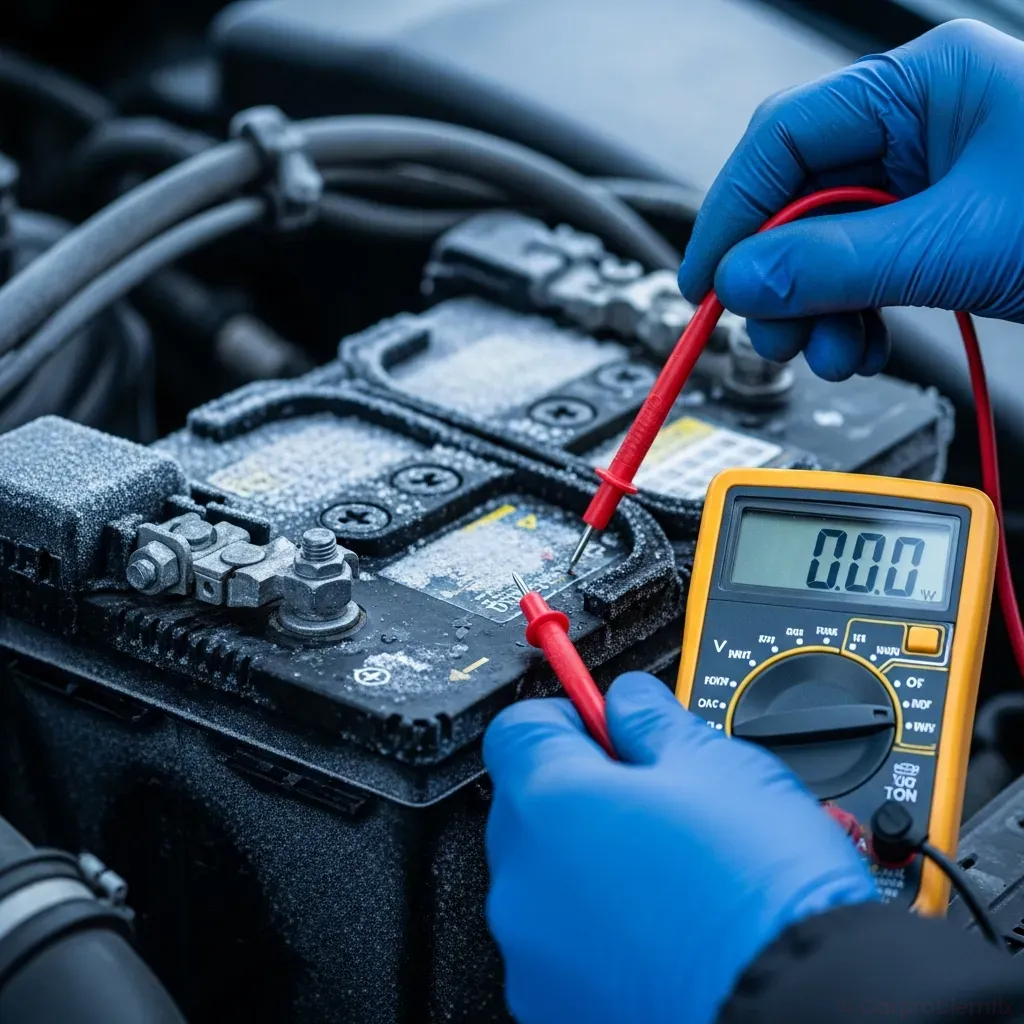
- If you have a multimeter, measure voltage with the engine off: a healthy, fully charged battery should read about 12.6V. Below 12.2V is significantly discharged.
Typical repair costs:
- Battery replacement: $120–$300 depending on size and brand.
- Terminal cleaning or replacement: $20–$80.
If your battery repeatedly dies overnight in cold weather, you may also have an underlying electrical draw. In that case, a deeper diagnosis for a parasitic battery drain is a smart next step.
2. Thick or Wrong-Grade Engine Oil
Oil that’s too thick for winter temperatures makes the engine harder to turn. The starter must work much harder, and a marginal battery may not keep up.
How to tell:
- Oil change is overdue or you don’t know what oil grade is in the engine.
- Cranking is noticeably slower on cold mornings but improves once the car has been driven and warmed up.
What to do:
- Check your owner’s manual for the recommended winter oil viscosity (e.g., 0W-20, 5W-30).
- If you live in a very cold climate, consider synthetic oil, which flows better at low temperatures.
- Change oil and filter if you’re overdue or using a heavier grade than recommended.
Typical cost: $60–$150 for a professional oil change with synthetic oil, depending on vehicle and region.
3. Failing Starter Motor or Solenoid
Cold temperatures can push a worn starter over the edge. Internal resistance increases, and the starter may not spin fast enough to crank the engine.
Symptoms of a bad starter in cold weather:
- Single loud click with no cranking, even with a good battery.
- Intermittent no-crank that gets worse in cold temperatures.
- Burning smell or smoke near the starter after repeated attempts.
DIY checks:
- Verify battery is fully charged and terminals are clean.
- Listen for the click of the solenoid when you turn the key.
- If accessible, check starter wiring for loose or corroded connections.
Typical repair costs:
- Starter motor replacement: $300–$800 parts and labor, depending on vehicle and access.
4. Fuel Delivery Problems in the Cold
Fuel system issues often show up only when it’s cold because fuel doesn’t vaporize as easily and the engine needs a richer mixture to start.
Common cold-related fuel issues:
- Weak fuel pump: Engine cranks but doesn’t start; you may not hear the fuel pump prime when turning the key to ON.
- Clogged fuel filter: Reduced fuel flow, especially noticeable during cold starts and hard acceleration.
- Moisture in fuel lines: In sub-freezing temps, water can freeze and restrict flow.
- Diesel fuel gelling: In diesels, fuel can thicken and plug filters in extreme cold.
DIY checks:
- Turn key to ON (without starting) and listen near the fuel tank for a 2–3 second humming sound (fuel pump priming).
- Check for fuel leaks or strong fuel smell under the car.
- Use a fuel system dryer (isopropyl-based) if you suspect water in the fuel.
Typical repair costs:
- Fuel filter replacement: $80–$250.
- Fuel pump replacement: $400–$1,000+ depending on vehicle.
5. Ignition System Weakness (Spark Plugs, Coils, Wires)
Cold, dense air requires a stronger spark to ignite the air-fuel mixture. Weak ignition components that work in warm weather may fail to fire in the cold.
Symptoms:
- Engine cranks normally but doesn’t start, or starts and runs very rough for the first minute.
- Check engine light may flash or stay on with misfire codes.
- Hard starting is worse in damp, cold conditions.
DIY checks:
- Inspect spark plug wires (if equipped) for cracks or arcing marks.
- Check maintenance records: if plugs are overdue (often 60k–100k miles), replace them.
Typical repair costs:
- Spark plug replacement: $150–$400 depending on engine layout.
- Ignition coil replacement: $150–$350 per coil.
6. Faulty Engine Coolant Temperature (ECT) Sensor
The ECT sensor tells the engine computer how cold the engine is. If it sends the wrong signal, the computer may not enrich the fuel mixture enough for a cold start.
Symptoms:
- Hard starting only when cold; starts fine when warm.
- Poor fuel economy and rough idle after cold start.
- Check engine light with temperature-related codes.
Typical repair cost: ECT sensor replacement usually runs $120–$300 including parts and labor.
7. Frozen Locks, Linkages, or Security System Issues
Sometimes the engine is fine, but the car won’t let you start it.
- Frozen ignition lock cylinder: Key won’t turn, or turns very stiffly.
- Gear selector interlock frozen: You can’t move the shifter out of Park, so the car won’t crank.
- Security/immobilizer faults: In some vehicles, low battery voltage or moisture can trigger an immobilizer fault, preventing starting.
What to try:
- Use a lock de-icer (never hot water) on frozen locks.
- Step firmly on the brake and wiggle the shifter while trying to move it out of Park.
- Try a spare key if you suspect a key transponder issue.
- Disconnecting the battery for a few minutes can reset some security systems, but be aware this may erase radio presets and readiness monitors.
Step-by-Step Diagnosis: What to Check First
When your car won’t start in cold weather, use this logical sequence to narrow down the cause.
Step 1: Listen and Observe
- Do dash lights come on at normal brightness?
- Do you hear a click, rapid clicking, or nothing at all?
- Does the engine crank slowly, normally, or not at all?
This initial observation points you toward either an electrical (battery/starter) or fuel/ignition problem.
Step 2: Check the Battery and Connections
- Inspect terminals for corrosion and clean if needed.
- Ensure clamps are tight.
- If available, measure battery voltage. Below 12.2V indicates a low state of charge.
- Try jump-starting the car. If it starts easily with a jump, the battery is weak or not being charged properly.
If the battery repeatedly goes dead, investigate for a parasitic battery drain or charging system issue.
Step 3: Evaluate Cranking Speed
- Slow cranking: Battery, cables, or starter drag.
- No cranking, single click: Starter or solenoid issue.
- No sound at all: Could be ignition switch, neutral safety switch, or security system.
Step 4: If It Cranks But Won’t Start
- Listen for the fuel pump priming hum when key is turned to ON.
- Check for fuel smell after repeated cranking (could indicate flooding).
- If you have an OBD2 scanner, check for stored codes related to crank sensor, cam sensor, or misfires.
Step 5: Consider Recent Maintenance and Driving Symptoms
- Overdue oil changes or wrong oil grade?
- Recent rough idle, misfires, or poor acceleration?
- Any steering vibrations or pulling that might hint at broader maintenance neglect, like the issues covered in our guides on steering wheel shakes when braking or car pulling to one side while driving?
Often, a car that’s behind on basic maintenance will develop multiple issues at once when winter hits.
When It’s Safe to Keep Trying—and When to Stop
Repeatedly cranking a car that won’t start can cause more damage.
- Limit cranking attempts: 10–15 seconds at a time, with at least 30 seconds of rest between attempts.
- Stop if: You smell something burning, see smoke, or the starter gets very hot.
- Don’t drain the battery completely: A deeply discharged battery can freeze and be permanently damaged in very cold weather.
Preventing Cold-Weather No-Start Problems
A bit of preparation before winter can save you from a lot of cold, frustrating mornings.
1. Test and Replace the Battery Proactively
- Have the battery load-tested before winter, especially if it’s older than 3–4 years.
- Replace marginal batteries before the first deep freeze.
- Consider a higher cold cranking amps (CCA) rating if you live in very cold regions.
2. Use the Right Oil and Keep Up on Maintenance
- Follow the manufacturer’s recommended oil viscosity for winter.
- Stay current on spark plug and ignition system maintenance.
- Replace fuel filters at the recommended interval.
3. Protect the Car from Extreme Cold
- Park in a garage whenever possible.
- Use a block heater or oil pan heater in very cold climates.
- Install a battery blanket or maintainer if the car sits outside for long periods.
4. Drive Regularly and Avoid Short Trips Only
Short trips don’t give the alternator enough time to fully recharge the battery, especially with heavy winter electrical loads (defroster, heated seats, lights).
- Take the car for a longer drive (20–30 minutes) at least once a week in winter.
- Turn off unnecessary accessories during startup to reduce load.
When to Call a Professional
Some cold-weather starting issues are easy DIY fixes; others require professional tools and experience.
Get the car to a shop if:
- Jump-starting doesn’t help, or the car dies again shortly after starting.
- You hear grinding, whining, or burning smells from the starter area.
- The engine cranks normally but never starts, and basic checks don’t reveal the cause.
- The check engine light is on with multiple codes, especially related to sensors or misfires.
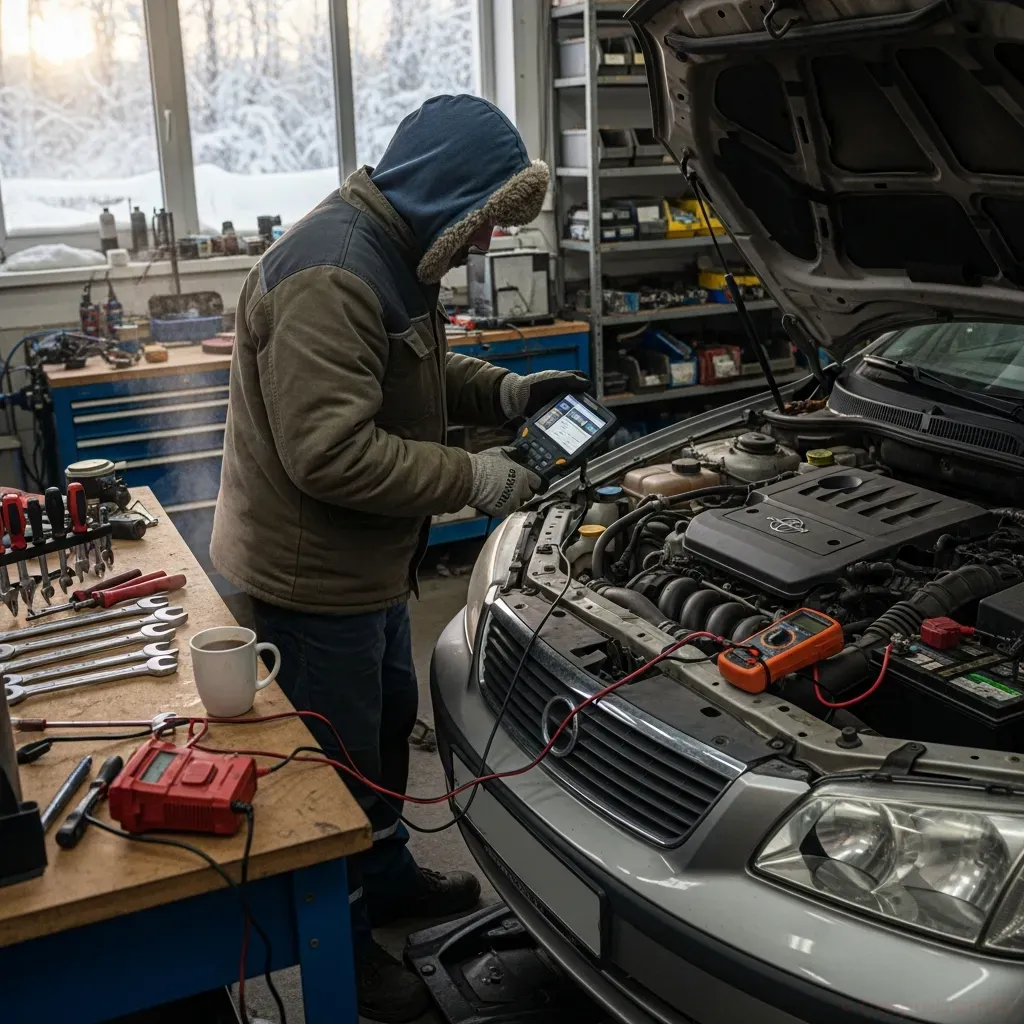
A professional technician can perform advanced tests like starter current draw, fuel pressure, and detailed scan tool diagnostics to pinpoint the exact failure.
Key Takeaways
- Cold weather magnifies existing weaknesses in your battery, starter, fuel system, and ignition components.
- Most winter no-starts trace back to a weak battery, poor connections, or old oil that’s too thick for the temperature.
- Listening to how the car behaves—slow crank, clicking, or strong crank with no start—quickly narrows down the likely cause.
- Proactive maintenance before winter, including battery testing and using the correct oil, is the best way to avoid being stranded.
If your car won’t start in cold weather, don’t just keep cranking and hoping. Use the symptom-based approach in this guide to diagnose the problem, fix the underlying cause, and make sure the next cold morning starts with a running engine instead of a dead silence.
How do you rate this guide?

Related Posts
Comments have been disabled.
