Car Won’t Start but Battery Is Good: Beginner’s Guide to Fast Checks and Easy Fixes
If your car won’t start but the battery tests good, don’t panic. This beginner-friendly guide walks you through quick checks and simple fixes you can do in your driveway before calling a tow truck....

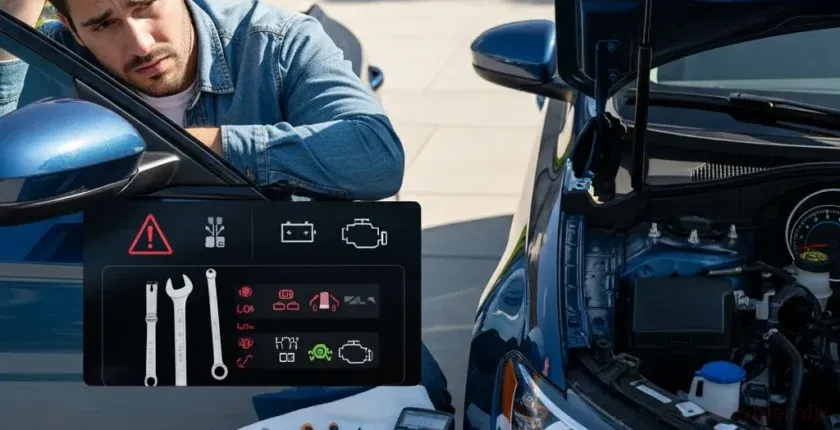
Turning the key and getting nothing is stressful, especially when you know the battery is good. Maybe the lights work, the radio turns on, and a shop or multimeter says the battery is fine, yet the engine still refuses to start. The good news is that many of these no-start problems can be narrowed down with simple checks that don’t require advanced tools.
- 1. How to Confirm Your Battery Really Is Good
- 2. Quick Symptom Checklist: What Does Your Car Do When You Try to Start It?
- 3. Fast Checks for “No Crank” Problems (Engine Doesn’t Turn Over)
- 3.1. 1. Make Sure the Car Is Actually in Park or Neutral
- 3.2. 2. Check the Brake or Clutch Pedal Switch (Push-Button and Manual Cars)
- 3.3. 3. Listen for a Starter Relay Click
- 3.4. 4. Inspect Starter and Ground Connections
- 4. Fast Checks for “Cranks but Won’t Start” Problems
- 4.1. 1. Listen for the Fuel Pump
- 4.2. 2. Check for Flooding or Fuel Smell
- 4.3. 3. Look for Security or Immobilizer Warnings
- 5. Simple DIY Fixes You Can Try Safely
- 5.1. 1. Clean and Tighten Battery Terminals and Grounds
- 5.2. 2. Try a Safe Jump-Start or Booster Pack
- 5.3. 3. Reset Basic Electronics
- 6. When You Should Stop Cranking and Call for Help
- 7. Summary and Next Steps
This guide is written for beginners. You’ll learn how to quickly tell whether you have a starter, ignition, fuel, or security problem, and what you can safely try at home before paying for a tow or diagnostics.
How to Confirm Your Battery Really Is Good
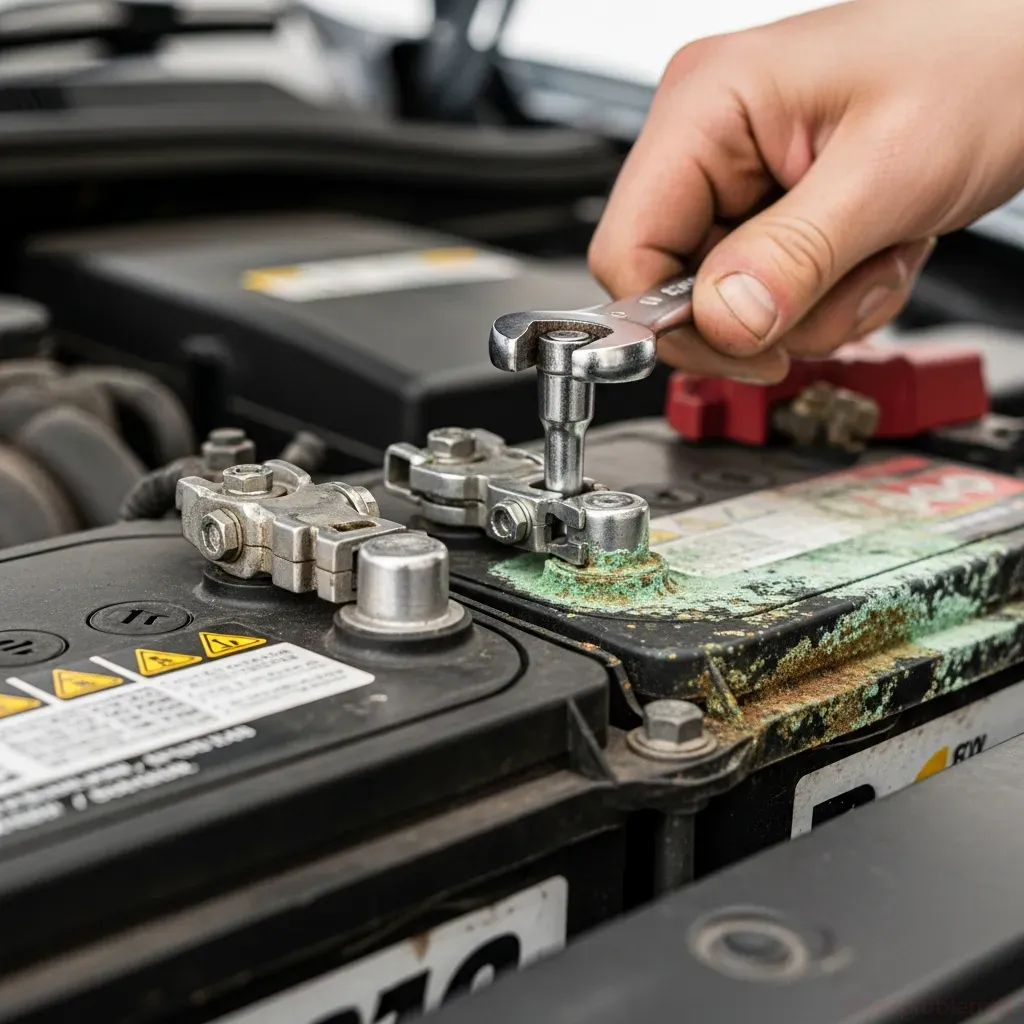

Before chasing other problems, make sure the battery is truly healthy under load, not just “showing 12 volts” with everything off. A weak battery can still power lights and the radio but fail when the starter motor demands high current.
- Check for bright, stable lights. Turn on the headlights and interior lights. They should be bright and not flicker or dim significantly when you try to start the car. Severe dimming usually points to a weak battery or poor connections.
- Listen for clicking vs. silence. If you hear rapid clicking when you turn the key, the battery or connections may still be borderline even if the battery tested “good.” A single solid click usually points more toward a starter or relay issue.
- Inspect battery terminals and cables. Corrosion, loose clamps, or damaged cables can make a good battery act bad. Wiggle each terminal gently; it should not move. Look for white/green crust, broken strands, or swollen insulation.
- Check recent battery history. If the battery is older than 4–5 years, has been jump-started often, or sat discharged, it may test okay at rest but sag under load. In that case, keep battery issues on your suspect list even if voltage looks fine.
If your battery passes these checks and your terminals are clean and tight, it’s reasonable to move on and treat this as a “battery is good” no-start problem.
Quick Symptom Checklist: What Does Your Car Do When You Try to Start It?
The sounds and behavior when you turn the key (or push the start button) are your best clues. Use this checklist to match your symptoms and jump to the most likely area to inspect.
- Symptom A: Absolutely nothing happens (no crank, no click, dash may or may not light up).
Likely areas: ignition switch, brake/neutral safety switch, starter relay, security/immobilizer. - Symptom B: Single click but no crank each time you try.
Likely areas: starter motor, starter solenoid, heavy cable connections, engine ground. - Symptom C: Rapid clicking, lights dim but battery was “tested good.”
Likely areas: borderline battery, dirty terminals, weak connections, high resistance in cables. - Symptom D: Engine cranks strongly but won’t fire (spins but never starts).
Likely areas: fuel delivery, ignition (spark), security system, sensors. - Symptom E: Starts sometimes, other times just clicks or does nothing (intermittent no-start).
Likely areas: worn starter, failing ignition switch, loose wiring, failing relay, neutral safety switch out of adjustment.
Keep your symptom in mind as you go through the next sections. It will help you prioritize which checks to do first.
Fast Checks for “No Crank” Problems (Engine Doesn’t Turn Over)
If the engine doesn’t spin at all when you try to start it, you’re dealing with a “no crank” condition. This is different from a “cranks but won’t start” problem and usually points to the starter circuit or safety interlocks.
1. Make Sure the Car Is Actually in Park or Neutral
- Firmly move the shifter. With your foot on the brake, move the gear selector from Park to Neutral, then try to start the car in Neutral. Wiggle the shifter slightly while turning the key.
- Watch for dash indicators. Confirm the dash actually shows “P” or “N.” If the light doesn’t match the shifter position, the neutral safety switch or shifter linkage may be out of alignment.
- If it starts in Neutral but not in Park, that’s a strong clue the neutral safety switch or shifter adjustment is the issue. This usually requires adjustment or replacement but is often cheaper than a starter.
2. Check the Brake or Clutch Pedal Switch (Push-Button and Manual Cars)
Most push-button start systems and manual transmissions require the brake or clutch pedal to be fully pressed before the starter will engage.
- Press the pedal firmly. Make sure you’re pressing the brake or clutch all the way down. Try starting while applying slightly more pressure than usual.
- Look for brake lights. Have someone stand behind the car and confirm the brake lights come on when you press the pedal. If they don’t, the brake switch may be faulty or misadjusted, preventing the start signal.
- Try different pedal positions. Sometimes a failing switch will work only when the pedal is at a certain angle. If you find a “sweet spot,” you’ve likely found your problem.
3. Listen for a Starter Relay Click
The starter relay is a small electrical switch that sends power to the starter solenoid. If it fails, the starter never gets the signal to engage.
- Turn the key to “Start” while listening under the dash or hood. You may hear a soft click from a relay. No click at all can indicate a failed relay, ignition switch, or a security system issue.
- Check your owner’s manual for the starter relay location. Many fuse boxes have a diagram showing which relay controls the starter.
- Swap with an identical relay if available. If your fuse box has another relay with the same part number (for example, for the horn or A/C), you can temporarily swap them. If the car starts afterward, the original starter relay is suspect.
4. Inspect Starter and Ground Connections
Even with a good battery, poor connections at the starter or engine ground can stop the engine from cranking.
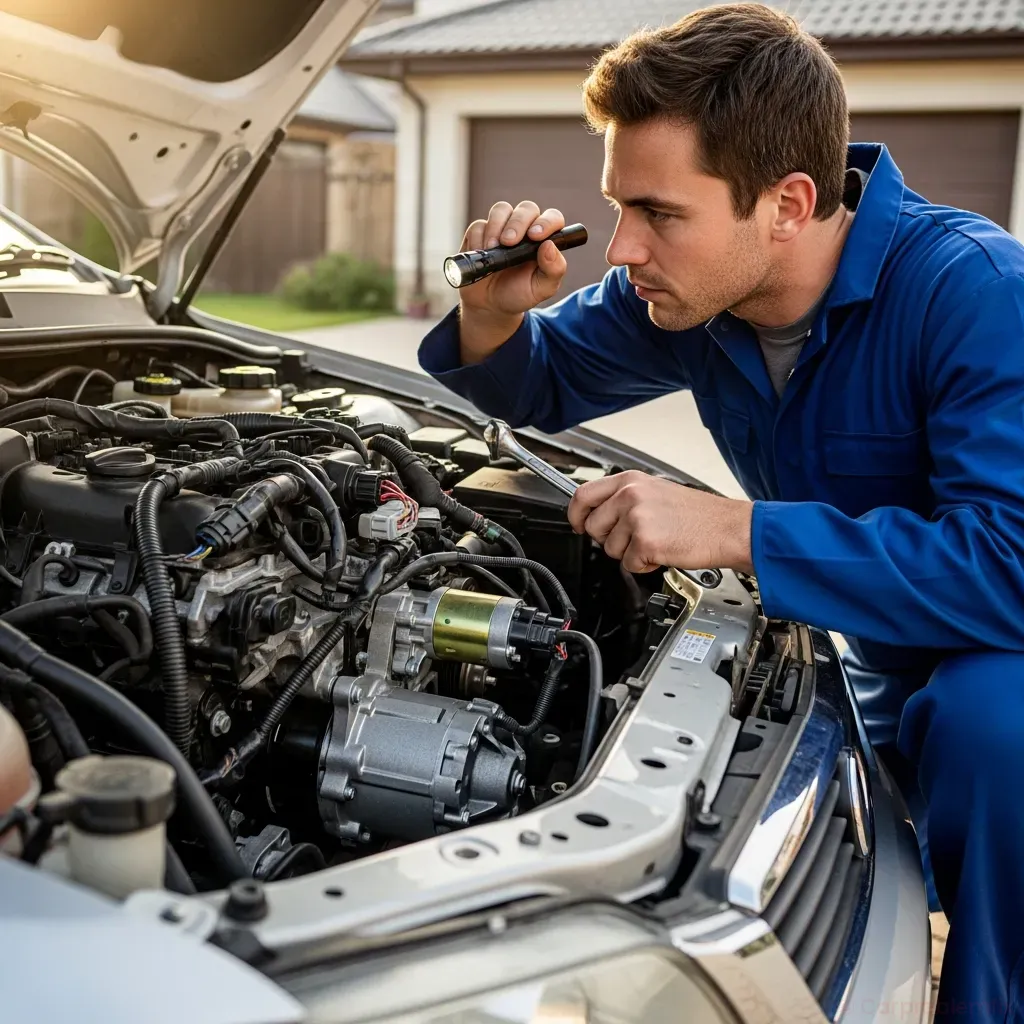
- Locate the starter. It’s usually near where the engine meets the transmission, with a thick cable from the battery and a smaller signal wire.
- Visually inspect the cables. Look for loose nuts, frayed wires, oil-soaked insulation, or obvious damage. Do not touch hot or moving parts; wait until the engine is cool.
- Check engine ground straps. Look for braided or heavy cables connecting the engine or transmission to the body. If they’re broken, corroded, or hanging loose, the starter may not have a good return path for current.
If you’re not comfortable working near the starter, you can stop at the visual inspection and share your observations with a mechanic. It still saves time and diagnostic cost.
Fast Checks for “Cranks but Won’t Start” Problems
If the engine turns over normally but refuses to fire, your battery and starter are doing their job. The problem is usually with fuel, spark, air, or the engine computer’s decision to allow starting.
1. Listen for the Fuel Pump
- Turn the key to “ON” (not “Start”). In a quiet environment, you should hear a soft humming sound from the rear of the car for 1–3 seconds. That’s the fuel pump priming.
- No hum at all? Check the fuel pump fuse and relay in the fuse box. A blown fuse or failed relay can stop the pump even when everything else works.
- Intermittent hum or odd noises. If the pump sometimes runs and sometimes doesn’t, or makes loud whining sounds, it may be failing. This can cause random no-starts, especially after the car has been sitting.
2. Check for Flooding or Fuel Smell
Too much fuel in the cylinders (flooding) can also prevent starting.
- After repeated start attempts, step out of the car and smell near the tailpipe. A strong fuel smell can indicate flooding or a misfire condition.
- Try the “clear flood” technique. In many fuel-injected cars, pressing the accelerator pedal to the floor while cranking tells the computer to reduce fuel injection. Hold the pedal down fully and crank for up to 10 seconds. If it starts and then smooths out, flooding was likely.
- Avoid repeated short cranks. Constantly turning the key for one second at a time can worsen flooding. Use longer, controlled cranks instead.
3. Look for Security or Immobilizer Warnings
Modern vehicles often have immobilizer systems that disable fuel or spark if they don’t recognize the key or detect a fault.
- Check the dash for a key, padlock, or security icon. If it’s flashing rapidly or staying on solid when you attempt to start, the system may be blocking the engine from starting.
- Try a different key or fob. If you have a spare key, use it. A failing transponder chip or weak fob battery can cause intermittent no-starts.
- Lock and unlock the car. Sometimes cycling the locks with the remote, then trying to start, will reset a temporary immobilizer glitch.
If security lights stay on or flashing, further diagnosis may require a scan tool that can read body and security modules, not just engine codes.
Simple DIY Fixes You Can Try Safely
Once you’ve identified your symptom and done basic checks, there are a few simple fixes many beginners can handle. These won’t solve every problem, but they often restore a no-start car long enough to get to a shop.
1. Clean and Tighten Battery Terminals and Grounds
- Gather basic tools. You’ll need safety glasses, gloves, a battery terminal brush or old toothbrush, baking soda and water, and a wrench that fits the terminal clamps.
- Disconnect the negative terminal first. Loosen the clamp and remove it from the post. Then remove the positive terminal. This reduces the risk of short circuits.
- Clean the posts and clamps. Mix baking soda with water to create a paste. Scrub away corrosion on the posts and inside the clamps. Rinse with clean water and dry thoroughly.
- Reconnect positive, then negative. Tighten each clamp so it doesn’t move when you twist it by hand. Loose clamps can cause intermittent no-starts even with a perfect battery.
- Inspect and snug engine grounds. If you can easily access ground straps or cables, make sure their bolts are snug (but don’t overtighten and strip them).
Good electrical connections are critical not just for starting, but for all electronics, including systems like ABS and power steering. Clean terminals can also help prevent issues like dashboard lights flickering while driving and other electrical gremlins.
2. Try a Safe Jump-Start or Booster Pack
Even if the battery tested good, a jump-start can help confirm whether borderline voltage is the real issue.
- Connect jumper cables correctly. Positive to positive, negative to a solid metal ground on the dead car (not directly to the negative terminal if you can avoid it). Follow your owner’s manual for the recommended procedure.
- Let the donor car run for a few minutes. This allows some charge to flow into your battery before cranking.
- Try starting again. If the car now cranks and starts easily, your battery or its connections are still suspect, even if a previous test said it was “good.”
If jump-starting doesn’t change anything, you can shift focus away from the battery and toward the starter circuit or fuel/ignition systems.
3. Reset Basic Electronics
Occasionally, a glitch in the engine computer or a module can cause a no-start, especially after a low-voltage event.
- Turn everything off. Switch off lights, HVAC, radio, and accessories.
- Disconnect the negative battery terminal for 10–15 minutes. This can reset some modules and clear temporary faults. Be aware this may erase radio presets and clock settings.
- Reconnect and try again. If the car now starts, monitor it closely. A repeat issue may indicate a deeper electrical or sensor problem that needs professional diagnosis.
When You Should Stop Cranking and Call for Help
There are times when continuing to crank or experiment can cause more damage than it solves. Knowing when to stop can save your starter, battery, and even your engine.
- If you smell strong burning or see smoke from under the hood or near the battery, stop immediately. This can indicate a shorted starter, melting wiring, or an internal battery failure.
- If the starter sounds harsh, grinds, or whines without turning the engine, you may have a damaged starter drive or flywheel teeth. Continued attempts can make the repair more expensive.
- If the engine cranks very slowly even with a jump-start, you could have internal engine problems (such as seizing) or a severely failing starter. Forcing it can cause catastrophic damage.
- If you’ve tried 3–4 reasonable crank attempts with no change in symptoms, it’s time to pause and reassess instead of draining the battery or overheating the starter.
At this point, a more advanced diagnostic approach like the one in Car Won’t Start but the Battery Is Good: Electrical & Starter System Diagnosis Guide can help a DIYer with tools, or you can hand your notes to a professional technician.
Summary and Next Steps
When your car won’t start but the battery is good, the problem is usually in the starter circuit, safety switches, fuel system, or security system. By listening carefully, watching the dash, and doing a few safe checks, you can often narrow the cause in minutes.
Start with simple items: gear selector position, brake or clutch switches, relay clicks, fuel pump noise, and clean battery and ground connections. If your checks point toward a failing starter, immobilizer issue, or internal engine problem, it’s wise to call a trusted mechanic or roadside service rather than keep cranking.
Document what you observed—sounds, warning lights, and what changed after each step. Sharing these details with a shop can shorten diagnostic time and reduce your repair bill, getting you back on the road more quickly and with fewer surprises.
How do you rate this guide?

Related Posts
Comments have been disabled.