Car Won’t Start After Rain or Heavy Washing: Causes, Diagnosis & Fixes
If your car won’t start after a rainstorm or a thorough wash, water intrusion and moisture-sensitive electrical problems are usually to blame. Learn the most common causes, how to diagnose them at home, and which fixes are DIY-safe versus when you need a mechanic....

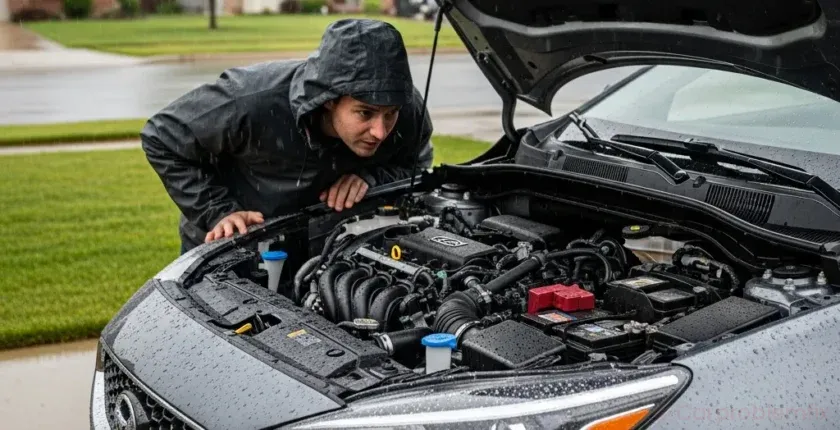
Walk out after a heavy rain or finish washing your car, turn the key or push the start button… and nothing. The battery seemed fine yesterday, the car ran perfectly, and now it cranks weakly or not at all. When a car won’t start specifically after rain or washing, moisture is almost always involved – but that doesn’t automatically mean something is permanently ruined.
- 1. Why Your Car Won’t Start After Rain or Washing
- 2. Most Common Causes of No-Start After Rain or Washing
- 2.1. 1. Moisture in Ignition Components (Coils, Wires, Distributor)
- 2.2. 2. Water in the Fuse Box or Power Distribution Center
- 2.3. 3. Wet or Corroded Battery Terminals and Ground Connections
- 2.4. 4. Water in the Air Intake or Air Filter Box
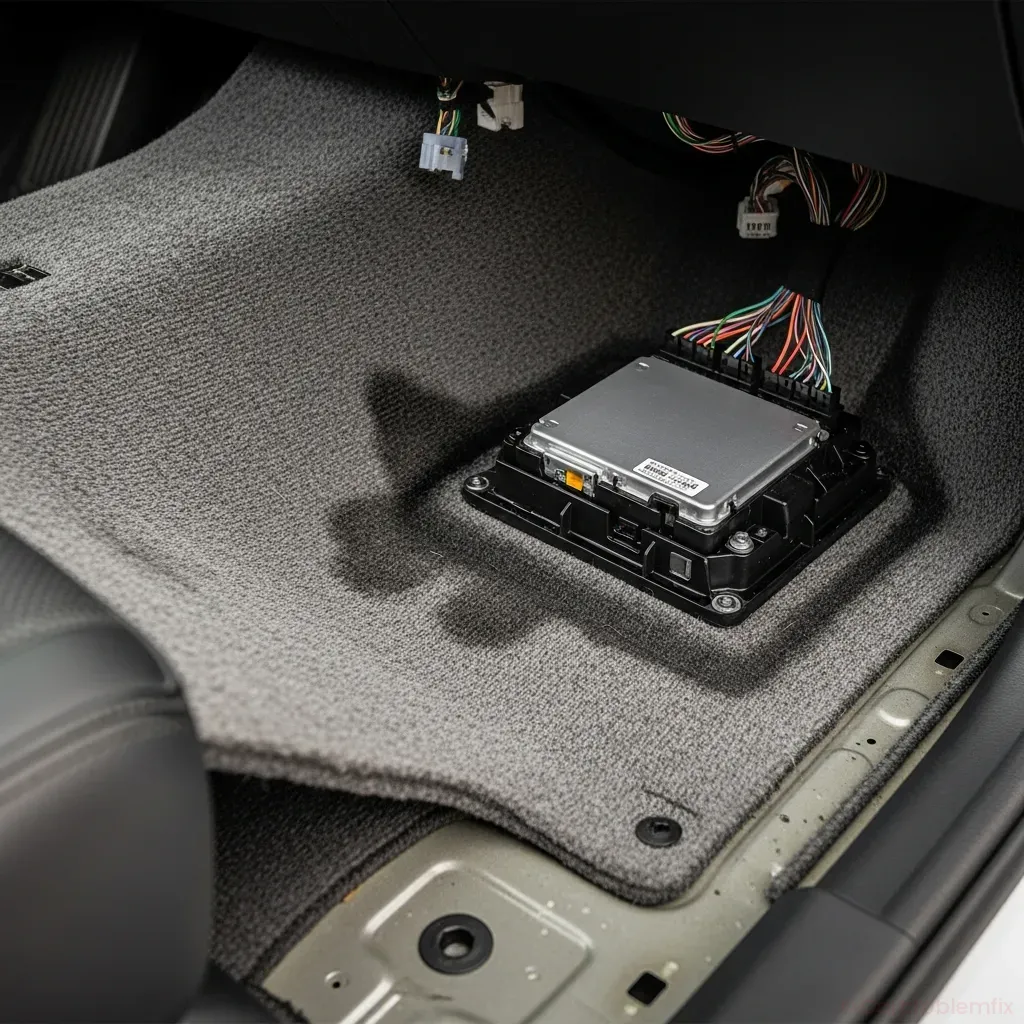
- 2.5. 5. Water in the Cabin or Under-Carpet Modules
- 2.6. 6. Wet Starter Motor or Wiring
- 3. Step-by-Step Diagnosis: What to Check First
- 3.1. Step 1: Identify the Type of No-Start
- 3.2. Step 2: Quick Visual and Smell Check
- 3.3. Step 3: Battery and Connections
- 3.4. Step 4: Fuse Box and Relays
- 3.5. Step 5: Ignition System and Air Intake
- 3.6. Step 6: Scan for Diagnostic Trouble Codes (DTCs)
- 4. When to Call a Professional Mechanic
- 5. How to Prevent No-Start Problems After Rain or Washing
- 5.1. 1. Be Smart About Washing
- 5.2. 2. Maintain Seals and Covers
- 5.3. 3. Stay on Top of Electrical and Fluid Maintenance
- 5.4. 4. Watch for Early Warning Signs
- 6. Related Issues You Might Notice After Heavy Rain
- 7. Bottom Line
This guide explains why cars often refuse to start after wet conditions, how to safely diagnose the problem at home, and what repairs or preventive steps will keep you from getting stranded next time the weather turns ugly.
Why Your Car Won’t Start After Rain or Washing
Modern vehicles are packed with electrical connectors, sensors, and computers. Most are sealed, but age, heat, vibration, and previous repairs can compromise those seals. When water gets where it shouldn’t, you can see anything from a simple misfire to a complete no-start.
Common patterns when a car won’t start after rain or washing include:
- Cranks normally but won’t fire (no spark or fuel)
- Cranks weakly or intermittently (voltage drop from wet connections)
- Single click or rapid clicking, no crank (starter or power supply issues)
- Absolutely nothing happens – no crank, no click (immobilizer or main power problem)
Understanding which pattern you have will help narrow down the likely cause.
Most Common Causes of No-Start After Rain or Washing
1. Moisture in Ignition Components (Coils, Wires, Distributor)
On older vehicles with a distributor and spark plug wires, moisture intrusion is a classic cause of a post-rain no-start. On newer coil-on-plug systems, cracked coil boots or poor seals can let moisture in as well.
What happens: Water or condensation gets into:
- Distributor cap (older vehicles)
- Ignition coil boots or spark plug wells
- Cracked or worn spark plug wires
This moisture provides an easier path for the spark to leak to ground instead of jumping the spark plug gap. The engine cranks but never actually ignites the air-fuel mixture.
Typical symptoms:
- Engine cranks normally but doesn’t start
- Occasional sputter or single cylinder trying to fire
- Strong fuel smell from the exhaust (fuel is injected but not burned)
- May start and run rough once it dries out, then clear up
DIY checks:
- Open the hood and look for obvious water pooling around ignition coils or plug wells.
- On older cars, remove the distributor cap (if easily accessible) and check for moisture or corrosion.
- In a dark garage, have someone crank the engine while you look (from a safe distance) for visible arcing around wires or coils.
Fixes:
- Dry components gently with compressed air or a hair dryer on low heat (avoid overheating plastic).
- Apply dielectric grease to spark plug boots and coil boots during reassembly to improve sealing.
- Replace cracked ignition coils, worn spark plug wires, or a damaged distributor cap and rotor.
2. Water in the Fuse Box or Power Distribution Center
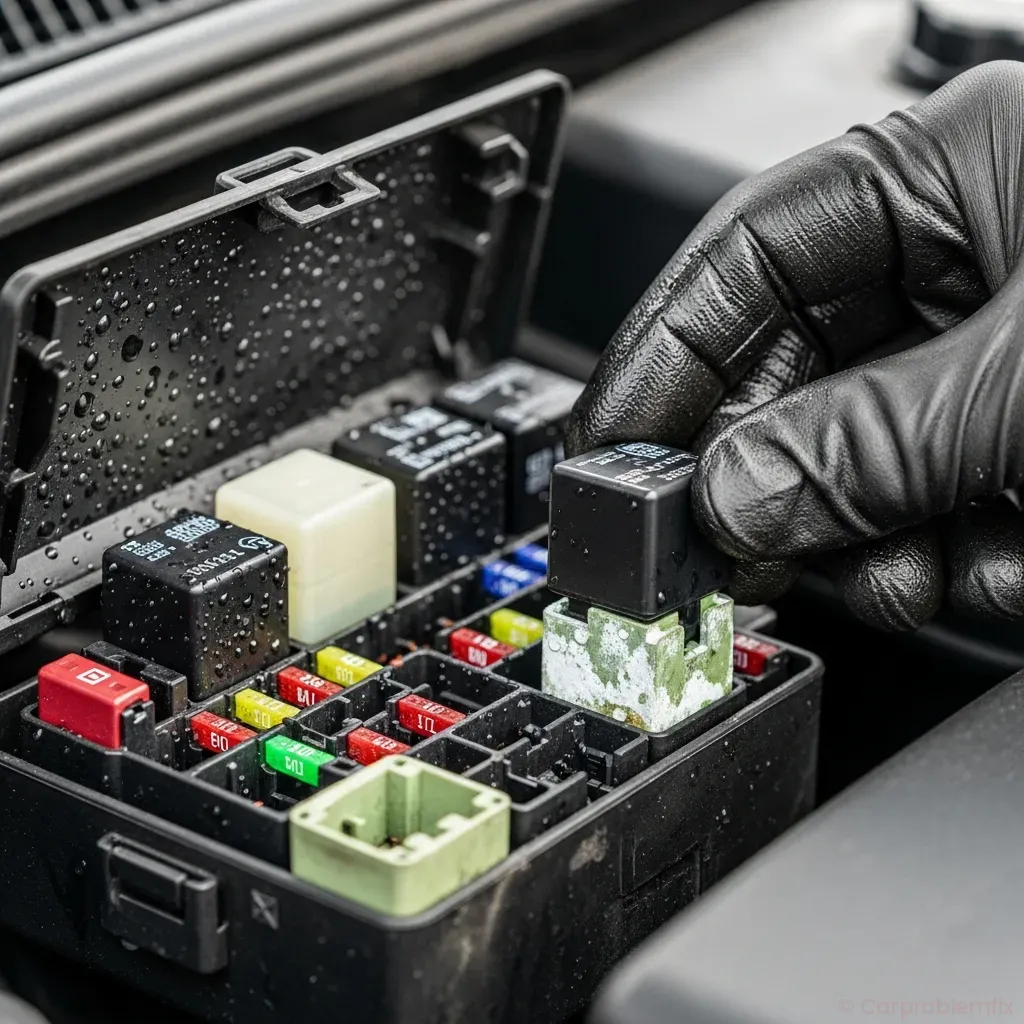
Many vehicles have a main fuse and relay box under the hood, often near the fender or firewall. If its cover is missing, cracked, or not seated properly, heavy rain or aggressive engine bay washing can let water in.
What happens: Water bridges contacts between fuses or relays or causes corrosion at the terminals. This can interrupt power to:
- Starter relay
- Fuel pump relay
- Engine control module (ECM/PCM)
- Ignition system
Typical symptoms:
- Intermittent no-crank or no-start that appears only after rain
- Random clicking from the fuse box area when you try to start
- Multiple unrelated warning lights or electrical glitches
DIY checks:
- Inspect the under-hood fuse box cover for cracks, missing seals, or signs it’s not fully latched.
- Open the cover and look for visible moisture, greenish corrosion, or water stains.
- Lightly tap on relays while an assistant turns the key to see if a sticking relay wakes up (do this only with the engine off and key in start position).
Fixes:
- Dry the fuse box thoroughly with compressed air and a gentle heat source.
- Clean light corrosion with electrical contact cleaner and a soft brush.
- Replace heavily corroded fuses, relays, or the fuse box assembly if damage is extensive.
- Replace the fuse box cover or its gasket to prevent future water intrusion.
3. Wet or Corroded Battery Terminals and Ground Connections
Even if the battery itself is healthy, poor connections can mimic a dead battery, especially when they get wet. Road salt, age, and previous leaks can leave crusty corrosion that worsens with moisture.
What happens: Wet, corroded, or loose terminals and grounds increase resistance. Under starter load, voltage drops too low for the starter, ignition, or engine computer to function correctly.
Typical symptoms:
- Rapid clicking when you turn the key
- Single loud click from the starter but no crank
- Dash lights dim or go out when trying to start
- Car may start fine once everything dries out, then fail again in the next rain
DIY checks:
- Inspect battery terminals for white, green, or blue corrosion.
- Check that the battery clamps are tight and don’t rotate on the posts.
- Follow the negative cable to its ground point on the body or engine and look for rust or loose bolts.
Fixes:
- Clean battery terminals with a battery brush and a baking soda/water solution (disconnect battery first).
- Clean ground connections to bare metal and retighten securely.
- Apply a thin layer of battery terminal protectant or petroleum jelly after reassembly.
4. Water in the Air Intake or Air Filter Box
High-pressure washing directly into the grille or deep puddles during storms can force water into the air intake system. While most systems are designed to avoid ingesting liquid water, they’re not foolproof.
What happens: Water saturates the air filter or, in extreme cases, enters the intake manifold and cylinders. A soaked filter can restrict airflow so much that the engine can’t start. If enough water reaches the cylinders, it can cause hydrolock, which may bend connecting rods.
Typical symptoms:
- Engine cranks but struggles and doesn’t start, especially right after driving through deep water or washing the front end
- Very rough running and misfires if it does start
- Unusual mechanical noise if hydrolock damage has occurred
DIY checks:
- Open the air filter box and inspect the filter for dampness or water stains.
- Look for standing water in the bottom of the air box.
- Check intake ducts for loose clamps or missing splash shields that could allow water entry.
Fixes:
- Replace a wet or heavily damp air filter – don’t try to dry and reuse it.
- Drain and dry the air box and ducts.
- If you suspect hydrolock (engine suddenly stopped while in deep water, now won’t crank), do not keep trying to start it – have it towed and inspected by a professional.
5. Water in the Cabin or Under-Carpet Modules
Some vehicles hide critical control modules under the carpet, beneath seats, or in low areas of the cabin. Clogged sunroof drains, failed door seals, or windshield leaks can flood these areas during heavy rain.
What happens: Water soaks wiring harnesses and modules, causing short circuits or corrosion. This can disable the immobilizer, body control module (BCM), or even the engine computer.
Typical symptoms:
- No crank or no-start combined with random electrical issues (power windows, locks, interior lights acting strangely)
- Wet or musty carpet, especially in the footwells
- Warning lights for ABS, airbag, or traction control after rain
DIY checks:
- Feel the carpet near the front and rear footwells for dampness.
- Lift the edge of the carpet (if possible) to check for standing water or corrosion on connectors.
- Inspect door seals and sunroof drains for obvious blockages or damage.
Fixes:
- Dry the interior thoroughly – use fans, dehumidifiers, and remove floor mats.
- Clear sunroof drains with gentle compressed air or flexible weed-whacker line.
- Have any soaked control modules inspected; sometimes they can be cleaned and saved if addressed quickly.
6. Wet Starter Motor or Wiring
The starter is usually mounted low on the engine, where it can be exposed to road splash. Aggressive underbody washing or deep puddles can soak the starter and its wiring.
What happens: Moisture can get into the starter solenoid or cause corrosion at the main power cable and control wire. The result is intermittent or complete failure to crank.
Typical symptoms:
- Single click from the starter area but no crank, especially after driving in heavy rain
- Car starts fine when dry, then randomly fails after wet conditions
- Sometimes tapping the starter (carefully) temporarily restores operation – a sign of internal wear or moisture issues
DIY checks:
- Visually inspect the starter and its wiring for obvious corrosion or loose connections.
- Check for damaged splash shields or missing underbody panels that should protect the starter.
Fixes:
- Clean and tighten starter electrical connections.
- Replace a starter that shows repeated failure after rain – internal corrosion often progresses quickly.
- Restore any missing splash shields to reduce future water exposure.
Step-by-Step Diagnosis: What to Check First
When your car won’t start after rain or washing, work through these steps systematically. Always prioritize safety: if you’re unsure, call for professional help.
Step 1: Identify the Type of No-Start
- No crank at all: No sound, no movement from the engine.
- Click but no crank: Single or rapid clicking when you turn the key.
- Cranks but won’t start: Engine spins normally but doesn’t fire.
This distinction points you toward power supply/starter issues vs. ignition/fuel problems.
Step 2: Quick Visual and Smell Check
- Open the hood and look for obvious standing water, loose covers, or disconnected hoses.
- Smell for raw fuel at the tailpipe after cranking – indicates fuel is present but not igniting.
- Check inside the cabin for wet carpets or condensation on windows.
Step 3: Battery and Connections
- Turn on headlights: if they’re very dim or go out when you try to start, you may have a voltage drop issue.
- Inspect and clean battery terminals and grounds as described earlier.
- If you have a multimeter, check battery voltage (12.4–12.7V is normal for a fully charged battery).
Step 4: Fuse Box and Relays
- Inspect under-hood fuse box for moisture; dry thoroughly if wet.
- Swap a suspect relay (starter or fuel pump) with an identical non-critical relay (like horn) as a test, if you’re comfortable doing so.
Step 5: Ignition System and Air Intake
- Check for water around coils, plug wells, and the air filter box.
- Replace a soaked air filter and dry the air box.
- If you suspect moisture in ignition components, allow the car to sit in a dry, warm area for several hours, then try again.
Step 6: Scan for Diagnostic Trouble Codes (DTCs)
If you have an OBD2 scanner, plug it in and check for codes. Even if the check engine light isn’t on, stored codes can point to:
- Crankshaft or camshaft position sensor issues
- Immobilizer or key recognition problems
- Ignition coil or injector circuit faults
Codes that appear only after rain often indicate moisture-sensitive connectors or wiring.
When to Call a Professional Mechanic
Some water-related no-start issues are straightforward (wet air filter, corroded battery terminals). Others can be complex and risky to troubleshoot without experience.
Seek professional help if:
- The engine suddenly stopped in deep water and now won’t crank (possible hydrolock).
- You find standing water under the carpet or in control module areas.
- You’ve cleaned and dried obvious issues but the no-start persists.
- You see or smell burning, melted plastic, or heavy corrosion in electrical components.
A good shop can perform more advanced tests, including voltage drop measurements, current draw tests, and pinpointing wiring faults with factory diagrams.
How to Prevent No-Start Problems After Rain or Washing
Once you’ve fixed the immediate issue, it’s worth taking a few preventive steps to avoid repeat failures.
1. Be Smart About Washing
- Avoid spraying high-pressure water directly into the grille, under the hood, or into wheel wells where wiring and connectors live.
- Use low-pressure rinsing around the engine bay and avoid directly soaking the fuse box, alternator, and ignition components.
- If you must clean the engine bay, cover sensitive components with plastic bags and remove them after you’re done.
2. Maintain Seals and Covers
- Replace cracked fuse box covers and ensure they latch securely.
- Inspect hood seals, cowl panels, and windshield trim for gaps that could let water into the cabin or engine bay.
- Keep sunroof drains and door drains clear of debris.
3. Stay on Top of Electrical and Fluid Maintenance
Moisture problems often expose underlying neglect. Corroded terminals, old ignition components, and worn seals are much more vulnerable when wet.
- Follow your vehicle’s maintenance schedule for spark plugs, ignition coils, and filters.
- Inspect wiring harnesses for chafing or previous poor repairs (like exposed splices or electrical tape instead of proper heat-shrink).
- Keep up with fluid changes to reduce the chance of secondary issues like overheating or transmission problems that can leave you stranded in bad weather. For a detailed schedule and DIY tips, see the Complete Fluid Maintenance Guide: Intervals, DIY Checks & Costly Mistakes to Avoid.
4. Watch for Early Warning Signs
- Intermittent electrical glitches after rain (flickering lights, random warning messages) often precede a full no-start.
- Musty smells or foggy windows inside the car can indicate chronic water leaks.
- Repeated misfires or rough running after wet weather may point to ignition components that need replacement.
Related Issues You Might Notice After Heavy Rain
Water intrusion doesn’t just affect starting. You might also notice:
- HVAC problems: If your AC performance changes after rain – for example, it blows cold then suddenly warm – that can point to separate issues like low refrigerant or a failing expansion valve. For those, see Car AC Blows Cold Then Warm: Causes, Diagnosis & Fixes and Car AC Not Blowing Cold Air: Causes, Fixes & Cost to Repair.
- Brake feel changes: Driving through deep water can temporarily reduce braking effectiveness until the rotors and pads dry.
- Transmission behavior changes: If you’ve recently driven through flood-level water, watch for delayed shifts or slipping that could indicate water-contaminated fluid.
Bottom Line
When your car won’t start after rain or a wash, don’t immediately assume the worst. In many cases, the culprit is moisture in ignition components, fuse boxes, or electrical connections that can be dried, cleaned, and protected.
Start by identifying whether the engine won’t crank or simply won’t fire, then work through battery connections, fuse boxes, ignition components, and signs of water intrusion in the cabin or intake. Address any underlying corrosion or damaged seals so the next storm doesn’t leave you stranded again.
If you’re ever in doubt – especially with potential hydrolock or flooded control modules – stop cranking and get a professional diagnosis. Catching water-related problems early can save you from far more expensive repairs down the road.
How do you rate this guide?

Related Posts
Comments have been disabled.