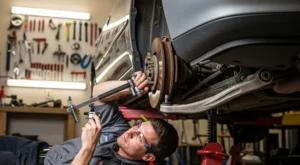
Car Won’t Start After Getting Gas: Causes, Diagnosis & Fixes
If your car won’t start right after filling up at the gas station, it’s more than just bad luck. Learn the most common causes, how to diagnose them step by step, and what it really costs to fix a no‑start problem that only appears after refueling....


- 1. Car Won’t Start After Getting Gas – What’s Really Going On?
- 2. First Step: Pay Attention to the Symptoms
- 2.1. Symptom Checklist
- 3. Common Causes When a Car Won’t Start After Getting Gas
- 3.1. 1. EVAP System Flooded or Stuck (Most Common for Post‑Refuel No‑Start)
- 3.1.1. Typical EVAP‑Related Causes
- 3.1.2. Symptoms of EVAP Problems After Refueling
- 3.1.3. DIY Diagnosis
- 3.1.4. Fix & Cost
- 3.2. 2. Bad or Loose Gas Cap
- 3.2.1. How a Gas Cap Can Cause Problems
- 3.2.2. What You’ll Notice
- 3.2.3. Quick DIY Check
- 3.2.4. Fix & Cost
- 3.3. 3. Weak Fuel Pump or Failing Fuel Pump Relay
- 3.3.1. Why It Shows Up at the Gas Station
- 3.3.2. Symptoms
- 3.3.3. DIY Diagnosis
- 3.3.4. Fix & Cost
- 3.4. 4. Hot‑Soak Problems: Crankshaft or Camshaft Position Sensors
- 3.4.1. What It Feels Like
- 3.4.2. DIY Diagnosis
- 3.4.3. Fix & Cost
- 3.5. 5. Vapor Lock (More Common on Older Vehicles)
- 3.5.1. When to Suspect Vapor Lock
- 3.5.2. Fix & Prevention
- 3.6. 6. Battery or Charging System Issues Exposed by Short Trips
- 3.6.1. Symptoms
- 3.6.2. DIY Diagnosis
- 3.6.3. Fix & Cost
- 4. Step‑by‑Step Diagnosis: Car Won’t Start After Getting Gas
- 4.1. Step 1: Does the Engine Crank?
- 4.2. Step 2: Listen for the Fuel Pump
- 4.3. Step 3: Consider EVAP and Refueling Behavior
- 4.4. Step 4: Scan for Codes
- 4.5. Step 5: Check Under the Hood and Under the Car
- 5. Is It Safe to Keep Driving After a Hard Start at the Gas Station?
- 6. Preventing No‑Start Problems After Refueling
- 6.1. 1. Stop Topping Off the Tank
- 6.2. 2. Keep Up with Fuel System Maintenance
- 6.3. 3. Maintain the Battery and Charging System
- 6.4. 4. Follow a Fluid and General Maintenance Schedule
- 7. When to Call a Tow Truck vs. Keep Troubleshooting
- 8. Key Takeaways
Car Won’t Start After Getting Gas – What’s Really Going On?

Pulling away from the pump, turning the key, and getting nothing is one of the most frustrating car problems you can have. The car drove to the gas station just fine, you shut it off for a couple of minutes, and suddenly it won’t start after getting gas. This specific scenario points to a different set of issues than a random no‑start in your driveway.
In this guide, you’ll learn:

- The most common causes when a car won’t start right after refueling
- How to diagnose the problem yourself with basic tools
- Which fixes are DIY‑friendly and which need a mechanic
- Typical repair costs so you know what to expect
First Step: Pay Attention to the Symptoms
Before you start swapping parts, note exactly what happens when you try to start the car after getting gas. Different symptoms point to very different causes.
Symptom Checklist
- Engine cranks normally but won’t fire: Starter spins the engine at normal speed, but it never catches.
- Cranks slowly, like the battery is weak: Engine turns over sluggishly or stops.
- No crank at all: You turn the key or push the button and hear nothing, or maybe a single click.
- Strong fuel smell: You smell gasoline near the car after repeated start attempts.
- Check engine light on or flashing: The ECM may have stored codes that point directly to the problem.
Keep these details in mind as you read through the likely causes below; they’ll help you narrow things down quickly.
Common Causes When a Car Won’t Start After Getting Gas
1. EVAP System Flooded or Stuck (Most Common for Post‑Refuel No‑Start)
The EVAP (evaporative emissions) system captures fuel vapors from the tank and routes them to the engine to be burned. When you refuel, the EVAP system is actively dealing with vapor changes. If something goes wrong, it can make the engine hard to start right after filling up.
Typical EVAP‑Related Causes
- Overfilling the tank: Topping off past the first click can send liquid fuel into the charcoal canister and purge lines, flooding the system.
- Stuck open purge valve: Allows a large amount of fuel vapor into the intake at startup, creating a rich mixture that won’t ignite easily.
- Charcoal canister saturated with fuel: Causes rough running, hard starts after refueling, and sometimes a strong fuel smell.
Symptoms of EVAP Problems After Refueling
- Car cranks but won’t start or starts and immediately stalls
- Hard starting only after filling up; starts normally at other times
- Check engine light with codes like P0440, P0441, P0446, P0455, P0496
- Occasional rough idle or stumbling right after refueling
DIY Diagnosis
- Stop topping off: If you habitually squeeze in extra fuel after the pump clicks off, stop doing it. See if the problem improves over a few tanks.
- Listen at the engine bay: With the key on (engine off), you may hear a faint clicking from the purge valve. It shouldn’t be stuck buzzing loudly or obviously stuck open.
- Scan for codes: A basic OBD2 scanner can confirm EVAP‑related trouble codes.
Fix & Cost
- Purge valve replacement: $75–$250 parts and labor, depending on vehicle.
- Charcoal canister replacement: $200–$600, often more on SUVs and trucks.
- Hoses and lines: $50–$200 if cracked or fuel‑soaked hoses need replacement.
If you’ve been topping off for years, the charcoal canister may be permanently damaged and will need replacement before the no‑start after refueling goes away.
2. Bad or Loose Gas Cap
A gas cap might seem too simple to cause a no‑start, but it’s a key part of the fuel and EVAP system. While a bad cap is more famous for causing a check engine light, in some cars it can contribute to hard starting after filling up.
How a Gas Cap Can Cause Problems
- Loose or missing cap: Can cause incorrect tank pressure and confuse the EVAP system.
- Damaged seal: Allows vapor leaks that trigger EVAP errors and can affect fuel delivery.
What You’ll Notice
- Check engine light with EVAP leak codes (often P0455 or P0457)
- Fuel smell around the rear of the car
- Hard starts or stumbling right after refueling
Quick DIY Check
- Inspect the cap’s rubber seal for cracks, flattening, or missing pieces.
- Make sure the cap clicks several times when you tighten it.
- If in doubt, replace the cap with an OEM or high‑quality aftermarket part (cheap insurance).
Fix & Cost
- New gas cap: $15–$60, usually DIY in seconds.
3. Weak Fuel Pump or Failing Fuel Pump Relay
Refueling changes the temperature and pressure conditions in the tank. A marginal fuel pump or relay that worked on the way to the station can fail just enough that the engine won’t start after you shut it off to get gas.
Why It Shows Up at the Gas Station
- Turning the car off and back on stresses a weak pump or relay.
- Cold fuel entering a hot tank can cause a failing pump to seize or stall.
- Low fuel level before refueling may have overheated a weak pump.
Symptoms
- Cranks but won’t start, especially after a short stop
- No fuel pump “whir” sound for a second or two when you turn the key to ON
- Intermittent stalling while driving on previous days
- Long crank times even when it does start
DIY Diagnosis
- Listen for the pump: With the car quiet, turn the key to ON (not start). You should hear a brief hum from the rear. No sound can mean a bad pump or relay.
- Cycle the key: Turn key ON for 3 seconds, OFF, repeat 3–4 times, then try starting. If it starts easier, you may have a fuel pressure issue.
- Check the fuel pump fuse and relay: Swap the relay with an identical one (like the A/C relay) if your fuse box allows it. If the car starts, the relay was likely bad.
Fix & Cost
- Fuel pump relay: $30–$150 installed, often DIY‑friendly.
- Fuel pump module: $400–$1,000+ parts and labor, depending on access (in‑tank pumps are labor‑intensive).
4. Hot‑Soak Problems: Crankshaft or Camshaft Position Sensors
Many no‑start issues that show up after a brief stop at the gas station are caused by heat‑soaked sensors. The engine is hot, you shut it off, heat builds up under the hood, and a marginal crankshaft or camshaft position sensor fails until it cools.
What It Feels Like
- Car drives perfectly before the stop
- Cranks but won’t start after a short shutdown (like refueling)
- Starts again after 10–30 minutes of cooling
- Check engine light may or may not be on; codes like P0335 (crank sensor) or P0340 (cam sensor) may be stored
DIY Diagnosis
- Scan for codes: Even if the check engine light is off, stored codes can point to a failing sensor.
- Heat pattern: If the car only refuses to start when hot and always starts cold, suspect a heat‑sensitive sensor.
Fix & Cost
- Crankshaft or camshaft position sensor: $100–$350 installed. Many are DIY‑accessible with basic tools.
5. Vapor Lock (More Common on Older Vehicles)
On older carbureted or early fuel‑injected vehicles, especially in very hot weather, vapor lock can cause a no‑start after refueling. Fuel boils in the lines or rail, creating vapor pockets instead of a solid stream of fuel.
When to Suspect Vapor Lock
- Vehicle is older (’80s or early ’90s, or carbureted)
- Extremely hot ambient temperatures
- Engine bay feels scorching, and the car has been driven hard or idled for a long time
- Cranks but won’t start until it cools down
Fix & Prevention
- Let the car cool for 15–30 minutes, then try again.
- Ensure heat shields and fuel line routing are intact.
- On some older vehicles, upgrading to better‑insulated fuel lines or adding a return line can help.
6. Battery or Charging System Issues Exposed by Short Trips
If your car only takes short trips and the battery is already weak, the extra cranking at the gas station can push it over the edge. You may think the no‑start is related to refueling, but it’s actually a borderline battery or charging system.
Symptoms
- Slow cranking or rapid clicking when you try to start
- Dim interior lights when cranking
- Battery more than 4–5 years old
- Recent issues with lights dimming, or battery light flickering while driving
DIY Diagnosis
- Check battery age: There’s usually a date code sticker on top or on the side.
- Test voltage: With a multimeter, a healthy resting battery should read about 12.6V. Under 12.2V is weak.
- Look for drains: If the battery keeps dying overnight, you may have an electrical draw. A dedicated guide to parasitic battery drain walks through that diagnosis in detail.
Fix & Cost
- Battery replacement: $120–$300 depending on size and type.
- Alternator replacement: $350–$900 if charging system is weak.
Step‑by‑Step Diagnosis: Car Won’t Start After Getting Gas
Use this simple flow to narrow down the cause quickly at the gas station or at home.
Step 1: Does the Engine Crank?
- No crank at all: Focus on battery, starter, ignition switch, or security system.
- Cranks slowly: Likely weak battery or poor cable connections.
- Cranks normally but won’t start: Move on to fuel, spark, and EVAP system checks.
Step 2: Listen for the Fuel Pump
Turn the key to ON (without starting) and listen near the rear seat or fuel tank area.
- Hear a brief hum: Pump is at least trying to prime. Fuel pressure may still be low, but the pump isn’t completely dead.
- No sound: Check pump fuse and relay; suspect a failing pump if fuses and relays are good.
Step 3: Consider EVAP and Refueling Behavior
- Do you always top off the tank past the first click?
- Does the problem only happen right after refueling and not at other times?
- Is there a fuel smell or EVAP‑related check engine light?
If yes, EVAP issues like a stuck purge valve or saturated charcoal canister are likely.
Step 4: Scan for Codes
A basic OBD2 scanner (often available as a loaner tool from parts stores) can reveal stored codes even if the check engine light isn’t currently on. Look for:
- EVAP codes: P0440–P0457, P0496
- Crank/cam sensor codes: P0335, P0340 and related
- Fuel system codes: P0087 (low fuel pressure), P0190–P0193 (fuel rail pressure sensor)
Step 5: Check Under the Hood and Under the Car
While less common, a no‑start after refueling can coincide with other issues that just happen to show up at the same time:
- Look for fluid leaks: Oil or coolant leaks can cause low levels and poor running. If you notice fresh oil spots where you park, see the detailed guide on car leaking oil when parked.
- Check fluid levels: Low coolant, engine oil, or transmission fluid can create drivability issues. A complete fluid maintenance guide explains how to check each fluid correctly.
Is It Safe to Keep Driving After a Hard Start at the Gas Station?

If your car eventually starts after a long crank or a few tries, you might be tempted to ignore it. Whether that’s safe depends on the underlying cause:
- EVAP issues: Usually not an immediate safety risk, but they can lead to poor fuel economy, raw fuel smells, and failed emissions tests. Overfilling can eventually damage expensive components.
- Fuel pump problems: Can quickly escalate to complete failure, leaving you stranded. Treat repeated hard starts as an early warning.
- Crank/cam sensors: A failing sensor can cause sudden stalling while driving, which is a safety concern, especially at highway speeds.
- Battery/charging issues: A weak battery may leave you needing a jump start at the worst possible time.
If the no‑start after refueling happens more than once, schedule diagnosis soon rather than waiting for a full breakdown.
Preventing No‑Start Problems After Refueling
While not every failure is preventable, a few habits and maintenance steps can dramatically reduce your chances of being stuck at the pump.
1. Stop Topping Off the Tank
- When the pump clicks off, stop. Don’t add extra fuel to reach a round dollar amount.
- This prevents liquid fuel from entering the EVAP system and damaging the charcoal canister and purge valve.
2. Keep Up with Fuel System Maintenance
- Replace the fuel filter at the interval recommended by your manufacturer (or sooner if you drive in dusty conditions).
- Use high‑quality fuel from busy stations to reduce the chance of contaminated fuel.
- Consider an occasional fuel system cleaner if your owner’s manual allows it.
3. Maintain the Battery and Charging System
- Replace the battery proactively at 4–5 years of age, especially in very hot or very cold climates.
- Address any parasitic drain or charging issues early instead of repeatedly jump‑starting the car.
4. Follow a Fluid and General Maintenance Schedule
Many starting issues are easier to diagnose and less frequent when the car is well maintained overall. That includes regular oil changes, coolant flushes, and transmission service. If you’re not sure where to start, the complete fluid maintenance guide is a good baseline.
When to Call a Tow Truck vs. Keep Troubleshooting
At the gas station, you have limited tools and time. Use this rule of thumb:
- Call a tow immediately if:
- You smell strong raw fuel around the car
- You see fuel leaking from under the vehicle
- The engine cranks but sounds abnormal (metallic noises, banging)
- You’ve tried multiple times and the battery is getting weak
- Keep troubleshooting briefly if:
- The car cranks normally and you suspect a simple issue like a loose gas cap or relay
- You have a code reader and can quickly check for obvious EVAP or sensor codes
If you’re not comfortable diagnosing on the spot, it’s better to tow the car to a trusted shop than to keep cranking and risk draining the battery or flooding the engine.
Key Takeaways
- A car that won’t start specifically after getting gas often points to EVAP system issues, a weak fuel pump, or heat‑soaked sensors.
- Pay attention to whether the engine cranks, how it sounds, and whether you smell fuel.
- Stop topping off the tank; it’s a leading cause of expensive EVAP damage and hard starts after refueling.
- Basic tools—a code reader and a multimeter—can quickly narrow down battery, sensor, and EVAP problems.
- If the problem repeats, don’t ignore it. Early diagnosis can prevent being stranded and reduce repair costs.
With a methodical approach, you can turn that stressful no‑start at the pump into a solvable problem—and keep your car starting reliably every time you fill up.
How do you rate this guide?

Related Posts
Comments have been disabled.