Car Vibrates While Driving – Causes, Diagnosis & Fixes
Car Vibrates While Driving – Causes, Diagnosis & Fixes Experiencing vibrations while driving can be disturbing, especially when the cause is unclear. Whether the shaking happens at low speeds, high speeds, during braking, or while accelerating, vibrations always indicate that something is out of balance within the vehicle. Left unresolved,...


- 1. Car Vibrates While Driving – Causes, Diagnosis & Fixes
- 2. 1. Tire Balance Issues
- 2.0.1. Symptoms
- 2.0.2. Diagnosis
- 2.0.3. Fix
- 2.0.4. Cost
- 3. 2. Worn or Damaged Tires
- 3.0.1. Symptoms
- 3.0.2. Fix
- 3.0.3. Cost
- 4. 3. Bent Rims or Wheel Damage
- 4.0.1. Symptoms
- 4.0.2. Diagnosis
- 4.0.3. Fix
- 4.0.4. Cost
- 5. 4. Bad Wheel Bearings
- 5.0.1. Symptoms
- 5.0.2. Fix
- 5.0.3. Cost
- 6. 5. Brake Rotor Problems
- 6.0.1. Symptoms
- 6.0.2. Fix
- 6.0.3. Cost
- 7. 6. Suspension Issues (Bushings, Tie Rods, Ball Joints)
- 7.0.1. Common failures
- 7.0.2. Symptoms
- 7.0.3. Cost
- 8. 7. Engine or Transmission Mount Problems
- 8.0.1. Symptoms
- 8.0.2. Fix
- 8.0.3. Cost
- 9. 8. CV Joint or Driveshaft Issues
- 9.0.1. Symptoms
- 9.0.2. Fix
- 9.0.3. Cost
- 10. 9. Misfiring Engine (Less Common but Serious)
- 10.0.1. Symptoms
- 10.0.2. Fix
- 10.0.3. Cost
- 11. Diagnosis Summary Table
- 12. When You Should Visit a Mechanic
- 13. Conclusion
Car Vibrates While Driving – Causes, Diagnosis & Fixes
Experiencing vibrations while driving can be disturbing, especially when the cause is unclear. Whether the shaking happens at low speeds, high speeds, during braking, or while accelerating, vibrations always indicate that something is out of balance within the vehicle. Left unresolved, these issues can lead to bigger mechanical failures, unsafe driving conditions, and expensive repair bills.
This detailed guide explains every major cause of vehicle vibrations, along with symptoms, diagnostic steps, repair options, and cost estimates. It’s written for beginners while still offering enough depth for enthusiasts wanting accurate, structured information.


1. Tire Balance Issues
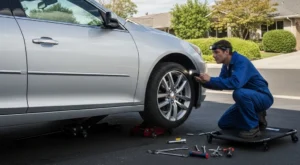
Unbalanced tires are the number one cause of vibrations at certain speeds. Even a small imbalance causes the wheel to spin unevenly, leading to steering wheel shaking between 60–100 km/h (40–65 mph).
Symptoms
Steering wheel shakes at specific speeds
Vibration disappears after slowing down
No noises or warning lights
Diagnosis
Inspect tires visually
Look for uneven tread or missing wheel weights
Have a shop perform a wheel balancing test
Fix
Wheel balancing solves most vibration issues in 20–30 minutes.
Cost
$30–$70 for all wheels.
2. Worn or Damaged Tires
A tire with tread separation, flat spots, bulges, or uneven wear causes constant vibration at all speeds.
Symptoms
Visible deformities on the sidewall
Rhythmic “thumping” noise
Vibration increases with speed
Fix
Replace the affected tire(s) immediately.
Cost
$80–$200 per tire depending on brand.
3. Bent Rims or Wheel Damage
A bent rim from hitting a curb or pothole can create intense vibration, especially at highway speeds.
Symptoms
Steering wheel wobble
Pulling to one side
Air pressure slowly leaking
Diagnosis
A tire shop can check rim roundness with a balancing machine.
Fix
Repair or replace the rim.
Cost
Rim repair: $50–$150
Rim replacement: $100–$400+

4. Bad Wheel Bearings
Wheel bearings allow the wheels to rotate smoothly. When they wear out, the wheel begins to wobble, creating vibration, humming noises, and unsafe driving conditions.
Symptoms
Low humming or growling noise
Vibration increases when turning
Steering feels loose
Fix
Replace the failing wheel bearing.
Cost
$150–$350 per wheel.
5. Brake Rotor Problems
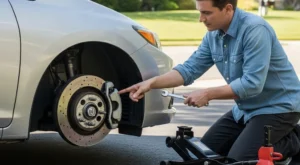
Warped brake rotors cause the steering wheel to shake only during braking. This happens when rotors overheat, wear unevenly, or are poorly installed.
Symptoms
Steering wheel vibrates while braking
Pulsating brake pedal
Shaking increases at higher speeds
Fix
Resurface or replace rotors.
Cost
$120–$350 per axle.
6. Suspension Issues (Bushings, Tie Rods, Ball Joints)
Damaged suspension components cause persistent vibration, poor alignment, and unstable handling.
Common failures
Worn control arm bushings
Loose tie rods
Failing ball joints
Damaged sway bar links
Symptoms
Steering feels sloppy
Car pulls to one side
Knocking noises over bumps
Cost
Suspension repairs vary widely:
$100–$700+ depending on the part.
7. Engine or Transmission Mount Problems
If vibrations are strongest when the car is in gear or idling, the cause may be engine or transmission mounts.
Symptoms
Strong vibration at stoplights
Car shakes when shifting into Drive
Clunk sounds when accelerating
Fix
Replace worn mounts.
Cost
$150–$500 depending on the mount type.

8. CV Joint or Driveshaft Issues
Front-wheel-drive vehicles rely on CV joints; rear-wheel-drive cars rely on driveshafts. Wear or imbalance here causes vibrations during acceleration.
Symptoms
Vibrations only under throttle
Clicking noise while turning
Shaking intensifies at high speed
Fix
Replace the damaged CV joint or driveshaft.
Cost
CV joint: $200–$400
Driveshaft: $300–$800
9. Misfiring Engine (Less Common but Serious)
An engine misfire causes harsh vibration because one or more cylinders are not firing properly.
Symptoms
Check engine light
Loss of acceleration
Rough idle
Fuel smell
Fix
Fix underlying causes:
Bad spark plugs
Ignition coil failure
Fuel injector problems
Cost
$100–$500 depending on the issue.
Diagnosis Summary Table
| Vibration Timing | Most Likely Cause |
|---|---|
| Only at certain speeds | Tire imbalance |
| During braking | Warped rotors |
| At idle / in gear | Engine mounts |
| During acceleration | CV joint or driveshaft |
| At all speeds | Damaged tires or bearings |
When You Should Visit a Mechanic
Seek professional help if:
Vibrations worsen quickly
Noise accompanies the shaking
The steering wheel pulls left or right
The car shakes heavily at all speeds
Ignoring vibration issues leads to dangerous failures — especially wheel bearings, CV joints, and tires.
Conclusion
A vibrating car is always trying to tell you something. Whether the issue lies in the wheels, tires, suspension, brakes, or drivetrain, diagnosing vibrations early will save you from major repairs and unsafe driving conditions. Use this guide to pinpoint the likely cause and fix the problem before it escalates.