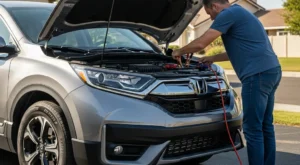
Car Makes Noise When Turning the Steering Wheel: Causes, Diagnosis & Fixes
Hearing clunking, creaking, or whining when you turn the steering wheel? Learn the most common causes of steering noises, how to diagnose them at home, and what it typically costs to fix them before they turn into a dangerous steering or suspension failure....


If your car makes a noise when turning the steering wheel, you should never ignore it. Clunks, pops, creaks, or whining sounds while turning can be early warning signs of worn suspension parts, low power steering fluid, or even an impending steering failure.
- 1. Is It Normal for a Car to Make Noise When Turning?
- 2. Common Types of Noises When Turning the Steering Wheel
- 2.1. 1. Clicking or Popping When Turning
- 2.2. 2. Clunking or Knocking When Turning
- 2.3. 3. Creaking or Groaning When Turning the Wheel
- 2.4. 4. Whining or Moaning When Turning the Steering Wheel
- 2.5. 5. Squealing When Turning
- 3. How to Diagnose Steering Noises at Home
- 3.1. Step 1: Determine If the Noise Happens While Moving or Stationary
- 3.2. Step 2: Check Power Steering Fluid (Hydraulic Systems)
- 3.3. Step 3: Inspect Front Suspension and Steering Components
- 3.4. Step 4: Listen While Someone Else Turns the Wheel
- 3.5. Step 5: Consider Vehicle Age and Mileage
- 4. Major Causes of Noise When Turning the Steering Wheel
- 4.1. 1. Worn CV Joints (Clicking or Popping When Turning)
- 4.2. 2. Worn Tie Rod Ends or Ball Joints (Clunking, Loose Steering)
- 4.3. 3. Strut Mounts and Suspension Bushings (Creaking, Groaning, Clunks)
- 4.4. 4. Power Steering Pump or Low Fluid (Whining or Moaning)
- 4.5. 5. Serpentine Belt and Tensioner (Squealing When Turning)
- 4.6. 6. Electric Power Steering (EPS) Issues (Whine, Buzz, or Clunk)
- 5. When Is It Safe to Drive and When Should You Stop?
- 5.1. Okay to Drive Short-Term (But Schedule a Repair)
- 5.2. Drive with Extreme Caution or Avoid Driving
- 6. Preventing Steering Noises and Premature Wear
- 7. DIY vs. Professional Repair: What You Can Realistically Do
- 7.1. Often DIY-Friendly
- 7.2. Usually Best Left to a Shop
- 8. Key Takeaways: Don’t Ignore Noises When Turning the Steering Wheel
This guide walks you through the most common causes of steering noises, how to diagnose them at home, and what it usually costs to fix them. Whether you drive a compact hatchback, a full-size truck, or a popular SUV like the Toyota RAV4, the basic principles are the same.
Is It Normal for a Car to Make Noise When Turning?
Some minor noise is normal, especially at full lock (when the steering wheel is turned as far as it will go). Power steering pumps can whine slightly at full lock, and tires may scrub a bit on rough surfaces. But persistent or loud noises when turning usually mean a problem that needs attention.

Pay attention to:
- When the noise happens (only while moving, only at low speed, only at full lock, etc.).
- Where the noise seems to come from (front left, under the dash, under the hood).
- What kind of noise it is (clicking, clunking, creaking, grinding, whining, squealing).
Those details will help you narrow down the cause and decide how urgent the repair is.
Common Types of Noises When Turning the Steering Wheel
Different noises usually point to different components. Use this quick reference to match what you hear to likely causes.
1. Clicking or Popping When Turning
Typical sound: Rapid clicking or popping, especially when turning sharply at low speed (parking lots, tight turns).
Most likely causes:
- Worn CV joints (front-wheel drive or all-wheel drive vehicles)
- Loose or worn tie rod ends
- Worn ball joints
Outer CV joints are famous for making a rhythmic clicking noise when turning. If you hear it mostly during tight turns and it speeds up with vehicle speed, suspect the CV joint first.
2. Clunking or Knocking When Turning
Typical sound: Single or repeated clunk, thud, or knock when you start turning or hit a bump while turning.
Most likely causes:
- Worn control arm bushings
- Loose or damaged sway bar links or bushings
- Loose steering rack mounts
- Loose subframe bolts (less common but serious)
Clunking usually means something is moving that shouldn’t be. It can quickly turn into a safety issue if a suspension or steering component fails completely.
3. Creaking or Groaning When Turning the Wheel
Typical sound: Slow creak, groan, or rubber-on-metal noise when you turn the wheel, often at low speeds or while stopped.
Most likely causes:
- Dry or worn strut mounts
- Dry ball joints or control arm bushings
- Steering column or intermediate shaft needing lubrication
If the noise seems to come from directly above the front wheels, especially when turning while stopped, suspect the strut mounts or upper suspension components.
4. Whining or Moaning When Turning the Steering Wheel
Typical sound: High-pitched whine or moan that changes with steering input, often louder at full lock.
Most likely causes:
- Low power steering fluid
- Failing power steering pump
- Clogged power steering filter or restricted fluid flow
This is one of the most common complaints. The good news: sometimes it’s just low fluid. The bad news: driving too long with low fluid can destroy the pump.
5. Squealing When Turning
Typical sound: Sharp squeal or screech when you turn the wheel, often right after startup or in wet conditions.
Most likely causes:
- Loose or worn accessory belt (serpentine belt)
- Worn belt tensioner or idler pulley
- Power steering pump pulley issues
If the squeal happens only when you turn the wheel and not when you rev the engine in park, focus on the belt and power steering system first.
How to Diagnose Steering Noises at Home
You can often narrow down the cause of steering noises with a few simple tests. Always prioritize safety: use jack stands, chock the wheels, and never get under a car supported only by a jack.
Step 1: Determine If the Noise Happens While Moving or Stationary
- Noise only when moving: More likely suspension, wheel bearings, or CV joints.
- Noise even when stopped (turning the wheel in park): More likely steering column, power steering pump, or strut mounts.
Park in a quiet area and turn the wheel lock-to-lock with the engine running. Listen carefully inside the cabin and with the driver’s door open.
Step 2: Check Power Steering Fluid (Hydraulic Systems)
Most older and many current vehicles use hydraulic power steering. Electric power steering (EPS) has no fluid.
- Locate the power steering reservoir (usually labeled and near the front of the engine bay).
- Check the fluid level against the HOT/COLD marks on the dipstick or reservoir.
- Inspect the fluid color: it should be relatively clear, not dark, burnt, or full of metal flakes.
If the fluid is low, top it up with the correct type and recheck after driving. If it drops again, you have a leak that must be fixed, not just refilled.
Step 3: Inspect Front Suspension and Steering Components
With the front wheels off the ground and the car safely supported:
- Grab each front wheel at 3 and 9 o’clock and wiggle side to side to check for tie rod end play.
- Grab at 12 and 6 o’clock and wiggle to check for ball joint or wheel bearing play.
- Visually inspect CV boots for tears and grease leakage.
- Check sway bar links and control arm bushings for cracks, missing rubber, or obvious looseness.
Any excessive play or torn rubber usually means the part is worn and should be replaced.
Step 4: Listen While Someone Else Turns the Wheel
Have a helper sit in the car and slowly turn the steering wheel left and right with the engine running while you listen from outside:
- Listen near each front wheel for creaks or clunks (strut mounts, ball joints, bushings).
- Listen near the firewall and under the dash for clicks or groans (steering column or intermediate shaft).
- Listen near the power steering pump and belt for whining or squealing.
This simple test often reveals the exact area the noise is coming from.
Step 5: Consider Vehicle Age and Mileage
Certain issues are more common at specific mileages:
- 60,000–100,000 miles: CV joints, strut mounts, sway bar links, and tie rod ends often start to wear.
- 100,000+ miles: Steering racks, intermediate shafts, and control arm bushings are more likely to fail.
If you drive a high-mileage SUV or crossover, it’s worth reading reliability guides for your specific model. For example, our detailed breakdown of Toyota RAV4 reliability by year highlights which years are more prone to suspension and steering issues.
Major Causes of Noise When Turning the Steering Wheel
Now let’s look at the most common culprits in more detail, along with typical repair costs.
1. Worn CV Joints (Clicking or Popping When Turning)
Symptoms:
- Rapid clicking or popping when turning, especially at low speed.
- Noise gets faster with vehicle speed.
- Torn CV boot and grease splattered around the inside of the wheel.
Why it happens: The CV joint allows the drive axle to transfer power while the wheels turn and move up and down. When the protective boot tears, grease escapes and dirt enters, wearing the joint quickly.
Risks: A severely worn CV joint can fail and leave you stranded, though total breakage is less common than persistent noise and vibration.
Typical repair cost:
- Replace one front axle (CV axle): $300–$800 parts and labor, depending on vehicle.
- Boot-only replacement (if caught early): $150–$350, but many shops prefer full axle replacement.
2. Worn Tie Rod Ends or Ball Joints (Clunking, Loose Steering)
Symptoms:
- Clunking or knocking when turning or going over bumps.
- Steering feels loose or wanders.
- Uneven tire wear and poor alignment.
Why it happens: These joints allow controlled movement in the steering and suspension. Over time, the internal ball and socket wear out, creating play.
Risks: A severely worn tie rod or ball joint can separate, causing a sudden loss of steering control. This is a serious safety issue.
Typical repair cost:
- Tie rod end: $150–$350 per side including alignment.
- Ball joint: $200–$450 per side, depending on whether it’s pressed into the control arm.
3. Strut Mounts and Suspension Bushings (Creaking, Groaning, Clunks)
Symptoms:
- Creaking or groaning when turning at low speeds.
- Clunking when turning into driveways or over speed bumps.
- Rubber components visibly cracked or deteriorated.
Why it happens: Rubber bushings and strut mounts dry out, crack, and compress over time, especially in harsh climates. When they can’t flex smoothly, they creak or clunk as the suspension moves.
Risks: Usually more about comfort and noise than immediate danger, but severely worn bushings can affect alignment and tire wear.
Typical repair cost:
- Strut mount replacement (often with new struts): $400–$1,000 for both fronts.
- Control arm with bushings: $300–$700 per side.
- Sway bar links/bushings: $150–$350 per axle.
4. Power Steering Pump or Low Fluid (Whining or Moaning)
Symptoms:
- Whining or moaning that gets louder as you turn the wheel.
- Foamy or discolored power steering fluid.
- Stiff steering, especially at low speeds.
Why it happens: Low fluid allows air into the system, causing the pump to cavitate and whine. Over time, this can damage the pump’s internal vanes and bearings.
Risks: Ignoring a whining pump can lead to complete pump failure and loss of power assist. You’ll still be able to steer, but it will be very heavy, especially at low speeds.
Typical repair cost:
- Power steering fluid top-off and leak check: $80–$150.
- Power steering hose replacement: $150–$400.
- Power steering pump replacement: $350–$900, depending on vehicle.
5. Serpentine Belt and Tensioner (Squealing When Turning)
Symptoms:
- Squealing when turning the wheel, especially on cold starts or in wet weather.
- Squeal may also occur when you turn on the AC or other accessories.
- Visible belt cracks or glazing.
Why it happens: The belt that drives the power steering pump (and other accessories) loses grip when worn or loose. The tensioner or idler pulleys can also wear out and cause belt slip.
Risks: A broken belt can take out power steering, alternator, and water pump drive on many engines, potentially leading to overheating while driving and a dead battery.
Typical repair cost:
- Serpentine belt replacement: $80–$200.
- Belt tensioner or idler pulley: $150–$350.
6. Electric Power Steering (EPS) Issues (Whine, Buzz, or Clunk)
Newer vehicles often use electric power steering instead of hydraulic systems.
Symptoms:
- Whining, buzzing, or faint electric motor noise when turning.
- Intermittent loss of power assist.
- Steering warning light or check engine light.
Why it happens: EPS systems use an electric motor and sensors. Faults can occur in the motor, torque sensor, or control module.
Diagnosis tip: Many EPS issues will store diagnostic trouble codes. A basic OBD2 scanner can sometimes read them, but some vehicles require advanced scan tools. Understanding how OBD2 readiness monitors work can help you interpret scan results and know when the system has fully tested itself after repairs.
Typical repair cost:
- EPS motor or column replacement: $700–$2,000+, depending on design.
- Sensor or wiring repairs: highly variable, usually $200–$800.
When Is It Safe to Drive and When Should You Stop?
Not all steering noises mean you must pull over immediately, but some do. Use this as a rough guide:
Okay to Drive Short-Term (But Schedule a Repair)
- Light whining only at full lock, with normal fluid level.
- Mild creaking from strut mounts with no steering looseness.
- Occasional belt squeal on cold start that goes away quickly.
Drive with Extreme Caution or Avoid Driving
- Persistent loud clicking when turning (suspected CV joint).
- Steering feels loose, wanders, or clunks heavily.
- Power steering fluid leaking rapidly or steering suddenly becomes very heavy.
- EPS warning light with intermittent loss of assist.
If the steering feels unpredictable or you hear violent clunks from the front end, have the vehicle towed rather than risk driving it.
Preventing Steering Noises and Premature Wear
A few simple habits can dramatically extend the life of your steering and suspension components:
- Avoid holding the wheel at full lock for more than a second or two. This reduces stress on the power steering pump and rack.
- Slow down for potholes and speed bumps. Hard impacts accelerate wear on bushings, ball joints, and strut mounts.
- Get alignments after suspension work or significant impacts. Misalignment increases stress and noise.
- Inspect CV boots and bushings during every oil change. Catching a torn boot early can save a CV joint.
- Replace the serpentine belt on schedule (often every 60,000–100,000 miles).
DIY vs. Professional Repair: What You Can Realistically Do
Some steering noise fixes are DIY-friendly; others are better left to a professional with an alignment rack and press tools.
Often DIY-Friendly
- Checking and topping up power steering fluid.
- Replacing a serpentine belt on many vehicles.
- Visual inspections of boots, bushings, and leaks.
Usually Best Left to a Shop
- CV axle replacement (especially on AWD vehicles).
- Tie rod ends, ball joints, and control arms (alignment required).
- Strut and strut mount replacement.
- Electric power steering motor or rack replacement.
If you’re unsure, get a professional inspection and estimate. Many shops will apply the inspection fee toward the repair if you proceed.
Key Takeaways: Don’t Ignore Noises When Turning the Steering Wheel
- Clicking, clunking, creaking, whining, or squealing when turning are all early warning signs of steering or suspension issues.
- Ignoring these noises can lead to loss of steering control, tire damage, or even overheating if a belt fails and the water pump stops turning.
- Basic checks—like inspecting power steering fluid, looking for torn CV boots, and checking for loose components—can be done at home.
- Most repairs fall in the $150–$900 range per affected component, but catching problems early often keeps costs lower.
If your car makes noise when turning the steering wheel, treat it as a safety issue, not just an annoyance. A quick inspection and timely repair will restore quiet, precise steering and keep you safely in control.
How do you rate this guide?

Related Posts
Comments have been disabled.