Car Makes Grinding Noise When Braking – Causes, Diagnosis & Fixes
Car Makes Grinding Noise When Braking – Causes, Diagnosis & Fixes A grinding noise when braking is one of the most alarming sounds a driver can hear. Unlike squeaking or light rubbing, a grinding sound indicates that metal components inside the braking system are rubbing directly against each other. This...

- 1. Car Makes Grinding Noise When Braking – Causes, Diagnosis & Fixes
- 2. 1. Worn Brake Pads (Most Common Cause)
- 2.0.1. Symptoms
- 2.0.2. Diagnosis
- 2.0.3. Fix
- 2.0.4. Cost
- 3. 2. Damaged or Warped Brake Rotors
- 3.0.1. Symptoms
- 3.0.2. Fix
- 3.0.3. Cost
- 4. 3. Debris Between Brake Pad and Rotor
- 4.0.1. Symptoms
- 4.0.2. Fix
- 4.0.3. Cost
- 5. 4. Sticking or Seized Brake Caliper
- 5.0.1. Symptoms
- 5.0.2. Fix
- 5.0.3. Cost
- 6. 5. Lack of Lubrication on Brake Hardware
- 6.0.1. Symptoms
- 6.0.2. Fix
- 6.0.3. Cost
- 7. 6. Failed Wheel Bearings (Severe Cases)
- 7.0.1. Symptoms
- 7.0.2. Fix
- 7.0.3. Cost
- 8. 7. Rotor and Pad Misalignment
- 8.0.1. Symptoms
- 8.0.2. Fix
- 8.0.3. Cost
- 9. 8. Driving With the Parking Brake Partially Engaged
- 9.0.1. Symptoms
- 9.0.2. Fix
- 10. Diagnosis Summary Table
- 11. When to Stop Driving Immediately
- 12. Conclusion
Car Makes Grinding Noise When Braking – Causes, Diagnosis & Fixes
A grinding noise when braking is one of the most alarming sounds a driver can hear. Unlike squeaking or light rubbing, a grinding sound indicates that metal components inside the braking system are rubbing directly against each other. This usually means the problem has progressed beyond routine wear and requires immediate attention.
Driving with grinding brakes is unsafe and can cause severe damage to rotors, calipers, bearings and even wheel hubs. This guide explains every major cause of brake grinding, what symptoms to look for, how to diagnose the issue, and what repairs are needed.
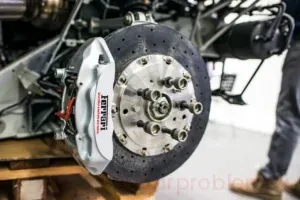
1. Worn Brake Pads (Most Common Cause)
Brake pads are designed to wear down slowly, but once they reach the end of their lifespan, the metal backing plate begins rubbing directly against the brake rotor. This produces a loud grinding sound every time you hit the brakes.
Symptoms
Harsh grinding sound during braking
Reduced braking power
Steering wheel vibration when braking
Increased stopping distance
Diagnosis
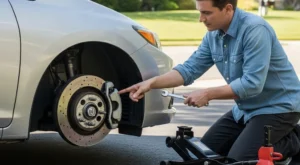
Look through the wheel spokes
Check if pads appear thinner than 3mm
Inspect for metallic dust around the wheel
Fix
Replace brake pads immediately before rotor damage becomes severe.
Cost
$80–$180 per axle.
2. Damaged or Warped Brake Rotors
If rotors are unevenly worn, cracked, or deeply grooved, they create grinding sounds even with healthy pads.
Symptoms
Pulsation or vibration in brake pedal
Scraping or grinding noise
Visible grooves on rotors
Steering shake when braking at high speed
Fix
Resurface or replace the rotors.
Cost
Resurfacing: $40–$70 per rotor
Replacement: $150–$350 per axle
3. Debris Between Brake Pad and Rotor
Small rocks, rust flakes, or road debris can become lodged between the pad and rotor, causing temporary grinding.
Symptoms
Grinding that appears suddenly
Noise changes depending on wheel rotation
Goes away after driving for a while
Fix
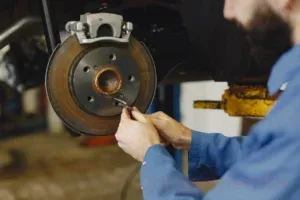
Remove the wheel and inspect for debris.
Cost
Often free if you can do it yourself.
4. Sticking or Seized Brake Caliper
A sticking caliper causes continuous pressure on the rotor, wearing pads down quickly and generating grinding, overheating, and smoke.
Symptoms
Car pulls to one side when braking
Burning smell near the wheel
Excessive heat on one rotor
Grinding gets worse the longer you drive
Fix
Repair or replace caliper
Replace pads and possibly rotors
Cost
$150–$450 depending on severity.
5. Lack of Lubrication on Brake Hardware
Brake pads slide on guide rails. When these rails dry out or corrode, the pad cannot move smoothly, causing harsh grinding and uneven wear.
Symptoms
Grinding at low speeds
Clicking sound when braking
Uneven brake pad wear
Fix
Clean and lubricate all brake hardware.
Cost
$20–$50 DIY,
$80–$120 shop price.
6. Failed Wheel Bearings (Severe Cases)
If the grinding noise is present even when not braking, especially while turning, the issue may be the wheel bearings rather than the brakes themselves.
Symptoms
Grinding or growling noise at all speeds
Gets louder during turns
Wheel feels loose when shaken by hand
Vibration in steering
Fix
Replace the wheel bearing immediately.
Cost
$150–$350 per wheel.
7. Rotor and Pad Misalignment
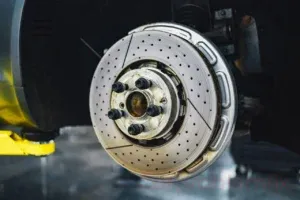
If brakes were installed incorrectly or hardware was not seated properly, the pads may contact the rotor unevenly and cause grinding.
Symptoms
Grinding right after brake service
Inconsistent braking performance
Clicking or knocking sounds
Fix
Reinstall pads and hardware correctly.
Cost
Usually free if the service shop is responsible.
8. Driving With the Parking Brake Partially Engaged
Some cars allow slight movement even when the parking brake is partially engaged. This creates grinding and can severely damage rear brakes.
Symptoms
Burning smell
Grinding from the rear wheels
Poor acceleration
High engine revs
Fix
Fully release the parking brake and inspect rear pads.
Diagnosis Summary Table
| Symptom | Likely Cause |
|---|---|
| Grinding only when braking | Worn pads or bad rotors |
| Grinding constantly | Wheel bearings or debris |
| Burning smell | Sticking caliper |
| Vibration while braking | Warped rotors |
| Grinding after brake service | Improper installation |
When to Stop Driving Immediately
Stop driving and get repairs if:
Grinding noise becomes louder quickly
Smoke comes from the wheels
Car pulls aggressively during braking
Brake pedal sinks or feels soft
Brake warning light turns on
Driving with grinding brakes risks catastrophic brake failure.
Conclusion
A grinding noise when braking is a serious warning sign that something in your brake system is failing or already damaged. Whether it’s worn pads, warped rotors, debris, or a seized caliper, early diagnosis prevents dangerous driving conditions and expensive repairs. Use this guide to identify the issue and take immediate action before the damage spreads.