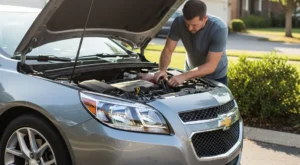
Car Battery Keeps Dying Overnight: Electrical Causes, Diagnosis & Fixes Before You Get Stranded
If your car battery keeps dying overnight, you’re dealing with more than just an old battery. Learn the real electrical causes—parasitic drains, bad alternators, wiring faults, and more—plus step‑by‑step DIY diagnosis and smart repair strategies so you don’t wake up to a dead car again....


If you keep waking up to a dead car, replacing the battery over and over won’t solve the real problem. A battery that keeps dying overnight is almost always a symptom of an underlying electrical issue, not just a weak battery.
- 1. What It Really Means When Your Battery Dies Overnight
- 2. Common Electrical Causes of a Battery That Keeps Dying Overnight
- 2.1. 1. Parasitic Draw: Something Stays On When the Car Is Off
- 2.2. 2. Weak or Failing Battery
- 2.3. 3. Alternator Not Charging Properly
- 2.4. 4. Poor Grounds and High-Resistance Connections
- 2.5. 5. Faulty Ignition Switch or Accessory Circuits Staying Live
- 2.6. 6. Module “Wake-Up” Problems on Modern Cars
- 3. How to Diagnose an Overnight Battery Drain
- 3.1. Step 1: Rule Out a Bad Battery
- 3.2. Step 2: Verify Alternator Output
- 3.3. Step 3: Check for Excessive Parasitic Draw
- 3.4. Step 4: Isolate the Problem Circuit
- 4. Practical Fixes for Common Overnight Battery Drains
- 4.1. 1. Fixing Simple Lighting and Switch Issues
- 4.2. 2. Dealing With Aftermarket Electronics
- 4.3. 3. Repairing Charging System Problems
- 4.4. 4. Cleaning and Upgrading Battery Cables and Grounds
- 4.5. 5. Addressing Module and Ignition-Related Drains
- 5. When to Stop DIY and See a Professional
- 6. Preventing Future Overnight Battery Failures
- 7. Bottom Line: Don’t Just Keep Replacing the Battery
This guide walks you through the most common electrical causes of an overnight battery drain, how to diagnose them with simple tools, and what to fix before you get stranded for good. Whether you’re a DIYer with a basic multimeter or you just want to understand what your mechanic is talking about, this article is for you.
What It Really Means When Your Battery Dies Overnight

A healthy battery can sit for days (even weeks) and still start the car. When it goes dead overnight, one of three things is usually happening:
- The battery is worn out and can’t hold a charge.
- The charging system is weak (alternator or wiring), so the battery never gets fully charged.
- Something is drawing power with the car off (parasitic draw), slowly draining the battery while you sleep.
Often, more than one of these is involved. For example, a slightly weak battery plus a small parasitic drain is enough to leave you stuck in the morning.
Common Electrical Causes of a Battery That Keeps Dying Overnight
1. Parasitic Draw: Something Stays On When the Car Is Off
A parasitic draw is any electrical load that continues to use power with the ignition off. Modern cars always have a small draw (for things like the clock, security system, and ECU memory), but it should be low enough that the car can sit for weeks.
When that draw is too high, the battery can go flat overnight. Typical culprits include:
- Glove box or trunk light stuck on due to a bad switch or misaligned latch.
- Aftermarket stereo, amp, or alarm wired incorrectly or never going to sleep.
- Phone chargers, dash cams, or accessories plugged into a 12V outlet that stays live with the key off.
- Body control module (BCM) or other control units that don’t enter sleep mode because of a software or sensor issue.
- Shorted wiring or corroded connectors that let current leak through where it shouldn’t.
On many vehicles, a normal key-off draw is in the range of 20–50 milliamps (0.02–0.05 A). Anything much above that can drain a battery overnight or over a few days, depending on battery health.
2. Weak or Failing Battery
Even if the battery is the original problem, it’s rarely the only problem. But a weak battery makes everything worse.
Common signs your battery is near the end of its life:
- More than 4–6 years old (in hot climates, even 3–4 years).
- Cranks slowly in the morning but improves after driving.
- Visible swelling, cracks, or leaking around the case.
- Corroded or loose terminals that have been that way for a long time.
A weak battery may still start the car after a short stop, but not after sitting overnight, especially in cold weather. However, if a brand-new battery also dies overnight, you almost certainly have a parasitic draw or charging issue.
3. Alternator Not Charging Properly
The alternator’s job is to keep the battery charged while the engine runs. If it’s weak, the battery never gets fully topped up, and even a normal overnight draw can leave it dead by morning.
Alternator-related causes include:
- Worn brushes or internal failure leading to low output.
- Bad voltage regulator (often built into the alternator) causing undercharging or overcharging.
- Loose or slipping drive belt that doesn’t spin the alternator fast enough.
- Corroded or loose alternator wiring (B+ cable or ground) adding resistance to the circuit.
In some cases, a failed alternator diode can cause a double problem: poor charging while driving and a parasitic drain through the alternator when the engine is off.
4. Poor Grounds and High-Resistance Connections
Electrical systems rely on clean, low-resistance connections. Corrosion, loose terminals, or damaged cables can cause:
- Voltage drops that make it seem like the battery is weak.
- Charging issues because the alternator output can’t reach the battery effectively.
- Intermittent no-starts that look like a dying battery but are really a bad connection.
Check the main grounds: battery negative to chassis, chassis to engine, and any visible ground straps. A poor ground can also contribute to other symptoms like rough idle; if you’re also noticing vibration when stopped, see this guide on car vibrates at idle but smooths out while driving.
5. Faulty Ignition Switch or Accessory Circuits Staying Live
On some vehicles, a worn ignition switch or relay can leave certain circuits powered even with the key removed. Examples:
- Radio or infotainment staying on indefinitely.
- Blower motor or HVAC control module receiving power with ignition off.
- Power seats, windows, or mirrors still active when they should time out.
These issues can be tricky to spot because everything looks off, but the control modules are still awake and drawing power.
6. Module “Wake-Up” Problems on Modern Cars
Modern vehicles have multiple computers (modules) that are supposed to enter a low-power sleep mode after you shut the car off and lock it. If one module never sleeps, it can draw hundreds of milliamps continuously.
Common triggers:
- Faulty door, hood, or trunk latch sensors telling the car something is still open.
- Keyless entry systems repeatedly searching for the key fob.
- Software bugs that require a module update or reflash.
These problems often require a scan tool that can read body and network codes, not just engine codes. If you’ve recently had issues with readiness monitors or emissions testing, it’s worth understanding how systems go to sleep and wake up; see our guide on OBD2 readiness monitors not ready for more on how modules behave after key-off.
How to Diagnose an Overnight Battery Drain
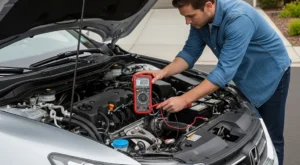
You don’t need a full shop to track down many drains. A basic digital multimeter and some patience go a long way. If you’re not comfortable working around batteries and live circuits, have a professional do these steps—improper testing can damage electronics or your meter.
Step 1: Rule Out a Bad Battery
- Visual inspection
- Check for swelling, cracks, or leaks.
- Clean heavy corrosion from terminals with a baking soda and water solution, then rinse and dry.
- Check resting voltage
- After the car has been off for a few hours, measure voltage at the battery posts.
- 12.6 V or higher = fully charged; 12.2 V ≈ 50% charge; below 12.0 V is essentially discharged.
- Load test (ideal)
- Use a battery tester or have an auto parts store perform a free load test.
- If the battery fails, replace it—but still continue diagnosis to ensure nothing else is killing it.
Step 2: Verify Alternator Output
- Measure charging voltage
- Start the engine and let it idle.
- Measure voltage at the battery posts.
- Normal range is typically 13.8–14.5 V. Much lower suggests undercharging; above ~15 V suggests overcharging.
- Load the system
- Turn on headlights, rear defroster, and blower fan.
- Voltage should stay above about 13.5 V. If it drops into the low 13s or 12s, the alternator may be weak.
- Listen and inspect
- Listen for alternator bearing noise or whining.
- Check the belt for glazing, cracks, or looseness.
Step 3: Check for Excessive Parasitic Draw
Important: Never crank the engine or turn on high-draw accessories with your meter in series; you’ll blow the meter fuse or damage it.
- Prepare the car
- Turn everything off: lights, radio, HVAC, etc.
- Close all doors (use the latch or a screwdriver to simulate closed latches if you need doors open to access the fuse box).
- Remove the key and lock the car if needed for modules to go to sleep.
- Wait at least 15–45 minutes for all modules to enter sleep mode.
- Connect the ammeter
- Set your multimeter to the amps setting (start on the 10A range if available).
- Disconnect the negative battery cable.
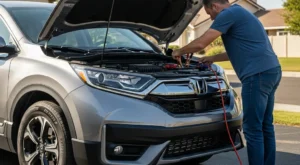
- Connect the meter in series: one lead to the negative battery post, the other to the disconnected cable.
- Read the draw
- After any initial spikes settle, note the current draw.
- Under 50 mA (0.05 A) is usually acceptable.
- Anything like 0.1 A (100 mA) or more is suspicious; 0.3–1.0 A can easily kill a battery overnight.
Step 4: Isolate the Problem Circuit
Once you know you have an excessive draw, you need to find which circuit is responsible.
- Pull fuses one at a time
- With the ammeter still connected, remove one fuse at a time from the fuse box.
- Watch the meter after each fuse. When the draw suddenly drops to a normal level, you’ve found the circuit causing the drain.
- Note the fuse number and description (e.g., “Radio,” “Body Control Module,” “Interior Lights”).
- Check related components
- If it’s an interior light circuit, check glove box, trunk, and dome lights for stuck switches.
- If it’s an audio or accessory circuit, disconnect aftermarket equipment first.
- If it’s a module or BCM circuit, you may need a wiring diagram and scan tool to go deeper.
Sometimes, you’ll find more than one circuit contributing to the total draw. Fix each issue and recheck the current draw until it’s within normal range.
Practical Fixes for Common Overnight Battery Drains

1. Fixing Simple Lighting and Switch Issues
- Glove box / trunk / under-hood lights
- Verify the light actually turns off with the lid closed (use a phone camera or look through a gap).
- Adjust or replace the switch or latch if the light stays on.
- As a temporary fix, remove the bulb until you can repair it properly.
- Dome and courtesy lights
- Make sure the switch isn’t set to “ON” instead of “DOOR” or “OFF”.
- Check door-ajar switches and latches if the car thinks a door is always open.
2. Dealing With Aftermarket Electronics
Aftermarket stereos, amps, alarms, and remote starters are frequent offenders.
- Check wiring
- Ensure the radio’s “memory” and “accessory” wires are connected correctly.
- Amps should have a proper remote turn-on wire that goes dead with ignition off.
- Test by disconnecting
- Temporarily disconnect the aftermarket device’s power wire or remove its fuse.
- If the parasitic draw drops to normal, you’ve found the culprit.
- Consider professional reinstallation
- If the wiring is messy, have a reputable audio shop redo it with proper power, ground, and remote lines.
3. Repairing Charging System Problems
- Replace a weak alternator
- If testing shows low output or bad diodes, replace the alternator with a quality unit (OEM or reputable aftermarket).
- Fix belt and wiring issues
- Install a new belt or tensioner if the belt is slipping.
- Clean and tighten the alternator’s main power and ground connections.
4. Cleaning and Upgrading Battery Cables and Grounds
- Clean terminals
- Disconnect negative first, then positive.
- Use a wire brush or terminal cleaner to remove corrosion from posts and clamps.
- Reinstall positive first, then negative, and tighten securely.
- Inspect cables
- Look for bulges, stiffness, or green corrosion under the insulation.
- Replace any suspect cables; high resistance can mimic a bad battery.
- Check ground straps
- Ensure engine and chassis grounds are intact and not frayed or loose.
5. Addressing Module and Ignition-Related Drains
These are more advanced and often require a professional with a factory-level scan tool.
- Software updates
- Some vehicles have known issues where modules won’t sleep until updated.
- Dealers or specialized shops can reflash modules with the latest software.
- Faulty relays or ignition switches
- A relay stuck in the “on” position can keep a circuit powered constantly.
- Ignition switch wear can leave accessories powered even when the key is out.
- Replacing the offending relay or switch usually solves the drain.
When to Stop DIY and See a Professional
Some electrical problems are straightforward; others can eat days of your time. Consider seeing a pro if:
- You’ve confirmed an excessive parasitic draw but can’t isolate it by pulling fuses.
- The draw seems to be on a main power feed or involves multiple modules.
- You suspect network or communication issues between modules.
- You’re uncomfortable working around live circuits or airbag wiring.
A good diagnostic shop will use current clamps, wiring diagrams, and advanced scan tools to see which modules are awake and why. This can save you from throwing parts at the problem.
Preventing Future Overnight Battery Failures
- Replace the battery proactively every 4–6 years (or sooner in extreme climates).
- Keep terminals and grounds clean and inspect them at every oil change.
- Be careful with accessories—don’t leave chargers, coolers, or inverters plugged in overnight unless the outlet is ignition-switched.
- Choose professional installers for stereos, alarms, and remote starters.
- Use a smart battery maintainer if the car sits for long periods, especially in cold weather.
If you’re also hearing new noises while driving—like a rhythmic thump that speeds up with vehicle speed—don’t ignore them. Electrical and mechanical issues can overlap, and a failing wheel bearing or tire problem can turn serious quickly. For that, see our detailed guide on car makes thumping noise that speeds up with the car.
Bottom Line: Don’t Just Keep Replacing the Battery
A car battery that keeps dying overnight is almost always a sign of another problem. Testing the battery, verifying alternator output, and checking for parasitic draw will quickly tell you whether you’re dealing with a simple battery replacement, a charging system fault, or a hidden electrical drain.
Take a systematic approach, fix the root cause, and you’ll stop waking up to a dead car—and stop wasting money on batteries that were never the real problem.
How do you rate this guide?

Related Posts
Comments have been disabled.