
Car AC Only Blows on High: Causes, Diagnosis & Fixes Before You Burn Out the Blower
If your car’s AC or heater only works on the highest fan speed, you’re likely dealing with a failing blower motor resistor or related wiring issue. Learn the common causes, how to diagnose them at home, and the best repair options before you lose airflow completely....

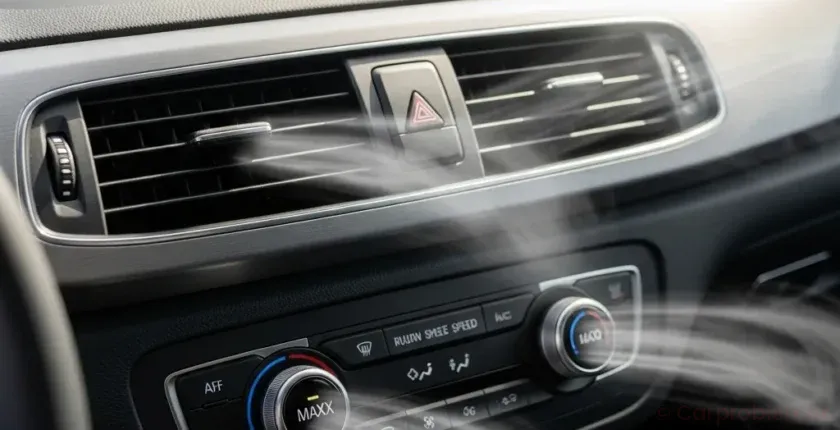
When your car’s AC or heater only blows air on the highest fan speed, it’s more than just annoying. It’s an early warning that a key part of your HVAC (heating, ventilation, and air conditioning) system is failing. Ignore it long enough and you may lose all fan speeds, including high, right when you need defrost or cold air the most.
- 1. How Your Car’s AC Blower System Is Supposed to Work
- 2. Common Symptoms When the AC Only Works on High
- 3. Main Causes of a Car AC That Only Blows on High
- 3.1. 1. Failed Blower Motor Resistor (Most Common)
- 3.2. 2. Failing Blower Motor Control Module (Automatic Climate Control)
- 3.3. 3. Overheating or Worn Blower Motor Drawing Too Much Current
- 3.4. 4. Burnt or Loose Electrical Connectors
- 3.5. 5. Faulty Fan Speed Switch or HVAC Control Panel
- 4. Is It Safe to Drive When the AC Only Works on High?
- 5. DIY Diagnosis: How to Confirm Why Your AC Only Works on High
- 5.1. Step 1: Verify the Symptom
- 5.2. Step 2: Locate the Blower Motor and Resistor/Module
- 5.3. Step 3: Inspect the Connector and Wiring
- 5.4. Step 4: Test the Blower Motor on Direct Power (If Accessible)
- 5.5. Step 5: Check Power and Ground at the Resistor/Module
- 6. Typical Fixes When the AC Only Works on High
- 6.1. 1. Replace the Blower Motor Resistor (Most Common DIY Fix)
- 6.2. 2. Replace the Blower Motor Control Module
- 6.3. 3. Replace a Worn Blower Motor
- 6.4. 4. Repair or Replace Burnt Connectors
- 6.5. 5. Replace the Fan Speed Switch or HVAC Control Panel
- 7. Preventing Future Blower Resistor or Module Failures
- 8. When to DIY and When to See a Pro
- 9. Related Issues You Might Notice
- 10. Bottom Line: Fix It Before You Lose All Fan Speeds
This guide explains why your car AC only works on high, how to diagnose the problem at home with basic tools, and what it typically costs to fix. We’ll focus on the most common culprit—the blower motor resistor—but also cover related issues that can cause similar symptoms.
How Your Car’s AC Blower System Is Supposed to Work
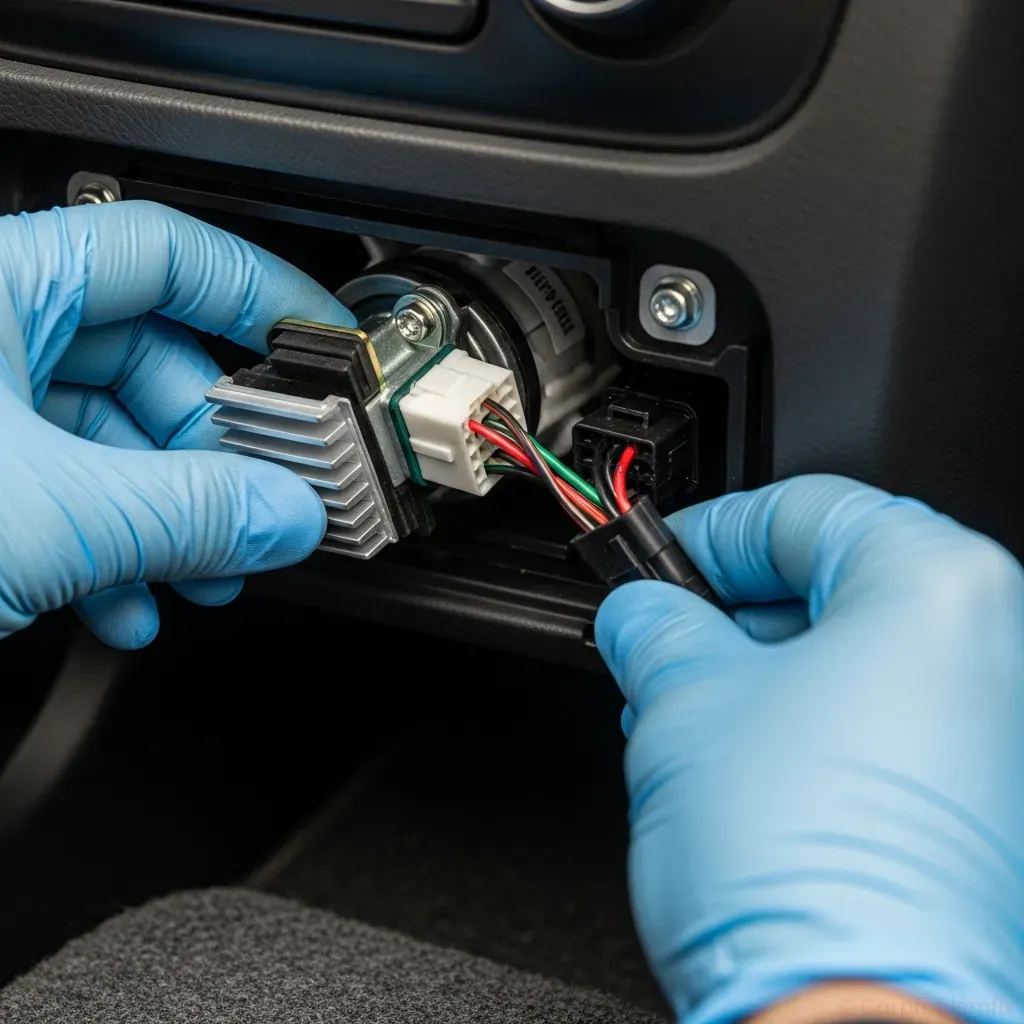

Before diving into failures, it helps to understand the basic components involved in controlling fan speed:
- Blower motor – The electric fan that pushes air through the heater core and AC evaporator, then out the vents.
- Blower motor resistor or blower control module – Controls how much power the blower receives, which sets the fan speed.
- Fan speed switch or HVAC control panel – The knob or buttons you use to select low, medium, or high speeds.
- Wiring, connectors, and fuses – Carry power and signals between the battery, switch, resistor/module, and blower motor.
On most older and many modern vehicles with manual climate controls, the blower motor resistor uses a series of resistors to drop voltage for the lower fan speeds. High speed usually bypasses the resistor and sends full battery power directly to the blower motor through a separate circuit or relay. That’s why it’s so common for low and medium speeds to fail while high still works.
Common Symptoms When the AC Only Works on High
If you’re reading this, you’re probably seeing one or more of these symptoms:
- Fan blows only on the highest setting; speeds 1–3 (or 1–4) are dead.
- Fan works on high but airflow seems weaker than it used to.
- Fan speeds may work intermittently, then finally only high remains.
- Blower may cut out completely after running on high for a while, then come back after cooling down.
- In some cases, you may smell a faint burning plastic odor from the vents or under the dash.
These symptoms point strongly to a failing blower motor resistor or control module, but you should still confirm with some basic checks before buying parts.
Main Causes of a Car AC That Only Blows on High
1. Failed Blower Motor Resistor (Most Common)
On vehicles with manual fan speed knobs, the blower motor resistor is by far the most common reason you only have high speed.
The resistor pack is usually mounted in or near the HVAC ducting, close to the blower motor. It sits in the airflow to help cool it because it gets hot while dropping voltage for lower speeds. Over time, heat and age cause the resistor elements to burn out or the thermal fuse inside the pack to blow.
Typical signs of a bad blower resistor:
- One or more lower speeds stop working, high still works.
- Speeds may fail one at a time over weeks or months.
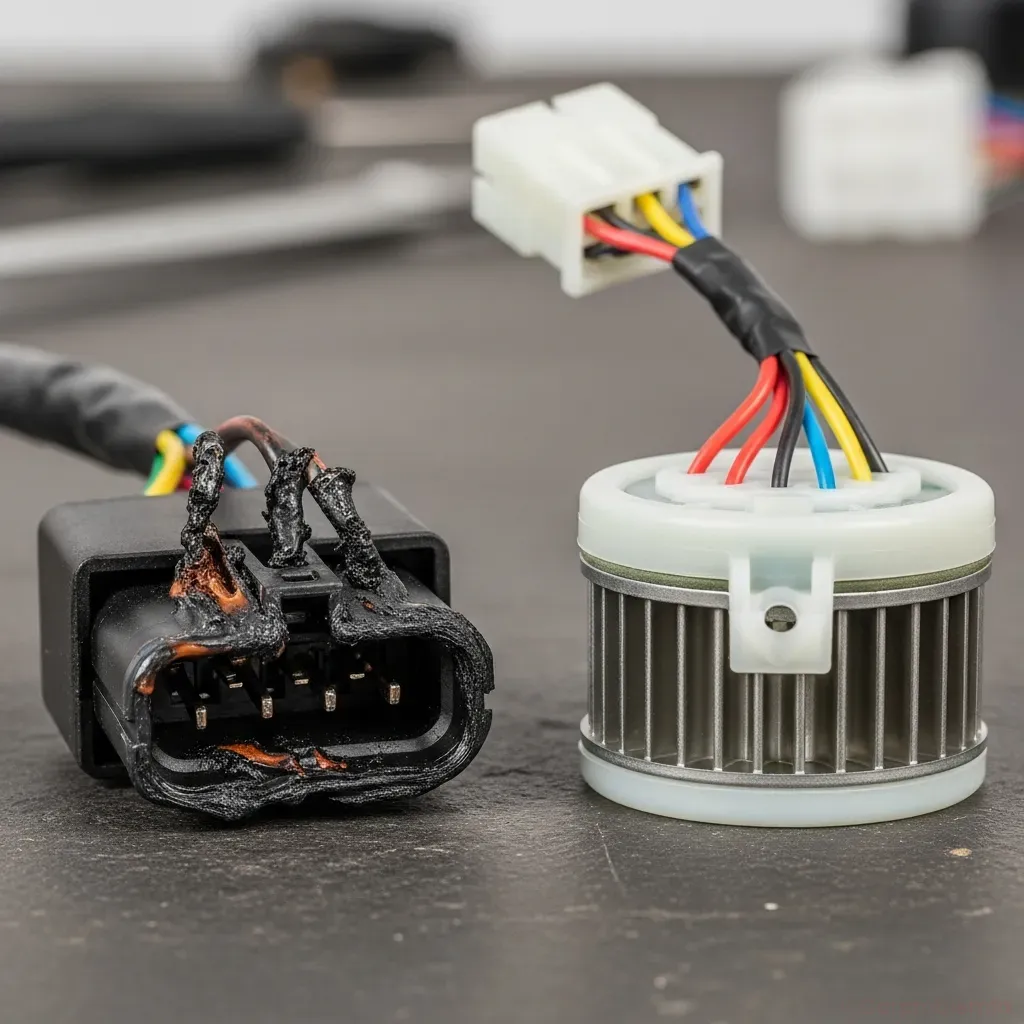
- Connector at the resistor may look discolored or melted.
2. Failing Blower Motor Control Module (Automatic Climate Control)
Many newer vehicles with automatic or digital climate control use a blower motor control module (also called a power transistor) instead of a simple resistor pack. The module uses electronics to vary blower speed smoothly.
When these modules fail, you may get:
- Blower stuck on one speed (often high or low).
- Blower that ramps up and down on its own.
- Intermittent operation that depends on temperature or bumps in the road.
3. Overheating or Worn Blower Motor Drawing Too Much Current
A blower motor that’s wearing out can draw excessive current, which overheats the resistor or control module and its connector. That can cause:
- Repeated blower resistor or module failures.
- Melted or burnt electrical connectors at the resistor or blower motor.
- Blower that squeals, chirps, or makes grinding noises.
- Blower that sometimes won’t start until you hit the dash.
If you replace a resistor or module without addressing a dragging blower motor, the new part may fail again quickly.
4. Burnt or Loose Electrical Connectors
High current and heat at the blower and resistor connections can cause:
- Loose terminals that cause intermittent fan operation.
- Brown or black discoloration on plastic connectors.
- Melted connector housings that no longer grip tightly.
Even if the resistor itself is bad, you often need to replace or repair the connector at the same time for a reliable fix.
5. Faulty Fan Speed Switch or HVAC Control Panel
Less commonly, the fan speed switch or digital HVAC control unit can fail. On manual systems, the speed switch routes power through different legs of the resistor pack. If the internal contacts wear out or burn, some speeds may stop working.
Signs pointing to a bad switch or control panel:
- Fan speeds work if you wiggle or press the knob a certain way.
- Backlighting or other functions on the control panel are also flaky.
- Resistor tests good, but some speeds still don’t work.
Is It Safe to Drive When the AC Only Works on High?
Mechanically, the car will still drive fine, but there are some real-world concerns:
- Defrost performance: In wet or cold weather, you need reliable airflow to clear fogged windows. If the blower fails completely, visibility can suffer.
- Component damage: Continuing to run a failing blower or resistor can overheat wiring and connectors, potentially leading to melted plastic or, in extreme cases, electrical short circuits.
- Overheating risk: If you’re already dealing with engine temperature issues, you want full control of cabin airflow. For related cooling-system issues, see Car Overheating While Driving? Causes, Fixes & Repair Costs.
It’s usually safe to drive short term, but you should plan to fix the issue soon—especially before extreme hot or cold seasons.
DIY Diagnosis: How to Confirm Why Your AC Only Works on High
You can often pinpoint the problem at home with basic tools:
- Phillips and flathead screwdrivers
- Trim removal tool (optional but helpful)
- Digital multimeter (for voltage and continuity checks)
- Flashlight
Step 1: Verify the Symptom
With the engine running (or key in ON position):
- Turn the fan speed knob through all positions.
- Note which speeds work and which do not.
- Check whether the issue affects both AC and heat (it usually does, because they share the same blower).
Step 2: Locate the Blower Motor and Resistor/Module
On most vehicles, the blower motor is located behind the glove box or under the passenger side of the dash. The resistor or control module is usually mounted close to it, often held in with 2 small screws and plugged into the ducting.
Look for:
- A small rectangular or square part with a multi-wire connector.
- Signs of heat damage on the connector or surrounding plastic.
Step 3: Inspect the Connector and Wiring
Unplug the connector from the resistor/module and inspect:
- Are the terminals green with corrosion, blackened, or melted?
- Is the plastic housing distorted or brittle?
- Do any wires look burnt or feel stiff near the connector?
If you see obvious heat damage, plan on replacing the connector pigtail along with the resistor or module.
Step 4: Test the Blower Motor on Direct Power (If Accessible)
If you can easily access the blower motor connector:
- Disconnect the blower motor.
- Use fused jumper wires from the battery to briefly power the blower (observe polarity and safety; avoid loose wires).
The blower should spin smoothly and strongly without strange noises. If it’s slow, noisy, or doesn’t start reliably, the motor may be failing and overloading the resistor/module.
Step 5: Check Power and Ground at the Resistor/Module
With the key ON and fan switch set to different speeds, use a multimeter to check for:
- Power into the resistor/module from the switch or relay.
- Power out from the resistor/module to the blower motor on different speed settings.
- A solid ground reference.
If power goes into the resistor/module but not out on the lower speeds, the resistor/module is likely bad. If there’s no power into the resistor, suspect the fan switch, fuse, or relay.
Typical Fixes When the AC Only Works on High
1. Replace the Blower Motor Resistor (Most Common DIY Fix)
On many cars, replacing the blower resistor is a straightforward 15–45 minute job:
- Disconnect the battery (recommended for safety).
- Remove the glove box or lower dash panel if needed.
- Unplug the resistor connector.
- Remove the mounting screws and pull the resistor out of the duct.
- Install the new resistor, reconnect the plug, and reassemble.
Typical parts cost:
- Aftermarket resistor: $20–$60
- OEM resistor: $40–$120
Shop labor: Usually 0.5–1.0 hours, or about $75–$150 depending on labor rates.
2. Replace the Blower Motor Control Module
On vehicles with automatic climate control, the blower module is often similarly accessible near the blower motor. Replacement is usually plug-and-play, but the module costs more than a resistor.
Typical parts cost:
- Aftermarket module: $60–$200
- OEM module: $150–$350+
Labor: 0.5–1.5 hours in most cases.
3. Replace a Worn Blower Motor
If your blower is noisy, slow, or drawing too much current, replacing it along with the resistor/module is smart insurance.
Typical parts cost:
- Aftermarket blower motor: $70–$200
- OEM blower motor: $150–$400+
Labor: 1.0–2.5 hours depending on access (some are simple, others require dash disassembly).
4. Repair or Replace Burnt Connectors
If the connector at the resistor or blower is burnt, many parts stores and dealers sell pigtail repair kits. These include a new connector and short wire leads you splice into the existing harness.
When doing this repair:
- Use proper crimp connectors or solder and heat-shrink tubing.
- Match wire colors carefully.
- Ensure the new connector seats firmly on the new resistor/module.
5. Replace the Fan Speed Switch or HVAC Control Panel
If testing points to a bad fan switch or digital control unit, replacement is usually the fix. On some vehicles, the switch is part of the control panel; on others, it’s a separate component.
Typical parts cost:
- Manual fan switch: $30–$120
- Complete HVAC control head: $150–$600+
Labor: 0.5–2.0 hours depending on dash design.
Preventing Future Blower Resistor or Module Failures
Once you’ve fixed the problem, a few habits and checks can help your new parts last:
- Replace the cabin air filter on schedule. A clogged filter makes the blower work harder and run hotter.
- Listen for blower noise. Squeals or grinding suggest bearing wear; address it before it cooks the resistor/module.
- Avoid running the blower on max speed constantly if you don’t need it. Occasional use is fine; constant max load increases heat and wear.
- Inspect connectors during any under-dash work. Catching early discoloration or looseness can prevent a meltdown.
When to DIY and When to See a Pro
Replacing a blower resistor or even a blower motor is within reach for many DIYers, especially if access is good and you’re comfortable removing a glove box or lower dash panel. A basic multimeter helps confirm the diagnosis, but many people simply replace the resistor first because it’s inexpensive and commonly fails.
Consider a professional diagnosis if:
- Your vehicle uses a complex automatic climate control system.
- You have multiple electrical issues at once, like dashboard lights flickering while driving.
- The blower doesn’t work on any speed, and you’ve already checked fuses and obvious connections.
- You’re not comfortable working under the dash or around airbags.
Related Issues You Might Notice
HVAC problems sometimes show up alongside other electrical or drivability issues. For example, if your car is hard to restart after a hot soak, that’s usually unrelated to the blower system and may point to fuel or ignition problems. For that scenario, see Car Won’t Start When Hot: Causes, Diagnosis & Fixes Before You Get Stranded.
Bottom Line: Fix It Before You Lose All Fan Speeds
When your car’s AC or heater only works on high, the system is warning you that a key component—usually the blower motor resistor or control module—is on its way out. The good news is that:
- The most common fix is relatively inexpensive.
- Many vehicles allow easy DIY access under the glove box.
- Addressing the issue early can prevent melted connectors and repeated part failures.
Confirm the cause with a quick visual inspection and basic electrical checks, then replace the faulty resistor, module, blower motor, or connector as needed. Do it now, and you’ll keep your cabin comfortable—and your windshield clear—before you’re stuck with no airflow at all.
How do you rate this guide?

Related Posts

Comments have been disabled.