
Beginner’s Guide to Pending OBD2 Codes: What They Are, Why They Matter, and Simple Checks You Can Do
Learn what pending OBD2 codes are, how they differ from confirmed codes, and simple checks you can do at home before a small issue turns into an expensive repair....

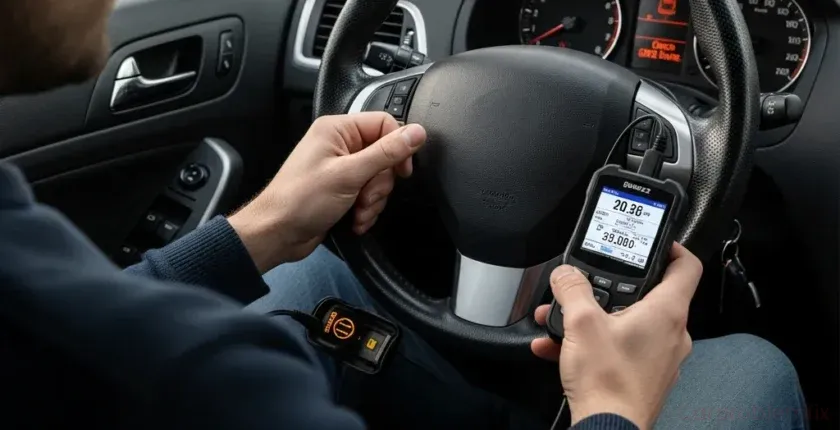
Plug in a scan tool and see a list of “pending” OBD2 codes? Many drivers ignore them because the check engine light is off or just flashed briefly. That can be a mistake. Pending codes are your car’s early warning system, and understanding them can save you money and stress.
- 1. What Is a Pending OBD2 Code?
- 2. Pending vs Confirmed Codes: Key Differences
- 3. Why Pending Codes Matter (Even if the Light Is Off)
- 4. How to Read Pending OBD2 Codes at Home
- 5. Common Types of Pending Codes and What They Hint At
- 5.1. 1. Fuel Trim and Air/Fuel Mixture Codes
- 5.2. 2. Misfire-Related Pending Codes
- 5.3. 3. EVAP System and Small Leak Codes
- 5.4. 4. Catalytic Converter and O2 Sensor Codes
- 6. Simple Checks You Can Do When You See Pending Codes
- 6.1. Step 1: Record Everything Before You Touch Anything
- 6.2. Step 2: Do a Basic Under-Hood Inspection
- 6.3. Step 3: Address Easy, Low-Cost Suspects
- 6.4. Step 4: Drive a Controlled Test Cycle
- 7. Decision Guide: When to Watch, When to Act, and When to See a Mechanic
- 8. Pending Codes and Other Systems: ABS, Transmission, and AC
- 9. Summary and Next Steps
This guide explains what pending OBD2 codes are, how they differ from confirmed codes, why they show up and disappear, and simple checks you can do at home. You do not need to be a mechanic, but you do need to be methodical.
What Is a Pending OBD2 Code?
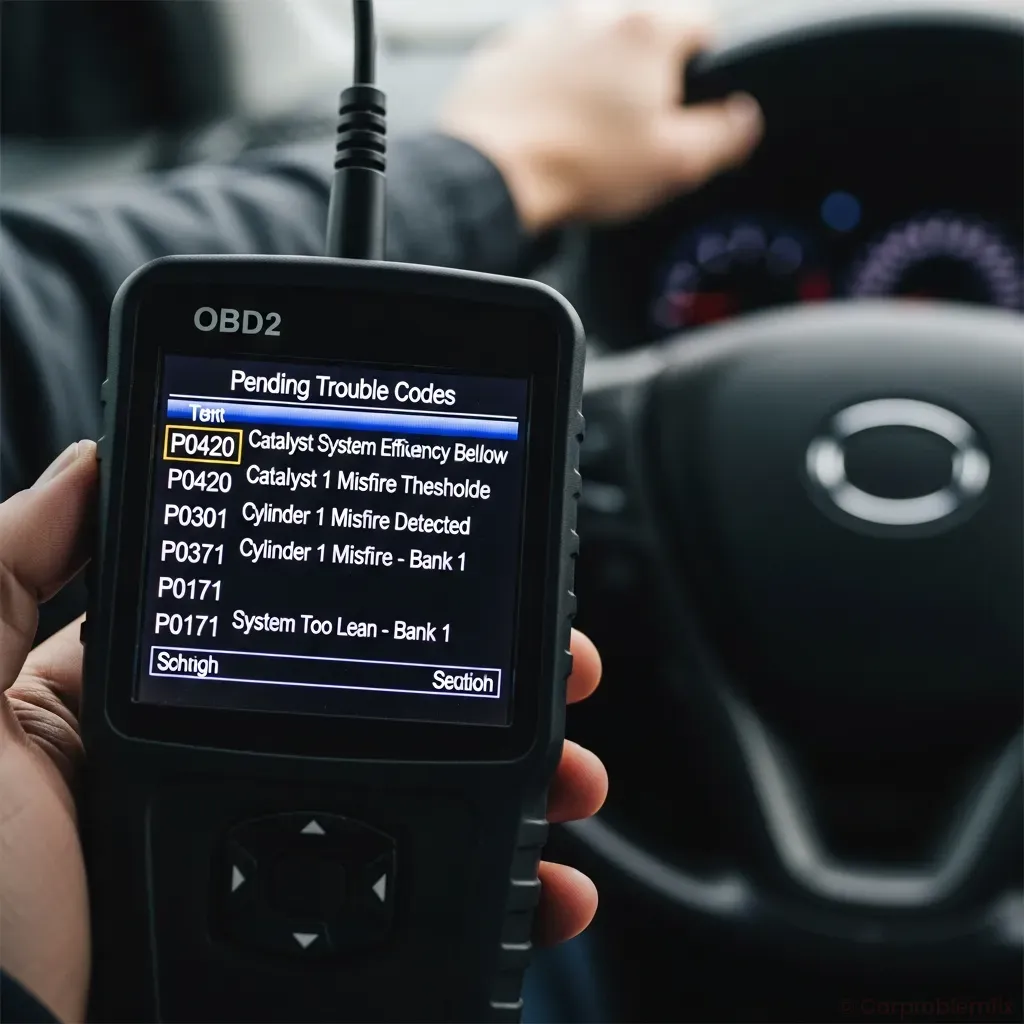
An OBD2 trouble code is stored when your car’s engine computer (ECM/PCM) detects something outside of normal operating limits. A pending code means the computer has seen a problem once, but it has not happened often enough or long enough to turn on the check engine light as a confirmed fault.
Most emissions-related tests in the OBD2 system are called “monitors.” Many monitors require the fault to be seen on two consecutive drive cycles before a confirmed code is set and the check engine light comes on. After the first failure, the code is stored as pending. If the test passes on the next drive, the pending code may clear itself.
In simple terms: a pending code is a “yellow flag.” It says, “Something might be wrong; let’s see if it happens again.”
Pending vs Confirmed Codes: Key Differences
Understanding the difference between pending and confirmed codes helps you decide how urgently to act.
- Pending code: One failed test or an intermittent glitch. The check engine light is usually off or may have flashed briefly.
- Confirmed code: The same fault has been seen enough times to be considered real. The check engine light is on and will usually stay on until the issue is fixed and the code is cleared.
- History/Stored code: A code that was set in the past but is not currently active. It may remain stored even after the light goes off.
Pending codes are especially common for evaporative emissions (EVAP) leaks, oxygen sensor issues, and catalytic converter efficiency problems. For example, a weak catalytic converter may first show as a pending P0420 before it becomes a confirmed code. If you want a deeper dive into that specific code, see OBD2 Code P0420 for Beginners: Catalytic Converter Efficiency.
Why Pending Codes Matter (Even if the Light Is Off)
It is tempting to ignore pending codes because the car seems to run fine. That can be risky for a few reasons:
- Early warning of a real failure: Many serious problems start as intermittent faults. Catching them early can prevent breakdowns.
- Preventing damage: A minor misfire or mixture issue can damage the catalytic converter over time. Addressing a pending code early may save you from an expensive converter replacement.
- Emissions and inspection: Pending codes can indicate monitors that are close to failing. If they become confirmed, you may fail an emissions test.
- Intermittent drivability issues: Hesitation, rough idle, or poor fuel economy may show up only occasionally. Pending codes can point you in the right direction even when the car behaves during a test drive.
You do not need to panic every time you see a pending code, but you should treat it as a prompt to check basics and monitor the situation.
How to Read Pending OBD2 Codes at Home
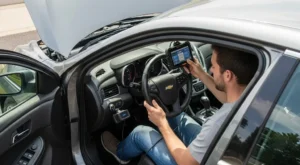
You can read pending codes with almost any OBD2 scanner, from a basic Bluetooth dongle to a more advanced handheld tool. The process is similar across most vehicles.
- Locate the OBD2 port. It is usually under the dashboard on the driver’s side, near the steering column. Sometimes it is behind a small plastic cover.
- Turn the ignition to ON. Do not start the engine yet (unless your scanner specifically requires it). The dash lights should be on.
- Plug in the scanner. Connect your OBD2 tool or Bluetooth adapter to the port. If it is a Bluetooth adapter, pair it with your phone and open the app.
- Choose “Read Codes” or similar. Most tools have separate options for “Stored/Confirmed,” “Pending,” and sometimes “Permanent” codes. Select the pending codes option.
- Write down the codes and descriptions. Note the exact code (for example, P0301, P0442, P0420) and any description the tool provides. If possible, also note the freeze frame data (engine temperature, speed, load) when the fault occurred.
Do not clear codes yet. Clearing them erases useful diagnostic information and resets readiness monitors, which can affect emissions testing.
Common Types of Pending Codes and What They Hint At
Here are some common categories of pending codes and what they often mean in practical terms. This is not a full list, but it will help you interpret what you see.
1. Fuel Trim and Air/Fuel Mixture Codes
Examples: P0171 (system too lean, bank 1), P0174 (system too lean, bank 2).
- What they hint at: Unmetered air entering the engine (vacuum leaks), weak fuel pump, dirty or failing mass airflow (MAF) sensor, or exhaust leaks before the oxygen sensor.
- What you may notice: Slight hesitation, rough idle when cold, or reduced fuel economy. Sometimes no obvious symptoms at first.
For a deeper dive into lean mixture issues, see the dedicated guide to P0171 if you encounter that specific code.
2. Misfire-Related Pending Codes
Examples: P0300 (random/multiple misfire), P0301–P0306 (misfire cylinder-specific).
- What they hint at: Weak ignition coil, worn spark plugs, bad plug wires, injector issues, or compression problems.
- What you may notice: Brief shudder under load, a momentary stumble at idle, or a flashing check engine light that goes away.
Intermittent misfires can be especially damaging to the catalytic converter if ignored, because unburned fuel can overheat it. If you also see white smoke or unusual exhaust behavior, it is worth reading about white smoke from exhaust but car runs fine to rule out more serious engine issues.
3. EVAP System and Small Leak Codes
Examples: P0440, P0441, P0442 (small EVAP leak), P0455 (large EVAP leak).
- What they hint at: Loose or bad gas cap, cracked EVAP hoses, faulty purge or vent valve, or a leak in the charcoal canister or fuel tank area.
- What you may notice: Usually no drivability symptoms. Sometimes a faint fuel smell.
EVAP codes are very common as pending codes because the tests run under specific conditions and small leaks can be intermittent.
4. Catalytic Converter and O2 Sensor Codes
Examples: P0420 (catalyst efficiency below threshold bank 1), P0430 (bank 2), O2 sensor slow response codes.
- What they hint at: Worn catalytic converter, lazy oxygen sensors, exhaust leaks, or long-term mixture issues.
- What you may notice: Often nothing at first. Over time, you may see reduced fuel economy or a sulfur/rotten egg smell.
If you see a pending P0420, it is worth reading both the beginner’s guide to P0420 and the more detailed diagnosis article: OBD2 Code P0420: Catalyst System Efficiency Below Threshold – Causes, Diagnosis & Fixes.
Simple Checks You Can Do When You See Pending Codes
Before you head to a shop, there are basic checks almost anyone can do with simple tools. The exact steps depend on the type of code, but this general process works for most situations.
Step 1: Record Everything Before You Touch Anything
- Write down all codes. Include pending and confirmed codes, even if the light is off.
- Check freeze frame data. Note engine temperature, speed, and load when the fault occurred. For example, did it happen at highway speed or idle?
- Look for patterns. Multiple codes in related systems (for example, several lean codes) can point to a shared cause.
Having this information makes it easier for you or a mechanic to avoid guesswork.
Step 2: Do a Basic Under-Hood Inspection
- Check the gas cap. Make sure it is the correct type, the seal is not cracked, and it clicks several times when tightened. A loose or worn gas cap is a common cause of EVAP-related pending codes.
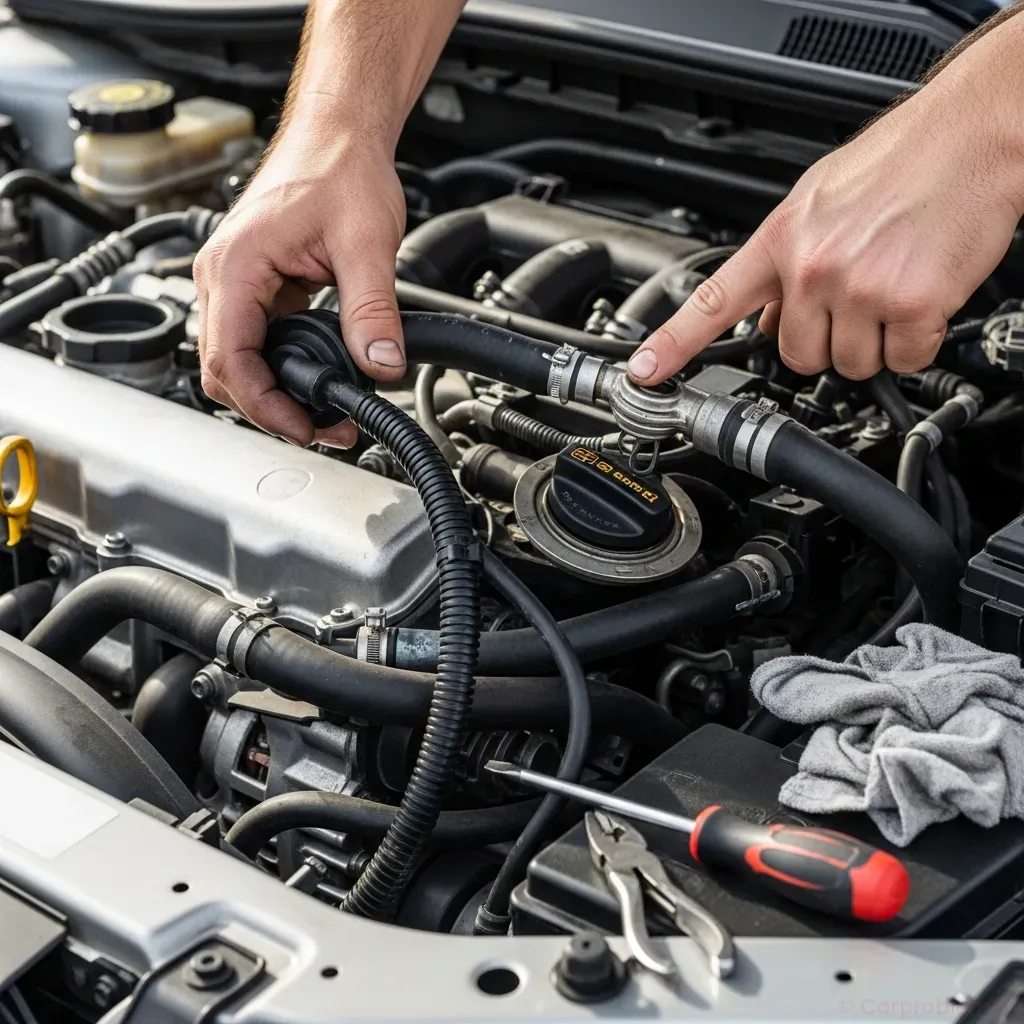
- Inspect visible vacuum hoses. Look for cracked, disconnected, or oil-soaked hoses around the intake manifold, throttle body, and brake booster. A vacuum leak can trigger lean and idle-related pending codes.
- Look for obvious wiring issues. Gently inspect around sensors related to your codes (MAF, O2 sensors, coils). Look for broken insulation, loose connectors, or corrosion.
- Check fluid levels. Low coolant or oil can indirectly contribute to some codes and should be corrected immediately.
These checks cost nothing and can catch simple issues that cause intermittent faults.
Step 3: Address Easy, Low-Cost Suspects
- Replace a suspect gas cap. If you have EVAP pending codes and the gas cap seal looks cracked or the cap does not tighten firmly, replacing it is inexpensive and often effective.
- Clean the MAF sensor (if applicable). For lean or mixture-related pending codes, a dirty MAF can be a factor. Use only MAF-specific cleaner, follow the directions, and do not touch the sensor element.
- Repair obvious vacuum leaks. Reattach loose hoses or replace cracked ones. If you are not comfortable, at least note the location for your mechanic.
- Check spark plug condition (if accessible). For misfire-related pending codes, pull the plug from the affected cylinder (for example, P0302 = cylinder 2) and look for heavy wear, oil fouling, or cracks.
Do not start replacing expensive parts like catalytic converters or oxygen sensors just because of a single pending code. Those should be tested and confirmed first.
Step 4: Drive a Controlled Test Cycle
- Clear codes only after you have made changes. If you replaced a gas cap or fixed a hose, then clear the codes so you can see what comes back.
- Drive normally for several days. Include a mix of city and highway driving, with the engine fully warmed up. Many monitors only run under specific conditions.
- Re-scan for codes. Check if the same pending code returns, becomes confirmed, or disappears.
If a pending code does not return after several drive cycles, it may have been a one-time glitch or a problem you successfully corrected.
Decision Guide: When to Watch, When to Act, and When to See a Mechanic
Use this simple decision-based checklist to decide your next move when you see pending OBD2 codes.
- If you have only one pending code, no symptoms, and no obvious issues found:
- Monitor the situation.
- Do a basic under-hood check and verify the gas cap.
- Re-scan after a few days of mixed driving.
- If the same pending code returns repeatedly:
- Treat it as a real developing problem.
- Do the simple checks listed above for that type of code (mixture, misfire, EVAP, etc.).
- Plan a diagnostic visit if you cannot find a clear cause.
- If a pending code becomes a confirmed code and the check engine light stays on:
- Prioritize diagnosis within a few days.
- If the car runs poorly, misfires, or the light flashes, avoid driving and seek help immediately.
- If you have multiple different pending codes across unrelated systems:
- Consider battery or ground issues, or recent work that may have disturbed wiring.
- This situation is a good time to involve a professional.
Also consider how the car feels. If you have drivability issues like rough idle, misfires, or poor performance along with pending codes, do not ignore them. For example, if the engine runs roughly, you may want to review guides on misfires and rough idle, or if you have starting issues after wet weather, see Car Won’t Start After Rain or Heavy Washing for moisture-related problems.
Pending Codes and Other Systems: ABS, Transmission, and AC
Pending codes are primarily an engine and emissions concept, but many scan tools will also show codes from other modules like ABS, transmission, and body control. These may not use the same “pending” terminology, but the idea of intermittent vs confirmed faults still applies.
- Transmission: Intermittent shift issues may log temporary faults before a full warning light appears. If you feel slipping or harsh shifting with related codes, do not delay diagnosis.
- ABS/Traction: Wheel speed sensor glitches may appear only occasionally at first. If you see ABS-related warnings, treat them as safety issues.
- AC performance: Engine-related pending codes can indirectly affect AC operation by changing engine load or idle speed. If you are also dealing with poor AC performance, see Car AC Not Blowing Cold Air Causes, Fixes & Cost to Repair or the more specific Beginner’s Guide to Car AC Not Blowing Cold Air: Simple Checks.
Even when other systems are involved, the same principle holds: an intermittent warning is a chance to fix something before it becomes a bigger problem.
Summary and Next Steps
Pending OBD2 codes are not something to fear, but they are not something to ignore either. They are your car’s way of saying, “I saw something odd once; keep an eye on me.” By reading pending codes, doing basic checks, and watching for patterns, you can often catch developing issues early and avoid expensive repairs.
If the same pending code keeps returning, becomes confirmed, or is accompanied by symptoms like misfires, rough running, or poor performance, it is time to involve a qualified mechanic. Bring your notes, including codes and freeze frame data, so they can diagnose efficiently. Treat pending codes as an early warning system, and your car—and your wallet—will be better off.
How do you rate this guide?

Related Posts

Comments have been disabled.