
Beginner’s Guide to Buying Your First Used Car: How to Avoid Lemons and Get Real Value
Buying your first used car can be intimidating, but it doesn’t have to be a gamble. This guide walks beginners through budgeting, research, inspections, and negotiation so you avoid lemons and get real value....


Buying your first used car feels exciting and stressful at the same time. You want something reliable and affordable, but you also don’t want to get stuck with a money pit that lives at the repair shop. With a simple, step-by-step plan, you can dramatically reduce your risk and get a car that actually fits your life and budget.
- 1. Step 1: Set a Realistic Budget (Including Hidden Costs)
- 2. Step 2: Choose the Right Type of Car for Your Needs
- 3. Step 3: Research Reliable Models and Known Problems
- 4. Step 4: Where to Shop and How to Read Listings
- 4.1. Common Places to Buy a Used Car
- 4.2. How to Read a Used Car Listing
- 5. Step 5: Questions to Ask the Seller Before You Visit
- 6. Step 6: How to Inspect a Used Car in Person (Beginner-Friendly)
- 6.1. Exterior and Body Check
- 6.2. Interior and Basic Electrical Check
- 6.3. Under the Hood (Beginner Basics)
- 7. Step 7: How to Do a Smart Test Drive
- 8. Step 8: Always Get a Pre-Purchase Inspection
- 9. Step 9: Negotiating and Closing the Deal
- 10. Summary and Next Steps
This beginner-friendly guide walks you through how to set a realistic budget, research models, inspect a car in person, and negotiate without getting pushed around. Follow these steps and you’ll be far less likely to drive home in a lemon.
Step 1: Set a Realistic Budget (Including Hidden Costs)
Before you look at a single listing, decide what you can truly afford. The sticker price is only part of the story. You must include taxes, fees, and the cost of catching up on maintenance or repairs.

- Decide your total spend limit. This is the maximum you can spend out-the-door (car price + taxes + registration + fees). For beginners, it’s safer to stay a bit under your absolute limit so you have room for repairs.
- Estimate taxes and fees. These vary by state and country, but a rough rule is 8–12% of the purchase price for taxes, title, and registration. Check your local DMV or government site for exact numbers.
- Set aside a repair/maintenance fund. Plan to keep at least 10–20% of the car’s price in reserve. For example, if you spend $8,000 on the car, aim to keep $800–$1,600 for tires, brakes, fluids, and surprise fixes.
- Consider insurance costs. Get quotes for a few models you’re considering. Some cars that look cheap to buy can be expensive to insure.
Once you have a clear budget, you can start targeting cars that fit your price range without leaving yourself financially exposed the first time something breaks.
Step 2: Choose the Right Type of Car for Your Needs
Many first-time buyers focus on style or brand instead of what they actually need. A car that fits your driving habits will be cheaper to own and less likely to disappoint you.
- Daily commuting: Look for small sedans or compact hatchbacks with good fuel economy and simple drivetrains. Fewer complex features usually means fewer expensive failures.
- Family use: Consider small SUVs or larger sedans with good safety ratings, easy child-seat installation, and enough cargo space for strollers or groceries.
- Snowy or rough roads: All-wheel drive can help, but it adds complexity and cost. Sometimes good winter tires on a front-wheel-drive car are enough.
- Student or first car: Focus on reliability, low insurance cost, and easy-to-find parts. For more detail on suitable starter cars, see the Beginner’s Guide to Reliable First Cars.
Make a short list of 2–4 body styles that fit your life. This will keep you from getting distracted by cars that look cool but don’t really work for you.
Step 3: Research Reliable Models and Known Problems
Not all used cars are equal. Some models are known for lasting a long time with basic maintenance, while others are notorious for expensive failures. Spend time here before you ever go see a car.
- Search reliability information by make and model. Look up common issues, typical repair costs, and how long major components usually last. Pay attention to automatic transmission problems, engine issues, and rust.
- Check for expensive failure points. Examples include turbocharger failures, timing chain issues, CVT transmission problems, or complex air suspension. These can turn a cheap car into a financial disaster.
- Look at parts availability and cost. Popular, common models often have cheaper parts and more independent mechanics who know how to fix them.
- Target “boring but reliable.” Plain sedans and compact SUVs from mainstream brands are often safer bets than high-performance or luxury models in the same price range.
As you research, build a shortlist of 3–6 specific models and year ranges that fit your budget and needs. This will make your search much more focused and efficient.
Step 4: Where to Shop and How to Read Listings
Once you know your budget and target models, you can start hunting. Each buying source has pros and cons, and the way a listing is written can tell you a lot about the seller and the car.
Common Places to Buy a Used Car
- Private sellers: Often cheaper and more negotiable. You can ask about the car’s history directly. But there’s usually no warranty, and you must be extra careful with inspections and paperwork.
- Independent used car dealers: More selection in one place, and they handle paperwork. Some offer short warranties. Prices may be higher, and quality can vary widely.
- Franchise dealers (brand-name dealers): Often sell trade-ins and certified pre-owned (CPO) vehicles. These tend to be more expensive but may come with better inspection standards and warranties.
How to Read a Used Car Listing
When you look at ads, don’t just focus on the photos and price. Read the description carefully and look for clues.
- Good signs: Detailed maintenance history, recent work (timing belt, brakes, tires), clear mileage, VIN listed, lots of photos from different angles, and a seller who mentions known flaws honestly.
- Red flags: Very short description, no mileage listed, only a few photos, “needs nothing” with no details, phrases like “just needs a little TLC” without explanation, or a price far below typical market value.
- Check the VIN: Use the VIN to look up basic history, recall information, and whether the car has a salvage or rebuilt title. Be cautious with cars that have been in major accidents or floods.
Make a shortlist of 3–5 cars that look promising and are within your budget. Then you’re ready to start contacting sellers.
Step 5: Questions to Ask the Seller Before You Visit
A quick phone call or message can save you a wasted trip. You want to confirm the basics and gauge how honest and knowledgeable the seller seems.
- Ask about ownership and reason for selling. “How long have you owned the car?” and “Why are you selling it?” Short ownership periods or vague answers can be warning signs.
- Confirm mileage and title status. Ask, “What’s the current mileage?” and “Is the title clean, salvage, or rebuilt?” Avoid surprises when you arrive.
- Ask about maintenance history. “Do you have service records?” and “When were the brakes, tires, and fluids last changed?” Detailed answers are better than “it’s been maintained.”
- Ask about accidents and major repairs. “Has the car ever been in an accident?” and “Any major engine or transmission work?” Compare their answers to any history reports you pull.
- Clarify any issues mentioned in the ad. If the listing mentions a warning light, odd noise, or minor damage, ask for details and whether they’ve had it diagnosed.
If the seller is evasive, rude, or refuses a pre-purchase inspection, it’s usually best to walk away before you invest more time.
Step 6: How to Inspect a Used Car in Person (Beginner-Friendly)
You don’t need to be a mechanic to spot many obvious problems. Use this simple checklist when you see the car. If anything feels wrong or rushed, be ready to leave.
Exterior and Body Check
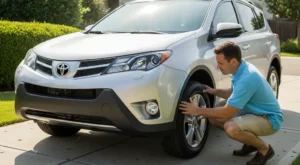
- Walk around the car in good light. Look for mismatched paint, uneven panel gaps, and overspray around doors or windows. These can indicate past bodywork from accidents.
- Check for rust. Focus on wheel arches, door sills, under the doors, and underbody edges you can see. Surface rust is common in some climates, but structural rust is a major red flag.
- Inspect glass and lights. Look for cracks, chips, or cloudy headlights. These can be negotiation points or signs of neglect.
Interior and Basic Electrical Check
- Sit in every seat. Check seat belts, seat adjustments, and general wear. Excessive wear for the mileage can suggest odometer tampering or hard use.
- Test all switches. Turn on headlights, high beams, turn signals, hazard lights, wipers, windows, locks, mirrors, and the horn. If multiple electrical items act strangely, you may later need to diagnose issues like dashboard lights flickering while driving or other wiring faults.
- Check the heater and AC. Make sure the blower works on all speeds and that heat and AC change temperature. If the heater doesn’t get warm, you may be dealing with issues similar to those covered in Car Heater Not Blowing Hot Air.
Under the Hood (Beginner Basics)
- Look for obvious leaks. Check around the engine, radiator area, and under the car for wet spots or stains. Fresh oil, coolant, or transmission fluid leaks can be expensive to fix.
- Check fluid levels and condition. Engine oil should not be thick sludge or metallic-looking. Coolant should be relatively clean and at the right level. Dark, burnt-smelling transmission fluid can be a warning sign.
- Listen to the engine at idle. It should idle smoothly without loud knocking, rattling, or squealing. Occasional minor vibrations are normal, but harsh noises are not.
If anything seems seriously wrong at this stage, you can politely end the visit and move on to the next car. There are always other options.
Step 7: How to Do a Smart Test Drive
The test drive is your chance to see how the car behaves in real conditions. Don’t rush this part, and don’t let the seller distract you with small talk while you’re trying to listen and feel for issues.
- Start the car from cold if possible. Cold starts can reveal hard starting, smoke, or rough idle that disappears once the engine is warm.
- Check the dashboard. All warning lights should briefly illuminate, then go out. Persistent battery, check engine, ABS, or airbag lights need further diagnosis. If the battery light stays on, you may later need guidance like Battery Light On While Driving: Causes, Fixes & Repair Costs.
- Drive at different speeds. Test city speeds, moderate acceleration, and a short highway run if safe and allowed. Listen for whining, humming, or clunking noises from the engine, transmission, or wheels.
- Test the brakes. Brake firmly but safely. The car should stop in a straight line without pulling to one side, grinding, or vibrating. If it pulls, you may face issues similar to those in Car Pulls to One Side While Driving.
- Check steering and suspension. The steering should feel stable and predictable, with no excessive play. Over bumps, listen for clunks or rattles that could indicate worn suspension components.
- Monitor temperature and behavior. The engine temperature gauge should reach normal operating range and stay there. Watch for overheating, misfires, or sudden loss of power.
If the car drives poorly, makes worrying noises, or triggers warning lights, don’t ignore it. You’re better off walking away than hoping problems will magically disappear.
Step 8: Always Get a Pre-Purchase Inspection
Even if the car looks and drives fine, a professional inspection is your best protection against hidden problems. This is especially important for beginners.
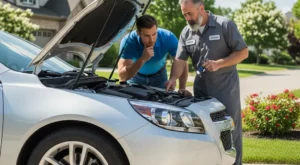
- Find an independent mechanic. Choose a shop that is not connected to the seller or dealer. Ideally, pick someone who regularly works on the brand you’re considering.
- Schedule a full pre-purchase inspection. The mechanic will put the car on a lift, check for leaks, worn suspension, brake condition, tire wear, frame damage, and scan for stored diagnostic codes.
- Review the report in detail. Ask the mechanic to prioritize issues: what is unsafe, what needs attention soon, and what is just wear-and-tear. Get rough repair estimates.
- Use the findings to negotiate or walk away. If the car needs more work than you can afford, it’s okay to thank the seller and move on. If issues are manageable, you can use them to justify a lower price.
The cost of a pre-purchase inspection is small compared to the thousands you could lose on a bad car. Skipping this step is one of the most common beginner mistakes.
Step 9: Negotiating and Closing the Deal
Negotiation doesn’t have to be confrontational. You’re simply trying to reach a fair price based on the car’s condition, market value, and needed repairs.
- Know the market value. Before you negotiate, look up similar cars (same year, mileage, condition) in your area. This gives you a realistic price range.
- Start with a reasonable offer. Use any inspection findings, worn tires, cosmetic damage, or missing maintenance as justification. Avoid lowball offers that insult the seller; they’re less likely to work with you.
- Be willing to walk away. If the seller won’t budge and the price doesn’t make sense given the car’s condition, politely leave. There are always other cars.
- Check the paperwork carefully. Verify the VIN on the car matches the title, make sure the seller’s name is on the title, and confirm there are no liens. For private sales, fill out a bill of sale and follow your local DMV’s process.
- Plan your payment safely. Avoid carrying large amounts of cash. Many buyers use cashier’s checks or meet at a bank to complete the transaction securely.
Once the deal is done, transfer the title, register the car, and update your insurance before driving it regularly.
Summary and Next Steps
Buying your first used car doesn’t have to be a gamble if you follow a clear process. Start with a realistic budget, research reliable models, and carefully inspect and test drive each candidate. A professional pre-purchase inspection is your best protection against hidden problems.
If a car shows serious mechanical issues, warning lights, or signs of neglect, walk away and keep shopping. When in doubt, get a trusted mechanic or experienced friend involved. With patience and a structured approach, you can avoid lemons and end up with a used car that delivers real value for years to come.
How do you rate this guide?

Related Posts

Comments have been disabled.
