Turning the key and hearing your engine crank but never start is frustrating and confusing. The starter is clearly working, but the engine just won’t fire up. Before you call a tow truck, there are several simple, beginner-friendly checks you can do that may either fix the problem or at least narrow it down.
- 1. What “Cranks but Won’t Start” Really Means
- 2. Safety First: When You Should Stop Trying to Start the Car
- 3. Quick Decision Checklist: What Does Your Car Do?
- 4. Step 1: Rule Out Simple Fuel Issues
- 4.1. 1.1 Confirm You Actually Have Fuel
- 4.2. 1.2 Listen for the Fuel Pump
- 4.3. 1.3 Check for Flooding (Especially on Older or Cold Engines)
- 5. Step 2: Check for Spark and Ignition Problems
- 5.1. 2.1 Look for Obvious Ignition Issues
- 5.2. 2.2 Use a Simple Spark Check (Beginner-Friendly Version)
- 6. Step 3: Air and Engine Health Checks (Compression & Timing Basics)
- 6.1. 3.1 Check the Air Intake Path
- 6.2. 3.2 Listen for Unusual Cranking Sounds
- 7. Step 4: Electrical Power and Sensor Basics
- 7.1. 4.1 Check Battery Voltage Under Load
- 7.2. 4.2 Look for Blown Fuses Related to Engine Control
- 7.3. 4.3 Consider Heat-Related No-Start Patterns
- 8. Step 5: Simple Things You Can Try Without Tools
- 8.1. 5.1 Shift Through Gears (Automatic Transmissions)
- 8.2. 5.2 Lightly Tap the Fuel Tank (Older Vehicles)
- 8.3. 5.3 Try a Different Key (If You Have an Immobilizer)
- 9. When It’s Time to Call a Tow Truck
- 10. Summary and Next Steps
This guide walks you through what it means when a car cranks but won’t start, the most common causes, and step-by-step checks you can safely do in your driveway with basic tools.
What “Cranks but Won’t Start” Really Means
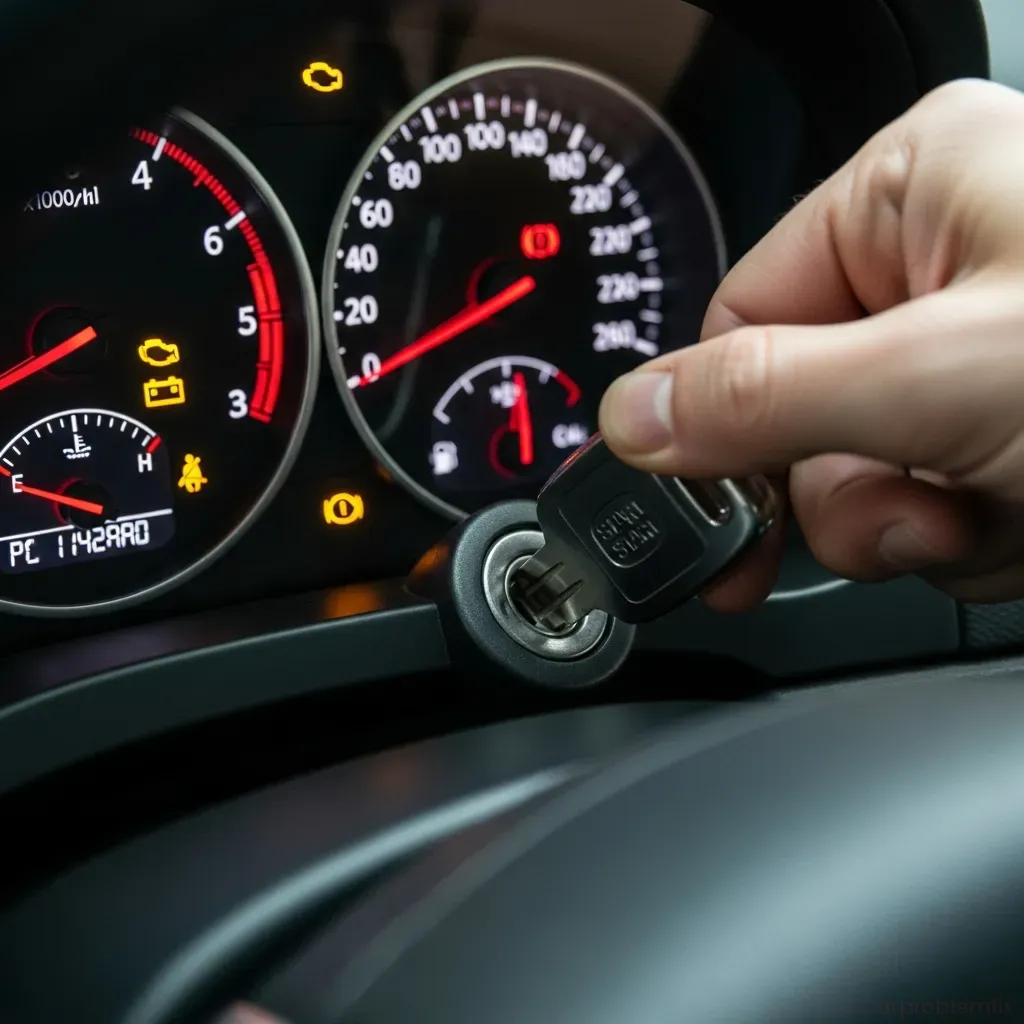
When people say a car “cranks but won’t start,” they mean the starter motor is spinning the engine normally. You hear a steady “rr-rr-rr-rr” sound, not just a click or silence. The battery has enough power to turn the engine, but the engine never actually runs on its own.
For an engine to start, it needs three basic things at the right time:
- Air (and good compression)
- Fuel (at the right pressure)
- Spark (ignition at the right time)
If any of these are missing or badly out of spec, the engine will crank but not start. Your goal with the checks below is to figure out which of these three is likely missing.
Safety First: When You Should Stop Trying to Start the Car
Before you start troubleshooting, keep these safety rules in mind:
- Stop cranking after 10–15 seconds at a time. Let the starter cool for at least 30–60 seconds between attempts to avoid burning it out.
- Don’t keep flooring the gas on modern cars. Most fuel-injected engines don’t need throttle input to start. Excessive cranking can flood the engine.
- Be very careful around fuel. If you smell strong gasoline or see leaks, avoid sparks, smoking, or open flames.
- If you suspect a major electrical issue (burning smell, smoke, melted plastic, repeatedly blowing fuses), stop and see a mechanic or review a guide like Beginner’s Guide to Car Electrical Problems: Simple Checks for Lights, Fuses, and Power Drains.
If at any point you feel out of your depth, it’s better to stop than to risk damage or injury.
Quick Decision Checklist: What Does Your Car Do?
Use this simple checklist to narrow down the problem based on what you experience when you try to start the car.
- Engine cranks at normal speed, no attempt to fire
- Likely: no fuel, no spark, or a sensor issue.
- Engine cranks, sometimes coughs or almost starts
- Likely: weak fuel pressure, partially failing ignition, or flooded engine.
- Engine cranks faster than normal, sounds “whirry” or light
- Possible: very low compression (timing belt/chain problem). Stop cranking and call a tow.
- Engine cranks and then suddenly stops or locks
- Possible: mechanical failure (hydrolock, seized engine). Stop immediately and call a professional.
If your situation matches the first two bullet points, the step-by-step checks below are appropriate for most beginners.
Step 1: Rule Out Simple Fuel Issues
Fuel problems are one of the most common reasons a car cranks but won’t start. Start with the easiest checks.
1.1 Confirm You Actually Have Fuel
- Check the fuel gauge. It sounds obvious, but gauges can be inaccurate, and it’s easy to underestimate how much you’ve driven.
- Think about the last time you filled up. If it’s been a while or you’ve done a lot of driving, you may simply be out of fuel.
- Parked on a steep hill? On some older or low-fuel cars, parking nose-up or nose-down on a steep slope can move fuel away from the pickup in the tank.
If you’re unsure, adding a few gallons of fresh fuel is a simple test. If the car starts afterward, the problem was likely low fuel or a failing fuel gauge.
1.2 Listen for the Fuel Pump
Most modern cars use an electric fuel pump inside the tank. When you turn the key to the “ON” position (without cranking), the pump usually runs for a second or two to build pressure.
- Turn the key to ON (not START).
- Listen near the rear seat or fuel tank area. You should hear a brief humming or whirring sound for 1–3 seconds.
- No sound? The pump may not be running due to a bad pump, relay, fuse, or wiring issue.
If you don’t hear the pump, check your owner’s manual for the fuel pump fuse and relay location. Then:
- Inspect the fuse. If it’s blown, replace it with one of the same rating. If it blows again immediately, stop and see a mechanic.
- Swap the relay (if possible). Some cars use identical relays for different circuits (like the horn). Swapping them can help you test a bad relay without tools.
If the pump still doesn’t run after fuse and relay checks, you’re likely dealing with an electrical or pump failure that usually requires professional diagnosis. Again, a broader electrical guide like Beginner’s Guide to Car Electrical Problems can help you understand the basics.
1.3 Check for Flooding (Especially on Older or Cold Engines)
A flooded engine has too much fuel and not enough air, soaking the spark plugs and preventing ignition. Signs include a strong fuel smell from the exhaust and repeated failed start attempts.
- Hold the gas pedal to the floor (on many fuel-injected cars, this tells the computer to reduce fuel during cranking).
- Crank the engine for 5–10 seconds.
- Release the key and pedal. Wait 30–60 seconds and try a normal start.
If the engine was only mildly flooded, this “clear flood” procedure may help it start. If it doesn’t, move on to the next checks.
Step 2: Check for Spark and Ignition Problems
If fuel seems to be getting to the engine, the next suspect is spark. Modern ignition systems are reliable, but failures still happen, especially with older spark plugs, coils, or crank sensors.
2.1 Look for Obvious Ignition Issues
- Open the hood and visually inspect ignition components.
- Look for loose or disconnected spark plug wires or coil connectors.
- Check for obvious damage, cracks, or burn marks on ignition coils.
- Check for moisture. After heavy rain or a car wash, moisture can get into ignition components, especially on older cars with distributor caps.
If you see a connector that’s clearly unplugged or a wire that’s obviously broken, reconnecting or securing it may solve the problem. Do this only with the ignition off.
2.2 Use a Simple Spark Check (Beginner-Friendly Version)
A full spark test normally uses a dedicated tester, but there’s a basic, safer way to get an idea if the ignition system is working without touching live components.
- Have a helper crank the engine while you stand safely to the side of the engine bay.
- Watch for engine “behavior.” If the engine occasionally coughs, pops, or tries to start, you may be getting intermittent spark or fuel.
- Check the tachometer (if equipped). On some cars, if the tach needle moves slightly during cranking, it suggests the crankshaft sensor is at least sending some signal.
If there is absolutely no sign of life—no coughs, no sputters, and the engine just spins—there may be no spark at all, often due to a failed crankshaft position sensor, cam sensor, ignition module, or related wiring. These usually require scan tools and more advanced diagnostics.
At this point, scanning for trouble codes with an OBD2 scanner can be very helpful. Even if the check engine light isn’t on, stored codes can point toward ignition or sensor problems. If you’re curious about how readiness tests work after repairs, see OBD2 Readiness Monitors: What They Are, Why They’re Not Ready, and How to Fix Them.
Step 3: Air and Engine Health Checks (Compression & Timing Basics)
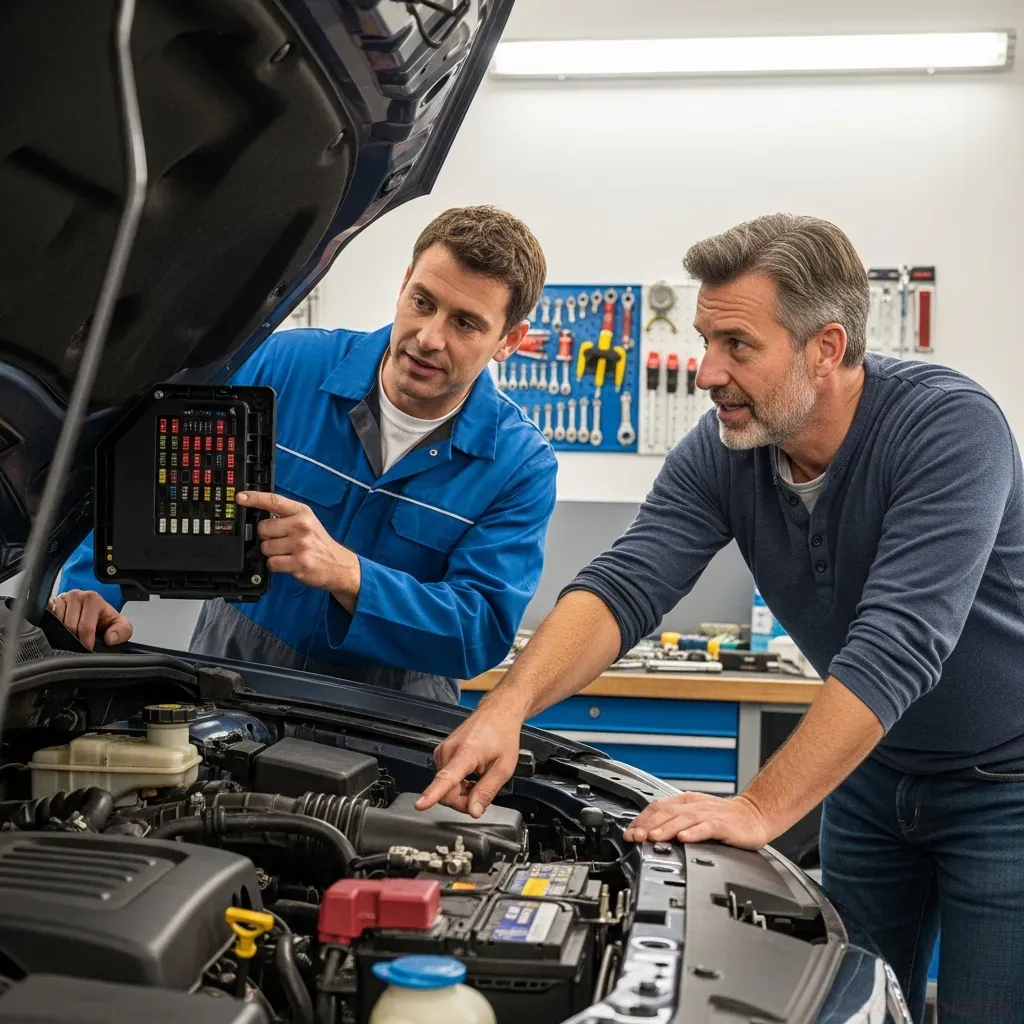
If fuel and spark seem okay, the last piece of the puzzle is air and compression. Mechanical problems are less common but more serious.
3.1 Check the Air Intake Path
- Inspect the air intake hose. Look for a hose that has come loose or collapsed between the air filter box and the throttle body.
- Check the air filter box. Make sure it’s closed properly and nothing is blocking the intake (like a rag or heavy debris).
- Look for obvious vacuum hoses that are completely disconnected. A major vacuum leak can sometimes prevent starting or cause extremely rough attempts to start.
Minor air leaks usually cause rough running rather than a complete no-start, but a totally blocked intake or massive leak can keep the engine from firing.
3.2 Listen for Unusual Cranking Sounds
The way the engine sounds while cranking can give clues about its internal health.
- Normal cranking: Steady, rhythmic “rr-rr-rr-rr” sound.
- Very fast, smooth cranking: Can indicate low or no compression, sometimes from a broken timing belt or chain.
- Uneven or clunky cranking: May suggest internal engine damage or a mechanical obstruction.
If your engine suddenly cranks much faster than it used to, especially on an interference engine with a timing belt, stop trying to start it and call a tow. Continuing to crank can cause more damage if valves and pistons are colliding.
Step 4: Electrical Power and Sensor Basics
Even when the engine cranks, low voltage or bad sensors can prevent it from starting. This step focuses on simple checks you can do without deep electrical knowledge.
4.1 Check Battery Voltage Under Load
A weak battery can crank the engine but drop voltage so low that the computer and fuel system can’t operate correctly.
- Turn on the headlights. They should be bright and steady.
- Have someone crank the engine while you watch the lights.
- If the lights dim severely or go almost out while cranking, the battery may be too weak even though it can still turn the engine.
Jump-starting from a good battery is a reasonable test. If the car starts easily with a jump and then runs normally, you likely have a weak battery or charging system issue that should be checked soon.
4.2 Look for Blown Fuses Related to Engine Control
Modern cars rely on multiple fuses to power the engine computer, fuel system, and ignition. A single blown fuse can cause a crank-no-start.
- Consult your owner’s manual for the fuse box layout.
- Identify fuses labeled for “ECM,” “PCM,” “IGN,” “INJ,” or “EFI.”
- Visually inspect these fuses. If the metal strip inside is broken or burned, the fuse is blown.
- Replace any blown fuse with one of the same rating.
If a new fuse blows immediately, there’s a short circuit that needs professional diagnosis. Don’t keep replacing fuses, as this can cause wiring damage or even fire.
4.3 Consider Heat-Related No-Start Patterns
If your car only refuses to start when hot (after driving or sitting in the sun) but starts fine when cold, you may be dealing with a heat-sensitive sensor or fuel issue. For a deeper dive into that specific pattern, see Car Won’t Start When Hot: Causes, Diagnosis & Fixes Before You Get Stranded.
Heat-related failures often point to crankshaft position sensors, ignition modules, or fuel pumps that fail when hot and recover when cool.
Step 5: Simple Things You Can Try Without Tools
Before you give up and call a tow truck, there are a few low-risk tricks that sometimes help, especially on older or high-mileage vehicles.
5.1 Shift Through Gears (Automatic Transmissions)
Some cars won’t allow the engine to start if the computer doesn’t see the transmission in Park or Neutral. While this usually prevents cranking entirely, a misaligned range sensor can sometimes cause weird behavior.
- Firmly press the brake pedal.
- Move the shifter from Park to Neutral.
- Try starting in Neutral. Sometimes a worn shifter linkage will let the car start in Neutral but not Park.
If it starts in Neutral, you likely have an issue with the range sensor or shifter linkage that should be adjusted or replaced.
5.2 Lightly Tap the Fuel Tank (Older Vehicles)
On older cars with a failing in-tank fuel pump, lightly tapping the bottom of the fuel tank while someone cranks the engine can sometimes temporarily free a stuck pump.
- Use the rubber side of a mallet or your hand (don’t use sharp or metal tools).
- Have a helper crank the engine while you gently tap the tank.
- If the car suddenly starts, the fuel pump is very likely failing and should be replaced soon.
This is a temporary trick to get you to a safe location or shop, not a long-term fix.
5.3 Try a Different Key (If You Have an Immobilizer)
Many modern cars have an immobilizer system that uses a chip in the key. If that chip or the reader fails, the engine may crank but not start because the computer is cutting fuel or spark.
- Try a spare key if you have one.
- Look for a flashing security or key symbol on the dash when you try to start.
If the car starts with a different key, you may have a key or immobilizer issue that requires dealer or locksmith programming.
When It’s Time to Call a Tow Truck
After you’ve worked through the basic checks, it’s important to know when to stop and get professional help. Call a tow or mobile mechanic if:
- You smell strong fuel and the engine still won’t start after flood-clearing attempts.
- The engine cranks unusually fast or makes metallic noises.
- Fuses related to the engine or fuel system keep blowing.
- You suspect a timing belt/chain issue or internal engine damage.
- You’re not comfortable working around fuel, batteries, or electrical components.
At that point, further cranking can cause more damage or drain the battery completely, making diagnosis harder.
Summary and Next Steps
A car that won’t start but cranks usually has an issue with fuel delivery, spark, or engine management—not the starter itself. By checking fuel level, listening for the fuel pump, inspecting basic ignition components, and verifying fuses and battery strength, you can often narrow the problem down before you ever call a tow truck.
If your checks point to a simple issue—like low fuel, a weak battery, or a blown fuse—you may be able to fix it on the spot. If the engine sounds abnormal, fuses keep blowing, or you suspect a deeper electrical or mechanical problem, it’s time for a professional diagnosis. Either way, understanding these basics will help you describe the symptoms clearly and avoid unnecessary parts swapping or guesswork at the shop.