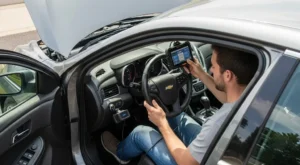
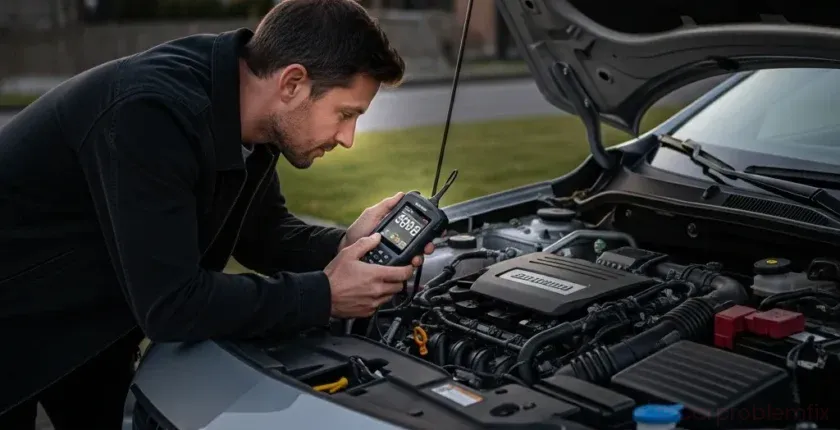
Modern cars constantly monitor themselves and store OBD2 trouble codes whenever something looks wrong. A basic code reader can show you these codes in seconds, but the real value comes from knowing what they actually mean and what you can safely check at home.
- 1. How OBD2 Trouble Codes Are Organized
- 2. Most Common Engine-Related OBD2 Codes (P0xxx)
- 2.1. P0101–P0103: Mass Air Flow (MAF) Sensor Problems
- 2.2. P0116–P0128: Engine Coolant Temperature Sensor and Warm-Up Issues
- 2.3. P0130–P0161: Oxygen (O2) Sensor and Air-Fuel Ratio Sensor Codes
- 2.4. P0440–P0457: EVAP System Leak and Gas Cap Codes
- 2.5. P0500–P0507: Idle Speed and Vehicle Speed Sensor Issues
- 3. Transmission-Related OBD2 Codes: What Beginners Should Look For
- 4. ABS, Traction, and Chassis Codes (C0xxx)
- 5. Body and Network Codes (B and U Codes): When to Worry
- 6. Step-by-Step: How to Approach Any New OBD2 Code
- 7. Summary and Next Steps
This guide walks beginners through the most common OBD2 trouble codes, the typical symptoms you might notice, and simple checks you can do before paying for diagnostics. You do not need advanced tools for most of these steps, just patience, a flashlight, and a basic scan tool.
How OBD2 Trouble Codes Are Organized
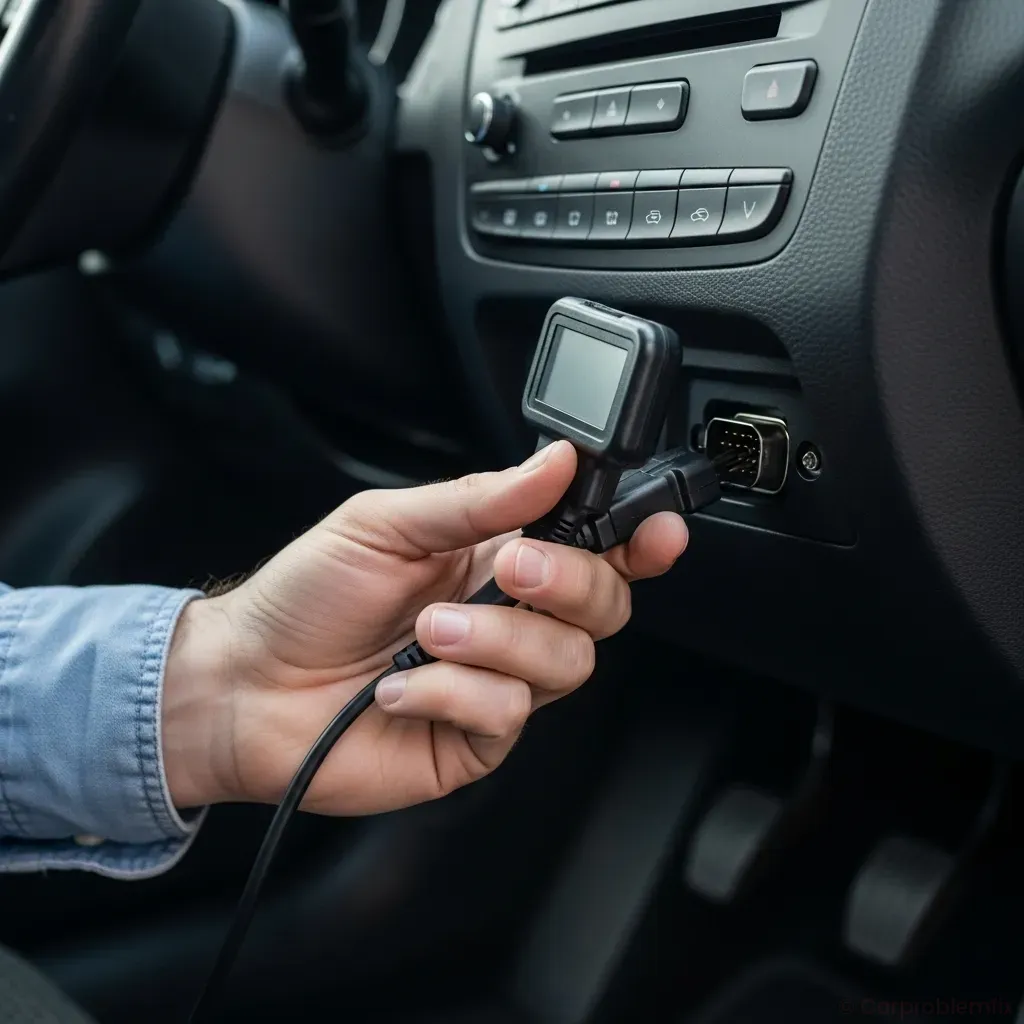

OBD2 codes all follow the same pattern: a letter followed by four numbers. Understanding that pattern makes it easier to guess what kind of problem you are dealing with, even before you look up the exact code.
- P = Powertrain (engine, transmission, fuel, ignition)
- B = Body (airbags, power seats, climate controls, etc.)
- C = Chassis (ABS, steering, suspension)
- U = Network/communication between modules
The first number after the letter tells you whether the code is generic or manufacturer-specific:
- 0 = Generic OBD2 code used by all manufacturers
- 1 (or sometimes 2, 3) = Manufacturer-specific code
The last three digits narrow down the system and specific fault. For example, P0301 is a generic powertrain code for a misfire on cylinder 1, while P0456 is a generic code for a small EVAP system leak.
Most Common Engine-Related OBD2 Codes (P0xxx)
Engine-related codes are the ones most drivers see when the check engine light turns on. Below are some of the most common generic codes, what they usually mean, and simple checks you can do without special tools.
P0101–P0103: Mass Air Flow (MAF) Sensor Problems
What they mean: These codes indicate the engine computer is not happy with the air flow readings from the MAF sensor. Typical codes include P0101 (MAF performance), P0102 (MAF circuit low), and P0103 (MAF circuit high.
Typical symptoms:
- Rough idle or hesitation on acceleration
- Sluggish power and poor fuel economy
- Check engine light, sometimes with other fuel trim codes
Simple checks you can do:
- Inspect the air filter box and intake hose. Open the air filter box, check for a clogged or heavily dirty filter, and replace if needed. Look for cracks or loose clamps on the intake hose between the air box and the throttle body.
- Check the MAF sensor connector. With the engine off, gently wiggle the MAF electrical connector. Make sure it is fully seated and the locking tab is engaged. Look for broken wires or corrosion on the pins.
- Look for obvious air leaks. Follow the intake tube and nearby vacuum hoses. If you see a hose disconnected or split, that can trigger MAF-related codes.
If these checks do not reveal anything obvious, a mechanic can test the sensor signal and look at live data to confirm whether the MAF itself has failed.
P0116–P0128: Engine Coolant Temperature Sensor and Warm-Up Issues
What they mean: Codes like P0116 (coolant temperature sensor range/performance) and P0128 (coolant temperature below thermostat regulating temperature) point to the engine not warming up as expected or the computer not trusting the temperature reading.
Typical symptoms:
- Temperature gauge staying low or moving slowly
- Poor fuel economy, especially in cold weather
- Heater taking a long time to blow warm air
Simple checks you can do:
- Check coolant level when the engine is cold. With the engine completely cool, verify that the coolant in the reservoir is between the MIN and MAX marks. If it is low, top it up with the correct coolant type and look for obvious leaks.
- Watch the temperature gauge. On a normal drive, the gauge should rise steadily and settle near the middle. If it barely moves, the thermostat may be stuck open.
- Inspect around the thermostat housing. Look for dried coolant residue or wet spots around the thermostat housing and nearby hoses that could indicate a leak.
If you see persistent temperature-related codes, it is wise to address them quickly. Overheating or chronic cold running can both shorten engine life. For more background on coolant and other vital fluids, see the Complete Fluid Maintenance Guide: Intervals, DIY Checks & Costly Mistakes to Avoid.
P0130–P0161: Oxygen (O2) Sensor and Air-Fuel Ratio Sensor Codes
What they mean: These codes indicate problems with the oxygen sensors or air-fuel ratio sensors that monitor exhaust gases. Examples include P0130 (O2 sensor circuit), P0133 (slow response), and P0141 (heater circuit malfunction).
Typical symptoms:
- Check engine light on, sometimes with no obvious drivability issue
- Worse fuel economy
- Occasional rough idle or hesitation
Simple checks you can do:
- Inspect the exhaust near the sensors. With the engine cool, look under the car for damaged wiring or connectors near the exhaust pipe and catalytic converter.
- Check for exhaust leaks. Listen for ticking or hissing near the exhaust manifold or pipes, especially during cold start. Leaks can fool O2 sensors and trigger codes.
- Review recent work. If the codes appeared right after exhaust or engine repair, a sensor connector might be loose or a wire pinched.
Replacing oxygen sensors can be a DIY job for some owners, but access is often tight and rusted threads are common. If you are not comfortable under the car, have a shop handle it.
P0440–P0457: EVAP System Leak and Gas Cap Codes
What they mean: EVAP (evaporative emissions) codes like P0440 (general EVAP fault), P0442 (small leak), P0455 (large leak), and P0457 (loose gas cap) relate to the system that traps fuel vapors from the tank.
Typical symptoms:
- Check engine light on, usually with no change in how the car drives
- Sometimes a faint fuel smell around the rear of the car
Simple checks you can do:
- Inspect and reseat the gas cap. Remove the gas cap, check the rubber seal for cracks, then reinstall it until it clicks several times. If the cap will not click or the seal is damaged, replace it.
- Check for a missing or wrong cap. Using a non-original or incorrect cap can trigger EVAP codes. If in doubt, consider an OEM or high-quality replacement.
- Look under the car near the fuel tank. Without crawling under dangerously, visually inspect for loose hoses or obvious damage to the plastic EVAP lines and charcoal canister.
After tightening or replacing the gas cap, it can take several drive cycles for the light to go off. You can clear the code with a scanner and see if it returns.
P0500–P0507: Idle Speed and Vehicle Speed Sensor Issues
What they mean: Codes in this range often relate to idle control or vehicle speed sensor problems. P0500 is a common code for a vehicle speed sensor malfunction, while P0507 indicates idle speed higher than expected.
Typical symptoms:
- Idle that is too high or too low
- Stalling when coming to a stop
- Speedometer not working or behaving erratically (for P0500)
Simple checks you can do:
- Inspect the throttle body area. Look for vacuum hoses that have popped off or cracked. A vacuum leak can cause high idle and related codes.
- Check for carbon buildup at the throttle plate. If you can see heavy black deposits around the throttle plate, a careful cleaning (following a repair manual) can help stabilize idle.
- Look at the wheel speed sensors and wiring. If your speedometer is dead and ABS lights are on, inspect wiring at the wheel hubs for damage or broken clips.
Because idle and speed sensor issues can overlap with ABS and transmission behavior, do not ignore these codes if you notice shifting problems or ABS warnings at the same time.
Transmission-Related OBD2 Codes: What Beginners Should Look For
Transmission codes can be intimidating, but many of them point to issues you can at least screen for at home. Common generic transmission codes include P0700 (generic transmission control system fault) and more specific codes like P0715 (input speed sensor) or P0740 (torque converter clutch circuit).
Typical symptoms of transmission-related codes:
- Harsh or delayed shifting
- Transmission stuck in one gear (“limp mode”)
- Warning lights such as “AT”, “D” flashing, or a separate transmission light
Simple checks you can do:
- Check transmission fluid level and condition (if equipped with a dipstick). Follow your owner’s manual. Fluid should usually be a clear red or amber, not black or burned. If you are unsure about fluid care, the Complete Fluid Maintenance Guide is a good starting point.
- Inspect the transmission wiring harness and connectors. Look for damaged wiring or loose connectors on top or side of the transmission case.
- Note when the symptoms appear. Pay attention to whether the problem happens only when cold, only when hot, or only in certain gears. This information helps a mechanic diagnose more efficiently.
If your car will not shift out of Park, that is a separate issue from most OBD2 codes and is covered in detail in Automatic Transmission Won’t Shift Out of Park: Causes, Diagnosis & Fixes.
ABS, Traction, and Chassis Codes (C0xxx)

Chassis codes (C-codes) usually relate to ABS, traction control, stability control, and sometimes steering or suspension systems. Many basic code readers only show powertrain codes, so you may need a more advanced scanner to see C-codes.
Common ABS-related C-codes often point to:
- Wheel speed sensor faults
- Damaged tone rings (reluctor rings) on axles or hubs
- ABS module or pump issues
Typical symptoms:
- ABS and traction control lights on
- ABS not engaging during hard braking
- Occasional pulsing or grinding feel in the brake pedal at low speeds
Simple checks you can do:
- Inspect wheel speed sensor wiring. Look behind each wheel for small sensors and wiring harnesses. Check for broken wires, missing clips, or obvious damage.
- Look at the tone rings. On some cars, you can see a toothed ring on the axle or hub. If teeth are missing, cracked, or heavily rusted, that can trigger ABS codes.
- Listen for abnormal brake noises. If you hear grinding when braking, address that immediately. For a deeper dive, see Car Makes Grinding Noise When Braking – Causes, Diagnosis & Fixes.
Because ABS and traction systems are safety-critical, treat persistent C-codes as a priority, especially if you drive in wet or snowy conditions.
Body and Network Codes (B and U Codes): When to Worry
Body (B) and network (U) codes can look scary, but many are minor convenience issues. Common examples include airbag system faults, power window problems, and communication errors between control modules.
Typical symptoms:
- Airbag or SRS light on
- Power locks, windows, or mirrors not working correctly
- Random warning lights that come and go
Simple checks you can do:
- Check fuses related to the affected system. Use the fuse box diagram in your owner’s manual to find fuses for airbags, body control, or power accessories. Replace any blown fuses with the correct amperage.
- Inspect visible wiring and connectors. Look under seats (for airbag connectors), in door jambs (for broken wires in the rubber boots), and around the dash for obvious damage.
- Note patterns. If a problem only appears when it is raining, when you move the seat, or when you turn the steering wheel, that points to a wiring or connector issue rather than a failed module.
Airbag-related B-codes should not be ignored. If the airbag light is on, the system may not deploy in a crash. Many manufacturers, such as Nissan, provide owner information and recalls through sites like Nissan owner resources, which can be useful if you suspect a safety recall or known issue.
Step-by-Step: How to Approach Any New OBD2 Code
Even if your exact code is not listed above, you can use the same basic process whenever a new code appears. This approach helps you avoid guesswork and unnecessary parts swapping.
- Write down the code and freeze-frame data. When you scan the car, note the exact code (for example, P0442) and any freeze-frame data (engine temperature, speed, load). This snapshot can help later if the code becomes intermittent.
- Check for multiple related codes. If you see several codes, start with the one that appears first or looks most “basic” (for example, a sensor circuit code before a performance code). Fixing the root cause often clears the others.
- Look up the code by system, not just the description. Instead of focusing only on the text (“small EVAP leak”), think in terms of the system involved (fuel vapor control, ignition, cooling, etc.). This helps you decide where to inspect first.
- Perform simple visual and basic checks. Before replacing any parts, inspect connectors, hoses, fluid levels, and recent work areas. Many issues are caused by loose plugs or damaged hoses.
- Clear the code and drive normally. After you perform your checks, clear the code with your scanner and drive as you normally would. If the code does not return after several trips, the issue may have been minor.
- Escalate to a professional when symptoms are severe. If you have hard starting, stalling, loud knocking, or transmission slipping along with codes, do not keep driving and guessing. For example, if the car will not start at all, guides like Car Won’t Start in the Morning: Simple Beginner Checks Before You Call a Tow Truck can help you decide what to do next.
Summary and Next Steps
Common OBD2 trouble codes often point to familiar problems: loose gas caps, aging sensors, vacuum leaks, or basic maintenance issues. With a simple scanner and a methodical approach, beginners can rule out many easy causes before paying for diagnostics.
Use the code patterns and checklists in this guide to understand what your car is trying to tell you and which simple checks are safe to do at home. If codes return quickly, symptoms are severe, or you are unsure about any step, it is time to involve a trusted mechanic. Addressing OBD2 codes early usually costs less than waiting until a minor issue turns into a major repair.