When an automatic transmission starts slipping, it can go from a small annoyance to a destroyed gearbox faster than most drivers realize. The good news is that many early slipping issues give you clear warning signs you can catch at home before the damage is permanent.
- 1. What Is Automatic Transmission Slipping?
- 2. Is It Safe to Drive With a Slipping Automatic Transmission?
- 3. Common Causes of Automatic Transmission Slipping
- 3.1. 1. Low or Degraded Transmission Fluid
- 3.2. 2. Worn Clutches or Bands
- 3.3. 3. Failing Torque Converter
- 3.4. 4. Valve Body or Solenoid Problems
- 3.5. 5. Computer or Sensor Issues
- 4. Simple Checks You Can Do at Home
- 4.1. 1. Check Transmission Fluid Level and Condition
- 4.2. 2. Look for Obvious Leaks
- 4.3. 3. Note When and How the Slipping Happens
- 4.4. 4. Scan for Trouble Codes (If Possible)
- 5. Beginner-Friendly Repair Options for Transmission Slipping
- 5.1. 1. Fluid Top-Off and Leak Repair
- 5.2. 2. Fluid and Filter Change (Service)
- 5.3. 3. Valve Body or Solenoid Repairs
- 5.4. 4. Torque Converter Replacement
- 5.5. 5. Rebuild or Replacement Transmission
- 6. How to Prevent Automatic Transmission Slipping
- 7. Summary and Next Steps
This beginner-friendly guide explains what automatic transmission slipping really is, the most common causes, simple checks you can do yourself, and realistic repair options so you don’t waste money on guesswork.
What Is Automatic Transmission Slipping?
“Slipping” means the transmission is not holding the gear ratio it should. Instead of locking into a gear and sending power directly to the wheels, something inside is slipping under load, like a worn-out clutch on a bicycle.
You may notice one or more of these symptoms:
- Engine revs increase, but the car barely accelerates.
- RPMs jump up suddenly during steady cruising, then drop back down.
- Delayed engagement when shifting from Park to Drive or Reverse.
- Transmission feels like it “lets go” then catches again, especially on hills.
- Burnt, hot, or chemical smell after driving, sometimes with dark fluid.
Slipping is different from automatic transmission hard shifts, where gear changes are harsh but still positive. With slipping, the transmission struggles to hold power, which quickly overheats internal parts.
Is It Safe to Drive With a Slipping Automatic Transmission?
Driving with a slipping transmission is risky for both safety and repair costs. When the transmission slips, you may not have the acceleration you expect when merging, crossing traffic, or climbing hills.
In addition, slipping creates heat. Heat burns the fluid, hardens seals, and damages clutches and bands. What might have been a minor issue (low fluid, small leak) can turn into a full rebuild if you keep driving on it.
As a rule of thumb:
- Mild, occasional slip that just started: You can usually drive home or to a shop, but minimize trips and avoid towing or hard acceleration.
- Frequent or severe slip (engine revs flare, car barely moves): Park it and arrange a tow. Every mile can add hundreds of dollars in damage.
Common Causes of Automatic Transmission Slipping
Most slipping problems fall into a few categories. Some are simple and cheap to fix; others require professional work or a replacement transmission.
1. Low or Degraded Transmission Fluid
Automatic transmissions rely on fluid for hydraulic pressure, lubrication, and cooling. If the fluid is low, dirty, or burnt, the clutches and bands can’t grip properly and start to slip.
Typical reasons for fluid-related slipping include:
- External leaks from cooler lines, pan gasket, axle seals, or the front pump seal.
- Old fluid that has broken down from heat and mileage.
- Wrong fluid type added during a previous service.
Fluid issues are the most common and the first thing you should check.
2. Worn Clutches or Bands
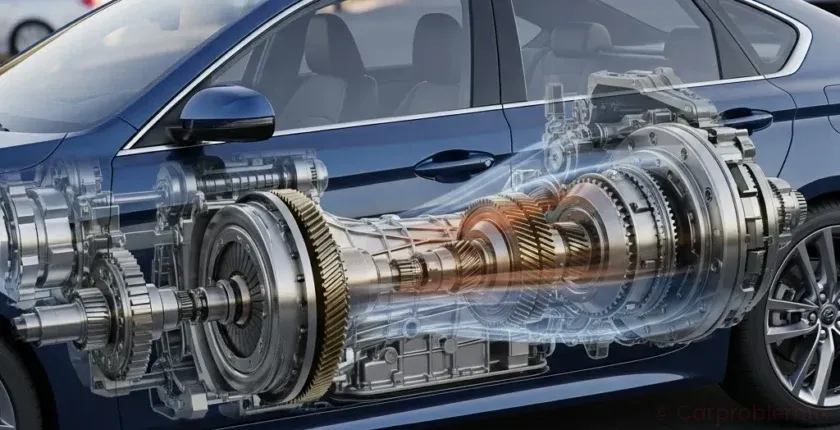
Inside an automatic transmission, multiple clutch packs and bands hold different gear sets. Over time, friction material wears away, especially if the vehicle has been overheated, used for towing, or driven hard.
Once the friction material is thin or burned, the clutches slip under load. This usually shows up as:
- Slipping only in certain gears (for example, 3rd or 4th).
- Shudder or flare during upshifts.
- Dark, gritty fluid with a burnt smell.
Worn internal parts rarely fix themselves. They typically require a rebuild or replacement transmission.
3. Failing Torque Converter
The torque converter connects the engine to the transmission. It multiplies torque and allows the car to stop without stalling the engine. Inside are a lockup clutch and fluid coupling that can also slip when they fail.
Possible signs of torque converter issues include:
- Shudder or vibration at certain speeds when the converter tries to lock up.
- High RPM at highway speeds with poor fuel economy.
- Overheating transmission fluid and slipping in multiple gears.
Torque converter problems can mimic general transmission slipping, so proper diagnosis is important.
4. Valve Body or Solenoid Problems
Modern automatics use electronic solenoids and a valve body to route fluid pressure to the right clutches at the right time. If a solenoid sticks or a valve body passage is clogged, the transmission may not get enough pressure to hold a gear.
Common clues include:
- Slipping or flare only during certain shifts (for example, 2–3 upshift).
- Harsh shifts combined with slipping.
- Check engine light or transmission warning light with stored trouble codes.
Sometimes, a valve body can be cleaned or replaced without rebuilding the entire transmission, but you still need a professional to confirm the cause.
5. Computer or Sensor Issues
The transmission control module (TCM) or engine control module (ECM) uses data from sensors (throttle position, speed sensors, temperature sensors) to control shifting and line pressure. If those signals are wrong, the transmission may behave like it’s slipping.
For example, a faulty speed sensor might cause erratic shifts, or low engine power from misfires (see OBD2 Code P0300: Random/Multiple Cylinder Misfire) can feel like the transmission is slipping when the real issue is the engine.
This is why scanning for codes and checking engine performance is part of a good transmission diagnosis.
Simple Checks You Can Do at Home
Before assuming your transmission needs a rebuild, there are several basic checks most beginners can do with simple tools and a bit of patience.
1. Check Transmission Fluid Level and Condition
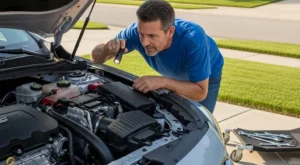
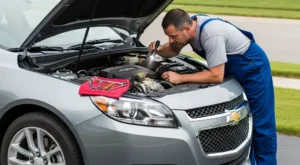
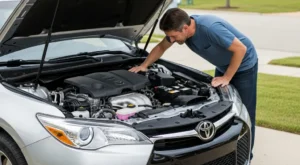
Not every modern car has a dipstick, but if yours does, this is your first step. Always follow the procedure in your owner’s manual, but the general process is:
- Warm up the car. Drive 10–15 minutes so the transmission reaches operating temperature.
- Park on level ground. Set the parking brake and leave the engine idling unless the manual says otherwise.
- Cycle through the gears. With your foot on the brake, move the shifter slowly through all positions (P–R–N–D–L) and back to Park. This fills all the circuits with fluid.
- Locate and remove the dipstick. It usually has a colored handle labeled “ATF” or “TRANS”.
- Wipe, reinsert, and read. Wipe the dipstick clean, reinsert fully, then pull it out and check the level against the HOT range marks.
Now inspect the fluid:
- Healthy fluid is usually bright red or pink, clear, and smells slightly sweet or neutral.
- Bad fluid is dark brown or black, smells burnt, or looks gritty or metallic.
- Milky fluid can indicate coolant contamination from a failed cooler, which is serious.
If the fluid is low, you may have a leak. If it’s burnt or contaminated, continuing to drive will accelerate slipping and internal damage.
2. Look for Obvious Leaks
Transmission leaks are common and often ignored until slipping starts. To check for leaks:
- Park overnight in a clean, dry spot or place cardboard under the car.
- Inspect the ground in the morning for red or brown oily spots.
- Look under the car with a flashlight at the transmission pan, cooler lines, and where the axles go into the transmission.
Fresh wet areas or drips around these points suggest a leak. Fixing a small leak and refilling fluid is far cheaper than rebuilding a transmission that ran low for months.
3. Note When and How the Slipping Happens
Pay attention to patterns; they help a technician pinpoint the cause:
- Does it slip only when cold, only when hot, or all the time?
- Does it slip in Drive but not in manual or “L” mode?
- Does it slip mostly on upshifts, downshifts, or when holding a steady speed?
- Does it happen more on hills or when towing?
Write down these details. A good shop can use this information along with test drives and scan data to narrow down whether the issue is fluid, clutches, solenoids, or control logic.
4. Scan for Trouble Codes (If Possible)
Many auto parts stores will scan your car for free, or you can buy a basic OBD2 scanner. Even if the check engine light is off, there may be stored codes in the transmission module.
Ask for a printout or take photos of the codes. While you may not interpret every code yourself, they can confirm issues like solenoid faults, pressure problems, or sensor failures.
If you’re already dealing with starting issues at the same time, resources like Car Makes Clicking Noise but Won’t Start: Causes, Fixes & Full Diagnosis and the Beginner’s Guide to Car Battery Maintenance can help you rule out electrical problems that might confuse the diagnosis.
Beginner-Friendly Repair Options for Transmission Slipping
Once you’ve done the basic checks, you’ll need to decide how far to go with repairs. Here’s a realistic breakdown from cheapest to most expensive.
1. Fluid Top-Off and Leak Repair
If the fluid is low but otherwise looks and smells healthy, topping it off to the correct level and fixing the leak may stop mild slipping, especially if you caught it early.
Typical steps a shop might take:
- Pressure wash the transmission area to remove old fluid.
- Add UV dye to the fluid and drive briefly.
- Use a UV light to find the exact leak source.
- Replace the leaking gasket, seal, or line, then refill and test drive.
This is often the least expensive fix and can restore normal operation if there’s no internal damage yet.
2. Fluid and Filter Change (Service)
If the fluid is old but not completely burnt, a proper service can sometimes improve slipping or at least prevent it from getting worse. A typical service includes:
- Removing the transmission pan.
- Replacing the filter and pan gasket.
- Cleaning the pan and magnet of metal debris.
- Refilling with the correct fluid type and quantity.
Always use the exact fluid type specified by the manufacturer. Many automakers, such as Nissan in their official owner resources, provide fluid specifications and service intervals that should be followed closely.
Note: If the fluid is extremely burnt and the transmission already slips badly, a fluid change may not fix it and can sometimes make existing problems more obvious. At that point, internal wear is usually advanced.
3. Valve Body or Solenoid Repairs
If scan data and testing point to a specific solenoid or valve body issue, a shop may recommend:
- Replacing one or more shift solenoids.
- Installing a remanufactured valve body.
- Cleaning or updating the existing valve body if contamination is the main issue.
This type of repair is more involved but still cheaper than a full rebuild. It’s most effective when slipping is limited to certain gears or shift events and fluid condition is still reasonable.
4. Torque Converter Replacement
When the torque converter is the main culprit, it can sometimes be replaced without fully rebuilding the transmission, but the transmission usually has to be removed from the vehicle.
This is a labor-heavy job, so shops often recommend inspecting the rest of the transmission at the same time. If there’s significant internal wear, it may be smarter to rebuild or replace the whole unit while it’s out.
5. Rebuild or Replacement Transmission
If clutches and bands are worn, fluid is badly burnt, and slipping is severe, you’re usually looking at one of these options:
- Rebuild: Your existing transmission is removed, disassembled, cleaned, and rebuilt with new clutches, seals, and often updated parts.
- Remanufactured unit: A factory or third-party remanufactured transmission is installed, often with a warranty.
- Used transmission: A salvage-yard unit is installed. This is cheaper but riskier, as you don’t know its history.
For high-mileage vehicles, compare the cost of these options to the value of the car and your long-term plans. Sometimes, selling or trading the vehicle makes more financial sense than investing in a major transmission repair.
How to Prevent Automatic Transmission Slipping
Once you’ve fixed a slipping issue—or if your transmission is still healthy—there are several habits that help prevent future problems.
- Follow fluid change intervals. Check your owner’s manual or manufacturer resources for recommended service intervals and fluid types.
- Use the right gear when towing or on hills. Don’t let the transmission hunt between gears under heavy load; use tow/haul mode if equipped.
- Warm up gently. Drive gently for the first few minutes instead of flooring the throttle on a cold transmission.
- Fix leaks early. Any sign of fluid on the driveway should be checked quickly.
- Avoid overheating. If you tow frequently, consider an auxiliary transmission cooler and monitor fluid condition more often.
Good basic vehicle maintenance—like keeping the cooling system healthy and the engine running properly—also reduces stress on the transmission. Problems like overheating or misfires can indirectly shorten transmission life.
Summary and Next Steps
Automatic transmission slipping is a serious warning sign, but catching it early can save you from a full rebuild. Start with simple checks: fluid level and condition, leak inspection, and noting exactly when the slipping occurs.
If the fluid is low or slightly degraded, a proper service and leak repair may restore normal operation. If slipping is severe, the fluid is burnt, or you have related warning lights and codes, plan on a professional diagnosis and be prepared for internal repairs or replacement.
When in doubt, limit driving and get the car to a trusted transmission shop. A short tow bill is often far cheaper than the extra damage caused by driving on a slipping automatic transmission.