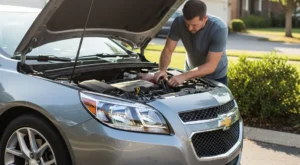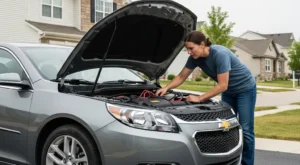
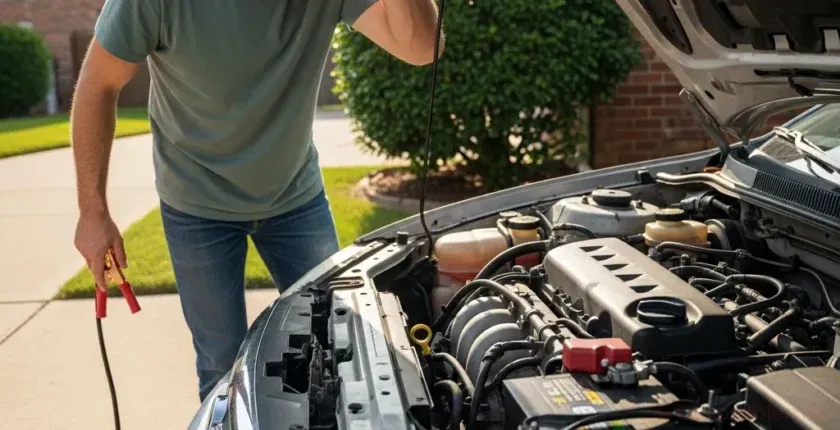
Turning the key, hearing a click, and getting nothing else is one of the most frustrating ways for a car to fail. The dash lights may come on, you might hear a single click or rapid clicking, but the engine never cranks. This is called a no-crank condition, and it usually points to a problem with power delivery to the starter or the starter itself.
- 1. What “Car Clicks but Won’t Start” Really Means
- 2. Before You Start: Safety and Tools
- 2.1. Safety First
- 2.2. Helpful Basic Tools
- 3. Step-by-Step Checklist: Car Won’t Start but Clicks
- 3.1. Step 1: Listen Carefully to the Type of Click
- 3.2. Step 2: Check the Obvious – Shifter Position and Wheel Lock
- 3.3. Step 3: Inspect the Battery – Even If It Seems “Good”
- 3.4. Step 4: Clean and Tighten Battery Connections
- 3.5. Step 5: Try a Safe Jump-Start Test
- 4. When the Battery Is Fine: Starter, Relays, and Wiring
- 4.1. Check Fuses and the Starter Relay
- 4.2. Signs of a Failing Starter Motor
- 4.3. Ground Straps and Hidden Connection Issues
- 5. Other Less Obvious Causes: Security, Ignition, and Engine Problems
- 5.1. Security / Immobilizer Issues
- 5.2. Ignition Switch or Start Button Problems
- 5.3. Could It Be an Engine Problem?
- 6. Summary and Next Steps
This beginner-friendly guide explains what that clicking noise really means, how to safely run through simple checks in your driveway, and when it is time to call a tow truck or mechanic.
What “Car Clicks but Won’t Start” Really Means
When you turn the key to START or press the start button, several things must happen in a split second. Power has to flow from the battery, through fuses, relays, switches, and wiring, to the starter motor. The starter then cranks the engine fast enough for it to fire up.
If you only get a click, it usually means the starter tried to engage but did not receive enough power, or the starter itself is jammed or failing. The click is often the starter relay or starter solenoid engaging, but the motor never spins.
Common causes of a click-no-crank problem include:
- Weak or discharged battery
- Loose, corroded, or damaged battery cables and terminals
- Bad starter relay or blown fuse in the starting circuit
- Failing starter motor or starter solenoid
- Faulty ignition switch or push-button start circuit
- Shifter or neutral safety switch issues (car thinks it is in gear)
- Security/immobilizer system preventing cranking
The good news: many of these issues can be identified with simple visual checks and a few basic tools.
Before You Start: Safety and Tools
Working around the starting system means dealing with high current and moving parts. Treat it with respect and take a few minutes to prepare.
Safety First
- Always keep the car in Park (automatic) or Neutral (manual) with the parking brake firmly set.
- Keep fingers, hair, and clothing away from belts and fans under the hood. The engine can suddenly crank if the problem is intermittent.
- Do not short or jump starter terminals with random metal tools unless you are experienced; it is easy to cause sparks or damage.
- If you smell fuel or see smoke, stop troubleshooting and get the car towed.
Helpful Basic Tools
- Flashlight or phone light
- Gloves and safety glasses
- Paper towel or rag
- Inexpensive digital multimeter or 12V test light (optional but very helpful)
- Portable jump starter or jumper cables and another vehicle (for testing, not as a permanent fix)
If you are new to working on cars, it may also help to review simple routine checks in the Beginner’s Guide to Basic Car Maintenance so you are more familiar with what you are looking at under the hood.
Step-by-Step Checklist: Car Won’t Start but Clicks
Use this structured checklist to narrow down the cause of your no-crank problem. Work through the steps in order; each step is designed to rule out a common cause before moving to the next.
Step 1: Listen Carefully to the Type of Click
- Turn off all accessories (headlights, radio, AC) and sit in a quiet environment.
- Turn the key to START or press the start button while listening closely.
Note what you hear:
- Single loud click from the engine bay: often a starter solenoid engaging but the motor not turning.
- Rapid, repeated clicking: usually a sign of low battery voltage or poor connections.
- Soft click from the dash or fuse box only: may be a relay engaging, with no power reaching the starter.
This sound clue will help you focus on either the battery/connections or the starter circuit itself.
Step 2: Check the Obvious – Shifter Position and Wheel Lock
- Verify the shifter is firmly in Park. Move it from Park to another gear and back again, then try starting.
- Try starting the car in Neutral. Many vehicles will still crank in Neutral even if the Park position switch is worn or misaligned.
- If you have a steering wheel lock, gently wiggle the wheel left and right while turning the key. A jammed lock cylinder can prevent the key from fully turning to START.
If the car cranks in Neutral but not in Park, you may have a neutral safety switch or shifter linkage issue. That is a job for a mechanic, but you have already diagnosed a big clue.
If the shifter will not leave Park at all, that is a separate issue. See Automatic Transmission Won’t Shift Out of Park: Causes, Diagnosis & Fixes for more details.
Step 3: Inspect the Battery – Even If It Seems “Good”
Even a fairly new battery can be too weak to crank the engine but still power the dash lights. That is why “my lights work, so the battery is fine” is often wrong.
- Open the hood and locate the battery. Use your flashlight to inspect it.
- Look for obvious issues: swollen or cracked case, leaking fluid, or a strong rotten-egg smell. If you see or smell any of these, do not touch the battery; have it towed to a shop.
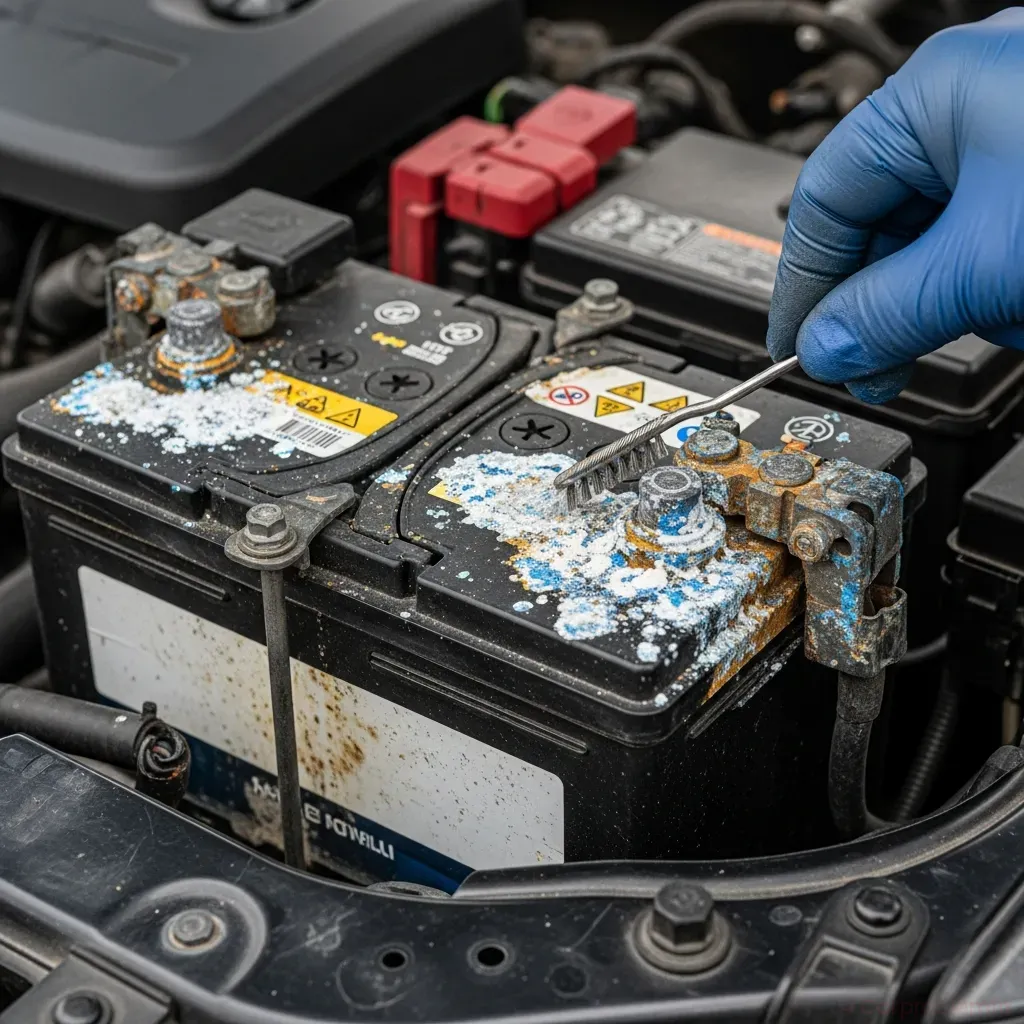
- Check the battery terminals (the metal posts) and cable ends for white, green, or blue crust. Heavy corrosion can block current and cause clicking instead of cranking.
If you have a multimeter, measure the voltage across the battery terminals:
- 12.6V or higher: fully charged.
- 12.2–12.4V: partially charged; may still crank but could struggle.
- Below 12.0V: likely too low to crank reliably.
Many parts stores, such as NAPA Auto Parts battery testing services, will test your battery and charging system for free if you can get the car there or bring the battery in.
Step 4: Clean and Tighten Battery Connections
If the battery looks physically intact, the next step is to ensure the connections are clean and tight. Poor connections are one of the most common causes of a click-no-crank problem.
- Turn the ignition OFF and remove the key. If you have a push-button start, make sure the car is fully off and the key fob is away from the vehicle.
- Try to gently twist each battery cable end by hand. They should not move at all. If they rotate or feel loose, that is a problem.
- If you see light corrosion, you can often clean it enough for a test: use a dry rag or paper towel to wipe away loose buildup. Avoid getting powder on your skin or in your eyes.
- If you are comfortable and have the tools, you can disconnect the negative (–) cable first, then the positive (+), clean the terminals with a battery brush or baking soda and water, dry them, and reconnect (positive first, then negative). Make sure the clamps are snug.
After cleaning and tightening, try starting the car again. If the clicking changes to a stronger crank or the engine starts, you have likely found the issue. You should still consider a proper battery and charging system test soon.
Step 5: Try a Safe Jump-Start Test
If the battery voltage is low or you are not sure, a controlled jump-start test can help you decide whether the battery is the main problem.
- Use quality jumper cables or a portable jump pack. Follow the instructions carefully; reversed connections can cause serious damage.
- With another vehicle: connect positive to positive, negative to a solid engine or frame ground on the dead car, and let the running car idle for a few minutes before trying to start the dead one.
- With a jump pack: connect as directed by the manufacturer, usually positive to positive terminal and negative to a ground point, then power on the pack.
- Try to start the car. Listen for any change in sound: stronger cranking, fewer clicks, or a successful start.
Results guide:
- Car starts and runs normally: your main issue is likely a weak or failing battery. Have it tested and replaced if needed.
- Clicking changes but still no crank: you may have both a weak battery and another issue (starter, cables, or ground connections).
- No change at all: the problem is likely beyond the battery, such as a bad starter, relay, or wiring fault.
If you are not comfortable jump-starting, consider having roadside assistance or a mobile mechanic perform this step.
When the Battery Is Fine: Starter, Relays, and Wiring
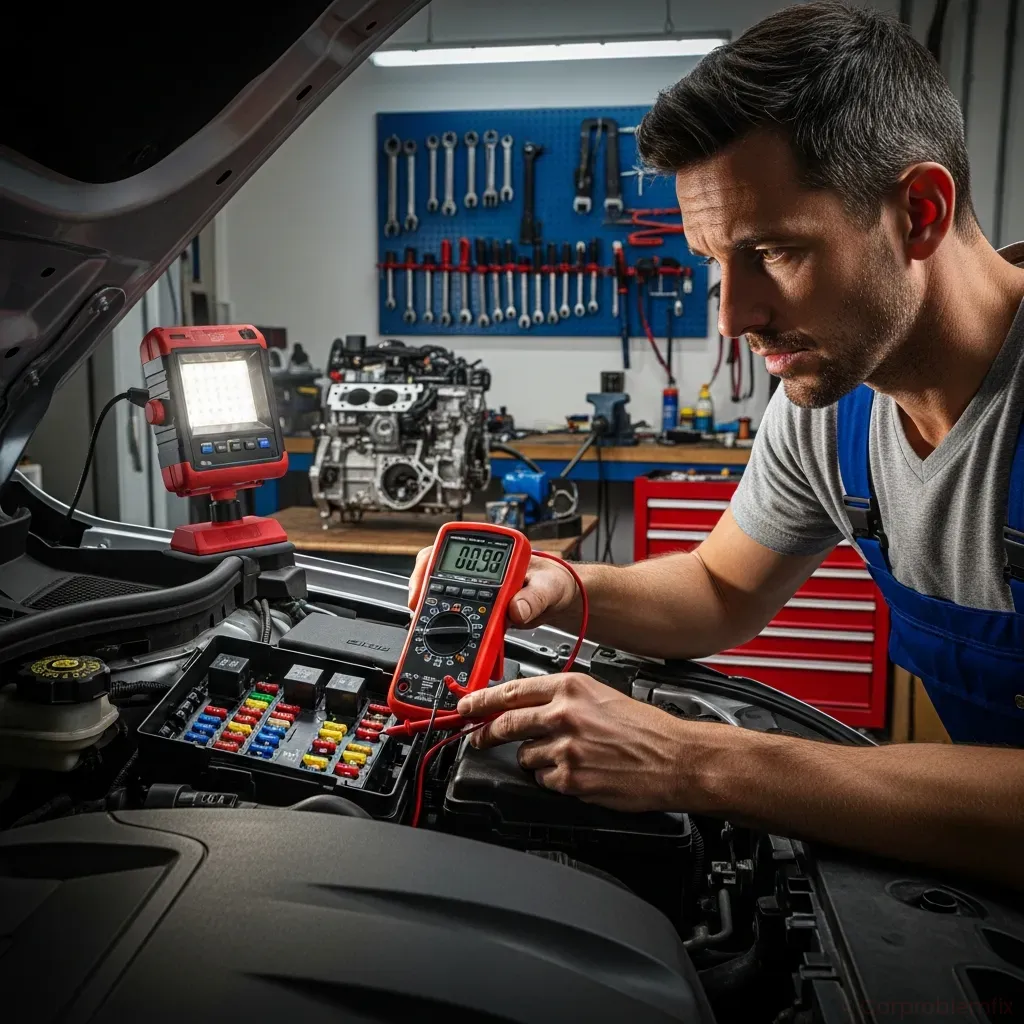
If your battery tests good, the connections are clean and tight, and a jump-start does not change anything, the focus shifts to the starter circuit itself.
Check Fuses and the Starter Relay
- Locate your interior and under-hood fuse/relay boxes. The lid usually has a diagram showing which fuses and relays belong to the starter or ignition system.
- Look for a fuse labeled START, IGN, CRANK, or similar. Carefully pull it and inspect the metal strip inside. If it is broken or burned, replace it with one of the same rating.
- Find the starter relay. On many cars, you can swap it with another identical relay (for example, the horn relay) as a test. If the car now cranks and the horn stops working, the relay was bad.
If replacing a fuse or swapping a relay suddenly allows the car to crank, you have identified a relatively inexpensive fix. If new fuses keep blowing, there is likely a deeper wiring problem that needs professional diagnosis.
Signs of a Failing Starter Motor
The starter motor itself can wear out over time, especially on high-mileage vehicles. Common symptoms include:
- Single loud click from the starter area with no crank, even with a strong battery
- Intermittent starting: sometimes it cranks, sometimes only clicks
- Grinding noise when starting, or the engine cranks slowly and then stops
Some older vehicles respond temporarily if you gently tap the starter body with a long extension or rubber mallet while someone turns the key (never put your hands near moving parts). If that makes it crank, the starter is almost certainly failing and should be replaced soon.
Replacing a starter can range from a simple driveway job to a complex repair depending on the vehicle. If you are not comfortable working under the car or near the exhaust, this is a good time to involve a professional mechanic.
Ground Straps and Hidden Connection Issues
Your car relies on solid ground connections between the battery, engine, and body. A corroded or broken ground strap can mimic a bad starter or weak battery.
- Look for thick cables or braided straps running from the battery negative terminal to the body and from the engine to the body.
- Check for obvious damage, broken strands, or heavy corrosion at the mounting points.
- Gently tug on each strap; it should be firmly attached and not crumble or break.
If a ground strap is loose or broken, the starter may only click or crank very weakly. Replacing or cleaning ground connections is usually a straightforward job but often overlooked during diagnosis.
Other Less Obvious Causes: Security, Ignition, and Engine Problems
Sometimes the problem is not the battery or starter at all, but the systems that tell the car it is allowed to crank.
Security / Immobilizer Issues
Modern cars use security systems that can prevent the starter from engaging if something does not match (wrong key, missing chip, or system fault). Symptoms may include:
- Flashing security or key symbol on the dash
- Car clicks or does nothing when you try to start
- Starts normally with one key but not another
Try these quick checks:
- Use your spare key if you have one.
- Make sure the key fob battery is not dead; many push-button cars will not crank if the fob is not detected.
- Consult your owner’s manual or an official resource like Toyota Owners support for brand-specific immobilizer reset procedures.
If the security light stays on or flashes rapidly, the car may need a dealer-level scan tool or key reprogramming.
Ignition Switch or Start Button Problems
The ignition switch (or start button module) sends the signal to engage the starter. Over time, internal contacts can wear out.
- Key turns but feels loose or does not spring back from START to ON.
- Accessories work, but nothing happens when you turn to START or push the button.
- Starter only engages if you hold the key or button at a certain angle.
Diagnosing an ignition switch usually requires electrical testing. If all other checks pass and you still only get a click or nothing at all, a mechanic can test the switch and wiring with a meter and wiring diagram.
Could It Be an Engine Problem?
In rare cases, a severely damaged or seized engine can prevent the starter from turning the crankshaft. The starter may click or strain without moving the engine.
- Check the engine oil level. Extremely low oil and recent loud knocking noises are red flags.
- Try turning the engine by hand (for experienced DIYers only) using a socket on the crankshaft pulley bolt. If it will not budge, stop and seek professional help.
If your engine has been misfiring, running rough, or showing a check engine light before the no-crank event, it is worth reading about misfire-related issues in OBD2 Code P0300: Random/Multiple Cylinder Misfire – Causes, Diagnosis & Fixes. While misfires do not usually cause a no-crank problem by themselves, they can be part of a bigger picture of engine trouble.
Summary and Next Steps
A car that will not start but only clicks is usually dealing with a no-crank problem in the battery, cables, starter, or control circuit. By checking shifter position, inspecting and cleaning battery connections, trying a safe jump-start, and examining fuses and relays, most beginners can narrow the issue down before calling a tow.
If your checks point to a failing starter, damaged wiring, or a security or ignition switch fault, it is time to involve a professional mechanic. When you are back on the road, consider building a simple maintenance routine using the Beginner’s Guide to Basic Car Maintenance so your next starting problem is easier to predict and prevent.