OBD2 code P0171 sounds intimidating, but at its core it means one thing: your engine computer thinks the air-fuel mixture is too lean (too much air, not enough fuel) on Bank 1. Left alone, a lean condition can cause rough running, poor performance, and even long-term engine damage.
- 1. What OBD2 Code P0171 Really Means
- 2. Common Symptoms of P0171 Lean Condition
- 3. Is It Safe to Drive with P0171?
- 4. Simple DIY Checks Before You Go to a Mechanic
- 4.1. Step 1: Confirm the Code and Look for Others
- 4.2. Step 2: Inspect the Air Intake and Filter
- 4.3. Step 3: Look and Listen for Vacuum Leaks
- 4.4. Step 4: Check the Mass Airflow (MAF) Sensor
- 4.5. Step 5: Basic Fuel System Checks
- 5. Common Causes of P0171 and How They Are Fixed
- 6. How a Mechanic Diagnoses P0171
- 7. When to See a Mechanic for P0171
- 8. Summary and Next Steps
This guide walks you through what P0171 actually means in plain English, the most common symptoms, simple checks you can do at home, and how to know when it is time to see a professional mechanic.
What OBD2 Code P0171 Really Means

Your engine is designed to run at a near-perfect air-fuel ratio, usually around 14.7 parts air to 1 part fuel. The engine control module (ECM or PCM) constantly adjusts fuel delivery using feedback from oxygen sensors and other sensors.
When you see P0171, the ECM has reached the limit of how much extra fuel it can add to compensate for a lean condition on Bank 1 (the side of the engine with cylinder 1). In simple terms, the computer is saying: “I am adding as much fuel as I can, but the mixture is still too lean.”
Common causes include unmetered air entering the engine (vacuum leaks), restricted fuel delivery (weak fuel pump, clogged filter, dirty injectors), or inaccurate sensor readings (mass airflow sensor, oxygen sensor, intake air leaks).
Common Symptoms of P0171 Lean Condition
Some vehicles will only show a check engine light with no obvious symptoms, especially early on. Others will feel noticeably different to drive. Pay attention to these common signs:
- Check engine light on – Often the only symptom at first. A basic OBD2 scanner will show P0171 stored or pending.
- Rough idle – Engine may shake at stoplights, idle speed may hunt up and down, or feel like it might stall.
- Hesitation or stumble on acceleration – You press the gas and the car hesitates, bogs, or feels weak before picking up.
- Loss of power – Especially noticeable when climbing hills, merging, or passing.
- Hard starting – The engine may crank longer than usual before starting, particularly when cold.
- Poor fuel economy – Ironically, a lean code can lead the ECM to dump more fuel in, which can hurt mileage.
- Possible misfire codes – In more severe cases, you might also see misfire codes like P0301–P0304. For a deeper dive into misfires, see OBD2 Code P0300 for Beginners.
If your car is shaking badly, stalling, or feels unsafe to drive, treat the situation as urgent and skip ahead to the section on when to see a mechanic.
Is It Safe to Drive with P0171?
Whether you can keep driving with P0171 depends on how the car feels and how long the code has been present.
- Usually safe short-term if: The car runs smoothly, has normal power, and the light is steady (not flashing). You can typically drive home or to a shop, but you should still diagnose it soon.
- Not safe to keep driving if: The engine is misfiring, the check engine light is flashing, the car stalls, or you smell strong fuel odors. Continuing to drive in this state can damage the catalytic converter and engine.
- Long-term risk: Running lean can cause high combustion temperatures, which can damage valves, pistons, and the catalytic converter over time.
If you are unsure, it is safer to limit driving and get the car inspected. A quick diagnosis now is cheaper than an engine or catalytic converter later.
Simple DIY Checks Before You Go to a Mechanic
You do not need to be a professional technician to perform some basic checks for P0171. The goal is to look for obvious air leaks, fuel delivery issues, or sensor problems that you can safely inspect at home.
Step 1: Confirm the Code and Look for Others
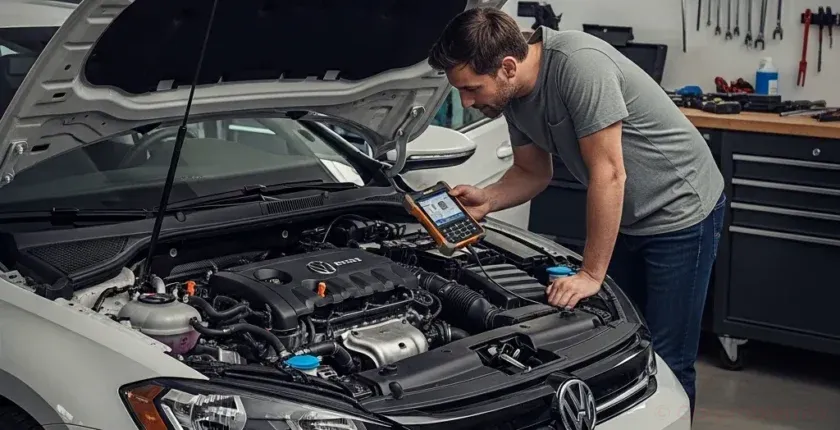
- Scan for codes. Use an OBD2 scanner to confirm P0171. Many parts stores will scan for free, or you can buy an inexpensive scanner.
- Check for related codes. Look for codes like P0174 (lean Bank 2), P0101–P0103 (MAF sensor), P0113 (intake air temperature), or misfire codes. Multiple codes can point to a shared root cause.
- Record freeze-frame data if available. Some scanners show engine conditions (RPM, load, temperature) when the code set. This can help a mechanic later if you cannot fix it yourself.
Step 2: Inspect the Air Intake and Filter
- Check the air filter. Open the airbox and inspect the filter. If it is extremely dirty, collapsed, or oily, replace it. A severely restricted filter can contribute to mixture issues.
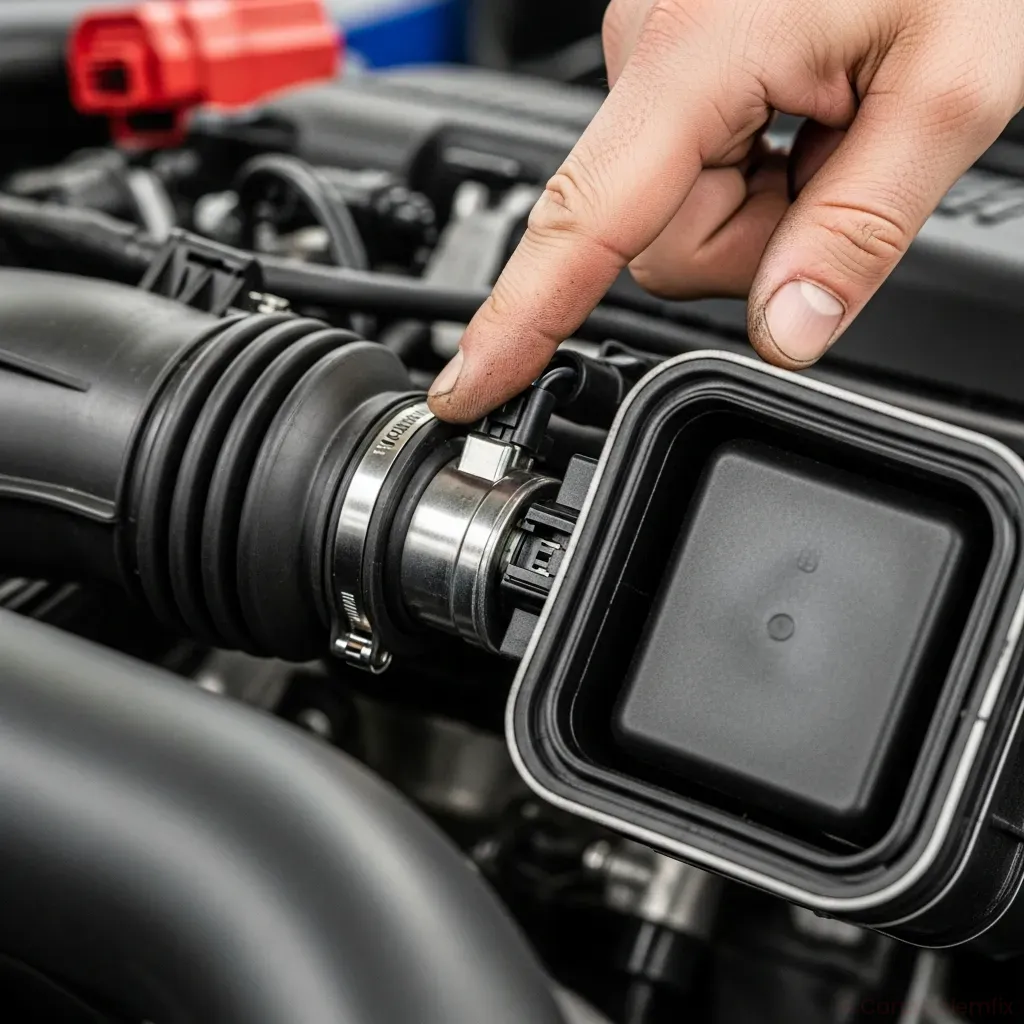
- Inspect the intake tube. Follow the plastic or rubber tube from the airbox to the throttle body. Look for cracks, splits, or loose clamps that could let in unmetered air.
- Ensure all hoses are connected. Small hoses attached to the intake tube should be firmly seated. Reattach any that are loose or disconnected.
Any crack or loose connection after the mass airflow (MAF) sensor can cause a lean condition because air is entering the engine without being measured.
Step 3: Look and Listen for Vacuum Leaks
- Perform a visual inspection. With the engine off, look around the intake manifold, throttle body, and vacuum hoses. Look for brittle, cracked, or disconnected hoses.
- Listen with the engine running. Start the engine and listen for a high-pitched hissing sound around the intake area, brake booster hose, and PCV (positive crankcase ventilation) hoses. A hiss often indicates a vacuum leak.
- Gently move hoses. Carefully wiggle suspect hoses and connections. If the idle changes when you move a hose, there may be a leak at that point.
Do not use open flames or unsafe chemicals to check for leaks. Professional shops often use smoke machines for this, but you can still catch obvious issues visually and by sound.
Step 4: Check the Mass Airflow (MAF) Sensor
- Locate the MAF sensor. It is usually mounted in the air intake tube just after the air filter box.
- Inspect the connector. With the engine off, check that the electrical plug is fully seated and that the wiring is not damaged or corroded.
- Look for contamination. If you can see the MAF element, look for heavy dirt, oil, or debris. An oiled aftermarket air filter can sometimes contaminate the MAF.
- Clean with proper MAF cleaner. If it looks dirty, remove the sensor (following your vehicle manual) and spray it with dedicated mass airflow sensor cleaner. Do not touch the element with tools or rags. Let it dry completely before reinstalling.
A contaminated or failing MAF sensor is one of the most common causes of P0171, especially on high-mileage vehicles.
Step 5: Basic Fuel System Checks
- Listen for the fuel pump. With the key turned to ON (engine off), you should hear a brief hum from the fuel tank area. No sound could indicate a pump issue, though not all pumps are loud.
- Consider fuel quality. If the problem started right after a fill-up, you may have gotten poor-quality or contaminated fuel. Running that tank down and refilling from a different station can sometimes help.
- Check maintenance history. If the fuel filter is external and has not been changed in many years, it may be partially clogged. On many modern cars the filter is part of the fuel pump assembly and not easily serviced.
Deeper fuel pressure testing requires a gauge and knowledge of safe fuel system procedures. If you suspect a fuel delivery issue, this is a good point to involve a professional.
Common Causes of P0171 and How They Are Fixed
Once you have done the basic checks, it helps to understand the most frequent root causes of P0171 and typical repair approaches. This can keep you from authorizing unnecessary parts swapping.
- Vacuum leaks
- Where they occur: Cracked vacuum hoses, intake manifold gaskets, PCV hoses, brake booster hose, or around the throttle body.
- Typical fix: Replace damaged hoses or gaskets, tighten loose clamps, or reseal intake components. Labor cost depends on how buried the parts are.
- Faulty or dirty MAF sensor
- Symptoms: Lean codes, hesitation, sometimes rough idle, often worse right after startup or during quick throttle changes.
- Typical fix: Clean with MAF cleaner if contamination is visible. If readings are out of spec, replacement is usually straightforward.
- Weak fuel pump or clogged fuel filter
- Symptoms: Lean codes under load, loss of power on hills or at highway speeds, may feel better at light throttle.
- Typical fix: Measure fuel pressure, then replace the pump, filter, or pressure regulator as needed. This is usually a shop job.
- Leaking PCV system
- Symptoms: Whistling noises, oil consumption, rough idle, lean codes.
- Typical fix: Replace the PCV valve and any cracked hoses or fittings.
- Exhaust leaks before the oxygen sensor
- Symptoms: Ticking noise from exhaust manifold area, sometimes fuel smell, lean codes because extra air enters the exhaust.
- Typical fix: Repair or replace the leaking exhaust manifold, gasket, or pipe section.
- Faulty oxygen sensor (upstream)
- Symptoms: Incorrect feedback to the ECM, leading to lean or rich codes, often with additional O2 sensor codes.
- Typical fix: Confirm with live data or tests, then replace the sensor if it is not responding correctly.
On higher-mileage compact cars and small SUVs, it is common to see a combination of issues: slightly weak fuel pump, aging sensors, and brittle vacuum hoses. If you are shopping for a used vehicle, understanding these patterns can help you evaluate reliability alongside resources like the Beginner’s Guide to Compact Car Reliability.
How a Mechanic Diagnoses P0171
Knowing how professionals approach P0171 helps you understand repair estimates and ask better questions. A good technician will not just throw parts at the problem.
- Scan tool data review – They will look at fuel trims (short-term and long-term), MAF readings, oxygen sensor behavior, and engine load to see when the mixture goes lean.
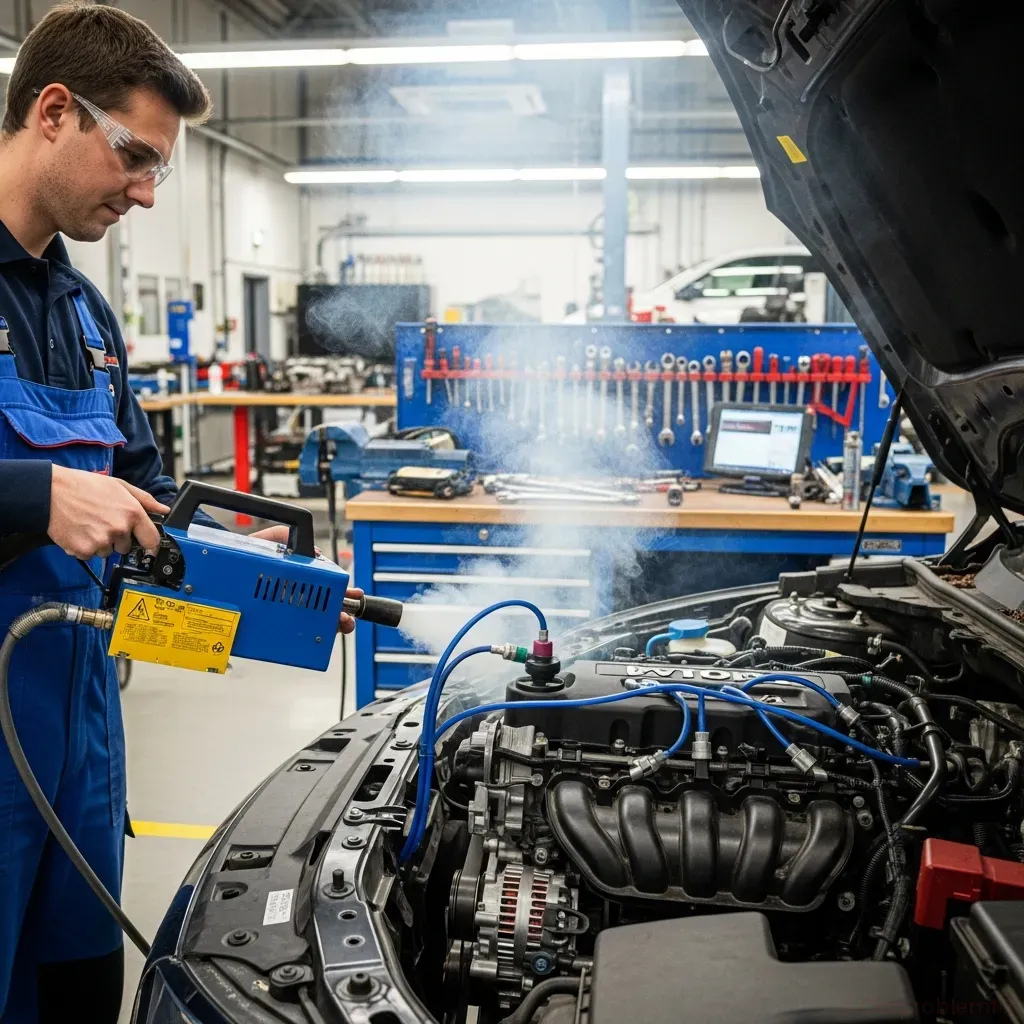
- Smoke test for vacuum leaks – A smoke machine pushes harmless smoke into the intake system to reveal leaks at hoses, gaskets, and fittings.
- Fuel pressure and volume tests – Using a fuel pressure gauge, they verify that the pump and regulator are delivering adequate pressure and flow under different conditions.
- MAF and O2 sensor testing – Live data and sometimes oscilloscope testing show whether sensors are responding correctly to changes in throttle and load.
- Exhaust leak inspection – Checking the exhaust manifold and pipes ahead of the upstream O2 sensor for cracks or gasket failures.
A thorough diagnosis may cost a bit up front, but it is usually cheaper than replacing multiple parts blindly and still chasing the same code.
When to See a Mechanic for P0171
Some P0171 issues are simple enough for a careful DIYer to address, but there are clear points where professional help is the smart move.
- See a mechanic soon if:
- You have checked the intake, hoses, and air filter and found nothing obvious.
- The code returns quickly after clearing, especially under normal driving.
- You notice loss of power, hesitation, or rough idle that does not improve with basic checks.
- Treat as urgent if:
- The check engine light is flashing.
- The engine is misfiring, shaking badly, or stalling.
- You smell strong fuel or hear loud exhaust leaks.
- Plan ahead if:
- Your car has high mileage and has never had fuel system or intake work.
- You are already dealing with other drivability issues, such as vibration at highway speeds or starting problems like those described in Car Won’t Start After Sitting Overnight.
If you are not comfortable working around fuel or intake components, there is no shame in handing the job to a professional. Safety comes first.
Summary and Next Steps
OBD2 code P0171 means your engine is running too lean on Bank 1, usually due to extra unmetered air, weak fuel delivery, or inaccurate sensor readings. Ignoring it can lead to poor performance, higher repair costs, and long-term engine damage.
Start with simple checks: inspect the air intake and filter, look and listen for vacuum leaks, and verify the mass airflow sensor and basic fuel system operation. If the code returns, symptoms worsen, or you are not comfortable going further, schedule a diagnostic visit with a trusted mechanic.
Addressing P0171 early keeps your engine running smoothly, protects your catalytic converter, and helps you avoid being stranded with a car that suddenly will not start or accelerate properly.