Seeing OBD2 code P0300 pop up can be intimidating, especially if the engine feels rough or the check engine light is flashing. The good news is that you can understand the basics of this code and do several simple checks at home before paying for a big repair.
- 1. What OBD2 Code P0300 Means in Plain English
- 2. Is P0300 Serious? When to Keep Driving and When to Stop
- 3. Common Symptoms of OBD2 Code P0300
- 4. Most Common Causes of Random Misfire (P0300)
- 4.1. 1. Ignition System Problems
- 4.2. 2. Fuel System Issues
- 4.3. 3. Air and Vacuum Problems
- 4.4. 4. Engine Mechanical and Compression Problems
- 5. Beginner-Friendly Checks for P0300 You Can Do at Home
- 5.1. Step 1: Confirm the Code and Look for Related Codes
- 5.2. Step 2: Visual Inspection Under the Hood
- 5.3. Step 3: Evaluate Spark Plugs (If Accessible)
- 5.4. Step 4: Simple Fuel and Air Checks
- 6. Diagnostic Checklist: Narrowing Down the Cause of P0300
- 7. When You Should Stop DIY and See a Mechanic
- 8. Summary and Next Steps
This guide explains what P0300 actually means, the most common symptoms and causes, beginner-friendly checks you can do with basic tools, and clear advice on when it is no longer safe to keep driving.
What OBD2 Code P0300 Means in Plain English
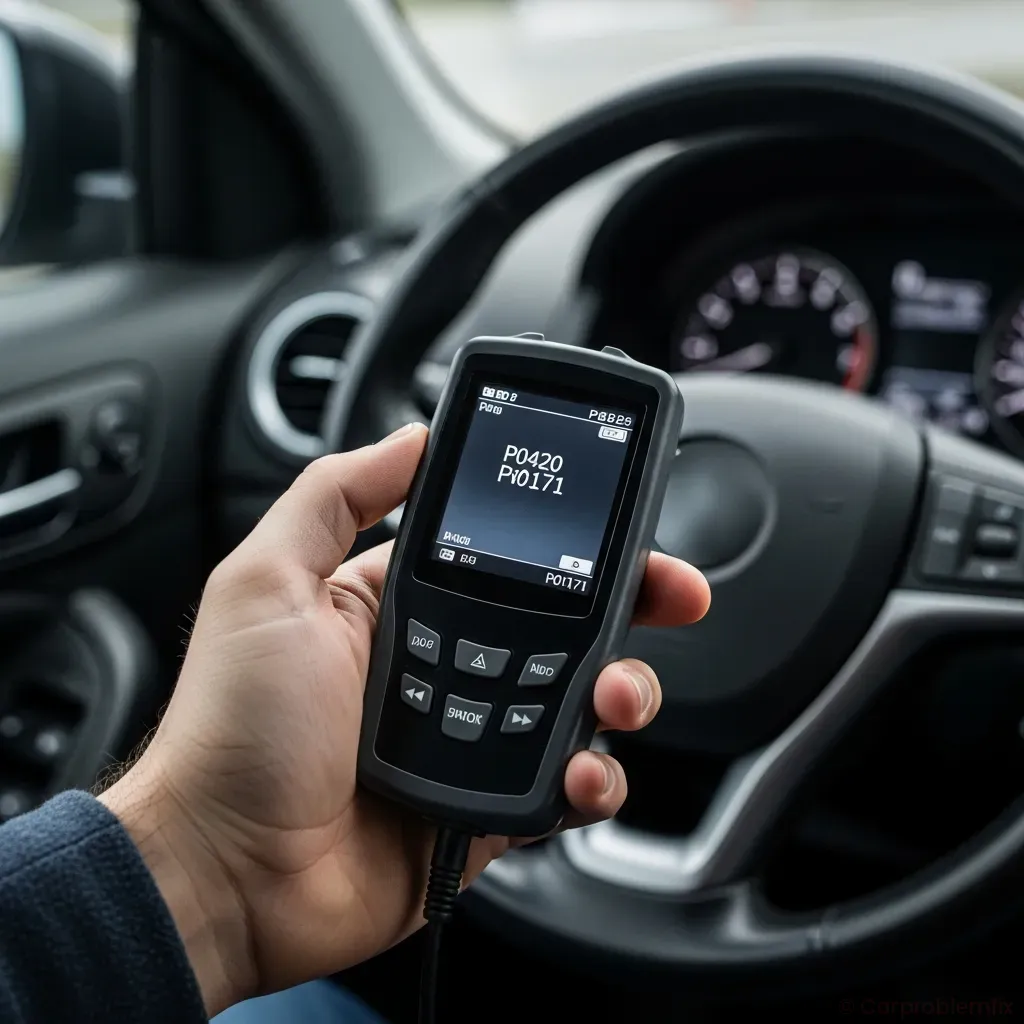
OBD2 code P0300 stands for “Random/Multiple Cylinder Misfire Detected.” In simple terms, your engine computer has noticed that one or more cylinders are not firing correctly, but the pattern is scattered or changing instead of being locked to a single cylinder.
Modern engines constantly monitor crankshaft speed. When a cylinder misfires, the crankshaft slows down slightly at the wrong moment. If this happens on different cylinders over a short period, the computer sets P0300.
Unlike codes such as P0301 or P0302, which point to a specific cylinder, P0300 means the misfire is moving around or affecting several cylinders at once. That can make diagnosis a bit more challenging, but it also gives you some useful clues about where to start.
Is P0300 Serious? When to Keep Driving and When to Stop
P0300 can range from mildly annoying to very serious, depending on how the car behaves. The key is to pay attention to symptoms and the check engine light behavior.
- Steady check engine light, mild roughness: Usually safe to drive short distances while you diagnose, as long as the car feels mostly normal and power is acceptable.
- Flashing check engine light: This usually means an active, severe misfire that can damage the catalytic converter quickly. You should reduce speed, avoid heavy acceleration, and stop driving as soon as it is safe.
- Strong fuel smell, loud backfires, or shaking: These are signs that unburned fuel is entering the exhaust or the engine is struggling. Continuing to drive can lead to expensive damage.
If you are ever unsure, treat a flashing check engine light and severe shaking as a reason to pull over safely and consider a tow. For more context on warning lights, see Dashboard Warning Lights Explained for Beginners.
Common Symptoms of OBD2 Code P0300
P0300 can show up in different ways depending on the cause, but most cars will show at least a few of these symptoms:
- Rough idle: The engine feels like it is shaking or pulsing when stopped at a light.
- Hesitation or stumbling: The car may jerk or feel weak when you accelerate.
- Loss of power: Climbing hills or merging onto the highway may feel sluggish.
- Increased fuel consumption: Misfires waste fuel, so you may notice fewer miles per gallon.
- Check engine light on or flashing: Sometimes accompanied by other misfire codes (P0301–P0306, etc.).
- Exhaust smell or popping: You might notice a raw fuel smell or light popping from the exhaust.
Some cars will only misfire under certain conditions, such as cold starts, heavy acceleration, or high speeds. Make note of when the symptoms appear; this can help narrow down the cause.
Most Common Causes of Random Misfire (P0300)
While there are many possible causes, most P0300 problems fall into a few main categories: ignition issues, fuel delivery problems, air/vacuum leaks, or engine mechanical faults. Here is how they break down in beginner-friendly terms.
1. Ignition System Problems
The ignition system is responsible for creating the spark that ignites the air-fuel mixture. If the spark is weak, late, or missing on different cylinders, you can get random misfires.
- Worn or fouled spark plugs: Old plugs with worn electrodes or heavy deposits can misfire under load. If you have high mileage and have never replaced them, this is a prime suspect. For a detailed how-to, see DIY Spark Plug Replacement: Restore Power, MPG and Smooth Idling in an Afternoon.
- Failing ignition coils or coil packs: Coils can break down when hot or under heavy load, causing misfires on multiple cylinders.
- Damaged plug wires (on older vehicles): Cracked or burned wires can leak spark to the engine block instead of the plug.
2. Fuel System Issues
The engine needs the right amount of fuel at the right time. Too little or too much fuel can both cause misfires.
- Weak fuel pump or clogged fuel filter: If fuel pressure drops, several cylinders may misfire, especially under acceleration.
- Dirty or partially clogged fuel injectors: If multiple injectors are restricted, you can get scattered misfires.
- Bad fuel or water in fuel: Contaminated fuel can cause random misfires shortly after filling up.
3. Air and Vacuum Problems
The engine also needs the right amount of air. Unmetered air entering through leaks can lean out the mixture and trigger P0300.
- Vacuum leaks: Cracked vacuum hoses, loose intake boots, or a leaking intake manifold gasket can all cause random misfires, especially at idle.
- Dirty or faulty mass airflow (MAF) sensor: If the sensor misreads airflow, the computer may deliver the wrong amount of fuel.
- Stuck EGR valve (on some engines): An EGR valve stuck open can dilute the mixture with exhaust gas and cause misfires.
4. Engine Mechanical and Compression Problems
Less common but more serious are mechanical issues inside the engine.
- Low compression in multiple cylinders: Worn piston rings, valves, or head gasket leaks can reduce compression and cause misfires.
- Timing chain or belt issues: If the timing is off, valves and pistons are not working in sync, leading to misfires across cylinders.
- Burned valves: Often shows up as misfires on certain cylinders but can trigger P0300 if multiple cylinders are affected.
Mechanical problems usually require professional diagnosis and repair. If your car has high mileage and a history of overheating or oil neglect, keep this category in mind.
Beginner-Friendly Checks for P0300 You Can Do at Home
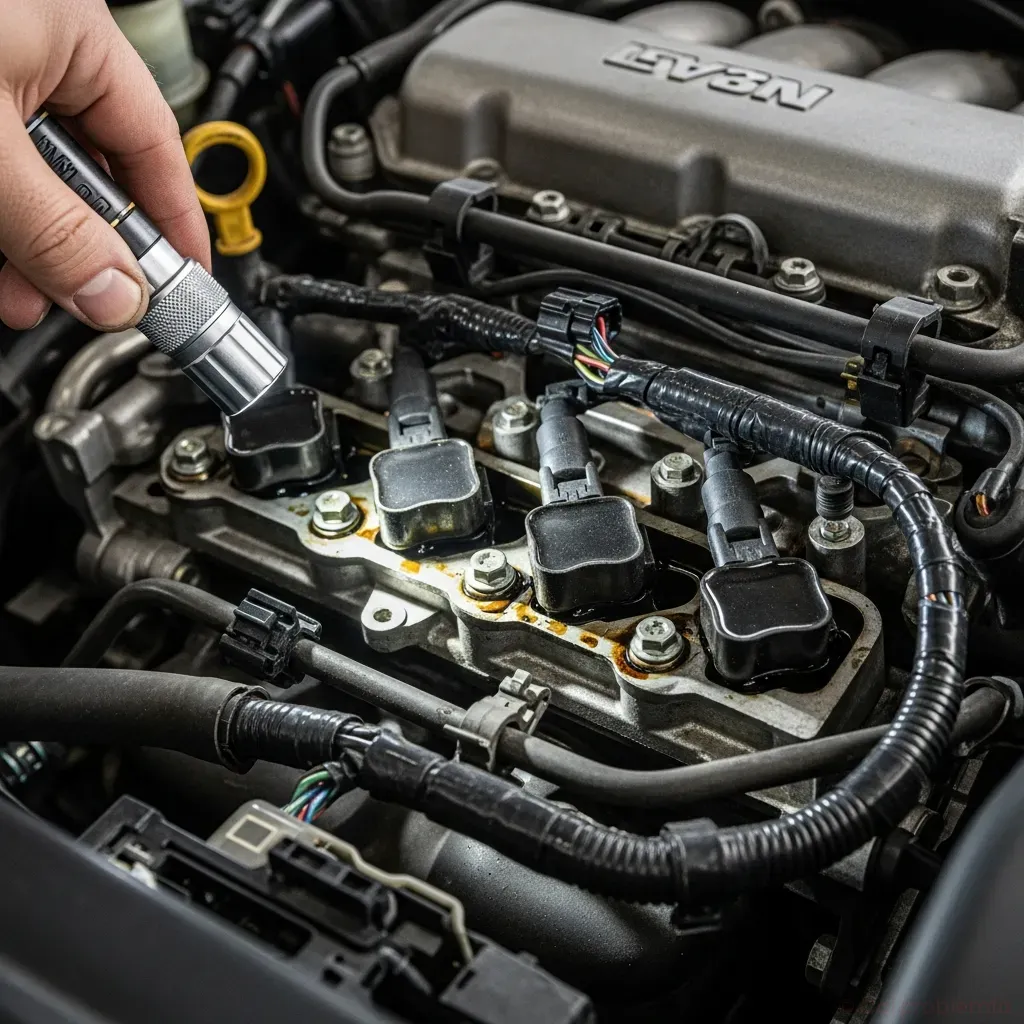
Before you assume the worst, there are several simple checks you can do with basic tools and a little patience. These steps are aimed at beginners and do not require advanced skills.
Step 1: Confirm the Code and Look for Related Codes
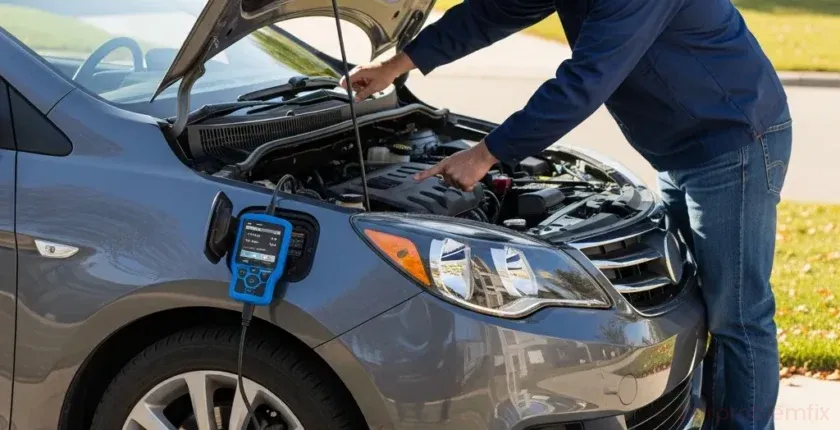
- Plug in an OBD2 scanner: Use a basic code reader to confirm P0300 and see if there are any cylinder-specific misfire codes (P0301–P0306, etc.) or fuel/air related codes.
- Write down all codes: The combination of codes is often more helpful than P0300 alone.
- Clear the codes (optional): After noting them, you can clear the codes and drive briefly to see which ones return. This can help identify active issues versus old, stored ones.
If you see codes related to oxygen sensors, fuel trim, or MAF sensors along with P0300, that can steer your diagnosis toward fuel or air issues rather than ignition.
Step 2: Visual Inspection Under the Hood
- Check for loose or damaged ignition parts: With the engine off, look for cracked ignition coils, loose coil connectors, or damaged spark plug wires (if equipped).
- Inspect vacuum hoses: Look for small rubber hoses that are cracked, collapsed, or disconnected. Pay attention to hoses near the intake manifold and throttle body.
- Check the air intake: Make sure the air filter box is closed properly and the intake boot between the air box and throttle body is not torn or loose.
Any obvious damage or disconnected parts you find should be addressed first. Many misfires are caused by simple issues like a loose coil connector or a cracked intake hose.
Step 3: Evaluate Spark Plugs (If Accessible)
- Remove one or two spark plugs for inspection: If you are comfortable, pull a plug from an easily accessible cylinder.
- Check plug condition: Look for heavy black soot (rich mixture), oily deposits (oil burning), or a worn center electrode. Compare to plug condition charts from reputable sources like spark plug manufacturer guides.
- Check plug gap and type: Make sure the plugs are the correct type and gap for your engine (refer to your owner’s manual).
If the plugs are old or heavily worn, replacing the full set is often a smart first step. Combine this with the guidance in DIY Spark Plug Replacement for a more detailed walk-through.
Step 4: Simple Fuel and Air Checks
- Listen to the fuel pump: With the key turned to “ON” (engine off), you should hear a brief hum from the rear of the car. Silence could indicate a pump issue, though this alone is not a diagnosis.
- Consider recent fuel: If P0300 appeared right after a fill-up, you may have gotten bad fuel. In mild cases, topping off with quality fuel and adding a reputable fuel system cleaner can help.
- Check the air filter: A severely clogged filter can restrict air and contribute to misfires. Replace it if it looks very dirty.
These checks will not solve every P0300, but they can rule out simple causes and sometimes fix the issue outright.
Diagnostic Checklist: Narrowing Down the Cause of P0300
Use this structured checklist to decide what to focus on next. Work through it in order and note your observations.
- 1. When does the misfire happen?
- Only at idle → Suspect vacuum leaks, EGR issues, or ignition problems.
- Only under load/acceleration → Suspect weak ignition coils, fuel delivery issues, or spark plugs.
- Only when cold or only when hot → Heat-related coil breakdown or sensor issues.
- 2. Any additional codes?
- MAF, MAP, or oxygen sensor codes → Focus on air/fuel metering and vacuum leaks.
- Individual cylinder misfire codes (P0301–P0306) → Focus on ignition or injector for those cylinders first.
- 3. Does adding throttle improve or worsen the misfire?
- Improves with light throttle → Could be vacuum leak at idle.
- Worsens with throttle or hills → Could be fuel starvation or ignition coil breakdown.
- 4. Any recent work done?
- Work near the intake or ignition system → Possible loose connectors, pinched hoses, or swapped plug wires.
- Recent oil change or maintenance → Double-check that nothing was left unplugged or bumped loose. For best practices, see DIY Oil Change for Beginners.
If you reach the end of this checklist without a clear direction, it may be time for more advanced tests such as fuel pressure checks or a compression test, which are usually best left to a professional.
When You Should Stop DIY and See a Mechanic
While many P0300 causes are simple, there are clear signs that professional help is the safest choice.
- Flashing check engine light that does not stop: Indicates an active, severe misfire that can quickly damage the catalytic converter.
- Strong fuel smell from the exhaust or under the hood: Suggests unburned fuel, possible fuel leaks, or dangerous conditions.
- Loud knocking, banging, or metallic noises: Could indicate internal engine damage.
- Car stalls repeatedly or will not stay running: Unsafe to drive in traffic; consider a tow.
- No clear cause after basic checks: If plugs, coils, hoses, and filters look good, deeper diagnostics are needed.
For safety guidance on driving with engine issues, organizations such as independent auto safety groups emphasize not ignoring severe misfires or flashing warning lights. When in doubt, play it safe.
Summary and Next Steps
OBD2 code P0300 means your engine is experiencing random misfires across multiple cylinders, usually due to ignition, fuel, air, or mechanical problems. Start with simple checks: confirm the code, inspect ignition components, look for vacuum leaks, and evaluate spark plugs and basic fuel and air issues.
If the check engine light is steady and the car drives reasonably well, you can often perform these beginner-friendly checks at home. However, a flashing light, strong fuel smell, loud noises, or repeated stalling are signs to stop driving and seek professional help. Addressing P0300 early can prevent costly damage and keep your car running smoothly for many more miles.