
DIY Cabin Air Filter Replacement: Breathe Cleaner Air and Stop Foggy Windows in 20 Minutes
Learn how to replace your car’s cabin air filter at home in about 20 minutes with basic tools. Improve air quality, reduce odors, and cut windshield fogging with this beginner‑friendly DIY guide....

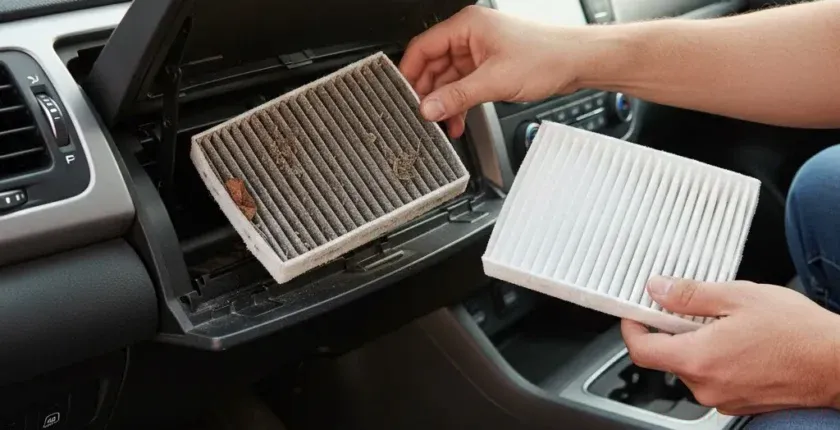
If your car’s interior smells musty, your windows fog up easily, or your HVAC fan seems weak, your cabin air filter is probably overdue for replacement. The good news: this is one of the easiest DIY repairs you can do, even if you’ve never turned a wrench before.
- 1. What Is a Cabin Air Filter and Why It Matters
- 2. How Often Should You Replace a Cabin Air Filter?
- 3. Tools and Parts You’ll Need
- 3.1. Basic Tools
- 3.2. Replacement Cabin Air Filter
- 4. Where Is the Cabin Air Filter Located?
- 5. Step‑by‑Step: How to Replace a Cabin Air Filter (Glove Box Style)
- 5.1. Step 1: Prepare the Area
- 5.2. Step 2: Lower or Remove the Glove Box
- 5.3. Step 3: Locate the Cabin Filter Access Door
- 5.4. Step 4: Remove the Old Cabin Air Filter
- 5.5. Step 5: Install the New Cabin Air Filter (Correct Orientation)
- 5.6. Step 6: Reinstall the Access Door and Glove Box
- 6. Variations: Under‑Dash and Under‑Hood Cabin Filters
- 6.1. Under‑Dash (Passenger Footwell) Filters
- 6.2. Under‑Hood (Cowl) Filters
- 7. Common Beginner Mistakes (and How to Avoid Them)
- 7.1. 1. Installing the Filter Backwards
- 7.2. 2. Breaking Glove Box Clips or Damper Arms
- 7.3. 3. Leaving Debris Inside the Housing
- 7.4. 4. Buying the Wrong Filter Size
- 8. Benefits You’ll Notice After Replacing the Cabin Air Filter
- 9. Choosing the Right Cabin Air Filter Upgrade
- 9.1. Standard vs. Carbon vs. Premium Filters
- 10. Simple Maintenance Habits to Keep the Cabin Filter Cleaner
- 11. When to Let a Shop Handle It
- 12. Wrap‑Up: A Quick DIY That Pays Off Every Day
This step‑by‑step guide will walk you through how to replace a cabin air filter on most modern cars, what tools you need, how often to change it, and how to avoid common beginner mistakes.
What Is a Cabin Air Filter and Why It Matters
The cabin air filter cleans the air that comes into your car’s interior through the heating, ventilation, and air conditioning (HVAC) system. It’s separate from the engine air filter.

Depending on your vehicle, the cabin filter may trap:
- Dust and dirt – road dust, construction dust, and general debris
- Pollen and allergens – helpful if you have allergies or asthma
- Leaves and organic debris – especially if you park under trees
- Smog and fine particles – on higher‑quality or carbon filters
When the filter clogs, airflow drops and your HVAC system has to work harder. That can lead to:
- Weak air from vents even with the fan on high
- Persistent foggy windows because the system can’t move enough dry air
- Musty or moldy smells inside the cabin
- Extra strain on the blower motor, which can eventually fail and become an expensive repair
How Often Should You Replace a Cabin Air Filter?
Most manufacturers recommend replacing the cabin air filter every 12,000–20,000 miles or once a year, whichever comes first. But your driving environment matters:
- City / heavy traffic: more pollution and fine particles – change closer to 12,000 miles.
- Dusty or rural roads: dirt and dust clog filters quickly – inspect every 6–9 months.
- Lots of trees / leaves: organic debris builds up – check before and after fall.
Use these signs as a clue that your cabin filter is overdue:
- Fan noise is normal but airflow feels weak
- Windows fog easily and take longer to clear
- Musty, damp, or earthy smell when you turn on the fan or AC
- You’ve never replaced it and the car is more than two years old
Tools and Parts You’ll Need
Most cabin air filter replacements are simple and require minimal tools.
Basic Tools
- Owner’s manual (for location and access notes)
- Small flathead screwdriver or trim tool (for clips, if needed)
- Phillips screwdriver (for glove box screws, if used)
- Shop vacuum or handheld vacuum (optional, to clean debris)
- Flashlight or phone light
Replacement Cabin Air Filter
You have two main choices:
- Standard paper filter: cheapest, good for basic dust and pollen.
- Activated carbon / charcoal filter: slightly more expensive, better at reducing odors and filtering fine particles and fumes.
To get the correct filter:
- Look up your car by year, make, model, and engine on a parts site or at a parts store.
- Double‑check the dimensions and part number against your old filter when you remove it.
Where Is the Cabin Air Filter Located?
On most modern vehicles, the cabin air filter is in one of three places:
- Behind the glove box (most common)
- Under the dash on the passenger side
- Under the hood, at the base of the windshield (cowl area)
Your owner’s manual usually has a section called “Cabin Air Filter” or “Passenger Compartment Filter” that shows the exact location and basic steps. If not, a quick search with your vehicle’s year/make/model plus “cabin air filter location” will usually turn up a diagram or video.
Step‑by‑Step: How to Replace a Cabin Air Filter (Glove Box Style)
The most common design is behind the glove box. The steps below cover that style, with notes for other layouts.
Step 1: Prepare the Area
- Park on a level surface and turn the engine and HVAC system off.
- Empty the glove box so nothing falls out when you lower it.
- Have your new filter unboxed and ready. Note any airflow arrows printed on the side.
Step 2: Lower or Remove the Glove Box
Most glove boxes are held by side stops and sometimes a small damper arm.
- Open the glove box fully.
- Look for side stops – small plastic tabs on the left and right that hit the dash frame.
- Gently push in on both sides of the glove box to flex it past the stops. It should swing down further.
- If there’s a small damper arm (a little plastic or string arm on one side), gently unhook it. Don’t force it; it should slide or unclip.
On some vehicles, you may need to remove 2–4 screws along the bottom or sides of the glove box. Use a Phillips screwdriver and keep the screws in a cup so you don’t lose them.
Step 3: Locate the Cabin Filter Access Door
With the glove box lowered, you should see a rectangular plastic panel on the HVAC housing. This is the cabin filter door.
- Look for a rectangular cover roughly the size of a paperback book.
- It may have clips on the sides or top/bottom. Some have a small tab marked “PULL.”
- Use your fingers or a small flathead screwdriver to gently release the clips. Don’t pry hard; the plastic can be brittle on older cars.
Step 4: Remove the Old Cabin Air Filter
- Slide the old filter straight out. Pay attention to how it’s oriented.
- Look for arrows on the old filter indicating “AIRFLOW” or “UP.” Take a quick photo if needed.
- Inspect the filter: if it’s dark gray, full of leaves, or smells musty, it was definitely overdue.
While the filter is out:
- Use a vacuum with a narrow attachment to gently clean out any visible leaves or debris in the filter slot.
- Do not stick tools deep into the housing; you don’t want to damage the blower fan or doors.
Step 5: Install the New Cabin Air Filter (Correct Orientation)
This is the step where many beginners make a mistake: installing the filter upside down or backwards.
- Look for the airflow arrow on the new filter.
- Most systems pull air from top to bottom, so the arrow usually points down. But always confirm with the markings on the housing or your owner’s manual.
- If the housing says “AIRFLOW ↓” or has an arrow, match the filter’s arrow to it.
- If the housing says “UP,” and the filter says “UP,” those arrows should match each other.
Once you’ve confirmed orientation:
- Gently slide the new filter into the slot. It may be a snug fit; that’s normal.
- Make sure the filter sits flat and fully inside the housing, with no edges folded or crushed.
Step 6: Reinstall the Access Door and Glove Box
- Reattach the plastic access door by lining up the tabs and snapping the clips back into place.
- Lift the glove box back into position.
- If you removed a damper arm, reconnect it to the glove box side.
- Push the sides of the glove box inward again to get past the stops, then let it rest in its normal closed position.
- Reinstall any screws you removed earlier.
Open and close the glove box a few times to make sure it moves smoothly and nothing is binding.
Variations: Under‑Dash and Under‑Hood Cabin Filters
Under‑Dash (Passenger Footwell) Filters
Some vehicles place the cabin filter under the dash on the passenger side.
- Look up under the dash near the center console or passenger side.
- You may need to remove a fabric or plastic trim panel held by clips or small screws.
- The filter access door will be on the HVAC housing, similar to the glove box style.
- Space can be tight; a flashlight and patience help a lot.
Under‑Hood (Cowl) Filters
On some cars, especially older European models, the cabin filter is under the hood at the base of the windshield.
- Open the hood and look at the plastic panel (cowl) where the windshield wipers sit.
- You may see a rectangular access cover on one or both sides.
- Release clips or remove a few screws, then lift the cover to access the filter.
- Note orientation and replace the filter as described above.
Always make sure the under‑hood cover seals properly again so water doesn’t leak into the HVAC system.
Common Beginner Mistakes (and How to Avoid Them)
1. Installing the Filter Backwards
Symptom: air still flows, but filtration is reduced and noise may increase.
Prevention: Always check both the filter arrow and any arrows or labels on the housing. Take a photo of the old filter before removal.
2. Breaking Glove Box Clips or Damper Arms
Symptom: glove box drops too far or doesn’t open smoothly.
Prevention: Don’t force anything. If a part doesn’t move easily, stop and look for hidden screws or another clip. Use gentle pressure and support the glove box with one hand while releasing stops.
3. Leaving Debris Inside the Housing
Symptom: new filter clogs quickly or you hear debris rattling in the fan.
Prevention: Vacuum loose leaves and dirt from the opening before installing the new filter. Don’t blow debris deeper into the system with compressed air.
4. Buying the Wrong Filter Size
Symptom: filter doesn’t fit, or you have to crush it to get it in.
Prevention: Match the part number to your vehicle, and compare the new filter to the old one before installation. The dimensions and seal style should be the same.
Benefits You’ll Notice After Replacing the Cabin Air Filter
Once the new filter is in, you may notice improvements right away, especially if the old one was badly clogged:
- Stronger airflow from vents at all fan speeds
- Faster defogging and defrosting of the windshield and side windows
- Cleaner smell inside the cabin, especially with a carbon filter
- Less dust settling on the dashboard and interior surfaces
- Less strain on the blower motor, which can help it last longer
Choosing the Right Cabin Air Filter Upgrade
If you’re already doing the work, you might consider upgrading from a basic filter.
Standard vs. Carbon vs. Premium Filters
- Standard paper: Good budget choice, filters dust and pollen.
- Activated carbon: Reduces odors, exhaust fumes, and some VOCs; ideal for city driving.
- Premium / HEPA‑style: Finer filtration, sometimes marketed for allergy sufferers; may restrict airflow slightly more but trap smaller particles.
For most drivers, an activated carbon cabin filter is the best balance of cost, performance, and comfort.
Simple Maintenance Habits to Keep the Cabin Filter Cleaner
You can help your new filter last longer with a few easy habits:
- Avoid parking directly under trees that drop heavy leaves or seeds when possible.
- Every few weeks, with the hood open, brush or vacuum leaves from the cowl area at the base of the windshield.
- Use recirculation mode in heavy traffic or dusty areas to reduce the amount of outside air (and dirt) pulled through the filter.
- Make a note in your phone or maintenance log of the date and mileage when you replaced the filter.
When to Let a Shop Handle It
Most cabin air filter jobs are perfect for beginners, but there are a few situations where you may want a professional to take over:
- Your vehicle requires removing the entire glove box assembly or multiple trim panels and you’re not comfortable with interior disassembly.
- You find signs of rodent damage (nests, chewed insulation, droppings) inside the filter area.
- You have severe mold or mildew odors that don’t improve after filter replacement – the evaporator or ducts may need cleaning.
Even then, knowing how the system works and where the filter is located will help you talk confidently with a technician and avoid unnecessary upsells.
Wrap‑Up: A Quick DIY That Pays Off Every Day
Replacing your cabin air filter is a simple DIY repair that most people can do in 15–20 minutes with basic tools. You’ll breathe cleaner air, clear foggy windows faster, and reduce strain on your HVAC system for the cost of a single filter.
If you’re just getting started with DIY car maintenance, this is one of the best first projects: low risk, low cost, and immediate, noticeable results every time you drive.
How do you rate this guide?

Related Posts



Comments have been disabled.
