
If your car’s AC smells bad every time you turn it on, you’re not alone. A musty, moldy, vinegar, or even exhaust-like smell from the vents is one of the most common AC complaints—and it’s more than just unpleasant. Certain odors can point to mold growth, refrigerant leaks, or even dangerous exhaust entering the cabin.
- 1. Is a Bad AC Smell Dangerous?
- 2. How Your Car’s AC System Creates Smells
- 3. Common AC Smells and What They Mean
- 3.1. 1. Musty or Mildew Smell When AC Turns On
- 3.2. 2. Sour or Vinegar-Like Smell
- 3.3. 3. Sweet, Syrupy, or Maple Syrup Smell
- 3.4. 4. Exhaust or Fuel Smell Through the Vents
- 3.5. 5. Burning, Hot Plastic, or Electrical Smell
- 4. Step-by-Step Diagnosis: Why Your Car AC Smells Bad
- 4.1. Step 1: Identify When the Smell Happens
- 4.2. Step 2: Check for Water Dripping Under the Car
- 4.3. Step 3: Inspect the Cabin Air Filter
- 4.4. Step 4: Check for Coolant or Exhaust Clues
- 4.5. Step 5: Note Any Electrical or Burning Smells
- 5. DIY Fixes for a Musty or Sour AC Smell
- 5.1. 1. Replace the Cabin Air Filter
- 5.2. 2. Dry Out the Evaporator Core After Driving
- 5.3. 3. Use an AC Evaporator Cleaner Foam
- 5.4. 4. Clear a Partially Clogged AC Drain (Carefully)
- 6. When You Should Not DIY an AC Smell
- 7. Preventing AC Odors from Coming Back
- 8. Cost Expectations: What Repairs Might Run
- 9. Key Takeaways
This guide walks you through the most common causes of bad smells from your car AC, how to diagnose them at home, when it’s safe to DIY, and when you need a professional. You don’t need advanced tools—just some patience and basic safety awareness.
Is a Bad AC Smell Dangerous?

Some AC smells are mostly a comfort issue, while others can affect your health or signal a serious problem:
- Musty / mildew smell: Usually mold or bacteria in the AC system. Annoying and can irritate allergies or asthma.
- Vinegar / sour smell: Often bacterial growth or a clogged drain; sometimes early refrigerant leak symptoms.
- Sweet, syrupy smell: Possible coolant (antifreeze) leak from the heater core—can be toxic if inhaled regularly.
- Exhaust / fuel smell: Potentially dangerous—could indicate exhaust entering the cabin.
- Burning / electrical smell: Could be a failing blower motor, wiring issue, or debris on the heater core.
If you ever feel dizzy, nauseous, or get a headache while driving with the AC on, turn off the AC, open the windows immediately, and get the car checked.
How Your Car’s AC System Creates Smells
Understanding the basics helps you track down odors logically:
- Evaporator core: A small radiator-like part inside the dash where refrigerant gets cold and cools the air. It collects condensation (water) whenever AC runs.
- Condensation drain: A small drain tube under the car that lets that water drip out.
- Cabin air filter: Filters air entering the cabin; traps dust, pollen, and debris.
- Fresh air / recirculation doors: Control whether air comes from outside or recirculates from inside the cabin.
When moisture, dirt, and organic material sit in dark, tight spaces, they become the perfect breeding ground for mold and bacteria—which is why AC odors are so common.
Common AC Smells and What They Mean
1. Musty or Mildew Smell When AC Turns On
Most common cause: Mold, mildew, or bacterial growth on the evaporator core or in the air ducts.
Typical symptoms:
- Smell is strongest right when you first turn on the AC.
- Smell may fade after a few minutes of driving.
- Often worse in humid weather or after short trips.
Why it happens: The evaporator gets cold and collects condensation. If the drain is partially clogged or you shut the car off immediately after using AC, moisture stays on the core and in the housing. Dust and pollen from the cabin air filter feed mold and bacteria.
2. Sour or Vinegar-Like Smell
Most common causes:
- Bacterial growth on the evaporator core.
- Clogged or restricted AC drain causing standing water.
- In rare cases, chemical odor from deteriorating plastics or a minor refrigerant leak.
Clues: Sour smell that’s strongest with AC on, may be worse after rain or high humidity.
3. Sweet, Syrupy, or Maple Syrup Smell
Most likely cause: Engine coolant (antifreeze) leak from the heater core or nearby hoses.
Clues:
- Smell present with heat or defrost on, sometimes with AC.
- Windows fog up with a greasy film on the inside.
- Coolant level in the reservoir slowly drops over time.
This is a safety and health issue. Coolant is toxic if inhaled or ingested. Don’t ignore it.
4. Exhaust or Fuel Smell Through the Vents
Possible causes:
- Exhaust leak under the hood or under the car.
- Failed or missing cabin air filter housing seals.
- Fresh air intake pulling in exhaust from another vehicle in front of you (temporary).
Warning: Exhaust fumes can contain carbon monoxide, which is colorless, odorless, and potentially deadly. If you suspect a real exhaust leak, avoid driving the car until it’s inspected.
5. Burning, Hot Plastic, or Electrical Smell
Possible causes:
- Failing blower motor or blower resistor overheating.
- Electrical short or melting wiring/connector in HVAC system.
- Leaves or debris on the heater core or blower motor burning.
If the smell is strong, accompanied by smoke, or the blower stops working, turn the system off immediately and have it inspected.
Step-by-Step Diagnosis: Why Your Car AC Smells Bad
You can often narrow down the cause without special tools. Work through these steps in order.
Step 1: Identify When the Smell Happens
- Only when AC is on (cold air): Likely mold/bacteria on the evaporator or a drain issue.
- With both AC and heat: Could be cabin filter, duct contamination, or exhaust leak.
- Only with heat/defrost: Suspect heater core (coolant) or debris on heater core.
- All the time, even with fan off: Likely a coolant or exhaust leak seeping into the cabin.
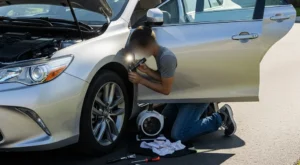
Step 2: Check for Water Dripping Under the Car
On a warm or humid day, run the AC for 10–15 minutes while parked, then look under the passenger side of the car:
- Normal: Steady dripping of clear water from the AC drain area.
- Abnormal: No water at all, or water pooling inside on the passenger floor. This suggests a clogged drain, which encourages mold and bad smells.
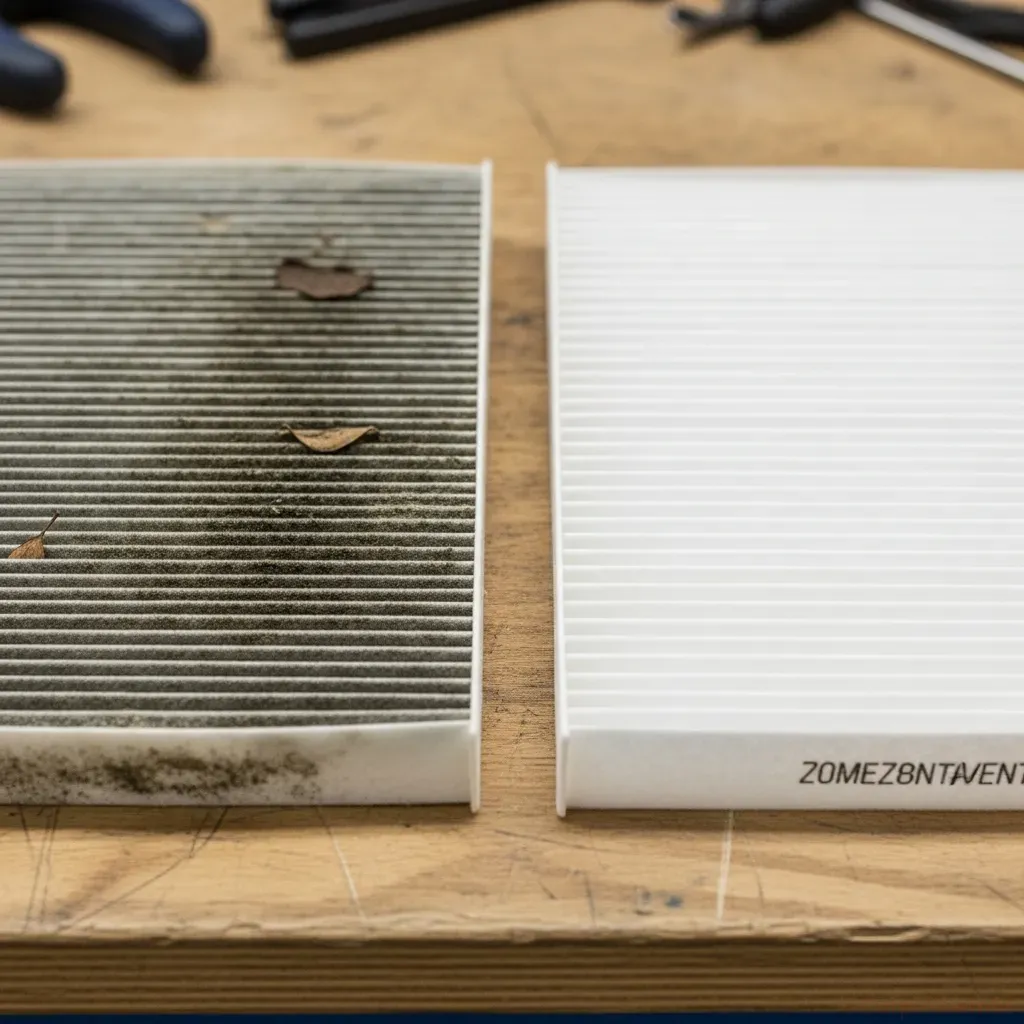
Step 3: Inspect the Cabin Air Filter
Locate the cabin air filter (often behind the glove box or under the cowl at the base of the windshield). Remove it and check:
- Dirty, dark, or clogged with leaves and debris: Replace it.
- Smells bad when you sniff it: It’s likely contributing to the odor.
Many odor problems improve significantly just by replacing a neglected cabin filter.
Step 4: Check for Coolant or Exhaust Clues
- Coolant leak signs: Low coolant in reservoir, greasy film on inside of windshield, damp carpet under dash, sweet smell.
- Exhaust leak signs: Louder exhaust noise, ticking sound near engine, soot around exhaust joints, exhaust smell near front of car.
If you find these signs, skip DIY odor treatments and go straight to a professional diagnosis.
Step 5: Note Any Electrical or Burning Smells
If the smell is hot, sharp, or electrical and changes with fan speed, suspect the blower motor or wiring. Don’t keep running the system—overheating parts can fail completely or, in rare cases, cause a fire.
DIY Fixes for a Musty or Sour AC Smell

If you’ve ruled out coolant, exhaust, and electrical issues, you can usually tackle mold and bacteria smells at home.
1. Replace the Cabin Air Filter
Difficulty: Easy, 10–30 minutes.
Steps:
- Consult your owner’s manual for the filter location.
- Remove the old filter carefully to avoid dropping debris into the housing.
- Vacuum out any leaves or dirt in the filter housing.
- Install a new filter with the airflow arrow oriented correctly.
Consider an activated carbon or charcoal cabin filter for better odor control.
2. Dry Out the Evaporator Core After Driving
This is more of a habit change than a repair, but it helps prevent odors from returning.
- About 5 minutes before you reach your destination, turn off the AC button but leave the fan on medium.
- Set the system to fresh air (not recirculate) if possible.
- This blows drier air over the evaporator, helping it dry out and discouraging mold growth.
3. Use an AC Evaporator Cleaner Foam
Specialized AC evaporator cleaners are designed to kill mold and bacteria on the evaporator core.
What you’ll need: AC evaporator cleaner foam (often comes with a long hose), basic hand tools to access the cabin filter area.
General procedure (always follow product instructions):
- Park the car in a well-ventilated area, engine off, keys removed.
- Remove the cabin air filter to access the air intake or evaporator housing.
- Insert the cleaner’s hose into the duct toward the evaporator core.
- Spray the entire can as directed; the foam will expand and coat the core.
- Let it sit for the recommended time (usually 15–30 minutes).
- The foam will drain out through the AC drain tube under the car, carrying debris and contaminants.
- Install a new cabin filter and run the fan on high with windows open for 10–15 minutes to clear any residue.
This method is effective for most musty or sour smells that originate at the evaporator.
4. Clear a Partially Clogged AC Drain (Carefully)
Warning: Be gentle—forcing tools into the drain can damage the evaporator housing.
Steps:
- Locate the AC drain tube under the car, usually on the passenger side of the firewall.
- With the engine off, gently insert a soft, flexible plastic zip tie or pipe cleaner a short distance into the tube.
- Wiggle lightly to break up debris; do not force it.
- Alternatively, use low-pressure compressed air from the drain end, not from inside the car.
If water suddenly gushes out, you’ve likely cleared a blockage that was contributing to odors.
When You Should Not DIY an AC Smell
Some odor causes are beyond safe DIY territory. Get professional help if:
- You suspect a coolant leak (sweet smell, greasy film, low coolant).
- You smell exhaust or fuel in the cabin.
- There’s a strong burning or electrical smell.
- The blower motor makes squealing, grinding, or rattling noises along with the smell.
- You’ve tried filter replacement and evaporator cleaning, but the smell returns quickly.
A professional shop can perform:
- Pressure tests for coolant and refrigerant leaks.
- Smoke tests for exhaust leaks.
- Dash disassembly to access and clean or replace the evaporator core or heater core.
Preventing AC Odors from Coming Back
Once you’ve fixed the smell, a few simple habits can keep it from returning:
- Change the cabin air filter every 12,000–15,000 miles, or annually in dusty or high-pollen areas.
- Use the AC dry-out method: Turn off AC but leave the fan on for the last 3–5 minutes of your drive.
- Avoid recirculate mode all the time: Use fresh air periodically to reduce humidity buildup.
- Keep the cowl area clean: Clear leaves and debris from the base of the windshield so they don’t get sucked into the HVAC intake.
- Address leaks quickly: Any coolant, water, or exhaust leak should be diagnosed and repaired as soon as you notice it.
Cost Expectations: What Repairs Might Run
Costs vary by vehicle and location, but these ballpark ranges can help you budget:
- Cabin air filter replacement: $15–$50 for the part, $0 DIY, $40–$120 at a shop.
- Evaporator cleaning service: $80–$200 depending on method and labor.
- AC drain cleaning: Often included with evaporator cleaning or $50–$150 alone.
- Heater core replacement (coolant leak): $600–$1,500+ (labor-intensive on many cars).
- Exhaust leak repair: $150–$800+ depending on location and parts.
- Blower motor or resistor replacement: $150–$500+ parts and labor.
Key Takeaways
- Most bad AC smells are caused by mold, mildew, or bacteria on the evaporator core and are fixable with cleaning and a new cabin filter.
- Sweet, exhaust, or burning smells can indicate serious safety issues—don’t ignore them.
- Simple habits like drying the evaporator before shutting off the car and regular cabin filter changes go a long way toward preventing odors.
- If you’re ever unsure, or if symptoms include headaches, nausea, or foggy windows with a sweet smell, get the car inspected by a professional immediately.
Deal with AC smells early and you’ll not only make your drives more comfortable—you’ll also protect your health and catch small problems before they turn into expensive repairs.