Few things are more frustrating than pulling away from the gas pump, turning the key or pressing the start button, and… nothing. The car ran fine when you arrived, you just filled the tank, and now it won’t start. The good news: when a car won’t start right after getting gas, the problem is usually limited to a handful of fuel and vapor-related issues you can understand and often diagnose yourself.
- 1. Why a Car Might Not Start Right After Getting Gas
- 2. Safety First: What to Do Immediately at the Pump
- 3. Quick Checks You Can Do in 2–3 Minutes
- 3.1. 1. Listen for the Fuel Pump
- 3.2. 2. Check the Gas Cap
- 3.3. 3. Watch the Dashboard Lights
- 4. Common Causes When a Car Won’t Start After Getting Gas
- 4.1. Cause 1: EVAP System Purge Valve Stuck Open
- 4.2. Cause 2: Flooded Engine (Too Much Fuel, Not Enough Air)
- 4.3. Cause 3: Contaminated or Wrong Fuel
- 4.4. Cause 4: Failing Fuel Pump That Quits After You Shut Off
- 4.5. Cause 5: Coincidental Electrical Problem (Battery, Starter, or Ignition)
- 5. Step-by-Step: How to Diagnose a No-Start After Getting Gas
- 5.1. Step 1: Observe the Cranking Behavior
- 5.2. Step 2: Listen for the Fuel Pump
- 5.3. Step 3: Try Clear-Flood Mode
- 5.4. Step 4: Scan for Codes (If Possible)
- 6. When It’s Safe to Drive vs. When to Call a Tow
- 7. Preventing No-Start Problems After Refueling
- 8. Key Takeaways
This guide walks you through the most common causes, how to tell them apart, and practical steps to get back on the road safely without guessing or throwing parts at the problem.
Why a Car Might Not Start Right After Getting Gas
When a no-start happens immediately after refueling, you have a valuable clue: something about fuel level, fuel delivery, or vapor control has changed. While it could still be a coincidence (like a failing starter or weak battery), several causes are more likely in this specific situation:
- Flooded engine from repeated cranking or pumping the gas pedal
- Evaporative emissions (EVAP) system problems, especially a stuck purge valve
- Bad or loose gas cap confusing the EVAP system
- Contaminated or wrong fuel from the pump
- Failing fuel pump that quits after you shut the engine off
- Coincidental electrical issues (battery, starter, or ignition switch)
We’ll focus on the fuel and EVAP-related problems that are most likely when the car dies or won’t restart right after filling up.
Safety First: What to Do Immediately at the Pump
Before diving into diagnosis, make sure you and your car are safe:
- Put the car in Park (P) or Neutral (N) and set the parking brake.
- Turn on hazard lights if you’re blocking a lane or pump.
- Don’t keep cranking endlessly. 5–10 seconds at a time is enough; then wait 30–60 seconds. This prevents starter and battery damage and reduces the risk of flooding the engine.
- Don’t smoke or use open flames near the vehicle. You’re sitting next to a large fuel source.
- If you need to open the hood, keep hands and tools clear of moving parts like belts and fans.
Quick Checks You Can Do in 2–3 Minutes
Before assuming a major failure, run through these simple checks:
1. Listen for the Fuel Pump
With the car quiet, turn the key to the ON position (or press the start button without pressing the brake so it goes to accessory/ON, not start). Listen near the rear seat or fuel tank area:
- Normal: a soft hum or buzz for 1–3 seconds, then it stops. This is the fuel pump priming.
- Suspicious: no sound at all, or a loud whining/grinding noise.
If you don’t hear the pump at all, a failing fuel pump or electrical issue to the pump is possible.
2. Check the Gas Cap
Make sure the gas cap is:
- Fully seated and turned until it clicks several times
- Not obviously cracked, missing its seal, or cross-threaded
A loose or damaged cap can confuse the EVAP system and, in some cases, contribute to hard starting after refueling.
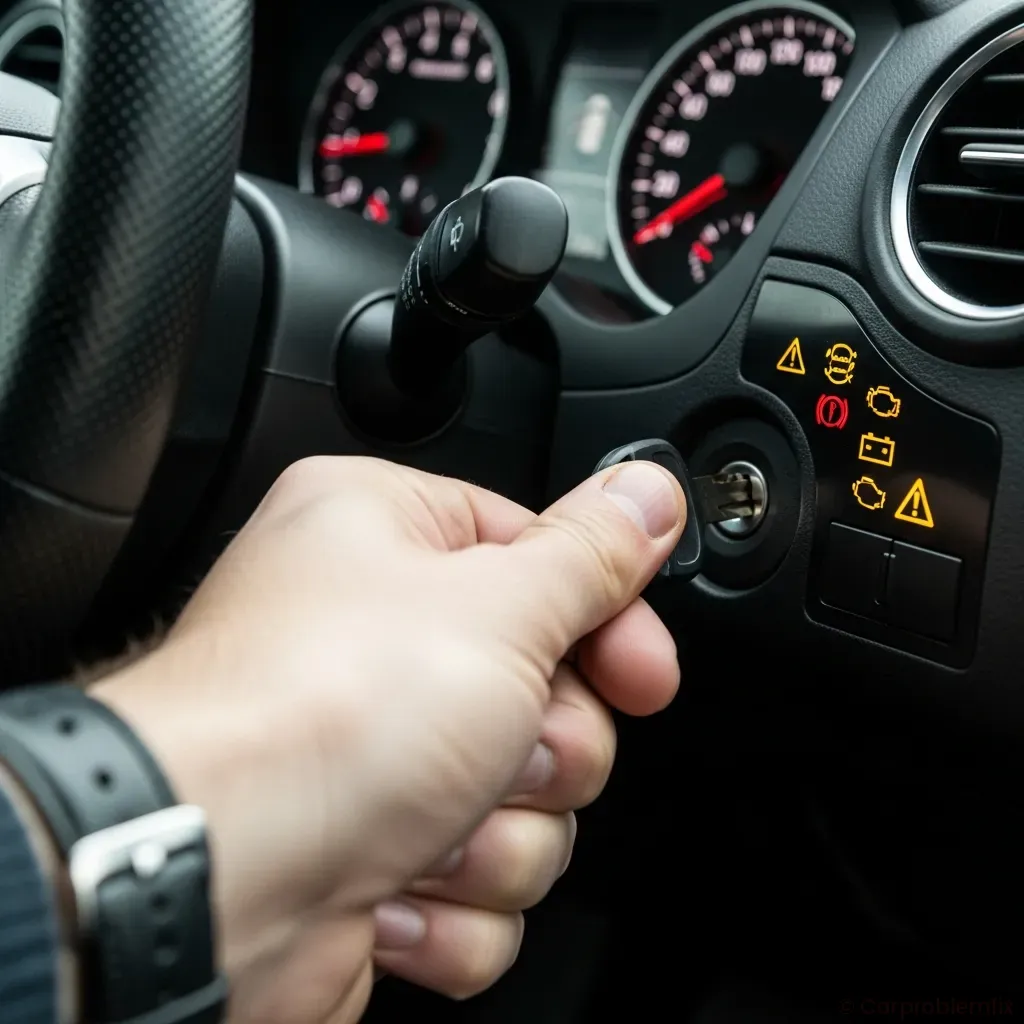
3. Watch the Dashboard Lights
Turn the key to ON (not start) and look at the dash:
- Battery light on? That’s normal before starting.
- Check engine light on? Also normal before starting, but if it stays on after you eventually get it running, you’ll want to scan for codes.
- No lights at all, or very dim lights? You may have a battery or main power issue, not a fuel problem.
Common Causes When a Car Won’t Start After Getting Gas
Cause 1: EVAP System Purge Valve Stuck Open
The evaporative emissions (EVAP) system captures fuel vapors from the gas tank and stores them in a charcoal canister. A purge valve then meters those vapors into the engine at the right time. When it sticks open, it can dump a rush of fuel vapor into the intake right after you refuel, causing a hard start or rough running.
Typical symptoms:
- Car cranks normally but struggles to start right after filling up
- Once it starts, it may stumble, idle rough, or even stall for a minute, then smooth out
- Check engine light may come on with codes like P0441, P0443, P0455, P0496 (EVAP-related)
- Problem is repeatable mainly after refueling
Basic diagnosis (beginner-friendly):
- If you have a simple OBD2 scanner, plug it in and check for EVAP codes.
- Note whether the issue only happens right after adding fuel and then disappears during normal driving.
- On many cars, the purge valve is near the engine’s intake manifold with a small electrical connector and vacuum hoses. A stuck-open valve may cause a strong fuel smell near the engine bay.
What you can do:
- Short term: If the car is flooded with vapor, hold the gas pedal to the floor (this triggers “clear flood” mode on many fuel-injected cars) and crank for up to 5–10 seconds. Release as soon as it starts.
- Long term: A stuck purge valve usually needs to be replaced. Many DIYers can do this with basic tools, but if you’re unsure, a shop can diagnose and replace it.
Cause 2: Flooded Engine (Too Much Fuel, Not Enough Air)
Even modern fuel-injected engines can flood, especially if:
- You cranked repeatedly after it didn’t start the first time
- You pressed the gas pedal several times while cranking
- The engine was already warm when you shut it off to get gas
When the engine is flooded, there’s so much fuel in the cylinders that the spark plugs can’t ignite it properly.
Typical symptoms:
- Strong raw fuel smell from the tailpipe or engine bay
- Engine cranks quickly but doesn’t catch, or catches briefly then dies
- May start after sitting for 10–20 minutes as fuel evaporates
How to clear a flooded engine (fuel-injected cars):
- Press the gas pedal all the way to the floor and hold it there.
- Crank the engine for up to 5–10 seconds.
- If it starts, release the pedal gradually and let the engine idle; don’t rev it hard immediately.
- If it doesn’t start, wait 30–60 seconds and try again. Avoid more than 3–4 attempts to prevent draining the battery or overheating the starter.
If the car still won’t start after a few clear-flood attempts, you likely have another issue (fuel pump, EVAP, ignition, or electrical).
Cause 3: Contaminated or Wrong Fuel
It’s rare, but it happens: a station’s underground tank gets water in it, the wrong fuel is delivered, or you accidentally grab the wrong nozzle.
Possible scenarios:
- Gasoline car accidentally filled with diesel: Often won’t restart after shutting off, or runs briefly then stalls. You may notice a thicker, oily fuel smell and more smoke if it does run.
- Water-contaminated fuel: Engine may start, stumble, misfire, or stall soon after. Hard starting and rough idle are common.
- Very low-quality or wrong octane fuel: Usually causes knocking or poor performance, but rarely a complete no-start by itself.
Clues that point to bad fuel:
- You filled up at a station you don’t normally use, or one that looked poorly maintained.
- Multiple cars at the same station seem to be having issues.
- The car ran perfectly before, then immediately started running poorly or not at all after refueling.
What to do if you suspect bad fuel:
- Don’t keep trying to start it if you know you put diesel in a gas car or vice versa. You can cause more damage.
- If safe, tell the station manager and document your receipt and the pump number.
- The fix usually involves draining the tank and fuel lines and sometimes replacing the fuel filter and spark plugs. This is typically a shop job.
Cause 4: Failing Fuel Pump That Quits After You Shut Off
Sometimes a fuel pump is on its last legs and only shows symptoms when you shut the engine off and try to restart, such as during a quick gas stop.
Typical symptoms:
- Car ran fine on the way to the station, then cranks but won’t start after refueling.
- You don’t hear the fuel pump prime (no brief hum) when turning the key to ON.
- It may start again after sitting for a while, then die later under load or at random.
Basic checks:
- Listen carefully for the pump prime sound with the key ON.
- If you have a helper, they can tap lightly under the fuel tank with a rubber mallet while you crank. Sometimes a failing pump will briefly come back to life when tapped. If this works, the pump is almost certainly failing and needs replacement.
What you can do:
- If tapping the tank gets it running, drive straight to a shop or home without shutting it off if possible. The pump could die completely at any time.
- Fuel pump replacement is usually not a beginner DIY job, especially on modern vehicles, because it often requires lowering the fuel tank.
Cause 5: Coincidental Electrical Problem (Battery, Starter, or Ignition)
Sometimes the timing is just bad: a weak battery, failing starter, or worn ignition switch chooses the gas stop to finally quit.
How to tell if it’s electrical, not fuel-related:
- Slow or labored cranking: The engine turns over slowly, lights dim significantly, or you hear clicking. This points to a weak battery or bad connection.
- Single click or no crank at all: Often a failing starter, starter relay, or ignition switch.
- No dash lights or very dim lights: Possible dead battery, loose battery terminals, or main fuse issue.
Quick checks:
- Look at the battery terminals under the hood. Are they loose, corroded, or covered in white/green buildup? Wiggle gently; they should not move.
- If you have jumper cables and another vehicle, try a jump start. If it starts easily with a jump, you likely have a battery or charging system issue.
Step-by-Step: How to Diagnose a No-Start After Getting Gas
Use this simple flow to narrow things down:
Step 1: Observe the Cranking Behavior
- Cranks normally (fast, strong) but won’t start: Likely fuel, EVAP, or ignition issue.
- Cranks slowly or not at all: Likely battery, starter, or main electrical issue, not specifically related to refueling.
Step 2: Listen for the Fuel Pump
- Hear the pump prime: Fuel pump is at least getting power and trying to run. EVAP or flooding becomes more likely.
- No pump sound: Fuel pump or its power supply may be failing.
Step 3: Try Clear-Flood Mode
- Hold the gas pedal to the floor and crank for 5–10 seconds.
- If it starts and then smooths out after a few seconds, you likely had a flooded engine or purge valve issue.
Step 4: Scan for Codes (If Possible)
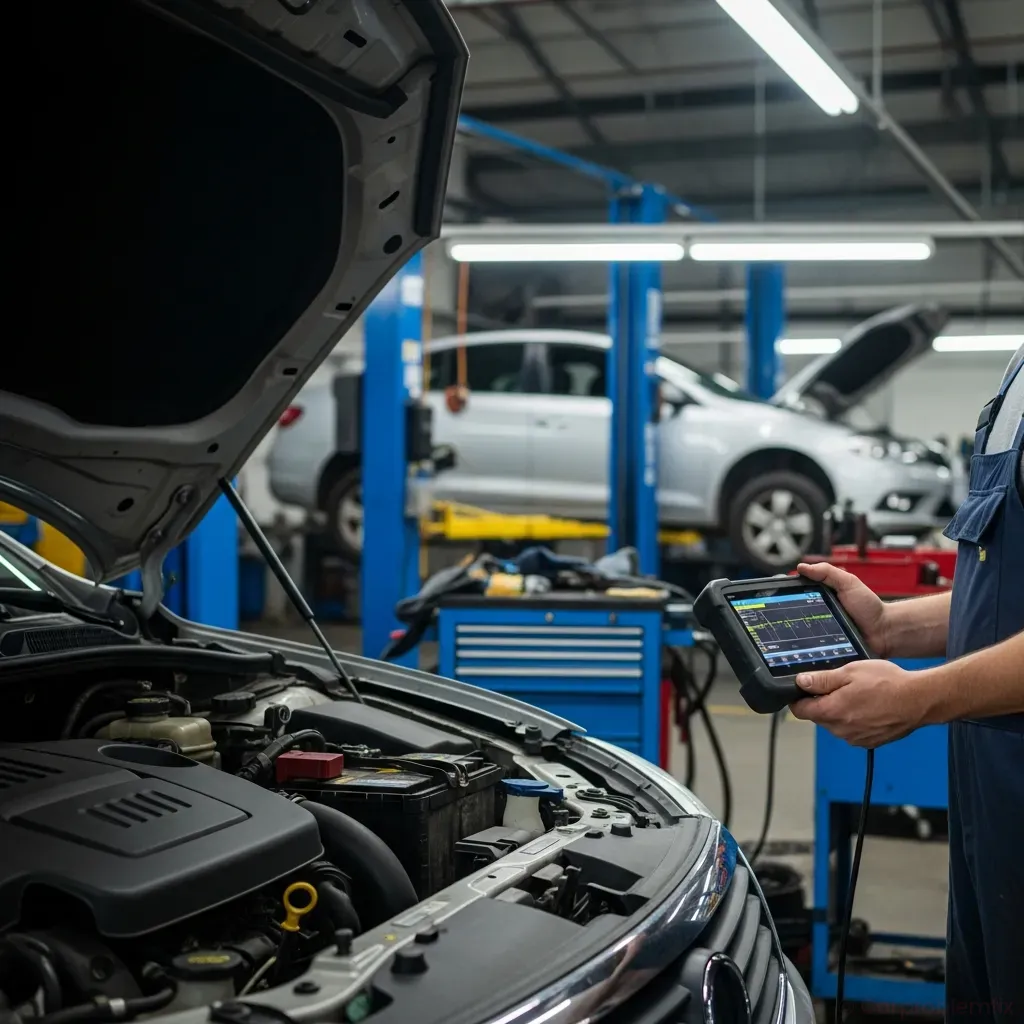
A basic OBD2 scanner is inexpensive and can save a lot of guessing. Plug it into the port (usually under the dash near the steering column) and look for codes:
- EVAP codes (P0440–P0499 range): Suspect purge valve or EVAP components.
- Misfire codes (P0300–P030X): Engine may be misfiring due to bad fuel or flooding.
- No codes: Doesn’t rule anything out, but points more toward mechanical or electrical issues that haven’t triggered the computer yet.
When It’s Safe to Drive vs. When to Call a Tow
You can usually drive (carefully) if:
- The car finally starts and runs smoothly after a few seconds.
- No major warning lights are flashing (solid check engine light is usually okay short-term; a flashing one is not).
- There are no strong fuel leaks or burning smells.
Call a tow or roadside assistance if:
- The engine won’t start at all after several reasonable attempts.
- You suspect wrong fuel (diesel in a gas car or vice versa).
- You see or smell a fuel leak under the car or around the engine.
- The engine starts but runs extremely rough, stalls repeatedly, or the check engine light flashes.
Preventing No-Start Problems After Refueling
While you can’t control everything, a few habits reduce the chances of being stranded at the pump:
- Don’t “top off” the tank. Stop when the pump clicks off. Overfilling can saturate the charcoal canister and stress the EVAP system.
- Use reputable gas stations with high turnover and well-maintained pumps.
- Replace a damaged or missing gas cap promptly with the correct type for your vehicle.
- If you’ve had EVAP or purge valve codes before, fix them sooner rather than later; they often get worse over time.
- Listen for changes in fuel pump noise over months—louder whining can be an early warning sign.
Key Takeaways
- A car that won’t start right after getting gas usually points to fuel delivery, EVAP, or flooding issues, not just random bad luck.
- Start by observing how it cranks, listening for the fuel pump, checking the gas cap, and trying clear-flood mode safely.
- EVAP purge valve problems are a very common cause of hard starting immediately after refueling.
- If you suspect wrong or contaminated fuel, don’t keep cranking; have the car towed and the tank inspected.
- When in doubt, a basic OBD2 scan and a professional diagnosis can prevent expensive guesswork and repeated no-start episodes.
Understanding these patterns gives you a big advantage the next time your car refuses to start after a fill-up. Instead of panicking at the pump, you’ll know what to check, what you can try safely, and when it’s time to call in a pro.