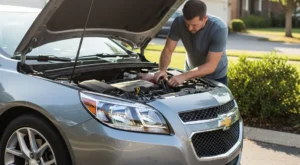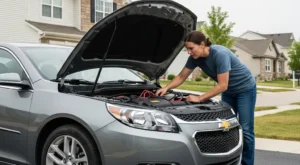

Few things are more frustrating than a car that starts perfectly in the morning but refuses to crank or fire up after you’ve been driving. You stop for fuel, run into a store, come back out, and suddenly the car won’t start when hot. Then, as if nothing happened, it starts again after cooling down.
- 1. Common Symptoms of a Car That Won’t Start When Hot
- 1.1. 1. Engine Cranks Slowly When Hot
- 1.2. 2. No Crank at All When Hot
- 1.3. 3. Cranks Normally but Won’t Fire When Hot
- 1.4. 4. Starts Hot but Stalls Shortly After
- 2. Main Causes of a Car That Won’t Start When Hot
- 2.1. 1. Heat-Soaked Starter Motor or Solenoid
- 2.2. 2. High Resistance in Battery Cables or Ground Connections
- 2.3. 3. Failing Crankshaft Position Sensor (CKP)
- 2.4. 4. Failing Camshaft Position Sensor (CMP)
- 2.5. 5. Weak Fuel Pump or Failing Fuel Pump Relay
- 2.6. 6. Vapor Lock (Mostly Older Carbureted or Returnless Systems)
- 2.7. 7. Ignition Coil or Coil Pack Breaking Down When Hot
- 2.8. 8. Engine Coolant Temperature (ECT) Sensor Misreading
- 2.9. 9. Security/Immobilizer or Key Transponder Issues
- 3. Step-by-Step Diagnosis: Car Won’t Start When Hot
- 3.1. Step 1: Separate “No Crank” from “Cranks but Won’t Start”
- 3.2. Step 2: Listen and Observe When Hot
- 3.3. Step 3: Check Battery and Connections
- 3.4. Step 4: Try a Hot-Soak Starter Test
- 3.5. Step 5: Check for Spark When Hot
- 3.6. Step 6: Check for Fuel Delivery
- 3.7. Step 7: Scan for Trouble Codes and Live Data
- 4. Common Fixes for Hot No-Start Problems
- 4.1. 1. Replace the Starter Motor and/or Solenoid
- 4.2. 2. Clean or Replace Battery Cables and Grounds
- 4.3. 3. Replace a Failing Crankshaft or Camshaft Position Sensor
- 4.4. 4. Replace a Weak Fuel Pump or Pump Relay
- 4.5. 5. Replace Failing Ignition Coils or Coil Packs
- 4.6. 6. Replace a Faulty Engine Coolant Temperature Sensor
- 4.7. 7. Address Security/Immobilizer Problems
- 5. When to Stop Cranking and Call for Help
- 6. Preventing Future Hot No-Start Problems
- 7. Bottom Line
This pattern usually points to a heat-related issue rather than a dead battery or random failure. In this guide, you’ll learn why a car won’t start when hot, how to narrow down the cause, and what you can do to fix it before you get stranded for good.
Common Symptoms of a Car That Won’t Start When Hot

Before jumping into components, pay attention to how the car behaves. The details of the no-start can tell you a lot.
1. Engine Cranks Slowly When Hot
- Starter turns the engine over, but much slower than normal.
- May sound like a weak battery: “rrr… rrr… rrr…”
- After cooling 20–60 minutes, it cranks normally and starts.
This often points to a failing starter motor or high resistance in cables/grounds that gets worse with heat.
2. No Crank at All When Hot
- Turn the key or push the start button and nothing happens.
- You might hear a single click, repeated clicking, or total silence.
- Lights and accessories still work, so the battery doesn’t seem dead.
This can indicate a failing starter solenoid, ignition switch, neutral safety switch, or a security/immobilizer issue that acts up when warm.
3. Cranks Normally but Won’t Fire When Hot
- Starter spins the engine at normal speed.
- Engine tries to catch or just spins with no sign of firing.
- After cooling down, it starts and runs fine again.
This pattern usually points to fuel delivery or ignition problems that are sensitive to temperature, such as a failing crankshaft position sensor, vapor lock (older cars), or a weak fuel pump.
4. Starts Hot but Stalls Shortly After
- Car starts but dies within seconds or minutes when hot.
- Restarting is difficult or impossible until it cools.
Here, engine management sensors or the fuel system are prime suspects.
Main Causes of a Car That Won’t Start When Hot
1. Heat-Soaked Starter Motor or Solenoid
The starter sits close to the engine and exhaust, so it lives in a brutal heat environment. Over time, internal windings, brushes, and the solenoid can wear out and become very sensitive to temperature.
Typical signs:
- Slow crank or no crank only when the engine is hot.
- Repeated key turns eventually get it to crank.
- Works fine first thing in the morning.
Why heat makes it worse: As temperature rises, electrical resistance in the starter increases, and worn components may expand just enough to bind or lose contact. A marginal starter that works cold can completely fail when hot.
2. High Resistance in Battery Cables or Ground Connections
Corroded or loose battery terminals, ground straps, and power cables can cause voltage drop. Heat increases resistance, so a marginal connection that’s okay when cold may fail when hot.
Typical signs:
- Intermittent no-crank or slow-crank when hot.
- Lights may dim noticeably during attempted start.
- Wiggling battery cables sometimes changes the symptom.
3. Failing Crankshaft Position Sensor (CKP)
The crankshaft position sensor tells the ECU where the crank is so it can control spark and fuel injection. Many CKP sensors fail when hot and work again after cooling.
Typical signs:
- Engine cranks normally but won’t start when hot.
- Sometimes stalls while driving, then won’t restart until it cools.
- Check Engine Light may or may not be on; codes like P0335–P0339 may be stored.
Heat can cause internal electrical failure or cracks in the sensor body that only show up at operating temperature.
4. Failing Camshaft Position Sensor (CMP)
On many modern engines, the camshaft sensor works with the crank sensor to time fuel and spark. A failing CMP can mimic CKP symptoms, especially hot no-start or hot stall.
Typical signs:
- Cranks but doesn’t start when hot, especially after a short shutdown.
- Rough running, misfires, or poor acceleration when it does run.
- Codes like P0340–P0344 may be present.
5. Weak Fuel Pump or Failing Fuel Pump Relay
Fuel pumps and their relays can become heat-sensitive with age. After a long drive, the pump or relay may fail, causing a hot no-start. Once they cool, they work again until the next heat cycle.
Typical signs:
- Cranks but won’t start when hot; no fuel pump hum heard at key-on.
- Long crank time before starting, especially after a hot soak.
- Loss of power or stumbling under load when driving (weak pump).
6. Vapor Lock (Mostly Older Carbureted or Returnless Systems)
Vapor lock happens when fuel boils in the lines or rail, turning to vapor. The pump struggles to move vapor, so pressure drops and the engine won’t start or runs poorly until things cool down.
Typical signs:
- Hot restart problems after a short stop on a very hot day.
- Engine may sputter or stall before the no-start.
- More common on older carbureted vehicles or some early fuel-injected designs.
7. Ignition Coil or Coil Pack Breaking Down When Hot
Ignition coils generate high voltage for spark plugs. Internal windings or insulation can fail when hot, leading to weak or no spark.
Typical signs:
- Cranks but won’t start when hot; starts fine when cold.
- Misfires, rough idle, or lack of power when the engine is hot.
- Possible codes for misfire (P030X) or ignition issues.
8. Engine Coolant Temperature (ECT) Sensor Misreading
The ECT sensor tells the ECU how hot the engine is. If it falsely reports a very cold or very hot temperature, the ECU can command the wrong fuel mixture, making hot starts difficult or impossible.
Typical signs:
- Hard starting when hot but okay when cold (or vice versa).
- Poor fuel economy, rich smell, or black smoke from the exhaust.
- Unrealistic temperature readings on a scan tool.
9. Security/Immobilizer or Key Transponder Issues
Some security systems or key transponders act up with heat, especially if the key, ignition cylinder, or steering column electronics are worn.
Typical signs:
- Cranks but won’t start, or no crank, with a flashing security light.
- Starts fine with a spare key but not with the main key.
- Problem may appear after the car sits in the sun or after a hot drive.
Step-by-Step Diagnosis: Car Won’t Start When Hot
Even without professional tools, you can narrow down the cause by following a logical process.
Step 1: Separate “No Crank” from “Cranks but Won’t Start”
- No crank: Focus on the starter, battery cables, ignition switch, neutral safety switch, and security system.
- Cranks but won’t start: Focus on fuel, spark, and engine management sensors (CKP, CMP, ECT, coils).
Step 2: Listen and Observe When Hot
- Turn the key to ON (not start). Do you hear the fuel pump prime for 1–3 seconds?
- Watch the dash: any security or immobilizer lights flashing?
- Note whether the starter sounds slow, normal, or silent.
Step 3: Check Battery and Connections
Even if the battery seems fine, verify the basics:
- Clean battery terminals until shiny; tighten them firmly.
- Inspect the main ground strap from battery to chassis/engine; look for corrosion, fraying, or looseness.
- Check the positive cable to the starter for damage or oil saturation.
If you also notice oil around the engine or under the car, address that too—chronic leaks can contaminate electrical connections and rubber parts. For a detailed guide on tracking down leaks, see Car Leaking Oil When Parked: Causes, Diagnosis & Fixes.
Step 4: Try a Hot-Soak Starter Test
If the problem is a slow or no crank when hot:
- Drive until fully warm, then shut off for 10–20 minutes.
- Attempt to restart; if it struggles or won’t crank, have a helper tap the starter body lightly with a rubber mallet while you turn the key.
- If it suddenly cranks and starts, the starter is very likely failing internally.
Safety note: Never crawl under a car that isn’t securely supported, and keep clear of moving parts.
Step 5: Check for Spark When Hot
If the engine cranks but won’t start when hot:
- Use a spark tester (inexpensive tool) connected to a plug wire or coil-on-plug.
- Crank the engine and look for a strong, regular spark.
- No spark or weak, intermittent spark when hot points to coils, CKP/CMP sensors, or ignition control modules.
Step 6: Check for Fuel Delivery
- Listen for the fuel pump prime at key-on when the engine is hot.
- If silent, check the fuel pump fuse and relay; some relays fail only when hot.
- If you have a fuel pressure gauge, compare hot vs. cold readings to spec.
Intermittent fuel delivery can also cause jerking or bucking under acceleration. If you’ve noticed that symptom along with hot start problems, the article Car Jerks When Accelerating – Causes, Diagnosis & Fixes can help you connect the dots.
Step 7: Scan for Trouble Codes and Live Data
A basic OBD2 scanner can be very helpful:
- Scan for stored and pending codes after a hot no-start episode.
- Look at live data for ECT temperature, RPM (crank sensor), and fuel trims.
- If RPM stays at 0 while cranking, the CKP sensor is a prime suspect.
- If ECT reads extremely cold or hot compared to reality, the sensor or wiring may be faulty.
Common Fixes for Hot No-Start Problems

1. Replace the Starter Motor and/or Solenoid
When it’s the fix: Slow or no crank only when hot, starter responds to tapping, and battery/cables test good.
What’s involved:
- Disconnect battery negative terminal.
- Access the starter (often from underneath), disconnect wiring, and remove mounting bolts.
- Install a quality new or remanufactured starter; avoid the cheapest options.
DIY difficulty: Moderate. Some vehicles have tight access or require removing other components.
2. Clean or Replace Battery Cables and Grounds
When it’s the fix: Intermittent slow crank, visible corrosion, or movement of cables changes the symptom.
What to do:
- Clean terminals with a wire brush and baking soda/water solution.
- Replace badly corroded or swollen cables.
- Add an extra ground strap from engine to chassis if grounds are marginal.
3. Replace a Failing Crankshaft or Camshaft Position Sensor
When it’s the fix: Cranks but won’t start when hot, no RPM signal on a scan tool, codes for CKP/CMP, or hot stall followed by no-start.
What’s involved:
- Locate the sensor (often near the crank pulley, transmission bellhousing, or on the cylinder head).
- Disconnect the electrical connector and remove the mounting bolt(s).
- Install the new sensor with a light coat of clean engine oil on the O-ring if equipped.
DIY difficulty: Easy to moderate, depending on access.
4. Replace a Weak Fuel Pump or Pump Relay
When it’s the fix: No pump sound when hot, low or no fuel pressure, long crank times, or stalling under load.
Relay replacement:
- Locate the relay in the fuse/relay box (consult owner’s manual).
- Swap with an identical relay (e.g., horn relay) as a quick test.
- If the problem follows the relay, replace it.
Fuel pump replacement:
- Typically requires dropping the fuel tank or accessing a service panel under the rear seat or trunk.
- Always relieve fuel pressure and disconnect the battery first.
DIY difficulty: Moderate to hard, depending on vehicle design.
5. Replace Failing Ignition Coils or Coil Packs
When it’s the fix: No spark when hot, misfire codes, or rough running when warm.
What to do:
- Identify which coil(s) are failing using misfire data or a spark tester.
- Replace individual coils or the entire coil pack on older designs.
- Inspect spark plugs and wires (if equipped) at the same time.
6. Replace a Faulty Engine Coolant Temperature Sensor
When it’s the fix: Unrealistic temperature readings, rich or lean running, and hard hot starts.
What’s involved:
- Locate the ECT sensor, usually near the thermostat housing or in the cylinder head.
- Drain a small amount of coolant if necessary.
- Unscrew the old sensor, install the new one with thread sealant if required, and top off coolant.
7. Address Security/Immobilizer Problems
When it’s the fix: Security light is flashing, car starts with a spare key, or symptoms change when you move the key or steering column.
Possible solutions:
- Try a different key if you have a chipped/transponder key.
- Have the dealer or a locksmith reprogram keys or the immobilizer.
- Repair or replace a faulty ignition lock cylinder or key reader ring.
When to Stop Cranking and Call for Help
Continuing to crank a hot engine that won’t start can overheat the starter, drain the battery, and even damage wiring. Stop and seek help if:
- You hear grinding or unusual noises from the starter.
- Cables or battery terminals feel hot to the touch.
- You smell burning plastic or insulation.
Also, if your hot no-start is accompanied by other serious symptoms—like severe braking noises or vibration—address those immediately. For example, if you hear metal-on-metal when stopping, read Car Makes Grinding Noise When Braking – Causes, Diagnosis & Fixes before driving further.
Preventing Future Hot No-Start Problems
While some failures are just age-related, you can reduce the chances of getting stranded by:
- Maintaining the battery and charging system: Test the battery annually and replace it before it’s completely worn out.
- Inspecting cables and grounds: Clean and tighten connections during routine maintenance.
- Fixing oil and coolant leaks promptly: Fluids can damage wiring, connectors, and rubber components over time.
- Using quality replacement parts: Cheap starters, sensors, and pumps often fail early—sometimes worse when hot.
- Scanning for codes early: Don’t ignore intermittent Check Engine Lights; they often appear before a full-blown no-start.
Bottom Line
A car that won’t start when hot but behaves normally when cold is usually telling you something very specific: a component is failing under heat and will eventually fail completely. By paying attention to whether it cranks or not, listening for the fuel pump, checking for spark, and scanning for codes, you can narrow the issue to the starter, wiring, sensors, ignition, fuel system, or security system.
Handle the basics you can safely DIY—battery, cables, simple sensors—and don’t hesitate to involve a qualified mechanic for in-depth electrical or fuel system diagnosis. Fixing a heat-related no-start now is far cheaper and less stressful than waiting until the day your car refuses to start at all.