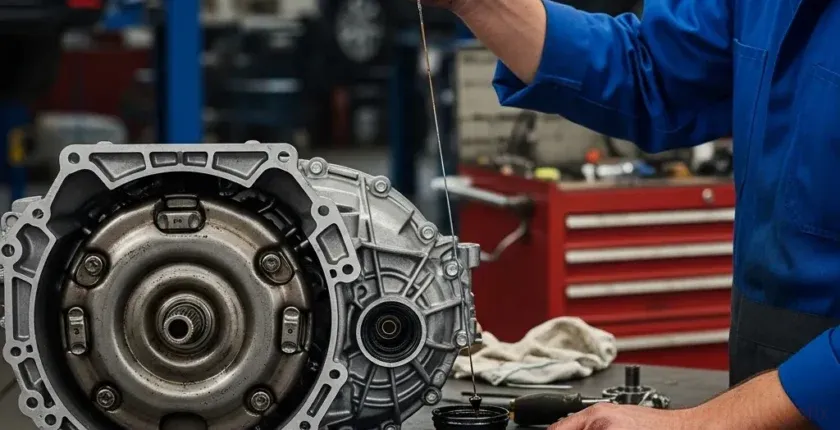
Few things kill a transmission faster than heat. Whether you drive a traditional automatic, CVT, or dual-clutch, transmission overheating can turn a perfectly good gearbox into a slipping, shuddering, metal-filled mess in a surprisingly short time.
- 1. Why Transmission Overheating Is So Dangerous
- 2. Common Symptoms of Transmission Overheating
- 2.1. 1. Burning Smell (Often Sweet or Acrid)
- 2.2. 2. Dark or Burnt Transmission Fluid
- 2.3. 3. Transmission Warning Light or Overheat Message
- 2.4. 4. Sudden Loss of Power or “Limp Mode”
- 2.5. 5. Harsh Engagement When Hot
- 2.6. 6. Shuddering, Especially at Light Throttle
- 3. Top Causes of Transmission Overheating
- 3.1. 1. Low Transmission Fluid Level
- 3.2. 2. Old, Degraded, or Wrong Fluid
- 3.3. 3. Heavy Towing, Hauling, or Mountain Driving
- 3.4. 4. Restricted or Failing Transmission Cooler
- 3.5. 5. Riding the Brakes or Poor Driving Habits
- 3.6. 6. Internal Transmission Problems
- 3.7. 7. Cooling System Problems
- 4. How to Diagnose Transmission Overheating
- 4.1. Step 1: Check for Warning Lights and Codes
- 4.2. Step 2: Inspect Fluid Level and Condition
- 4.3. Step 3: Look for External Leaks
- 4.4. Step 4: Check the Transmission Cooler and Radiator
- 4.5. Step 5: Monitor Transmission Temperature (If Possible)
- 5. How to Fix Transmission Overheating
- 5.1. 1. Stop Driving if Temperatures Are Extreme
- 5.2. 2. Correct Low Fluid and Repair Leaks
- 5.3. 3. Perform a Fluid and Filter Service
- 5.4. 4. Add or Upgrade a Transmission Cooler
- 5.5. 5. Fix Engine Cooling System Issues
- 5.6. 6. Address Internal Transmission Problems
- 6. Driving Habits That Prevent Transmission Overheating
- 6.1. 1. Use Tow/Haul Mode When Towing or Hauling
- 6.2. 2. Downshift on Long Descents
- 6.3. 3. Avoid Excessive Idling in Gear
- 6.4. 4. Don’t Overload the Vehicle
- 6.5. 5. Warm Up Gently in Cold Weather
- 7. Maintenance Tips to Keep Transmission Temperatures in Check
- 7.1. Follow (or Improve On) the Service Interval
- 7.2. Inspect the Cooler and Lines Periodically
- 7.3. Consider a Temperature Gauge or Monitoring App
- 8. When Is It Too Late to Save an Overheated Transmission?
- 9. Key Takeaways
This guide walks you through the causes, symptoms, diagnosis, and fixes for transmission overheating, plus practical prevention tips that can save you thousands in repair costs.
Why Transmission Overheating Is So Dangerous

Automatic and CVT transmissions rely on fluid for three critical jobs:
- Hydraulic pressure to apply clutches and bands
- Lubrication of gears, bearings, and bushings
- Cooling of internal components
When the fluid overheats, it breaks down chemically. Varnish and sludge form, seals harden, clutches glaze, and metal parts wear rapidly. A transmission that runs at 220–240°F (104–116°C) for extended periods can lose most of its service life.
Many modern vehicles don’t have a temperature gauge for the transmission, so you must rely on symptoms and scan data to catch overheating early.
Common Symptoms of Transmission Overheating
Overheating doesn’t always feel like a classic “slipping” transmission right away. Watch for these warning signs:
1. Burning Smell (Often Sweet or Acrid)
A hot, sweet, or acrid smell after driving—especially after towing, mountain driving, or stop-and-go traffic—often means the transmission fluid is cooking. If you smell burning near the front of the vehicle and your engine oil looks fine, suspect the transmission.
2. Dark or Burnt Transmission Fluid
Healthy ATF is typically bright red or pink (some newer fluids are blue or green). Overheated fluid turns:
- Dark brown or nearly black
- Thicker and more varnish-like
- Strong-smelling, like burnt toast or burnt sugar
If you pull the dipstick (if equipped) and the fluid smells burnt, overheating has already occurred.
3. Transmission Warning Light or Overheat Message
Many late-model vehicles have a dedicated transmission temperature warning or a generic drivetrain overheat message. Some will also trigger a Check Engine Light and store transmission-related codes.
If your Check Engine Light is flashing while the car is driving, that’s a separate urgent problem—see Check Engine Light Flashing? Causes, Fixes & How Serious It Really Is.
4. Sudden Loss of Power or “Limp Mode”
Some transmissions will intentionally reduce power or lock into a single gear when temperatures exceed a safe limit. This “limp mode” is designed to protect the transmission from catastrophic failure.
5. Harsh Engagement When Hot
If the transmission shifts fairly normally when cold but starts to:
- Engage Drive or Reverse with a harsh clunk
- Bang into gear at low speeds
- Hold gears too long before shifting
after 20–30 minutes of driving, overheating or degraded fluid may be the root cause.
6. Shuddering, Especially at Light Throttle
Torque converter clutch shudder—often felt as a vibration or rumble strip sensation between 30–60 mph—can be aggravated by overheated, worn-out fluid. In CVTs, overheating can cause belt/chain slip and a rubber-band feel.
Top Causes of Transmission Overheating
1. Low Transmission Fluid Level
Low fluid is the fastest way to overheat a transmission. With insufficient fluid, the pump can’t maintain pressure, lubrication suffers, and internal parts run hot.
Common reasons for low fluid:
- Leaking transmission cooler lines
- Leaking axle seals or output shaft seals
- Leaking pan gasket or drain plug
- Internal leaks into the transfer case (on some 4x4s)
Even half a quart low can significantly raise operating temperature.
2. Old, Degraded, or Wrong Fluid
Transmission fluid has a finite life. Over time, heat and shear forces break down the additives that provide lubrication, friction control, and cooling.
Using the wrong type of fluid can be just as bad. Modern automatics and CVTs are extremely picky about fluid friction characteristics. The wrong fluid can cause:
- Excessive heat generation
- Poor clutch engagement
- Shudder and early wear
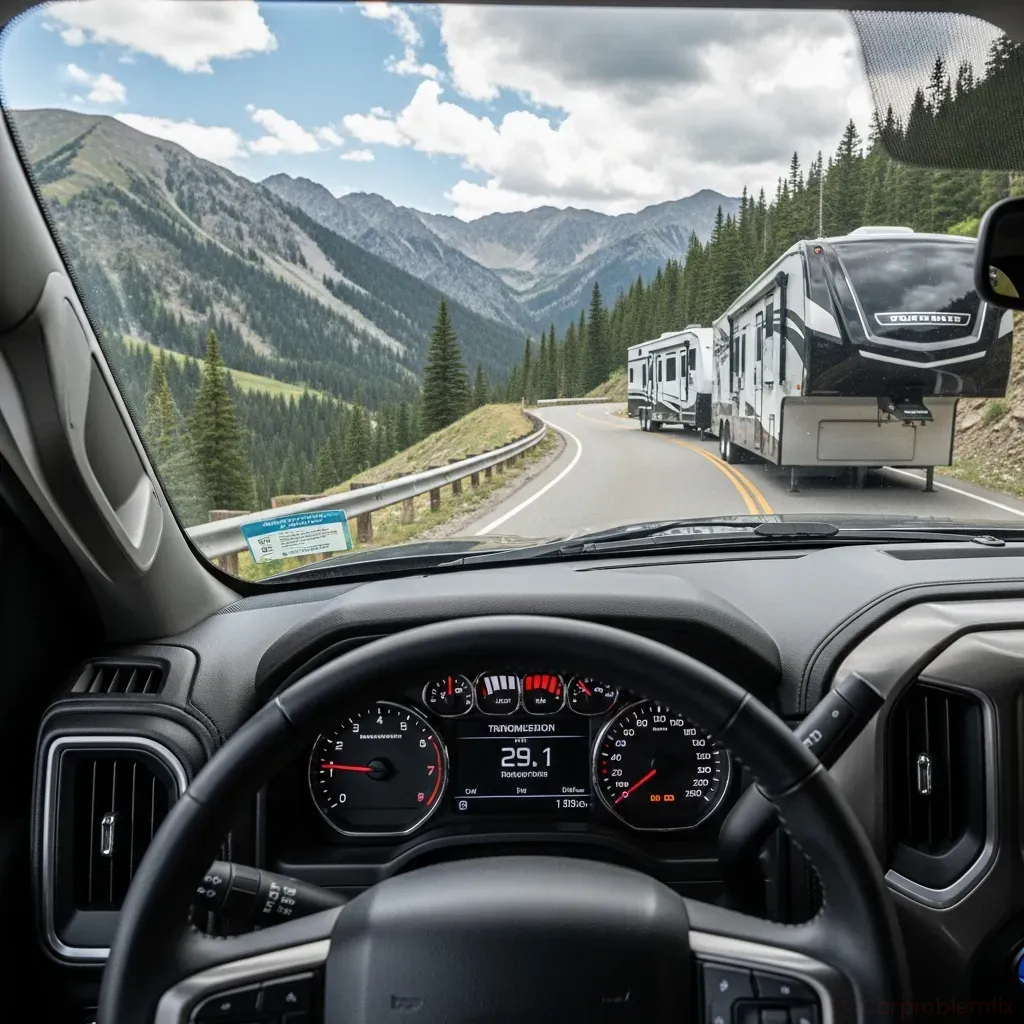
3. Heavy Towing, Hauling, or Mountain Driving
Any situation that makes the transmission work harder will increase heat:
- Towing near or above the vehicle’s rated capacity
- Hauling heavy cargo or passengers
- Long, steep climbs in hot weather
- Stop-and-go traffic with a loaded vehicle
Without an auxiliary cooler or proper tow mode strategy, it’s easy to push transmission temps into the danger zone.
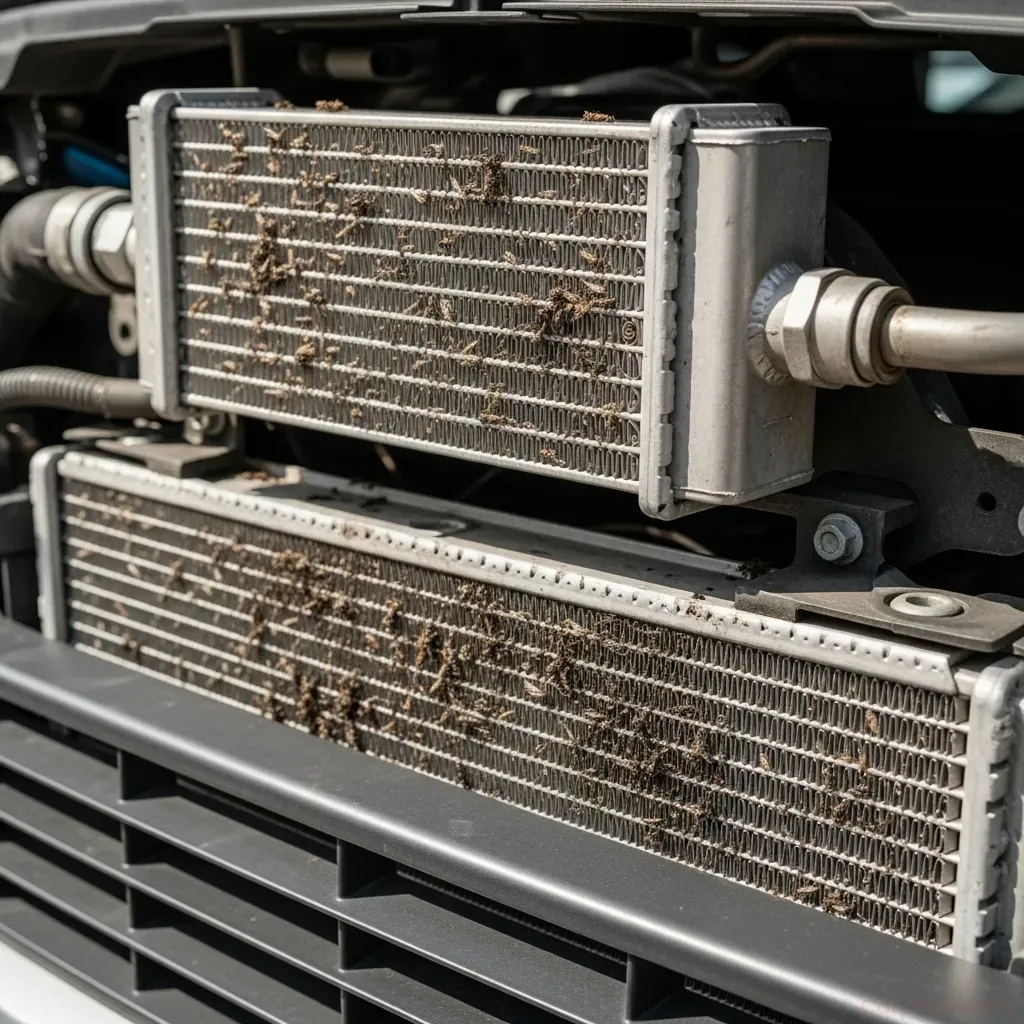
4. Restricted or Failing Transmission Cooler
Most automatics use a cooler integrated into the radiator, plus (on some models) an external auxiliary cooler. Over time, these can become:
- Internally restricted by debris or varnish
- Externally blocked by dirt, bugs, or bent fins
- Partially bypassed by a failing thermostat or bypass valve
A restricted cooler means the fluid can’t shed heat effectively, so temperatures climb quickly under load.
5. Riding the Brakes or Poor Driving Habits
Riding the brakes downhill forces the transmission to stay in higher gears and generates extra heat in the torque converter. Likewise, aggressive stoplight launches and constant on-off throttle driving keep the converter slipping more than necessary.
6. Internal Transmission Problems
Some overheating is a symptom of internal failure rather than the cause:
- Worn clutches or bands slipping excessively
- Failing torque converter
- Stuck solenoids causing improper line pressure
- Blocked internal passages
In these cases, the transmission generates more heat than a healthy cooler can handle.
7. Cooling System Problems
Because many transmissions rely on the engine’s radiator for cooling, any engine cooling system issue can indirectly overheat the transmission:
- Clogged radiator
- Failing radiator fan
- Low engine coolant level
- Thermostat stuck closed
If your engine runs hot, your transmission is likely running hot too.
How to Diagnose Transmission Overheating
Step 1: Check for Warning Lights and Codes
Use an OBD2 scanner capable of reading transmission data (not just generic engine codes). Look for:
- Transmission temperature PIDs (live data)
- Transmission-related codes (e.g., pressure control, shift solenoid, torque converter clutch)
Even if the transmission light isn’t on, a stored code can point to overheating or pressure issues.
Step 2: Inspect Fluid Level and Condition
Procedures vary by vehicle, but in general:
- Park on level ground
- Bring the transmission to operating temperature (unless the manufacturer specifies otherwise)
- Cycle through all gears, then leave in Park
- Check the dipstick (if equipped) for level and color
If your vehicle has a sealed transmission without a dipstick, checking fluid level usually requires lifting the vehicle and removing a level plug at a specific temperature. This is often best left to a professional.
Red or pink, clear fluid: Generally healthy.
Dark brown/black, burnt smell: Overheated, needs service.
Milky, pinkish fluid: Possible coolant contamination from a failed radiator cooler—very serious.
Step 3: Look for External Leaks
Visually inspect:
- Transmission pan and gasket
- Cooler lines running to the radiator or external cooler
- Axle seals and output shaft seals
- Area between transmission and engine (front pump seal)
Fresh wetness or drips indicate a leak that can lead to low fluid and overheating.
Step 4: Check the Transmission Cooler and Radiator
With the engine cool, inspect the front of the vehicle:
- Look through the grille for blocked or bent fins on the radiator and any external transmission cooler
- Clean out leaves, dirt, and bugs with low-pressure water (avoid bending fins)
- Check for kinked or damaged cooler lines
Step 5: Monitor Transmission Temperature (If Possible)
Using a scan tool or an aftermarket gauge, monitor transmission temp during a typical drive:
- 170–200°F (77–93°C) – Ideal range for many automatics
- 200–220°F (93–104°C) – Acceptable but watch closely under heavy load
- Above 230°F (110°C) – Excessive; life of the fluid and transmission drops quickly
If temps spike on hills, while towing, or in traffic, you likely have a cooling capacity or fluid issue.
How to Fix Transmission Overheating
1. Stop Driving if Temperatures Are Extreme
If you get a transmission overheat warning, smell burning fluid, or experience limp mode:
- Safely pull over
- Shift to Park and let the engine idle (this keeps fluid circulating through the cooler)
- Turn off A/C to reduce load on the cooling system
- Allow 15–30 minutes for temps to drop
Continuing to drive while severely overheated can turn a minor issue into a full rebuild.
2. Correct Low Fluid and Repair Leaks
If the fluid level is low and you’ve identified a leak:
- Top off with the exact OEM-specified fluid (check the owner’s manual or under-hood label)
- Schedule leak repair as soon as possible—topping off is not a permanent fix
Common leak repairs include replacing cooler lines, pan gaskets, and axle seals. Costs typically range from $150–$600 depending on the part and labor time.
3. Perform a Fluid and Filter Service
If the fluid is dark but not completely burnt, a fluid and filter change can help restore cooling and lubrication. For many vehicles, this involves:
- Dropping the transmission pan
- Replacing the internal filter (if serviceable)
- Cleaning the pan and magnet
- Refilling with fresh fluid to the correct level
Expect to pay roughly $200–$400 at a shop for a conventional automatic; CVTs and dual-clutch units may cost more due to fluid price and procedures.
Important: If the fluid is severely burnt or full of metal shavings, a simple fluid change may not save the transmission. In some cases, a full rebuild or replacement is the only long-term fix.
4. Add or Upgrade a Transmission Cooler
For vehicles used for towing, hauling, or frequent mountain driving, an auxiliary transmission cooler is one of the best defenses against overheating.
Benefits include:
- Lower operating temperatures under load
- Extended fluid and transmission life
- Extra protection if the factory cooler is marginal
Many aftermarket coolers are relatively affordable ($80–$250 plus installation). They are typically mounted in front of the radiator or A/C condenser.
5. Fix Engine Cooling System Issues
If your engine runs hot or the radiator is partially clogged, the transmission cooler won’t work efficiently. Address any engine cooling problems first:
- Flush or replace a clogged radiator
- Replace a failing thermostat or water pump
- Repair coolant leaks and bleed air from the system
- Ensure radiator fans are operating correctly
If your A/C performance is also poor, you may have a broader cooling system issue—see Car AC Not Blowing Cold Air Causes, Fixes & Cost to Repair for related diagnostics.
6. Address Internal Transmission Problems
If overheating is accompanied by:
- Consistent slipping in one or more gears
- Harsh or erratic shifts that don’t improve with fluid service
- Metal in the pan or on the magnet
you may be dealing with internal damage. In that case, options include:
- Professional rebuild
- Remanufactured transmission replacement
- Good used transmission (higher risk, lower cost)
Costs vary widely but typically range from $2,500–$5,500+ for modern vehicles.
Driving Habits That Prevent Transmission Overheating
1. Use Tow/Haul Mode When Towing or Hauling
Most trucks and many SUVs have a Tow/Haul mode that:
- Changes shift points to reduce torque converter slip
- Holds lower gears longer on hills
- Improves engine braking on descents
Using this mode significantly reduces heat buildup when pulling a trailer or carrying heavy loads.
2. Downshift on Long Descents
Instead of riding the brakes downhill, manually downshift (if safe) to use engine braking. This reduces converter slip and brake heat, helping both the engine and transmission stay cooler.
3. Avoid Excessive Idling in Gear
Extended idling in Drive with your foot on the brake keeps the torque converter slipping and generating heat. If you’re stuck for more than a couple of minutes, shifting to Neutral can reduce heat and load.
4. Don’t Overload the Vehicle
Respect the vehicle’s Gross Vehicle Weight Rating (GVWR) and towing capacity. Overloading dramatically increases transmission stress and heat generation.
5. Warm Up Gently in Cold Weather
Cold, thick fluid doesn’t flow or lubricate well. In very low temperatures, allow the engine to run for a short period and drive gently for the first few miles. If your car struggles to start in the cold, address that first—see Car Won’t Start in Cold Weather: Causes, Diagnosis & Fixes.
Maintenance Tips to Keep Transmission Temperatures in Check
Follow (or Improve On) the Service Interval
Many manufacturers advertise “lifetime” or very long transmission fluid intervals. In real-world driving—especially with towing or city traffic—this is optimistic.
A good rule of thumb for many vehicles:
- Normal driving: Change fluid every 40,000–60,000 miles (64,000–96,000 km)
- Severe service (towing, city driving, hot climate): Every 25,000–40,000 miles (40,000–64,000 km)
Always use the exact fluid type specified by the manufacturer.
Inspect the Cooler and Lines Periodically
At least once a year, check:
- Cooler lines for wetness or cracking
- Radiator and auxiliary cooler fins for debris
- Underbody for signs of leaks
Consider a Temperature Gauge or Monitoring App
If you tow regularly or live in a hot climate, adding a dedicated transmission temperature gauge or using a Bluetooth OBD2 adapter with an app can give you early warning before damage occurs.
When Is It Too Late to Save an Overheated Transmission?
If you catch overheating early—before severe slipping, harsh engagement, or metal contamination—fluid service and cooling upgrades can often restore reliable operation.
However, it may be too late for a simple fix if:
- The fluid is black and smells extremely burnt
- You find a lot of metal shavings or chunks in the pan
- The transmission slips badly in multiple gears
- There’s a loud whining or grinding noise that changes with gear
In these cases, it’s wise to get a professional diagnosis and a written estimate for repair or replacement. Continuing to drive can lead to a complete loss of drive, leaving you stranded and potentially causing additional collateral damage.
Key Takeaways
- Heat is the #1 enemy of automatic and CVT transmissions. Even modest temperature increases can dramatically shorten transmission life.
- Watch for early signs like a burning smell, dark fluid, warning lights, and limp mode.
- Check fluid level and condition regularly, especially before towing or long trips.
- Fix leaks and cooling issues promptly to prevent low fluid and heat buildup.
- Use proper driving techniques—tow/haul mode, engine braking, and avoiding overloads—to reduce heat.
- Preventive maintenance (fluid changes, cooler inspections) is far cheaper than a rebuild.
By understanding how and why transmissions overheat, you can make smarter maintenance and driving decisions that keep your gearbox running cooler, shifting smoother, and lasting much longer.