
- 1. Certified Pre‑Owned vs Used: Which Is the Smarter Buy in 2025?
- 2. What Is a Certified Pre‑Owned (CPO) Car?
- 2.1. Typical CPO Requirements
- 3. What Is a Regular Used Car?
- 4. Key Differences: CPO vs Used
- 4.1. 1. Warranty Coverage
- 4.2. 2. Inspection and Reconditioning
- 4.3. 3. Vehicle History and Condition
- 4.4. 4. Price and Depreciation
- 4.5. 5. Financing and Interest Rates
- 4.6. 6. Perks and Extras
- 5. Who Should Choose Certified Pre‑Owned?
- 6. Who Should Choose a Regular Used Car?
- 7. How to Compare a Specific CPO Car vs a Used Car
- 7.1. Step 1: Compare Total Price, Not Just Sticker
- 7.2. Step 2: Evaluate Warranty Coverage
- 7.3. Step 3: Compare Condition and History
- 7.4. Step 4: Get an Independent Inspection
- 7.5. Step 5: Test Drive Like You Own It
- 8. Common Myths About CPO and Used Cars
- 8.1. Myth 1: “CPO Cars Are Basically New Cars”
- 8.2. Myth 2: “All CPO Programs Are the Same”
- 8.3. Myth 3: “Regular Used Cars Are Always a Gamble”
- 8.4. Myth 4: “You Can’t Negotiate on CPO Cars”
- 9. Practical Tips Before You Decide
- 10. Bottom Line: CPO vs Used in 2025
Certified Pre‑Owned vs Used: Which Is the Smarter Buy in 2025?
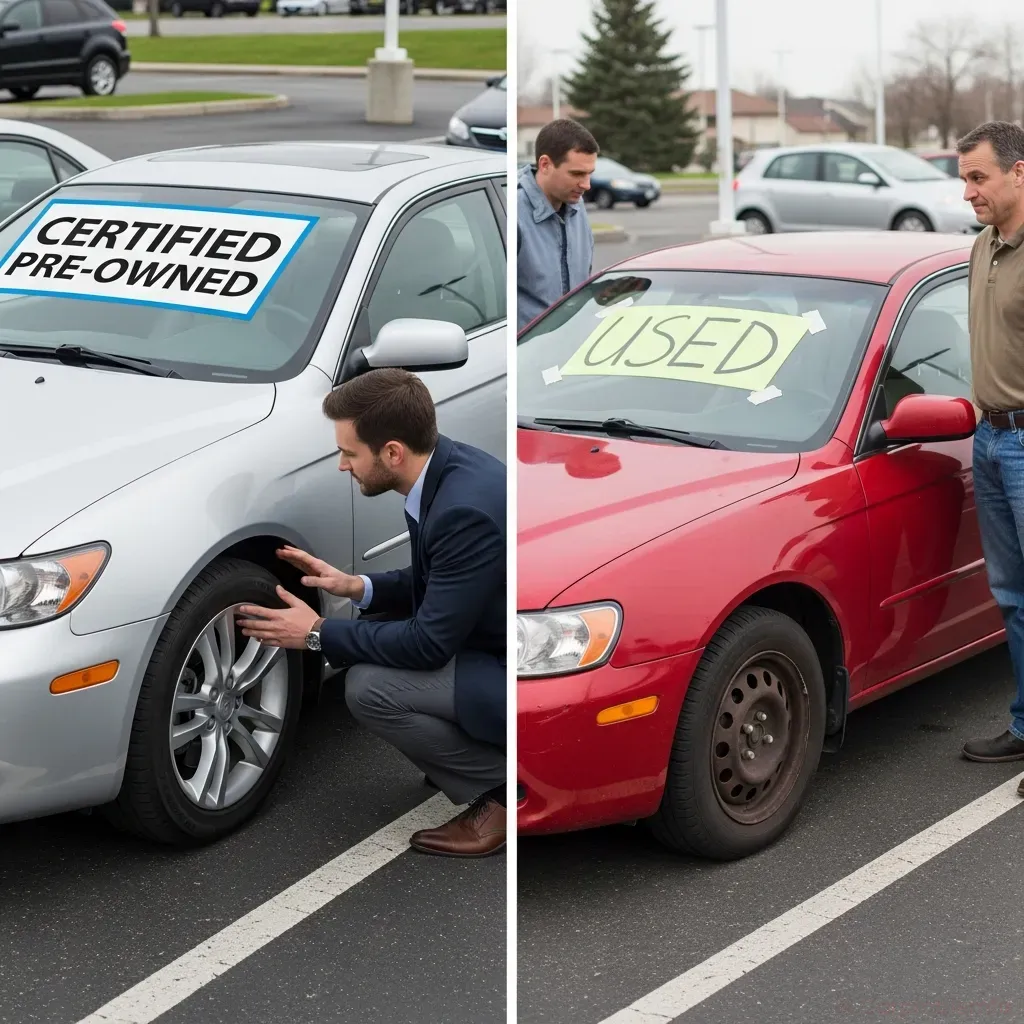
If you’re shopping for a car and want to avoid new‑car prices, you’ll quickly run into two options: certified pre‑owned (CPO) and regular used. On paper they can look similar—same model, similar mileage—but the price difference can be thousands of dollars. Is that CPO badge really worth the premium, or is a well‑chosen used car the better deal?
This guide breaks down the real‑world differences between certified pre‑owned and used cars in 2025, including warranty coverage, inspection standards, reliability, financing, and long‑term ownership costs. By the end, you’ll know exactly which option fits your budget, risk tolerance, and how long you plan to keep the vehicle.

What Is a Certified Pre‑Owned (CPO) Car?
A certified pre‑owned car is a used vehicle that has been inspected and reconditioned by a manufacturer or dealer and then sold with an extended warranty and other benefits. Not every used car can qualify—manufacturers set strict age, mileage, and condition requirements.
Typical CPO Requirements
- Age limit: Usually under 5–7 model years old.
- Mileage cap: Often under 60,000–80,000 miles at time of certification.
- Clean history: No salvage, flood, or major accident titles.
- Factory inspection: A multi‑point checklist (often 100+ items).
- Reconditioning: Any issues are repaired with OEM or approved parts.
Because the manufacturer’s brand is on the line, factory CPO programs are generally more consistent than a generic “certified” label used by some independent dealers. Always verify that the program is manufacturer‑backed, not just “dealer certified.”
What Is a Regular Used Car?
A regular used car is simply any pre‑owned vehicle sold without a manufacturer CPO program. It might be sold by a franchised dealer, an independent lot, or a private seller. Some dealers offer their own limited warranties or inspections, but these vary widely and are not the same as a factory CPO program.
Used cars typically cost less than comparable CPO vehicles because you’re not paying for the extended warranty, inspection, and reconditioning package. That lower price can be a big advantage—if you choose wisely.
Key Differences: CPO vs Used
To decide which is smarter for you, compare the major differences that actually affect ownership.
1. Warranty Coverage
CPO: The biggest selling point of a certified pre‑owned car is the warranty. Most factory CPO programs include:
- Extended powertrain warranty (engine, transmission, driveline) beyond the original new‑car warranty.
- Limited bumper‑to‑bumper coverage for certain components.
- Roadside assistance and sometimes trip interruption coverage.
The exact coverage varies by brand. For example, some brands extend the powertrain warranty to 7 years/100,000 miles from the original in‑service date, while others offer shorter terms. Read the fine print: some CPO warranties are from the original date, others start on the CPO purchase date.
Used: Regular used cars may have:
- Leftover factory warranty (if still within time/mileage limits).
- A short dealer warranty (e.g., 30–90 days), or none at all.
- Optional third‑party extended warranties or service contracts.
If you’re considering a used car that’s out of warranty, factor in potential repair costs. Issues like a failing alternator, transmission problems, or electrical faults can quickly erase the savings versus CPO. For example, if your battery light comes on while driving, a covered alternator replacement under a CPO warranty could save you hundreds of dollars.
2. Inspection and Reconditioning
CPO: Factory CPO vehicles go through a detailed inspection—often 125–200 points. This typically includes:
- Engine and transmission operation.
- Suspension, steering, and brakes.
- Electrical systems, including charging and starting.
- Interior condition and safety features.
- Body and frame for accident or rust damage.
Any issues found must be repaired or the car can’t be certified. That doesn’t mean the car is perfect, but it reduces the chance of buying something with obvious hidden problems.
Used: Regular used cars may get a basic safety check or oil change, but the depth of inspection varies dramatically. Some dealers do a thorough job; others do the bare minimum. Private sellers may do nothing at all.
For non‑CPO used cars, it’s crucial to pay for your own pre‑purchase inspection (PPI) from an independent mechanic. They can scan for stored trouble codes, check for leaks, and verify that all OBD2 monitors are ready. If your mechanic finds that OBD2 readiness monitors are not ready, it can be a red flag for recent repairs, emissions issues, or a seller trying to clear codes before a sale.
3. Vehicle History and Condition
CPO: Factory programs usually require a clean title and limit previous damage. Minor cosmetic repairs are allowed, but major structural damage or airbag deployment often disqualify a car from certification.
Used: Regular used cars run the full spectrum—from one‑owner, well‑maintained vehicles to hard‑driven ex‑rental or auction cars. A clean Carfax or history report is helpful but not bulletproof; not all accidents or flood damage get reported.
Regardless of CPO or used, always:
- Review the vehicle history report.
- Check for mismatched paint, panel gaps, or rust.
- Inspect tires, brakes, and interior wear for clues about prior use.
4. Price and Depreciation
CPO: Expect to pay a premium—often $1,000–$3,000 more than a similar non‑certified used car. You’re paying for warranty coverage, inspection, and reconditioning, plus the peace of mind that comes with manufacturer backing.
However, CPO cars are still used vehicles, so the worst of the depreciation has already occurred. Buying a 2–4‑year‑old CPO car can be a sweet spot: you avoid the steep new‑car drop while still getting modern safety tech and warranty coverage.
Used: Regular used cars are cheaper up front and may offer more car for the same money—newer model year, lower miles, or a higher trim level. But if you pick a model with poor reliability or hidden issues, long‑term costs can erase the initial savings.
Research model‑specific reliability before you decide. For example, if you’re eyeing a compact SUV, reading a breakdown like Toyota RAV4 reliability by year helps you avoid problem years whether you buy CPO or regular used.
5. Financing and Interest Rates
CPO: Manufacturers often offer promotional financing on certified pre‑owned vehicles—sometimes lower interest rates than you’d get on a regular used car. That can partially offset the higher purchase price.
Used: Regular used cars may come with higher interest rates, especially from independent dealers or subprime lenders. However, if you arrange financing through your bank or credit union, you can often get competitive rates for both CPO and non‑CPO used cars.
Always compare the total cost of ownership, not just the monthly payment. A slightly higher purchase price with a lower interest rate can sometimes cost less over the life of the loan.
6. Perks and Extras
CPO programs commonly include:
- Roadside assistance (towing, jump‑starts, lockout help).
- Trip interruption coverage (hotel/meals if you break down far from home).
- Free scheduled maintenance for a limited time (on some brands).
- Loaner vehicles during warranty repairs.
Regular used cars: You may get some of these perks if the original new‑car warranty is still active, but they’re rarely included by the dealer. You’ll likely need to rely on your insurance or roadside assistance plan.
Who Should Choose Certified Pre‑Owned?
CPO isn’t automatically better, but it is better for certain buyers. You’re a strong candidate for a certified pre‑owned car if:
- You hate surprise repair bills. The extended warranty and inspection reduce the risk of major unexpected costs.
- You keep cars 3–6 years. You’ll likely enjoy warranty coverage for most of your ownership period.
- You want newer tech and safety features. CPO cars are usually late‑model, so you get modern driver‑assist systems, infotainment, and better crash protection.
- You’re financing through the dealer. Promotional CPO rates can make the payment manageable even with a higher price.
- You’re not comfortable evaluating cars mechanically. The manufacturer inspection and limited warranty provide a safety net.
If you’re the type of buyer who would otherwise buy new but wants to save money, CPO is often the best compromise.
Who Should Choose a Regular Used Car?

A non‑CPO used car can be the smarter move if you’re willing to do more homework and accept a bit more risk. You’re a good candidate for a regular used car if:
- Your budget is tight. You need the lowest possible purchase price and can’t justify the CPO premium.
- You’re comfortable with some DIY or independent shop repairs. You can handle maintenance and minor issues without dealership pricing.
- You buy proven reliable models. A well‑chosen, reliable used car can be nearly as safe a bet as CPO, especially if it has a documented service history.
- You plan to keep the car for a long time. Once you’re outside the CPO warranty window, the advantage of certification shrinks.
- You’re willing to pay for a thorough pre‑purchase inspection. A good mechanic can spot many problems before you sign.
For experienced buyers who know what to look for, regular used cars often deliver the best value per dollar.
How to Compare a Specific CPO Car vs a Used Car
When you’re cross‑shopping a certified pre‑owned car against a similar non‑CPO used car, use this step‑by‑step approach:
Step 1: Compare Total Price, Not Just Sticker
- Get out‑the‑door prices for both cars (including taxes and fees).
- Compare interest rates and loan terms for each option.
- Calculate the total cost over the life of the loan, not just monthly payments.
Step 2: Evaluate Warranty Coverage
- List what the CPO warranty covers and how long it lasts.
- Check how much factory warranty remains on the regular used car, if any.
- Price a reputable extended warranty or service contract for the used car to see if the combined cost still undercuts the CPO option.
Step 3: Compare Condition and History
- Review history reports for both vehicles.
- Look at service records—regular oil changes and documented maintenance are a big plus.
- Inspect both cars in daylight for cosmetic and structural issues.
Step 4: Get an Independent Inspection
Even for CPO cars, a pre‑purchase inspection is cheap insurance. Ask the mechanic to:
- Check for leaks, worn suspension components, and brake condition.
- Scan the ECU for stored or pending trouble codes.
- Verify that all emissions monitors are ready and there are no signs of recent code clearing.
If the seller refuses an independent inspection, that’s a sign to walk away—CPO or not.
Step 5: Test Drive Like You Own It
On both cars, test drive in varied conditions:
- City streets and highway speeds.
- Acceleration, hard braking, and gentle cruising.
- Listen for clunks, rattles, whining, or grinding noises.
- Watch for warning lights on the dash, especially the check engine and battery lights.
If anything feels off, don’t ignore it. A CPO label doesn’t magically erase mechanical issues—it just makes them more likely to be covered if they show up later.
Common Myths About CPO and Used Cars
Myth 1: “CPO Cars Are Basically New Cars”
CPO cars are still used. They’ve had at least one previous owner and may have been driven hard. The inspection and warranty reduce risk, but they don’t reset the car’s wear and tear to zero.
Myth 2: “All CPO Programs Are the Same”
They’re not. Some brands offer excellent coverage with low deductibles; others provide minimal benefits. Always read the actual warranty booklet for that brand’s program.
Myth 3: “Regular Used Cars Are Always a Gamble”
A well‑researched used car with a clean history, strong reliability record, and a solid pre‑purchase inspection can be a very safe buy. The key is doing your homework instead of buying on impulse.
Myth 4: “You Can’t Negotiate on CPO Cars”
You can. Dealers may be less flexible than with regular used cars, but there’s usually room to negotiate price, trade‑in value, or extras like floor mats, tint, or a set of winter tires.
Practical Tips Before You Decide
- Set your budget first. Decide your maximum out‑the‑door price and monthly payment before visiting dealers.
- Research model reliability. Avoid problem years and engines, whether CPO or used. Resources that break down reliability by year are invaluable.
- Factor in insurance and taxes. A more expensive CPO car can cost more to insure and tax, not just to buy.
- Don’t skip the test drive. Even if the car is certified, your own impressions matter.
- Get everything in writing. Warranty coverage, included services, and any promises made by the salesperson should be documented on the contract.
Bottom Line: CPO vs Used in 2025
If you want maximum peace of mind, plan to finance through the dealer, and prefer a late‑model vehicle with warranty coverage, a certified pre‑owned car is usually worth the premium. You’re paying extra for reduced risk and manufacturer backing.
If your budget is tighter, you’re willing to research reliability and pay for a thorough inspection, and you don’t mind the possibility of occasional repairs, a regular used car can deliver more value for less money.
In 2025, the smartest move isn’t automatically “CPO” or “used”—it’s choosing the right car, with the right history and coverage, at the right price for your situation. Take your time, compare both options carefully, and you’ll end up with a vehicle that fits your needs without wrecking your wallet.