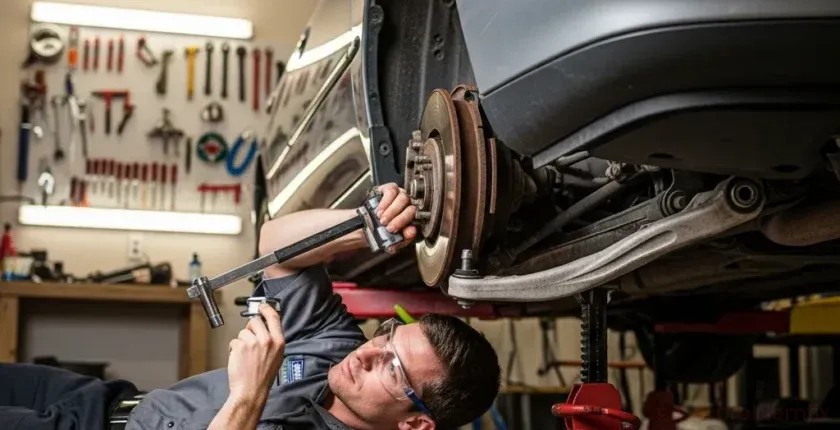
If your car feels loose, clunky, or wanders all over the road, worn suspension bushings are a likely culprit. These small rubber or polyurethane parts isolate vibration, keep alignment stable, and allow your suspension to move smoothly. When they fail, you can get clunks, vibration, uneven tire wear, and even a car that pulls to one side.
- 1. What Suspension Bushings Do (and Why They Matter)
- 2. Symptoms of Worn Suspension Bushings
- 3. Safety First: When You Shouldn’t DIY Bushings
- 4. Tools & Supplies You’ll Need
- 5. Choosing Replacement Bushings: Rubber vs Polyurethane
- 5.1. OEM-Style Rubber Bushings
- 5.2. Polyurethane (Poly) Bushings
- 6. Step-by-Step: DIY Suspension Bushing Replacement
- 6.1. 1. Research and Plan the Job
- 6.2. 2. Safely Lift and Support the Vehicle
- 6.3. 3. Inspect and Confirm the Bad Bushings
- 6.4. 4. Mark Alignment and Orientation
- 6.5. 5. Remove the Control Arm or Link
- 6.6. 6. Press Out the Old Bushings
- 6.7. 7. Clean the Bores and Prepare for Installation
- 6.8. 8. Press In the New Bushings
- 6.9. 9. Reinstall the Arm and Hand-Tighten Bolts
- 6.10. 10. Torque Bushings at Ride Height
- 7. Special Case: Easy DIY Sway Bar Bushing Replacement
- 8. After the Job: Alignment, Test Drive & Rechecks
- 8.1. Get a Professional Alignment
- 8.2. Test Drive Checklist
- 8.3. Recheck Torque and Hardware
- 9. Common DIY Mistakes to Avoid
- 10. When DIY Bushing Replacement Is Worth It
The good news: many suspension bushings can be replaced at home with patience, the right tools, and a methodical approach. This detailed DIY guide walks you through how to diagnose worn bushings, decide what to replace, and perform the job safely without wrecking your new parts—or your alignment.
What Suspension Bushings Do (and Why They Matter)
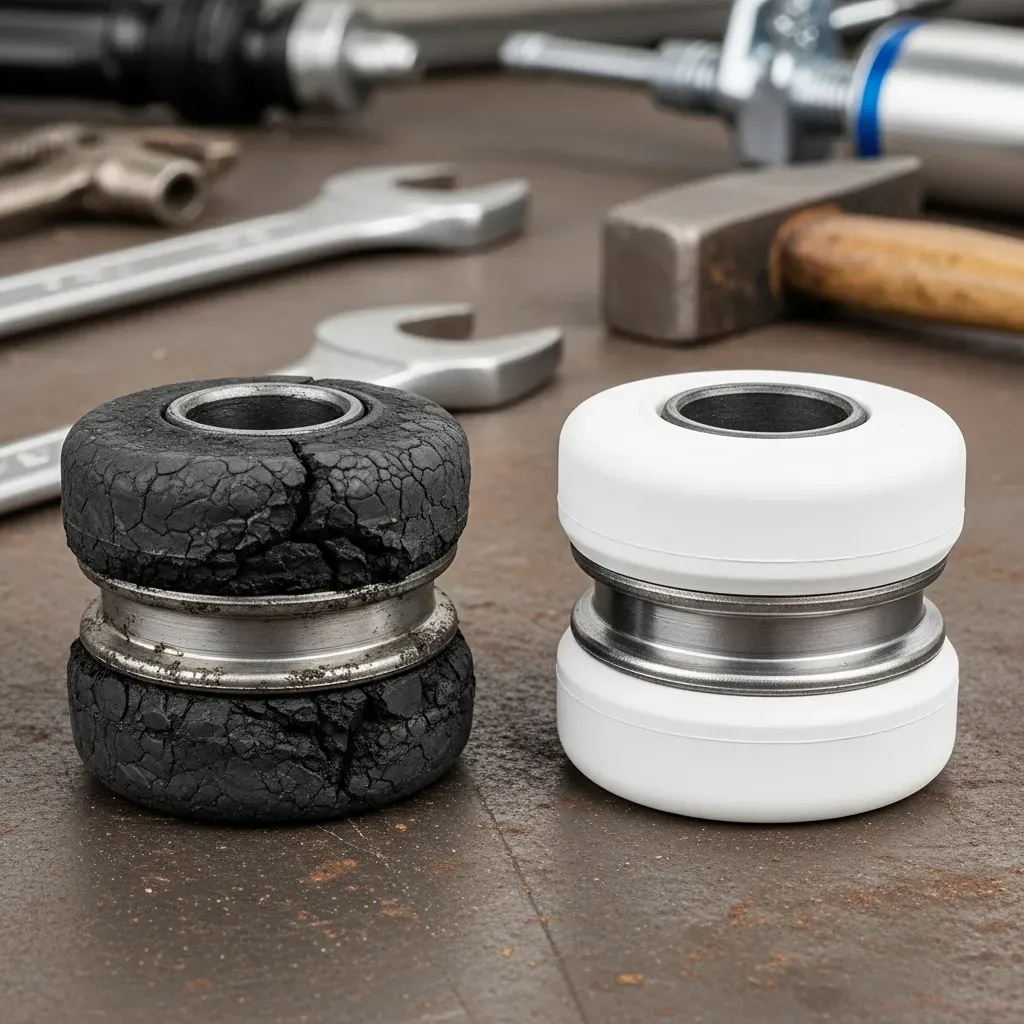

Suspension bushings are flexible mounts made of rubber or polyurethane. They sit between metal parts—like control arms, sway bars, and subframes—to:
- Absorb vibration and road harshness
- Allow controlled movement of suspension arms
- Maintain proper wheel alignment under braking, cornering, and acceleration
- Reduce noise and metal-to-metal contact
Common bushing locations include:
- Lower and upper control arms (front and rear)
- Sway bar (stabilizer bar) mounts and end links
- Trailing arms and lateral links
- Subframe mounts
- Engine and transmission mounts (technically also bushings)
Symptoms of Worn Suspension Bushings
Because bushings are rubber, they naturally crack, dry out, and soften over time. Signs they’re failing include:
- Clunking or knocking over bumps – especially when going over speed bumps or potholes.
- Vague, wandering steering – the car doesn’t track straight and needs constant correction.
- Uneven or rapid tire wear – often on the inner or outer edges, indicating alignment is shifting while driving.
- Braking instability – the car may dive, pull, or feel like the rear end is steering.
- Vibration or thumping – sometimes felt through the floor or steering wheel when bushings allow excessive movement.
- Car pulls to one side – especially under acceleration or braking, which can also be caused by alignment or brake issues. For a deeper dive into that specific symptom, see Car Pulls to One Side While Driving – Causes, Diagnosis & Fixes.
Safety First: When You Shouldn’t DIY Bushings
Before you grab a jack and breaker bar, decide if the job is realistic for your skill level and tools. Consider getting professional help if:
- You don’t have safe jack stands or a solid, level work surface.
- Your suspension uses large, pressed-in bushings in thick steel arms and you don’t have access to a press or bushing tool kit.
- Rust is severe and bolts look fused to the chassis.
- You’re uncomfortable working around coil springs or struts under tension.
- You lack a torque wrench and are not confident tightening critical fasteners by feel.
That said, many DIYers successfully replace sway bar bushings, control arm bushings, and trailing arm bushings at home. The key is to work slowly, safely, and methodically.
Tools & Supplies You’ll Need
The exact tools depend on your vehicle, but a typical suspension bushing DIY requires:
- Safety gear: wheel chocks, safety glasses, mechanic’s gloves.
- Support equipment: hydraulic floor jack, at least two quality jack stands, and a solid surface.
- Hand tools:
- Metric and/or SAE socket set (including deep sockets)
- Combination wrenches
- Breaker bar or long ratchet
- Torque wrench (covering 30–200 ft-lb range is ideal)
- Pry bar and large flat screwdriver
- Hammer and rubber mallet
- Penetrating oil: to loosen rusted bolts (PB Blaster, Liquid Wrench, etc.).
- Bushing tools:
- Ball joint/bushing press kit or access to a shop press
- Large sockets or metal sleeves to press bushings in/out
- Bench vise (very helpful)
- Marking tools: paint pen or scribe to mark alignment of arms and bolts.
- Lubricants & cleaners: silicone spray, rubber-safe grease (if specified), brake cleaner, rags.
- New hardware: replacement bolts/nuts if your service manual specifies one-time-use (stretch) fasteners.
Choosing Replacement Bushings: Rubber vs Polyurethane
You’ll typically have two main options:
OEM-Style Rubber Bushings
- Pros: best comfort, quietest, behave like factory parts, usually long-lasting.
- Cons: can be more expensive, may require a press to install, still wear out over time.
Polyurethane (Poly) Bushings
- Pros: stiffer, sharper handling, better resistance to oil and chemicals, often easier to install (two-piece design).
- Cons: can increase noise, vibration, and harshness (NVH); may squeak if not lubricated correctly; can transmit more impact to other components.
For a daily driver, high-quality rubber is usually the best choice. For a performance build or autocross car, poly bushings can tighten up handling significantly.
Step-by-Step: DIY Suspension Bushing Replacement
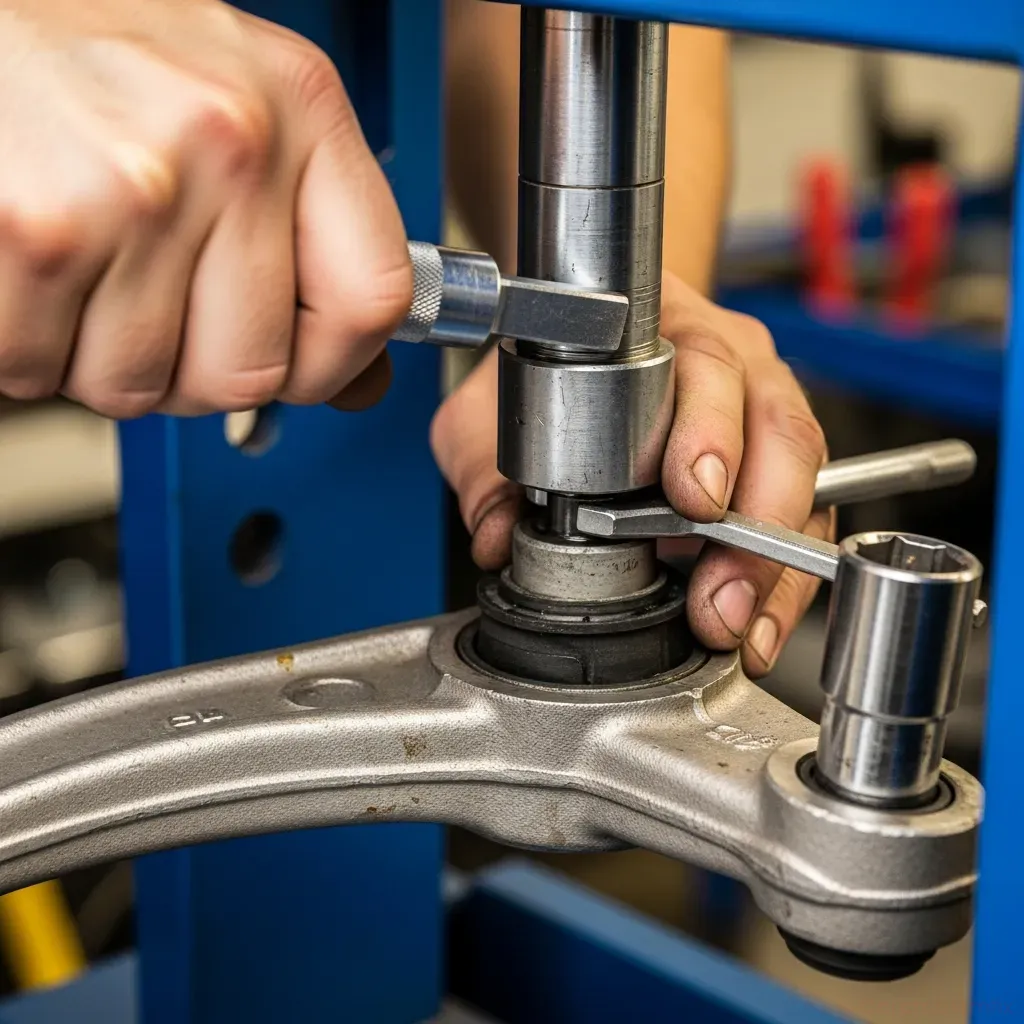
The exact process varies by vehicle and bushing location, but this general procedure applies to most control arm and trailing arm bushings.
1. Research and Plan the Job
- Consult a repair manual (factory, Haynes, or online) for your specific model.
- Identify all bushings you plan to replace in one session.
- Check if any bolts are single-use (torque-to-yield) and order replacements.
- Study torque specs and any special procedures (e.g., pre-loading bushings at ride height).
2. Safely Lift and Support the Vehicle
- Park on a level surface, engage the parking brake, and chock the wheels.
- Loosen (but do not remove) the wheel lug nuts with the car on the ground.
- Jack up the car at approved lift points and place jack stands under the frame or pinch welds.
- Gently lower the car onto the stands and shake the vehicle slightly to verify stability.
- Remove the wheels to access suspension components.
3. Inspect and Confirm the Bad Bushings
Before tearing things apart, confirm which bushings are actually worn.
- Use a bright light to inspect each bushing for cracks, missing chunks, or separation from the metal sleeve.
- Use a pry bar to gently move the control arm or link near the bushing. Excessive movement or clunking indicates wear.
- Look for shiny metal where parts have been rubbing, or rust dust around moving joints.
- Spin and shake the wheel hub to rule out wheel bearing issues that can mimic bushing problems.
If you also notice rhythmic thumping that speeds up with vehicle speed, inspect tires and wheel bearings as well. For more on that specific symptom, see Car Makes Thumping Noise That Speeds Up With the Car: Causes, Diagnosis & Fixes.
4. Mark Alignment and Orientation
Before loosening bolts, use a paint pen or scribe to mark:
- The position of eccentric (cam) bolts used for alignment.
- The orientation of each control arm relative to the subframe.
- The direction of the bushing (some are directional or have alignment marks).
These marks help you reassemble parts close to their original alignment, reducing how far off things are before your final alignment.
5. Remove the Control Arm or Link
- Spray all fasteners with penetrating oil and let them soak.
- Support the control arm or hub with a jack if it’s under tension from a spring or strut.
- Remove sway bar links or other components attached to the arm.
- Loosen and remove mounting bolts and nuts, noting any shims or spacers.
- Carefully pry the arm out of its mounts, watching for brake hoses or ABS wires that could be stretched.
6. Press Out the Old Bushings
This is often the most challenging part of the job.
- Secure the control arm in a vise or on a workbench.
- Use a bushing press kit or a shop press with properly sized cups and sleeves.
- Press on the metal sleeve of the bushing, not the rubber, to avoid tearing it and leaving the sleeve stuck.
- If the bushing is stubborn, additional penetrating oil, heat (carefully applied), or cutting the outer shell with a hacksaw blade may be necessary.
- Do not deform the control arm; if you’re bending the arm, your setup is wrong.
7. Clean the Bores and Prepare for Installation
- Use a wire brush and emery cloth to clean rust and debris from the bushing bores.
- Wipe with brake cleaner and a clean rag until the surfaces are smooth and dry.
- Lightly lubricate the bore or bushing shell if specified by the manufacturer (some rubber bushings are installed dry; poly bushings usually require grease).
8. Press In the New Bushings
- Align any arrows or marks on the bushing with the control arm as specified.
- Use the press or bushing tool to push the new bushing in straight, supporting the arm properly.
- Press only on the outer metal shell (for rubber bushings) or the correct surfaces specified for poly bushings.
- Ensure the bushing seats fully and evenly on both sides.
9. Reinstall the Arm and Hand-Tighten Bolts
- Reinstall the control arm or link in the vehicle, aligning your paint marks.
- Install all bolts and nuts finger-tight first to avoid cross-threading.
- Reconnect sway bar links, ball joints, and any brackets you removed.
- Do not fully torque the main bushing bolts yet.
10. Torque Bushings at Ride Height
This step is critical for bushing life and ride quality. If you tighten rubber bushings with the suspension hanging, the rubber is twisted at rest and will wear out quickly.
- Support the control arm or hub with a jack and raise it until the suspension is at approximate ride height (measure from fender to hub before disassembly and match it).
- With the suspension loaded, torque all bushing bolts to factory specifications using a torque wrench.
- Double-check that your paint marks on eccentric bolts are close to their original positions.
Special Case: Easy DIY Sway Bar Bushing Replacement
If you’re new to suspension work, sway bar (stabilizer bar) bushings are a good starter project:
- They’re usually accessible without removing major components.
- They often cause clunks over bumps when worn.
- They’re inexpensive and typically use simple brackets and bolts.
The process is straightforward:
- Support the car safely and remove the wheels if needed.
- Locate the sway bar bushings and brackets.
- Remove the bracket bolts, open the bracket, and slide off the old bushing.
- Clean the bar, install the new bushing (usually split for easy fit), and reinstall the bracket.
- Torque bolts to spec and repeat on the other side.
After the Job: Alignment, Test Drive & Rechecks
Get a Professional Alignment
Any time you replace control arm or trailing arm bushings, plan on a four-wheel alignment. Even if you marked everything carefully, fresh bushings change how the suspension sits and moves.
Ask the alignment shop to provide a before-and-after printout so you can see camber, caster, and toe values. This helps verify that nothing is bent or installed incorrectly.
Test Drive Checklist
On your first drive:
- Listen for new noises—clunks, pops, or squeaks.
- Check that the steering wheel is centered and the car tracks straight.
- Gently brake from various speeds to feel for pulling or instability.
- Drive over small bumps and speed humps to confirm the clunk is gone.
If you notice odd behavior along with dashboard lights flickering or electrical issues, that’s a separate problem—see Dashboard Lights Flickering While Driving – Causes, Diagnosis & Fixes for a dedicated guide.
Recheck Torque and Hardware
After 50–100 miles:
- Safely lift and support the vehicle again.
- Inspect all bushings for movement or signs of shifting.
- Re-torque critical fasteners to spec.
- Look for any fresh shiny metal or torn rubber that might indicate misalignment.
Common DIY Mistakes to Avoid
- Tightening bushings with the suspension hanging: drastically shortens bushing life and can cause a harsh ride.
- Pressing on the wrong part of the bushing: can tear new bushings or deform the control arm.
- Skipping alignment: leads to rapid tire wear and poor handling.
- Mixing up hardware: always keep bolts and nuts organized by location; some are different lengths or grades.
- Ignoring rusted or stretched bolts: critical suspension bolts should be in good condition and replaced if questionable.
- Over-greasing rubber bushings with petroleum products: use only lubricants specified by the manufacturer; some oils can attack rubber.
When DIY Bushing Replacement Is Worth It
Suspension bushing replacement can be time-consuming, but it’s one of the most rewarding DIY repairs you can do. Benefits include:
- Sharper, safer handling – the car feels more stable and predictable.
- Quieter ride – many clunks and rattles disappear.
- Longer tire life – alignment stays consistent.
- Significant cost savings – especially if you avoid labor-intensive shop rates.
If you’re comfortable working with hand tools and follow the steps carefully, DIY suspension bushing replacement is absolutely achievable at home. Take your time, respect safety, and your car will reward you with a tighter, more confident ride for years to come.