If your car makes a steady thumping noise that speeds up as the car goes faster, you’re hearing a problem that’s almost always tied to something that rotates: tires, wheels, axles, or drivetrain components. Ignore it, and that harmless-sounding thump can turn into a blown tire, damaged suspension, or even a dangerous loss of control.
- 1. What Does a Speed-Related Thumping Noise Usually Mean?
- 2. How to Quickly Narrow Down the Source of the Thumping
- 2.1. 1. Does the thump change with engine RPM or with road speed?
- 2.2. 2. Does the thump change when you turn?
- 2.3. 3. Do you feel it in the steering wheel, seat, or floor?
- 3. Common Causes of a Thumping Noise That Speeds Up With the Car
- 3.1. 1. Tire Problems (Most Common and Often Most Dangerous)
- 3.1.1. Bulged or Separated Tire
- 3.1.2. Flat-Spotted Tire
- 3.1.3. Cupped or Feathered Tires
- 3.2. 2. Wheel Issues: Bent Rim, Loose Lug Nuts, or Missing Weights
- 3.2.1. Bent or Cracked Wheel
- 3.2.2. Loose or Improperly Torqued Lug Nuts
- 3.2.3. Missing Wheel Weights (Imbalance)
- 4. When the Thump Might Be Coming From the Drivetrain
- 4.1. 3. Worn CV Axle or U-Joints
- 4.1.1. CV Axle Issues
- 4.1.2. Driveshaft or U-Joint Problems
- 5. Suspension & Wheel Bearing Causes of Thumping
- 5.1. 4. Failing Wheel Bearing
- 5.2. 5. Worn Suspension Bushings or Mounts
- 6. Brake-Related Thumping Noises
- 6.1. 6. Warped or Contaminated Brake Rotors
- 6.2. 7. Stuck Caliper or Dragging Brake
- 7. Less Common but Possible Causes
- 7.1. 8. Loose Exhaust or Heat Shield
- 7.2. 9. Loose Interior or Trunk Items
- 8. DIY Diagnosis: Step-by-Step Checklist
- 9. When Is a Thumping Noise an Emergency?
- 10. Repair Costs: What You Can Expect
- 11. Can Low Oil Pressure or Engine Problems Cause a Thump?
- 12. Key Takeaways
This guide explains the most common causes of a speed-related thumping noise, how to tell them apart, simple DIY checks you can do at home, and when it’s time to stop driving and call a tow truck.
What Does a Speed-Related Thumping Noise Usually Mean?

A noise that changes with vehicle speed—not engine RPM—is almost always caused by something between the engine and the road:
- Tires (bulges, flat spots, broken belts, cupping)
- Wheels (bends, cracks, missing weights)
- Wheel bearings
- CV axles or driveshaft
- Brake components that drag or are loose
Because these parts all spin, any damage or looseness tends to create a rhythmic thump, thud, or bump that gets faster as you speed up and slows as you slow down.
How to Quickly Narrow Down the Source of the Thumping
Before diving into detailed causes, use these quick checks to narrow things down.
1. Does the thump change with engine RPM or with road speed?
- Noise changes with vehicle speed (regardless of gear or RPM): Think tires, wheels, wheel bearings, axles, or brakes.
- Noise changes with engine RPM (even in park/neutral): Think engine or accessory issues. For engine-related vibrations at idle, see our dedicated guide on car vibrates at idle but smooths out while driving.
2. Does the thump change when you turn?
- Louder when turning left or right: Often a wheel bearing or CV axle on the opposite side of the turn.
- No change when turning: More likely a tire, wheel, or driveshaft issue.
3. Do you feel it in the steering wheel, seat, or floor?
- Steering wheel vibration/thump: Front tires, wheels, or front suspension.
- Seat or floor vibration: Rear tires/wheels, rear suspension, or driveshaft.
Common Causes of a Thumping Noise That Speeds Up With the Car
1. Tire Problems (Most Common and Often Most Dangerous)
Tires are the first thing to check. A damaged tire can fail suddenly at speed, so take any tire-related thump seriously.
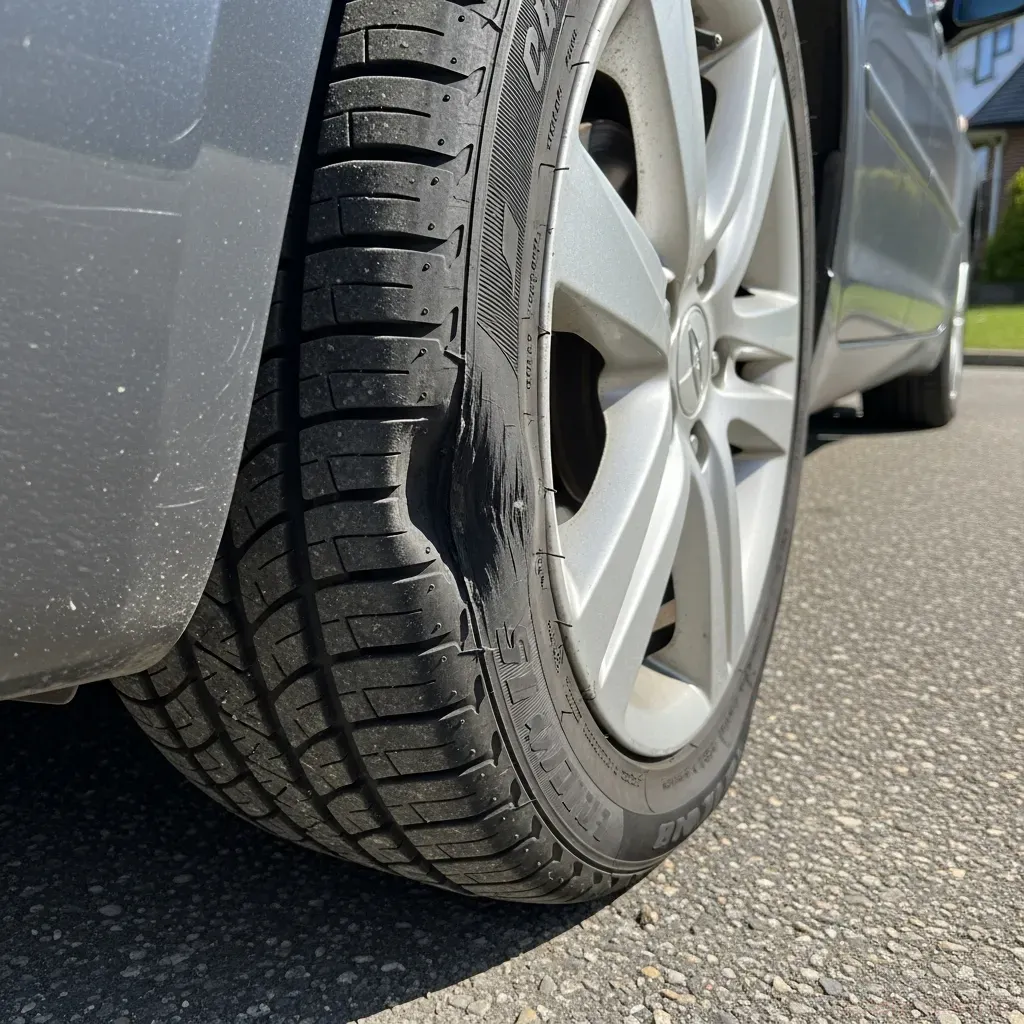
Bulged or Separated Tire
A bulge, bubble, or broken belt inside the tire creates a high spot that hits the road each rotation, causing a thump or bump that speeds up with the car.
- Symptoms: Rhythmic thump, often felt more than heard; steering may feel wobbly; car may pull to one side.
- How to check: Park safely, set the parking brake, and inspect each tire sidewall and tread. Look and feel for bulges, bubbles, or out-of-round sections. Run your hand gently around the tread (watch for exposed wires).
- Fix: Replace the damaged tire immediately. Do not drive on a tire with a bulge or visible internal damage.
Flat-Spotted Tire
After a hard brake lockup or long storage, a tire can develop a flat spot that causes a thump at low to moderate speeds.
- Symptoms: Thump or vibration at 10–40 mph that may improve as the tires warm up.
- How to check: Look for uneven tread wear or a visibly flat section when the tire is slowly rolled.
- Fix: Minor flat spots may smooth out after driving; severe ones usually require tire replacement.
Cupped or Feathered Tires
Cupping (scalloped dips in the tread) is often caused by worn shocks/struts or poor alignment. It can sound like a low-speed thump or growl that gets worse with speed.
- Symptoms: Thump or droning noise that gets louder with speed; visible scalloped tread pattern.
- How to check: Run your hand across the tread; if it feels wavy or uneven, you likely have cupping.
- Fix: Replace cupped tires and fix the underlying cause (shocks/struts, alignment, or worn suspension parts).
2. Wheel Issues: Bent Rim, Loose Lug Nuts, or Missing Weights
Bent or Cracked Wheel
Hitting a pothole or curb can bend a wheel, causing a thump or vibration that follows vehicle speed.
- Symptoms: Thump or vibration, especially at certain speeds; sometimes a slow air leak.
- How to check: Inspect the inner and outer rim edges for flat spots or bends; spin the wheel (on a lift or jack) and watch for wobble.
- Fix: Replace or professionally repair the wheel; rebalance the tire afterward.
Loose or Improperly Torqued Lug Nuts
Loose lug nuts allow the wheel to shift slightly on the hub, creating a thump, clunk, or knocking that changes with speed. This is extremely dangerous.
- Symptoms: Thumping or clunking, especially at low speeds; sometimes a wobble or vibration; in severe cases, you may see the wheel wobble.
- How to check: With the car parked, try to wiggle each wheel side-to-side. Check lug nuts with a lug wrench; they should be snug and evenly tight.
- Fix: Tighten lug nuts to the manufacturer’s specified torque. If the wheel has been driven loose, have the studs and wheel inspected for damage.
Missing Wheel Weights (Imbalance)
When a wheel weight falls off, the wheel becomes unbalanced. This usually causes a vibration more than a distinct thump, but some drivers describe it as a rhythmic bump at certain speeds.
- Symptoms: Vibration that appears in a specific speed range (e.g., 55–70 mph).
- Fix: Have all four wheels balanced at a tire shop.
When the Thump Might Be Coming From the Drivetrain
3. Worn CV Axle or U-Joints
On front-wheel-drive and many all-wheel-drive vehicles, CV axles transfer power to the wheels. On rear-wheel-drive and some AWD setups, a driveshaft with U-joints does the job. Wear in these parts can cause a speed-related thump, especially under load.
CV Axle Issues
- Symptoms: Thump or clicking on acceleration or when turning; torn CV boots with grease splatter around the wheel or suspension.
- How to check: Look for split CV boots and leaking grease. With the car safely lifted, rotate the wheel by hand and feel for play or clunks in the axle.
- Fix: Replace the worn CV axle. In most cases, the entire axle assembly is replaced rather than just the joint.
Driveshaft or U-Joint Problems
On rear-drive vehicles, a worn U-joint or out-of-balance driveshaft can cause a thump, shudder, or vibration that changes with road speed.
- Symptoms: Thump or clunk when shifting from park to drive or when accelerating; vibration at certain speeds; sometimes a metallic clank.
- How to check: With the vehicle safely supported, inspect the driveshaft for dents and the U-joints for play or rust-colored dust (a sign of wear).
- Fix: Replace worn U-joints; balance or replace a damaged driveshaft.
If you also feel slipping, surging, or odd shifting along with the noise, you may have a transmission issue rather than just a driveshaft problem. In that case, see our in-depth guide on transmission slipping while driving.
Suspension & Wheel Bearing Causes of Thumping
4. Failing Wheel Bearing
A worn wheel bearing usually starts as a humming or growling noise that changes with speed, but in advanced stages it can feel like a thump or rumble through the floor.
- Symptoms: Growl or rumble that gets louder with speed; noise may change when turning left or right; sometimes a rhythmic vibration.
- How to check: Safely lift the car and spin each wheel by hand, listening for grinding. Try rocking the wheel at 12 and 6 o’clock; noticeable play can indicate a bad bearing.
- Fix: Replace the wheel bearing or hub assembly. This usually requires a press or special tools and is often best left to a shop.
5. Worn Suspension Bushings or Mounts
Loose control arm bushings, sway bar links, or strut mounts can cause a repetitive thump as the suspension moves with each wheel rotation, especially over small bumps.
- Symptoms: Thump or clunk over small bumps; sometimes a knock when braking or accelerating; steering may feel loose or imprecise.
- How to check: With the car on the ground, bounce each corner and listen for clunks. On a lift, inspect bushings for cracks, tears, or excessive movement.
- Fix: Replace worn bushings, control arms, sway bar links, or mounts as needed; align the vehicle afterward.
Brake-Related Thumping Noises
6. Warped or Contaminated Brake Rotors
Warped rotors are more famous for causing steering wheel shake while braking, but in some cases they can create a light thump or pulsation even when you’re not on the brakes.
- Symptoms: Thump or pulsation mostly when braking; sometimes a light rhythmic noise at speed.
- How to check: Inspect rotors for heavy grooves, discoloration, or rust buildup. A dial indicator can measure runout, but that’s usually a shop job.
- Fix: Replace rotors and pads in pairs (both fronts or both rears); avoid cheap pads that can cause uneven deposits.
7. Stuck Caliper or Dragging Brake
A sticking caliper or partially seized slide pin can cause a dragging pad that hits a high spot on the rotor each rotation, creating a thump or scrape.
- Symptoms: Thump or scraping that changes with speed; car may pull to one side; wheel may be hot after driving; burning smell.
- How to check: After a short drive, carefully feel (without touching bare skin) near each wheel for excessive heat. Inspect pads and rotors for uneven wear.
- Fix: Free or replace the sticking caliper, clean and lubricate slide pins, and replace pads/rotors if damaged.
Less Common but Possible Causes
8. Loose Exhaust or Heat Shield
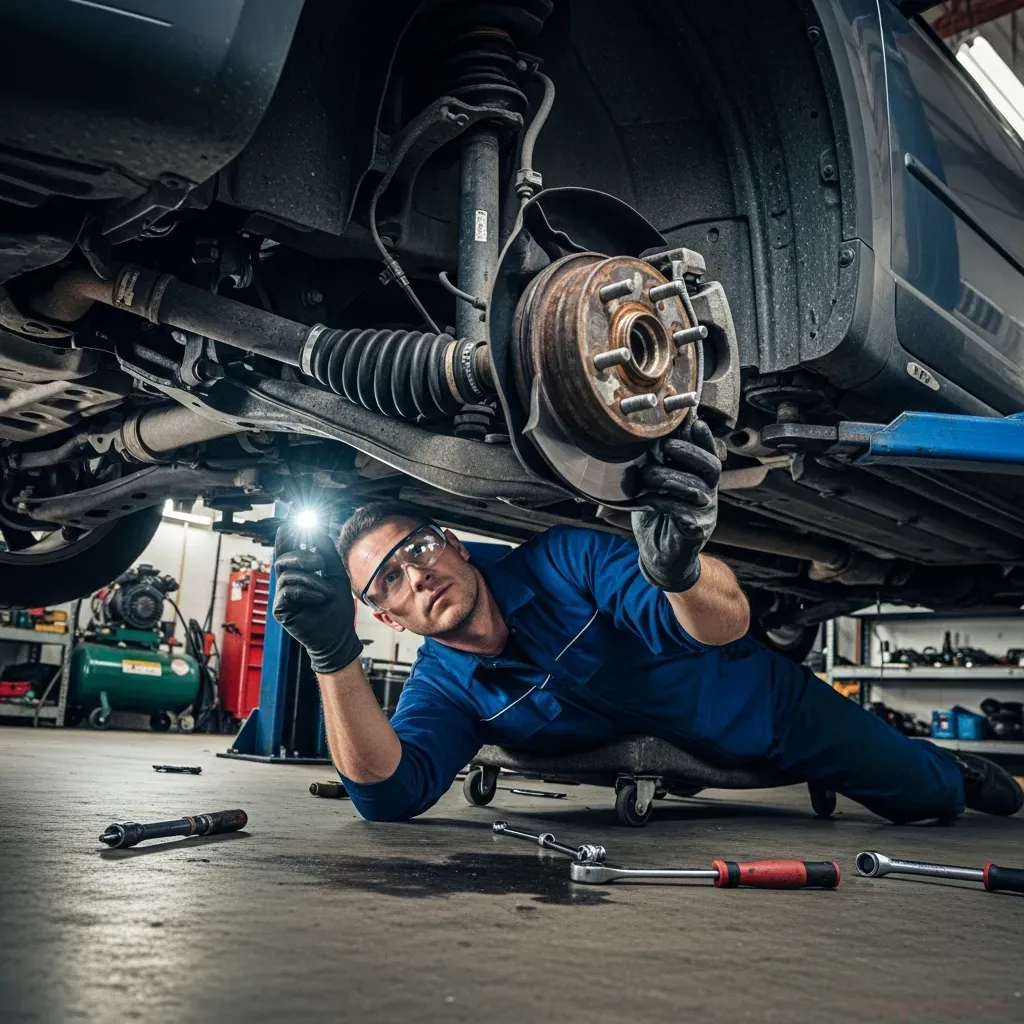
A loose exhaust hanger or heat shield can create a metallic thump or rattle that seems to follow road speed, especially if it’s close to a rotating part.
- Symptoms: Thump or rattle over bumps or at certain speeds; often more noticeable on rough roads.
- How to check: With the car cool and safely raised, gently shake the exhaust and look for loose brackets or shields.
- Fix: Tighten or replace hardware; in some cases, a simple clamp or new hanger solves it.
9. Loose Interior or Trunk Items
It sounds obvious, but tools, jacks, or spare tire components can create a rhythmic thump that seems like a mechanical issue.
- Symptoms: Thump from the rear, especially over bumps; noise may be intermittent.
- How to check: Empty the trunk, secure the spare tire and jack, and test drive again.
- Fix: Secure or remove loose items.
DIY Diagnosis: Step-by-Step Checklist
Use this simple process to track down a thumping noise that changes with speed:
- Safety first: If the thump is severe, the car pulls hard, or you suspect a tire issue, pull over immediately and inspect before continuing.
- Visual tire check: Look for bulges, bubbles, cuts, exposed cords, or severe uneven wear.
- Check lug nuts: Ensure all wheels are securely fastened and properly torqued.
- Inspect wheels: Look for bends, cracks, or missing chunks on the rims.
- Listen while turning: On a safe, empty road, gently weave left and right at low speed. Note if the noise changes when loading one side of the car.
- Feel where the noise is strongest: Steering wheel, seat, or floor can point to front vs rear issues.
- Check for heat: After a short drive, carefully check for an unusually hot wheel (possible dragging brake or bad bearing).
- Inspect under the car: Look for torn CV boots, leaking grease, loose exhaust parts, or damaged suspension components.
When Is a Thumping Noise an Emergency?
Stop driving and seek immediate help if:
- The thump is sudden and severe, especially after hitting a pothole or object.
- You see a bulge, cut, or exposed cords on any tire.
- The car pulls hard to one side or feels like it’s wandering.
- You hear a loud clunk and then a constant thump from one corner.
- A wheel or brake area is smoking or extremely hot.
Continuing to drive with these symptoms can lead to a blowout, wheel separation, or loss of control.
Repair Costs: What You Can Expect
Actual costs vary by vehicle and region, but these ballpark figures can help you budget:
- Tire replacement: $100–$250 per tire for typical passenger vehicles.
- Wheel repair or replacement: $100–$200 to straighten a bent wheel; $200–$600+ for a new alloy wheel.
- Wheel bearing replacement: $250–$600 per wheel, parts and labor.
- CV axle replacement: $300–$700 per axle.
- Driveshaft/U-joint repair: $200–$600 for U-joints; $500–$1,200+ for a complete driveshaft.
- Brake repairs (pads/rotors): $250–$600 per axle.
- Suspension bushings/links: $150–$500+ depending on parts and labor complexity.
Addressing a thumping noise early almost always costs less than waiting until it causes secondary damage. For example, a small tire defect caught early is a tire replacement; ignored, it can become a blowout that damages the wheel, fender, or suspension.
Can Low Oil Pressure or Engine Problems Cause a Thump?
Most speed-related thumps come from the wheels or drivetrain, not the engine. However, severe engine issues can cause knocking or thumping that changes with RPM, not road speed. If you notice a thump along with a low oil pressure warning or engine light, shut the engine off and investigate immediately. For engine lubrication issues, see our detailed guide on low oil pressure at idle.
Key Takeaways
- A thumping noise that speeds up with the car almost always points to tires, wheels, wheel bearings, axles, or brakes.
- Tire damage (bulges, broken belts, severe wear) is the most common and most urgent cause—inspect tires first.
- Use where you feel the thump (steering wheel vs seat) and how it reacts to turning to narrow down the source.
- Don’t ignore severe, sudden, or worsening thumps—these can quickly become safety hazards.
- Early diagnosis and repair almost always cost less than waiting until something fails completely.
If you’re unsure, have a trusted shop road-test and inspect the vehicle. Describing exactly when the thump happens—speed, turning, braking, accelerating—will help your mechanic find the problem faster and save you money.