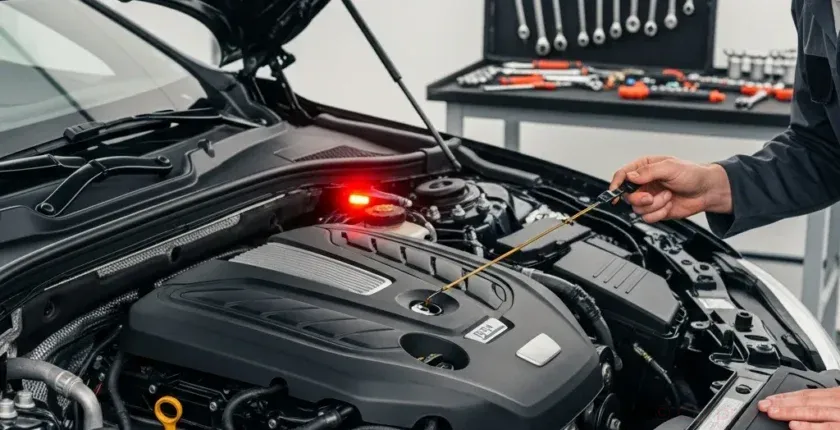
Seeing a low oil pressure warning at idle, or watching your gauge drop when you stop at a light, is one of those engine problems you can’t ignore. Unlike a small oil leak or a minor noise, low oil pressure can destroy an engine in minutes if it gets bad enough.
- 1. Why Low Oil Pressure at Idle Is So Dangerous
- 2. Normal Oil Pressure vs. Low Oil Pressure at Idle
- 3. Top Causes of Low Oil Pressure at Idle
- 3.1. 1. Low Oil Level
- 3.2. 2. Wrong Oil Viscosity (Too Thin)
- 3.3. 3. Severely Degraded or Contaminated Oil
- 3.4. 4. Worn Engine Bearings
- 3.5. 5. Weak or Worn Oil Pump
- 3.6. 6. Clogged Oil Pickup Screen or Internal Oil Passages
- 3.7. 7. Faulty Oil Pressure Sensor or Gauge
- 3.8. 8. Excessive Engine Temperature
- 4. How to Diagnose Low Oil Pressure at Idle
- 4.1. Step 1: Stop Driving if the Oil Light Stays On
- 4.2. Step 2: Check the Oil Level and Condition
- 4.3. Step 3: Verify the Correct Oil Viscosity
- 4.4. Step 4: Listen for Engine Noises
- 4.5. Step 5: Scan for Trouble Codes
- 4.6. Step 6: Confirm Oil Pressure with a Mechanical Gauge
- 4.7. Step 7: Inspect the Oil Filter and for Sludge
- 5. Fixes for Low Oil Pressure at Idle
- 5.1. 1. Correct the Oil Level and Viscosity
- 5.2. 2. Perform an Immediate Oil and Filter Change
- 5.3. 3. Replace a Faulty Oil Pressure Sensor
- 5.4. 4. Address Overheating and Cooling System Issues
- 5.5. 5. Clean Sludge and Inspect the Oil Pickup
- 5.6. 6. Replace the Oil Pump
- 5.7. 7. Engine Rebuild or Replacement
- 6. Preventing Low Oil Pressure Problems
- 7. When to DIY and When to See a Professional
- 8. Key Takeaways
This guide explains what low oil pressure at idle really means, the most common causes, how to diagnose it step by step, and the right fixes to protect your engine before it’s too late.
Why Low Oil Pressure at Idle Is So Dangerous

Your engine relies on a thin film of pressurized oil between moving parts: crankshaft bearings, camshafts, timing components, turbochargers, and more. At idle, oil pressure is naturally lower than at highway speeds, but it still has to stay above a safe minimum.
When pressure drops too low at idle, metal parts start to touch. That leads to:
- Accelerated bearing wear (rod and main bearings)
- Camshaft and lifter damage
- Timing chain and tensioner wear
- Turbocharger failure on turbo engines
Ignore it long enough and you’ll hear knocking, lose oil pressure completely, and end up with a seized engine. That’s why low oil pressure at idle is a problem you diagnose and fix immediately, not “when you get around to it.”
Normal Oil Pressure vs. Low Oil Pressure at Idle
Every engine is a little different, but most modern gasoline engines follow similar patterns:
- Cold start: 60–80 psi (4–5.5 bar) is common
- Fully warm at cruise: 35–60 psi (2.5–4 bar)
- Fully warm at idle: 10–25 psi (0.7–1.7 bar)
Many manufacturers consider anything above about 10 psi at hot idle acceptable, but you should always check your owner’s manual or service data for the exact spec.
Warning signs of low oil pressure at idle include:
- Oil pressure warning light flickering at stoplights
- Gauge dropping near zero when the engine is hot and idling
- Rattling or ticking noises on hot idle that go away with a little throttle
- Oil light coming on when cornering or braking hard at low RPM
Top Causes of Low Oil Pressure at Idle
Low oil pressure at idle is usually caused by one of three things: not enough oil, oil that’s too thin or degraded, or excessive internal wear or restrictions. Here are the most common culprits.
1. Low Oil Level
This is the simplest and most common cause. If the oil level is low, the oil pump can draw in air along with oil, especially when idling or cornering. That aerated oil doesn’t build pressure properly.
Symptoms:
- Oil light flickers on turns or hard braking
- Oil light comes on at idle but goes off when revving
- Dipstick shows oil below the minimum mark
2. Wrong Oil Viscosity (Too Thin)
Oil that’s too thin for your engine, especially when hot, will have trouble maintaining pressure at idle. This can happen if:
- The wrong viscosity was used at the last oil change
- You’re using low-quality oil that thins out excessively when hot
- Oil has been overheated repeatedly and sheared down
For example, an older engine designed for 5W-30 may not be happy with 0W-20, particularly in hot climates or under heavy use.
3. Severely Degraded or Contaminated Oil
Old, dirty oil loses its ability to maintain pressure and protect surfaces. Sludge and fuel dilution are especially harmful:
- Sludge can clog oil passages and the pickup screen
- Fuel dilution (common on direct-injection engines with lots of short trips) thins the oil
- Coolant contamination from a head gasket leak or oil cooler failure turns the oil into a milky mess that can’t hold pressure
4. Worn Engine Bearings
As rod and main bearings wear, the clearance between the crankshaft and bearings increases. Oil escapes through these gaps faster than the pump can supply it at idle, so pressure drops.
Typical signs of worn bearings:
- Low oil pressure at hot idle that improves slightly with RPM
- Deep knocking noise under light acceleration (rod knock)
- Metal flakes in the oil or on the drain plug magnet
This is one of the most serious causes and often means the engine is nearing the end of its life without major repair.
5. Weak or Worn Oil Pump
Oil pumps can wear internally or suffer from stuck pressure relief valves. A weak pump may still build enough pressure at higher RPM but struggle at idle.
Common causes include:
- High mileage and normal wear
- Running low on oil repeatedly
- Sludge or debris damaging pump gears or rotors
6. Clogged Oil Pickup Screen or Internal Oil Passages
The oil pump draws oil through a pickup screen in the oil pan. If this screen is partially clogged with sludge, silicone sealant, or debris, the pump can’t get enough oil at idle.
Similarly, sludge in internal oil passages can restrict flow and reduce pressure, especially to the top end of the engine (camshafts and lifters).
7. Faulty Oil Pressure Sensor or Gauge
Sometimes the engine is fine and the sensor is lying. A failing oil pressure sending unit can cause:
- Oil light flickering randomly
- Gauge readings that jump around
- Low readings at idle with no noise or other symptoms
That’s why confirming actual pressure with a mechanical gauge is a critical step in diagnosis.
8. Excessive Engine Temperature
Overheating thins the oil dramatically, which can drop pressure at idle. If your cooling system isn’t working correctly, you might see low oil pressure at idle when the engine is very hot.
Related issues can include a weak radiator fan, low coolant, or a partially clogged radiator. If your car also struggles with cabin cooling, it’s worth reading about car AC not blowing cold air, since AC and engine cooling often share components and loads.
How to Diagnose Low Oil Pressure at Idle
Before assuming the worst, follow a structured diagnosis. Many low oil pressure issues are fixable without rebuilding the engine.
Step 1: Stop Driving if the Oil Light Stays On
If the oil pressure warning light stays on at idle and doesn’t go out when you gently raise RPM, shut the engine off immediately. Driving with no oil pressure can destroy the engine in minutes.
Step 2: Check the Oil Level and Condition
- Park on level ground and let the engine cool for at least 5–10 minutes.
- Pull the dipstick, wipe it, reinsert fully, then pull again to check the level.
- Look at the oil’s color and feel: is it very thin, smells like fuel, or looks milky?
Quick fixes at this stage:
- If low, top up with the correct oil grade and recheck pressure.
- If the oil is very dirty, milky, or fuel-contaminated, plan an immediate oil and filter change.
Step 3: Verify the Correct Oil Viscosity
Check your last service invoice or ask your shop what oil they used. Compare it to the viscosity recommended in your owner’s manual. If the oil is thinner than recommended, especially on a high-mileage engine, that alone can cause low idle pressure.
Step 4: Listen for Engine Noises
With the engine fully warm and idling:
- Listen for ticking from the top of the engine (lifters, camshaft)
- Listen for deeper knocking from the bottom end (rod or main bearings)
- Note whether noises change or disappear when you raise RPM slightly
Noises combined with low pressure usually point to internal wear, not just a sensor issue.
Step 5: Scan for Trouble Codes
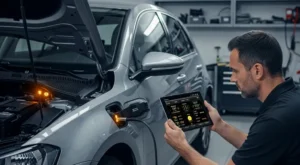
Many modern vehicles will store diagnostic trouble codes (DTCs) related to oil pressure or cam timing if pressure is low. Use an OBD2 scanner to check for codes related to:
- Engine oil pressure
- Variable valve timing (VVT) performance
- Camshaft position correlation
Codes related to VVT can be a hint that oil pressure or flow is marginal, especially at idle.
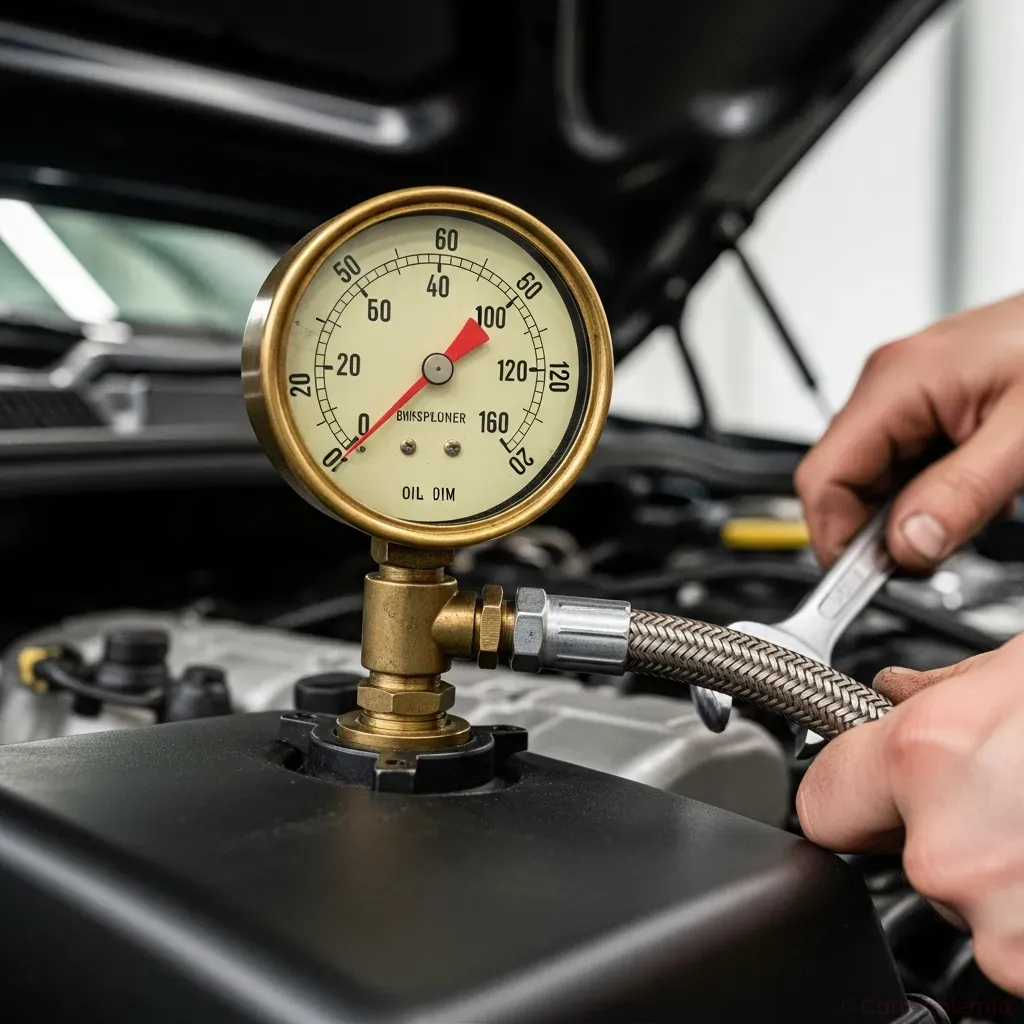
Step 6: Confirm Oil Pressure with a Mechanical Gauge
This is the most important diagnostic step and is usually best done by a professional, though experienced DIYers can do it with the right tools.
- Remove the factory oil pressure sensor and install a mechanical test gauge.
- Start the engine and let it reach full operating temperature.
- Record pressure at idle and at 2,000–3,000 RPM.
Compare the readings to factory specifications. If mechanical pressure is normal, the issue is likely the sensor or wiring. If it’s truly low, you’re dealing with an internal lubrication problem.
Step 7: Inspect the Oil Filter and for Sludge
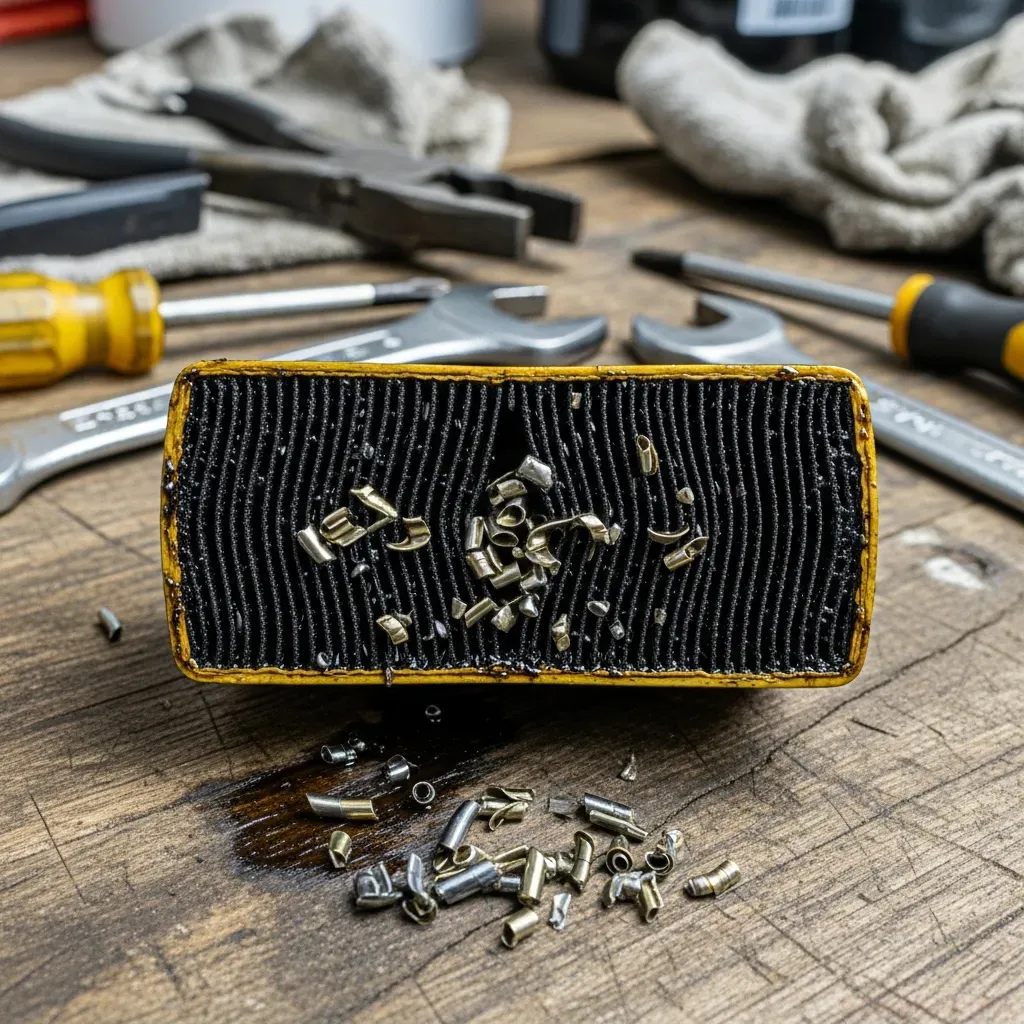
During an oil change, cut the old filter open and inspect the pleats:
- Look for metal shavings (silver or copper-colored)
- Check for thick sludge or chunks of sealant
Metal in the filter usually means internal wear (bearings, cam, etc.). Heavy sludge suggests neglected oil changes and possible clogged passages or pickup screen.
Fixes for Low Oil Pressure at Idle
The right repair depends entirely on what you find during diagnosis. Here are the most common fixes, from simplest to most involved.
1. Correct the Oil Level and Viscosity
Best for: Mild low pressure with no noise, especially after recent service.
- Top off oil to the proper level if it was low.
- If the wrong viscosity is in the engine, perform a full oil and filter change using the manufacturer’s recommended grade.
- For high-mileage engines that are borderline, some manufacturers allow a slightly thicker oil (e.g., 10W-30 instead of 5W-20) in hot climates—check your manual or factory service information.
2. Perform an Immediate Oil and Filter Change
Best for: Old, dirty, or fuel-contaminated oil; unknown service history.
- Use a high-quality oil that meets the correct specification (not just viscosity).
- Install a quality oil filter; cheap filters can restrict flow or bypass too easily.
- After the change, recheck pressure at hot idle.
Sometimes, a couple of short-interval oil changes (e.g., every 1,000–2,000 miles) can gradually clean up a sludged engine and improve pressure.
3. Replace a Faulty Oil Pressure Sensor
Best for: Normal mechanical gauge readings but low or erratic dash readings.
- Use an OEM or high-quality aftermarket sensor; cheap sensors often fail early.
- Inspect the connector and wiring for oil contamination or damage.
This is a relatively inexpensive repair on most vehicles and often resolves flickering oil lights when actual pressure is fine.
4. Address Overheating and Cooling System Issues
Best for: Low idle pressure only when the engine is very hot.
- Check coolant level and look for leaks.
- Verify radiator fans turn on when they should.
- Inspect the radiator and condenser for external blockage (leaves, dirt, etc.).
Hotter engines mean thinner oil and lower pressure. Fixing cooling issues not only protects the engine but also helps stabilize oil pressure. If you notice engine temperature climbing when using the AC, you may also see AC performance issues similar to those described in our guide on car AC not blowing cold air.
5. Clean Sludge and Inspect the Oil Pickup
Best for: Engines with sludge history, unknown maintenance, or evidence of clogged passages.
- Drop the oil pan (where possible) to inspect the pickup screen.
- Clean or replace the pickup if it’s partially blocked.
- Carefully remove sludge without letting large chunks circulate through the engine.
This is a moderate-level job that many DIYers can handle on some vehicles, but others require lifting the engine or dropping subframes—similar in complexity to major brake or suspension work. If you’re already comfortable doing jobs like preventive brake maintenance, you might be able to tackle an oil pan removal with the right tools and manual.
6. Replace the Oil Pump
Best for: Confirmed low mechanical pressure with no major bearing knock, especially on high-mileage engines.
- Requires removal of the oil pan and sometimes the timing cover.
- Always inspect the pickup tube and screen at the same time.
- Use a quality pump; cheap remanufactured units can fail prematurely.
Labor time varies widely by vehicle. On some engines, the pump is easily accessible; on others, it’s a major job.
7. Engine Rebuild or Replacement
Best for: Severely worn bearings, persistent low pressure even after pump replacement, or metal in the oil.
If the crankshaft bearings are worn out, no pump or thicker oil will permanently fix low idle pressure. At this point, your options are:
- Full engine rebuild with new bearings, machined crank, and other wear parts
- Install a quality remanufactured or low-mileage used engine
This is an expensive repair but often cheaper than buying a new vehicle, especially if your car is otherwise in good condition.
Preventing Low Oil Pressure Problems
Most low oil pressure issues are preventable with basic maintenance and a few smart habits.
- Follow oil change intervals based on time and mileage, not just what the dash reminder says—especially if you do lots of short trips.
- Use the correct oil specification and viscosity for your engine and climate.
- Check your oil level monthly and before long trips.
- Fix oil leaks promptly so the level doesn’t drop unnoticed.
- Warm the engine gently before heavy acceleration; cold revving is hard on bearings and oil pumps.
- Address engine noises early—ticking, knocking, or rattling at idle can be an early warning of lubrication problems, just like steering noises can hint at issues covered in our guide to noise when turning the steering wheel.
When to DIY and When to See a Professional
You can safely handle some parts of low oil pressure diagnosis at home:
- Checking and topping off oil
- Verifying oil type and changing oil and filter
- Listening for noises and scanning for codes
But you should involve a professional when:
- The oil light stays on at idle even after topping off
- You hear knocking or loud ticking
- Mechanical gauge readings confirm low pressure
- You suspect a clogged pickup, worn pump, or internal wear
A good shop will verify actual oil pressure, compare it to factory specs, and advise whether you’re looking at a simple sensor or oil issue, or something more serious like an oil pump or bearing problem.
Key Takeaways
- Low oil pressure at idle is a serious warning sign that can quickly lead to catastrophic engine damage if ignored.
- Always start diagnosis with the basics: oil level, oil condition, and correct viscosity.
- Confirm actual pressure with a mechanical gauge before assuming the worst.
- Many cases are fixable with oil changes, sensor replacement, or pump work—but severe bearing wear may require an engine rebuild or replacement.
- Regular maintenance and early attention to warning signs are the best ways to avoid expensive engine repairs.
If your oil light is flickering at idle, treat it as an emergency. The sooner you diagnose and fix low oil pressure, the better your chances of saving your engine and your wallet.