- 1. Why Dashboard Lights Flicker While Driving
- 2. How the Electrical System Affects Your Dash Lights
- 3. Common Causes of Flickering Dashboard Lights
- 3.1. 1. Weak or Failing Alternator
- 3.2. 2. Bad Voltage Regulator
- 3.3. 3. Loose or Corroded Battery Terminals
- 3.4. 4. Failing or Loose Ground Connections
- 3.5. 5. Worn or Slipping Alternator Belt
- 3.6. 6. Failing Instrument Cluster or Dimmer Switch
- 3.7. 7. Overloaded Electrical System or Aftermarket Accessories
- 3.8. 8. Failing Body Control Module (BCM) or CAN Bus Issues
- 4. How to Diagnose Flickering Dashboard Lights
- 4.1. Step 1: Note When the Flickering Happens
- 4.2. Step 2: Inspect Battery and Terminals
- 4.3. Step 3: Check Ground Connections
- 4.4. Step 4: Test Charging System Voltage
- 4.5. Step 5: Inspect the Alternator Belt
- 4.6. Step 6: Check the Dimmer Switch and Cluster
- 4.7. Step 7: Scan for Diagnostic Trouble Codes (DTCs)
- 5. Fixes for Flickering Dashboard Lights
- 5.1. 1. Clean and Tighten Battery and Ground Connections
- 5.2. 2. Replace the Alternator
- 5.3. 3. Replace or Repair the Voltage Regulator
- 5.4. 4. Replace the Alternator Belt or Tensioner
- 5.5. 5. Repair or Replace the Instrument Cluster / Dimmer Switch
- 5.6. 6. Correct Aftermarket Wiring and Reduce Electrical Load
- 5.7. 7. Address BCM or CAN Bus Issues
- 6. Is It Safe to Drive With Flickering Dashboard Lights?
- 7. Preventing Future Electrical Problems
- 8. When to DIY and When to See a Mechanic
Why Dashboard Lights Flicker While Driving
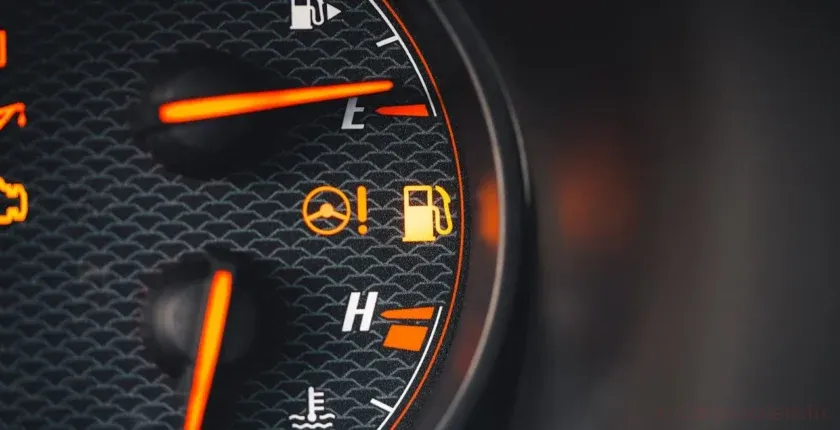
Dashboard lights that flicker while you’re driving are more than just an annoyance. They’re a warning that your car’s electrical system is unstable. Left alone, the same issue that makes your instrument cluster dance can quickly turn into a no-start condition, random stalling, or even damage to sensitive electronics.
This guide explains the most common causes of flickering dash lights, how to diagnose the problem step by step, and the typical fixes and repair costs. You don’t need to be an electrician to follow along – just basic tools and a bit of patience.
How the Electrical System Affects Your Dash Lights
To understand why your dashboard lights flicker, it helps to know the basics of how your car’s electrical system works:
- Battery – Provides power to start the engine and stabilizes voltage when loads change.
- Alternator – Generates electricity while the engine runs and keeps the battery charged.
- Voltage regulator – Controls alternator output to keep system voltage in a safe range (typically 13.5–14.7 volts).
- Wiring, grounds, and fuses – Carry power and provide return paths to complete the circuit.
- Body control module (BCM) / instrument cluster – Manages and displays information on the dashboard.
When voltage fluctuates or a connection is intermittent, your dash lights respond instantly – they dim, brighten, or flicker as the power supply becomes unstable.
Common Causes of Flickering Dashboard Lights
1. Weak or Failing Alternator
A failing alternator is one of the most common reasons for flickering dashboard lights while driving. As the alternator struggles, its output voltage can swing up and down. Your lights follow those swings.
Typical symptoms:
- Dashboard and interior lights flicker or pulse with engine speed.
- Headlights dim at idle and brighten when you rev the engine.
- Battery warning light may flicker or stay on.
- Electrical accessories (radio, blower fan, power windows) act erratically.
If the alternator fails completely, the battery will eventually discharge and the car may crank slowly or not start at all. If you reach that point, you may also run into the issues described in our detailed guide on car makes clicking noise but won’t start.
2. Bad Voltage Regulator
On many modern cars the voltage regulator is built into the alternator, but on some vehicles it’s a separate component. If the regulator fails, system voltage can spike too high or drop too low.
Signs of a bad voltage regulator:
- Dashboard lights flicker or suddenly get very bright.
- Headlights may flare brighter than normal, then dim.
- Electronics reset or behave strangely (radio reboots, gauges sweep).
- Battery may be overcharged (swollen case, strong sulfur smell) or undercharged.
Consistently high voltage can damage bulbs, the instrument cluster, and even the engine control module (ECM), so this isn’t something to ignore.
3. Loose or Corroded Battery Terminals
Even if your battery and alternator are healthy, loose or corroded battery terminals can interrupt power flow and cause flickering lights.
What to look for:
- White, green, or blue crust on battery posts and cable ends.
- Terminals that move or twist by hand.
- Intermittent loss of power when hitting bumps.
- Occasional no-start that suddenly fixes itself when you jiggle the cables.
Because the battery is the main stabilizer for the electrical system, any poor connection at the terminals can cause rapid voltage changes that show up as flickering dash lights.
4. Failing or Loose Ground Connections
Your car’s electrical system relies on solid ground connections between the battery, engine, body, and chassis. A loose or corroded ground strap can cause all sorts of weird electrical behavior.
Common ground issues:
- Corroded ground strap between battery negative and chassis or engine.
- Loose ground bolts near the fuse box or under the dash.
- Rusty connection points on older vehicles.
Because many components share ground points, one bad connection can cause multiple systems to flicker or fail at the same time.
5. Worn or Slipping Alternator Belt
If the belt that drives the alternator is loose, glazed, or contaminated with oil, the alternator may not spin consistently. That means inconsistent power output and flickering lights.
Symptoms of a belt issue:
- Chirping or squealing noise, especially on startup or when turning on the AC.
- Flickering lights that get worse when you turn on high electrical loads (rear defroster, blower on high).
- Visible cracks or shiny, glazed appearance on the belt.
If the belt breaks, you’ll lose alternator output entirely. On many vehicles the water pump is also driven by this belt, which can quickly lead to overheating. If that happens, the problems described in car overheating while driving can appear very quickly.
6. Failing Instrument Cluster or Dimmer Switch
Sometimes the problem isn’t with the car’s main electrical system at all, but with the instrument cluster or the dimmer control that adjusts dash brightness.
Cluster-related causes:
- Worn or dirty dimmer switch causing intermittent contact.
- Cold solder joints on the instrument cluster circuit board.
- Internal LED or bulb issues in the cluster itself.
If only the dashboard lights flicker, and all other lights and accessories behave normally, the cluster or dimmer switch is a likely suspect.
7. Overloaded Electrical System or Aftermarket Accessories
Extra electrical loads – like high-powered audio systems, additional lighting, or cheap aftermarket accessories – can strain the alternator and wiring.
Clues that your system is overloaded:
- Flickering lights when the bass hits on a subwoofer.
- Lights dim when you operate power windows or seats.
- Fuses blowing repeatedly after installing new accessories.
In these cases, the alternator may be undersized for the total electrical demand, or the accessories may be wired incorrectly.
8. Failing Body Control Module (BCM) or CAN Bus Issues
On modern vehicles, the body control module and the CAN bus (the communication network between modules) manage much of the interior lighting and dash functions. Software glitches or wiring issues here can cause sporadic flickering.
Typical signs:
- Multiple warning lights flicker on and off with no consistent pattern.
- Other body functions (power locks, interior lights, wipers) behave erratically.
- Scan tool shows communication errors between modules.
These issues are more complex to diagnose and often require professional equipment.
How to Diagnose Flickering Dashboard Lights
Before you start replacing parts, it’s worth doing some basic diagnosis. Many causes can be identified in your driveway with simple tools.
Step 1: Note When the Flickering Happens
Pay attention to the conditions when the dash lights flicker:
- At idle only – Often points to a weak alternator or loose belt.
- When revving the engine – May indicate a failing alternator or regulator.
- When hitting bumps – Suggests loose connections or bad grounds.
- Only when certain accessories are on – Possible overloaded system or accessory wiring issue.
- Only the dash, not headlights or interior lights – Likely dimmer switch or cluster issue.
Step 2: Inspect Battery and Terminals
Start with the basics:
- Turn the engine off and remove the key.
- Open the hood and locate the battery.
- Check for corrosion on the terminals and cable ends.
- Gently try to twist each terminal by hand – it should not move.
If you see corrosion, disconnect the negative terminal first, then the positive, and clean them with a battery terminal brush or a mix of baking soda and water. Reinstall and tighten firmly.
Step 3: Check Ground Connections
Locate the main ground strap from the battery negative to the body or engine. Look for:
- Frayed or broken ground straps.
- Rusty mounting points.
- Loose bolts or nuts.
Clean any rusty contact surfaces with sandpaper or a wire brush and retighten. If the strap is damaged, replace it.
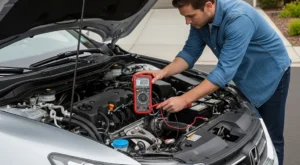
Step 4: Test Charging System Voltage
A basic digital multimeter is extremely helpful here.
- Set the multimeter to DC volts.
- With the engine off, measure across the battery terminals. A healthy, fully charged battery should read around 12.4–12.7 volts.
- Start the engine and measure again. You should see roughly 13.5–14.7 volts.
- Turn on headlights, blower fan, and rear defroster. Voltage should remain relatively stable, ideally above 13.2 volts.
Interpretation:
- Below 13 volts with engine running – Alternator may be weak or not charging properly.
- Over 15 volts – Possible bad voltage regulator.
- Voltage jumping up and down – Alternator or regulator issue, or poor connections.
Step 5: Inspect the Alternator Belt
With the engine off:
- Locate the belt that drives the alternator.
- Check for cracks, fraying, or a shiny glazed surface.
- Press on the belt midway between pulleys – there should be only a small amount of deflection (check your service manual for exact spec).
If the belt is loose or damaged, it should be adjusted or replaced.
Step 6: Check the Dimmer Switch and Cluster
If your headlights and interior lights are stable but the dash alone flickers:
- Operate the dash dimmer wheel or knob through its full range several times – if flickering changes or stops, the dimmer may be worn.
- Lightly tap around the instrument cluster – if the flicker changes, there may be internal connection issues.
Cluster repairs often require removal and professional re-soldering or replacement.
Step 7: Scan for Diagnostic Trouble Codes (DTCs)
A simple OBD-II scanner can reveal stored codes related to charging system or communication problems. Look for codes related to:
- Generator/alternator performance.
- Voltage regulator faults.
- Body control module or communication errors.
Even if the check engine light isn’t on, there may be stored codes that help narrow down the problem.
Fixes for Flickering Dashboard Lights
1. Clean and Tighten Battery and Ground Connections
Difficulty: Easy
Typical cost: $5–$30 (cleaning supplies, new terminals or ground strap)
For many vehicles, simply cleaning and tightening battery terminals and grounds solves the issue. This is the first and cheapest fix to try, and it’s good maintenance even if it doesn’t fully cure the flicker.
2. Replace the Alternator
Difficulty: Moderate (varies by vehicle)
Typical cost: $300–$900 parts and labor
If testing shows low or unstable charging voltage, a failing alternator is likely. On some cars it’s straightforward to replace; on others it’s buried and requires more labor.
When replacing an alternator, it’s wise to:
- Inspect or replace the drive belt.
- Check all related wiring and connectors.
- Test the battery afterward, as a weak battery can shorten alternator life.
3. Replace or Repair the Voltage Regulator
Difficulty: Moderate to difficult (depending on design)
Typical cost: $150–$600 (often included with alternator)
On many modern vehicles, the regulator is integrated into the alternator. In that case, replacing the alternator is the fix. If your car has a separate regulator, it may be mounted on the firewall or near the alternator and can be replaced individually.
4. Replace the Alternator Belt or Tensioner
Difficulty: Easy to moderate
Typical cost: $75–$250 parts and labor
If the belt is worn or loose, replacing it and ensuring proper tension can restore stable alternator operation. Some vehicles use an automatic belt tensioner, which can also fail and may need replacement.
5. Repair or Replace the Instrument Cluster / Dimmer Switch
Difficulty: Moderate to difficult
Typical cost: $150–$800 depending on vehicle and repair method
Cluster issues often require removal of interior trim and the cluster itself. Options include:
- Replacing the dimmer switch (often relatively inexpensive).
- Sending the cluster to a specialist for re-soldering and repair.
- Installing a new or remanufactured cluster.
On some vehicles, replacing the cluster requires programming with a scan tool to match the vehicle’s mileage and immobilizer system.
6. Correct Aftermarket Wiring and Reduce Electrical Load
Difficulty: Moderate
Typical cost: Varies widely ($50–$500+)
If flickering started after installing audio equipment, lighting, or other accessories, inspect the wiring carefully:
- Ensure proper gauge wire is used for high-current devices.
- Confirm all accessories are fused correctly and grounded properly.
- Consider upgrading the alternator or adding a capacitor for high-power audio systems.
7. Address BCM or CAN Bus Issues
Difficulty: Difficult (usually requires a professional)
Typical cost: $200–$1,200+
Software updates, module replacement, and network wiring repairs are typically not DIY-friendly. If your scan tool shows multiple communication codes and the flickering involves many different systems, it’s wise to have a qualified technician diagnose the issue.
Is It Safe to Drive With Flickering Dashboard Lights?
Whether it’s safe to keep driving depends on the underlying cause, but in many cases flickering dash lights are an early warning of a charging system failure.
You should avoid driving and seek immediate diagnosis if:
- The battery light is on solid or flashing.
- Headlights are also dimming or flickering.
- The engine is running rough, misfiring, or stalling.
- You smell burning or see smoke from under the hood.
A failing alternator can quickly lead to a dead battery and a no-start situation. If the car stalls in traffic or refuses to start again, you’ll be dealing with more than just annoying flickering lights.
Preventing Future Electrical Problems
Once you’ve fixed the flickering, a few simple habits can help prevent electrical issues from returning:
- Inspect the battery annually – Check age, condition, and terminal cleanliness.
- Listen for belt noise – Address squeals or chirps early.
- Avoid cheap electrical accessories – Poorly designed devices can overload circuits.
- Fix oil or coolant leaks promptly – Fluids can damage belts and electrical connectors, potentially leading to issues like overheating or AC problems similar to those described in our guide to car AC not blowing cold air.
- Have the charging system tested – Many parts stores will test batteries and alternators for free.
When to DIY and When to See a Mechanic
You can safely tackle basic checks and repairs at home: cleaning terminals, inspecting grounds, checking belt condition, and even replacing a battery or alternator on many vehicles.
However, you should consider professional help if:
- You measure abnormal charging voltage but aren’t comfortable replacing the alternator.
- The flickering involves multiple systems and is accompanied by communication-related trouble codes.
- Cluster removal requires significant dash disassembly or programming.
Flickering dashboard lights are your car’s way of telling you that the electrical system needs attention. By diagnosing and fixing the problem early, you can avoid being stranded, protect expensive electronics, and keep your vehicle running reliably.