- 1. Car Shakes When Accelerating: Causes & Easy Fixes
- 2. 1. Wheel & Tire Problems (Most Common Cause)
- 2.1. Possible Causes
- 2.2. Symptoms
- 2.3. How to Fix
- 3. 2. Engine Misfire or Ignition Issues
- 3.1. Causes
- 3.2. Symptoms
- 3.3. Fix
- 4. 3. CV Axle or Driveshaft Issues
- 4.1. Causes
- 4.2. Symptoms
- 4.3. Fix
- 5. 4. Worn Engine or Transmission Mounts
- 5.1. Causes
- 5.2. Symptoms
- 5.3. Fix
- 6. 5. Dirty Mass Airflow Sensor or Throttle Body
- 6.1. Fix
- 7. When It’s Dangerous
- 8. Quick DIY Checklist
- 9. Conclusion
Car Shakes When Accelerating: Causes & Easy Fixes
If your car shakes when you press the gas pedal, it can be both annoying and worrying. Vibration during acceleration almost always points to a mechanical imbalance or misfire. The good news? Most causes are easy to diagnose at home with simple checks.
Below are the most common reasons why your car shakes when accelerating, how dangerous each one is, and what you can do to fix it quickly.
1. Wheel & Tire Problems (Most Common Cause)

When the shaking feels strongest at 40–60 mph, the problem usually comes from unbalanced or damaged wheels.
Possible Causes
Unbalanced tires
Bent wheel rim
Uneven tire wear (cupping)
Low tire pressure
Broken or missing wheel weights
Symptoms
Steering wheel shakes
Vibration increases with speed
Noise from the front wheels
How to Fix
Check tire pressure
Spin each wheel and inspect uneven tread
Get a wheel balancing service (cheap)
Replace damaged rims/tire
📌 Cost: $10–$60 (wheel balance), $80–$150 (new tire)
2. Engine Misfire or Ignition Issues
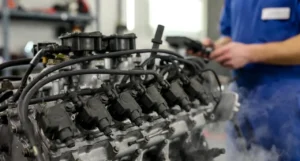
If the car shakes harder when you press the gas, especially under load, the engine may be misfiring.
Causes
Bad spark plugs
Faulty ignition coils
Dirty fuel injectors
Weak fuel pump
Vacuum leak
Symptoms
Check Engine Light flashing
Jerking or hesitation
Rough idle
Fix
Replace spark plugs
Clean injectors
Scan OBD2 for misfire codes (P0300–P0306)
📌 Cost: $20–$150 depending on part.
3. CV Axle or Driveshaft Issues
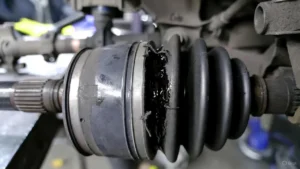
A damaged axle causes vibration ONLY during acceleration, which disappears when cruising.
Causes
Torn CV boot
Worn CV joint
Bent driveshaft
Loose axle nut
Symptoms
Clicking sound when turning
Strong vibration under load
Grease splatter inside the wheel
Fix
Replace CV axle (common fix)
Tighten axle nut
Replace damaged driveshaft
📌 Cost: $100–$300 per axle.
4. Worn Engine or Transmission Mounts
If vibration comes from the engine bay when accelerating from 0 to 20 mph, the problem may be bad mounts.
Causes
Rubber mount separated
Broken transmission mount
Engine moving excessively
Symptoms
Clunk when shifting
Engine tilts or moves
Cabin vibration at low speed
Fix
Inspect mounts visually
Replace the broken one
📌 Cost: $50–$250 (labor varies)
5. Dirty Mass Airflow Sensor or Throttle Body
If the engine shakes slightly and reacts slowly:
Fix
Clean MAF sensor
Clean throttle body
Replace air filter
📌 Cost: $10–$20 cleaner spray
When It’s Dangerous
Stop driving immediately if:
Vibration becomes violent
You hear metallic grinding
Steering feels loose
Axle clicks loudly during turns
Quick DIY Checklist
| Problem | Difficulty | Fix Time |
|---|---|---|
| Wheel imbalance | Easy | 20 min |
| Spark plug failure | Easy | 30 min |
| CV axle damage | Medium | 1–2 hours |
| Motor mount failure | Medium | 2 hours |
| Dirty sensors | Very easy | 10 min |
Conclusion
A shaking car during acceleration is usually caused by wheels, ignition, CV axles or engine mounts. Most issues are inexpensive and easy to diagnose at home. If you cannot find the cause, scan the car with an OBD2 tool or visit a mechanic for a detailed inspection.